
The One Muscle Formula Most Lifters Get Wrong
Two people can lift identical weights with vastly different results, depending on whether they apply proven muscle-building principles. Progressive overload—gradually increasing weight, reps, or sets—forces your muscles to adapt and grow, while sticking with the same weight leads to plateaus within three weeks.
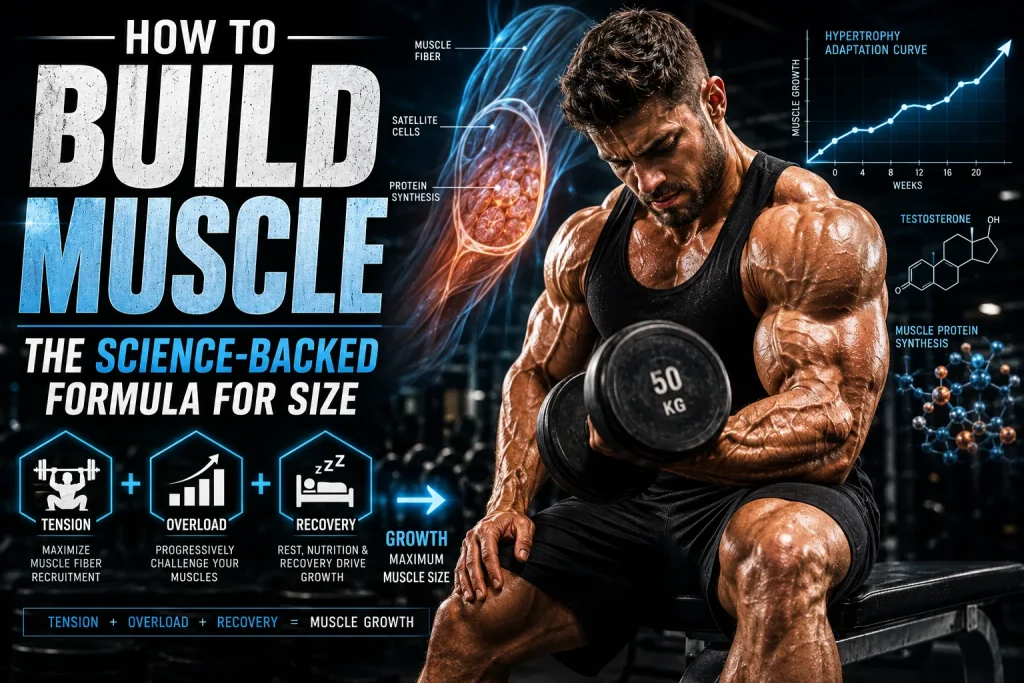
You walk into a gym and see two people lifting the same weight. One gains muscle every month. The other looks the same a year later. How to Build Muscle: The Science-Backed Formula for Size comes down to applying specific principles consistently.
How to Build Muscle Through Progressive Overload
Your muscles grow when you force them to adapt to increasing demands. This process is called progressive overload. You must lift heavier weights over time. You must do more reps with the same weight. You can also add more sets to your workouts.
Most people pick a weight and stick with it for months. Their muscles adapt within three weeks. After that, no new growth happens. You need to track every workout in a notebook. Write down the weight, sets, and reps for each exercise.
The next time you train that muscle group, aim to beat those numbers. Add five pounds to the bar. Do one more rep than last time. This small increase triggers new muscle growth. Your body rebuilds the muscle tissue slightly bigger and stronger.
Progressive overload doesn’t mean adding weight every single workout. Sometimes you plateau for two weeks. That’s normal. The key is making progress over months, not days. When you can do twelve reps easily, increase the weight by five to ten pounds.
The Protein Timing Strategy for Building Muscle Mass
Protein provides the building blocks your muscles need to grow. You need about 0.8 grams of protein per pound of body weight. A 180-pound man needs roughly 145 grams of protein daily. Spread this across four to five meals throughout the day.
Your muscles respond best to protein doses of 25 to 40 grams per meal for optimal muscle protein synthesis. Each meal should hit this range to maximize amino acid absorption and leucine threshold activation. Eating 100 grams in one sitting wastes most of that protein because your body has limited capacity for protein digestion and amino acid uptake per feeding. Distributing protein evenly across meals throughout the day—a practice called protein distribution—enhances net muscle protein balance better than front-loading your intake at single meals.
The post-workout window matters less than people think. Studies show muscle protein synthesis stays elevated for 24 hours after training. You don’t need to rush protein within 30 minutes of finishing your workout. What matters more is your total daily protein intake.
Eating protein before bed helps muscle growth during sleep. Your body repairs and builds muscle tissue while you rest. A casein protein shake digests slowly over several hours. This provides a steady stream of amino acids to your muscles overnight.
How to Build Muscle With the Right Training Volume
Training volume means the total amount of work you do per muscle group. Calculate it by multiplying sets times reps times weight. Research shows 10 to 20 sets per muscle group per week produces the best results.
Beginners should start at the lower end of this range. Do 10 to 12 sets per muscle group each week. Split this across two workouts. Train each muscle group twice per week for optimal growth. More advanced lifters can handle 15 to 20 sets per muscle group.
Going beyond 20 sets per week rarely adds more muscle. You simply accumulate fatigue without extra benefits. Supporting your recovery with proper supplementation becomes more important as training volume increases. Your body needs resources to repair and grow.
Each set should take you close to failure. Stop when you have one to two reps left in the tank. This intensity level maximizes muscle fiber recruitment. Going to complete failure every set increases injury risk without much extra growth.
The Science-Backed Formula for Size Through Rest and Recovery
Muscle growth happens outside the gym, not during your workout. Training breaks down muscle tissue. Rest and nutrition build it back up stronger. You need 48 to 72 hours between training the same muscle group.
Sleep is when your body releases the most growth hormone. This hormone plays a major role in muscle repair and growth. Aim for seven to nine hours of sleep each night. People who sleep less than six hours build muscle 30% slower.
Stress blocks muscle growth by raising cortisol levels. High cortisol breaks down muscle tissue and stores fat. Managing daily stress through walks, meditation, or hobbies protects your gains. Your mental state directly affects your physical results.
Deload weeks prevent burnout and reduce injury risk. Every four to six weeks, cut your training volume in half. Keep the same exercises but do fewer sets. This gives your nervous system and joints time to recover fully.
How to Build Muscle by Manipulating Training Tempo
The speed at which you lift weights affects muscle growth. Lowering the weight slowly creates more muscle damage. This triggers a stronger growth response. Take three to four seconds to lower each rep.
The lifting phase should be faster and more explosive. Take one to two seconds to raise the weight. This recruits different muscle fibers than slow lifting. Combining slow negatives with explosive lifting hits all fiber types.
Pausing at the bottom of each rep increases time under tension. Hold for one second in the stretched position. This prevents momentum from doing the work. Your muscles must work harder throughout the entire range of motion.
Time under tension matters more than rep count for muscle growth. A set of eight slow reps beats twelve fast reps. Aim for 40 to 60 seconds of tension per set. This duration maximizes the metabolic stress that drives muscle growth.
The Role of Compound Movements in Muscle Building
Compound exercises work multiple muscle groups at once. Squats, deadlifts, bench presses, and rows form the foundation of any muscle-building program. These movements allow you to lift the heaviest weights possible.
Heavy compound lifts trigger the largest hormonal response. Your body releases more testosterone and growth hormone after squats than after leg extensions. This systemic effect helps all your muscles grow, not just the ones you trained.
Start every workout with one or two compound movements. Do them when your energy is highest. Save isolation exercises like bicep curls for the end of your workout. These smaller movements add detail but don’t drive overall growth.
You can build significant muscle with just five exercises. Squat, deadlift, bench press, overhead press, and pull-ups cover your entire body. Master these patterns before adding fancy variations. Most people need years to maximize growth from these basics alone.
How to Build Muscle Through Proper Exercise Selection
Different exercises create different growth patterns within the same muscle. The incline press builds your upper chest more than flat bench. Romanian deadlifts target hamstrings better than leg curls. Choose exercises that match your weak points.
Your body structure determines which exercises work best for you. Long arms make bench pressing harder but rows easier. Short torsos favor deadlifts over squats. Experiment with different movements to find what creates the best muscle tension for your frame.
Changing exercises too often prevents progress. Stick with the same movements for at least eight weeks. This allows you to apply progressive overload effectively. You can’t track progress if you switch exercises every workout.
Free weights generally beat machines for muscle growth. They force you to stabilize the weight through natural movement patterns. Machines have their place for isolating specific muscles after compound work. Use both but prioritize barbells and dumbbells.
The Calorie Surplus Strategy for Maximum Muscle Growth
You need extra calories to build muscle tissue. Your body won’t create new mass without surplus energy. Eat 200 to 300 calories above your maintenance level. This provides enough energy for growth without excessive fat gain.
Calculate your maintenance calories by tracking your weight for two weeks. Eat the same amount daily and see if your weight stays stable. Once you know your maintenance, add 250 calories. Track your weight weekly to monitor progress.
Aim to gain 0.5 to 1 pound per week. Faster weight gain means you’re adding too much fat. Slower gains mean you’re not eating enough to maximize muscle growth. Adjust your calories up or down based on weekly weight changes.
Carbohydrates fuel intense training sessions better than fats. Eat most of your carbs around your workouts. This improves performance and recovery. Fats should make up 20 to 30% of your daily calories. They support hormone production and overall health.
How to Build Muscle With Strategic Supplement Support
Supplements enhance muscle growth but can’t replace proper training and nutrition. Creatine monohydrate is the most researched muscle-building supplement. It helps you perform one or two extra reps per set. This additional volume adds up to significant gains over months.
Take five grams of creatine daily regardless of training days. Your muscles store creatine for energy during high-intensity exercise. Loading phases aren’t necessary. Consistent daily use produces the same results within four weeks.
Whey protein powder makes hitting your daily protein target more convenient. It’s not magical but it’s practical. One scoop provides 25 grams of protein quickly. Use it when whole food meals aren’t available.
Some people struggle to eat enough calories for muscle growth. Mass gainers and specialized supplements can help bridge this gap when appetite limits your progress. They shouldn’t replace whole foods but can supplement your diet strategically.
The Mind-Muscle Connection for Better Results
Focusing on the working muscle during each rep improves growth. This mental focus is called the mind-muscle connection. Think about squeezing your chest during bench press. Feel your lats contract during rows.
Studies show that people who focus on their muscles grow more than those who just move weight. The same workout produces better results with better mental focus. Slow down and feel each rep working the target muscle.
Check your form in a mirror between sets. Look for symmetry and full range of motion. Video yourself performing key exercises. Small form adjustments can shift tension to the right muscles.
Distraction kills the mind-muscle connection. Put your phone away during workouts. Save conversations for after your session. Your gym time should be focused on the work.
Frequently Asked Questions
How long does it take to see noticeable muscle growth?
Most people notice visible changes after six to eight weeks of consistent training. You feel stronger within two weeks. Others typically notice your progress after three months of dedicated work.
Can you build muscle without eating meat?
Yes, plant-based protein sources like beans, lentils, and tofu support muscle growth. You need to eat slightly more total protein from plants. Combine different plant proteins to get all essential amino acids.
Should beginners train differently than advanced lifters?
Beginners grow muscle with less volume and lighter weights than advanced lifters. Start with three full-body workouts per week. Add more volume and frequency as you gain training experience.
How many calories above maintenance is best for muscle building?
A surplus of 200 to 300 calories daily works best for most people. This allows steady muscle growth without excessive fat gain. Smaller surpluses work better for people who gain fat easily.
Does cardio interfere with muscle growth?
Moderate cardio doesn’t hurt muscle growth if you eat enough calories. Keep cardio sessions under 30 minutes. Do cardio on separate days from weight training when possible.
Start tracking your workouts today and add five pounds to your main lifts next week.