
Why You're Building Muscle Half as Fast as You Could
Most lifters focus on the wrong variables when trying to build muscle fast, spending hours in the gym without seeing results. The key to rapid muscle growth lies in mastering recovery between sessions and maintaining optimal training volume, not just training harder.
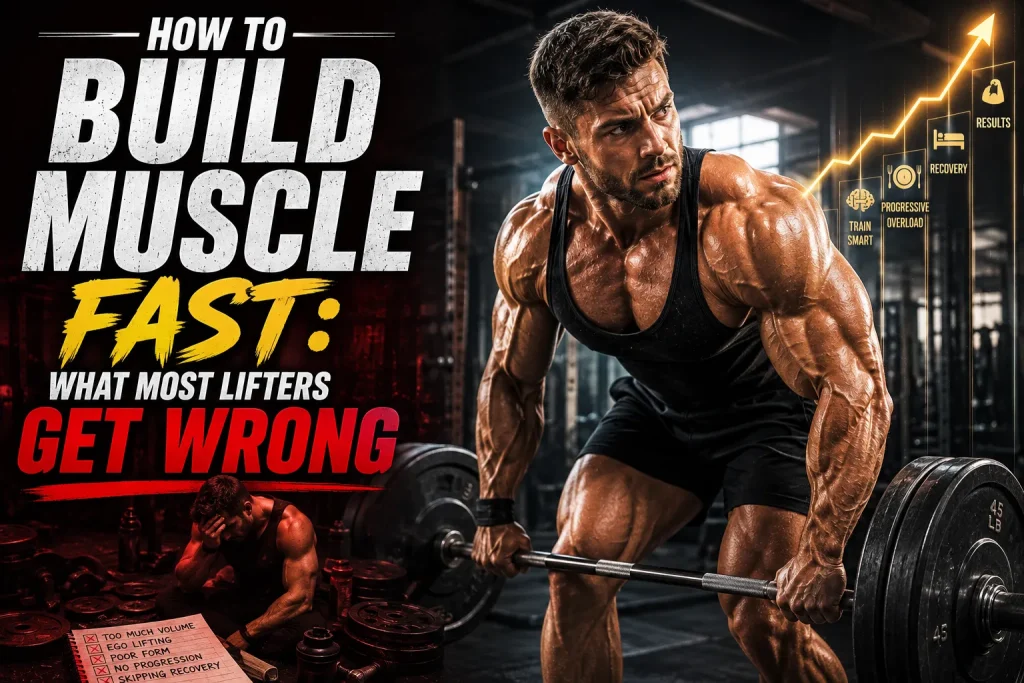
How to Build Muscle Fast: What Most Lifters Get Wrong starts with understanding that you can walk into the gym with a solid plan and train hard for months, yet the scale barely moves and your shirts fit the same because most lifters focus on the wrong variables. The fastest muscle gains come from mastering recovery between sessions, not just what happens during them.
How to Build Muscle Fast: What Most Lifters Get Wrong About Training Volume
Beginners think more sets always mean more growth. They add extra exercises until their workouts last two hours. This approach backfires within weeks.
Your muscles grow when they recover from training stress. Too many sets create damage your body can’t repair. You end up in a constant state of fatigue.
Research shows that 10 to 20 hard sets per muscle group each week drives optimal growth. Going beyond that range rarely adds extra size. It usually just extends your recovery time.
Each set should take you close to failure. That means stopping one or two reps before you physically can’t continue. These hard sets trigger the adaptation signal your muscles need.
Junk volume comes from sets where you stay too far from failure. You feel busy in the gym but don’t create enough stimulus. Your workout feels productive but results never come.
Track your sets per muscle group weekly. Count only the sets where you truly push hard. If you’re doing 25 sets for chest and not growing, cut back to 15 quality sets.
The Protein Timing Mistake That Slows Muscle Growth
Lifters obsess over drinking protein shakes within 30 minutes after training. They panic if they miss the so-called anabolic window. This focus misses the bigger picture entirely.
Total daily protein matters far more than exact timing. Your muscles build tissue throughout the entire day and night. One post-workout shake doesn’t make or break your progress.
You should eat roughly 1.6 to 2.2 grams of protein per kilogram of body weight daily. A 75-kilogram person needs about 120 to 165 grams spread across the day. Hit that target and timing becomes a minor detail.
Spacing protein across four meals works better than cramming it into two. Each meal triggers muscle protein synthesis for several hours. More frequent signals throughout the day mean more total growth.
Don’t skip protein before bed. Your body repairs muscle tissue while you sleep for eight hours. A serving of casein or Greek yogurt before bed provides amino acids during that crucial window.
The real timing mistake is going too long without protein. Gaps longer than five or six hours between meals leave your muscles without building blocks. Keep the supply steady and consistent.
How to Build Muscle Fast: What Most Lifters Get Wrong With Progressive Overload
Everyone talks about adding weight to the bar each week. You load up five more pounds and your form falls apart. The weight goes up but the muscle-building stimulus goes down.
Progressive overload means increasing the challenge to your muscles over time. Adding weight is just one method. You can also add reps, sets, or improve your technique.
Say you bench press 80 kilograms for three sets of eight reps. Next week you could do 80 kilograms for three sets of nine. The week after that you try three sets of 10.
Once you hit the top of your rep range, then you add weight. Drop back to eight reps with 82.5 kilograms. Build back up to 10 reps again before adding more weight.
This approach keeps your form clean and your joints healthy. You still progress every single week. The stimulus stays high because you’re actually challenging your muscles.
Some lifters add weight but cut their range of motion to compensate. They squat less deep each week to handle heavier loads. The muscles do less work despite the higher numbers.
Film your lifts every few weeks. Compare your depth, bar path, and speed. True progression means moving more weight through the same range with similar control.
Why Your Sleep Schedule Destroys Muscle Gains
You train hard and eat enough protein but still don’t grow. Your sleep tracker shows six hours most nights. That’s where your gains are disappearing.
Growth hormone peaks during deep sleep stages. Testosterone production drops significantly when you sleep less than seven hours. Your body simply can’t build muscle without adequate rest.
Studies show that people sleeping five hours gain 60% less muscle than those sleeping eight hours. Both groups followed identical training and nutrition plans. Sleep was the only difference.
Your nervous system also needs recovery time. Poor sleep reduces your strength and coordination in the gym. You lift lighter weights and perform fewer quality reps.
Aim for seven to nine hours nightly. Go to bed and wake up at consistent times, even on weekends. Your body’s recovery hormones follow a predictable rhythm.
Cool your bedroom to around 18 degrees Celsius. Keep the room completely dark with blackout curtains. These environmental factors improve deep sleep quality significantly.
Consider using supplements designed to support recovery and sleep quality if you struggle with rest. Better sleep means better gains, period.
How to Build Muscle Fast: What Most Lifters Get Wrong About Exercise Selection
Some lifters chase fancy exercises they see on social media. They do single-arm cable crossovers on a stability ball. Complex doesn’t mean effective.
Compound movements should form the foundation of your program. Squats, deadlifts, presses, and rows work multiple muscle groups simultaneously. They let you lift heavy weights safely.
These exercises create the biggest hormonal response in your body. They also build functional strength that carries over to everything else. You get more results from less total time.
Isolation exercises have their place after the main work. Bicep curls, tricep extensions, and calf raises add volume to smaller muscles. Do them at the end when you’re already fatigued.
Don’t program 10 different exercises for one muscle group. Pick two or three movements and get stronger at them. Mastery beats variety when building muscle.
Your body adapts to specific movement patterns. Switching exercises constantly means you never progress at any single lift. Stick with core exercises for at least eight to 12 weeks.
The Calorie Deficit That Secretly Sabotages Muscle Building
Lifters want to build muscle and lose fat at the same time. They eat in a moderate calorie deficit while training hard. This strategy works poorly for most people.
Your body needs extra energy to build new tissue. A deficit means you’re asking it to create something from nothing. The process slows down or stops completely.
Beginners and people returning after a break can build muscle in a deficit. Their bodies respond to training stimulus even without surplus energy. This advantage disappears after the first year.
Intermediate and advanced lifters need a calorie surplus to grow efficiently. Eat 200 to 300 calories above your maintenance level. This provides energy for training and tissue building.
You’ll gain some fat during a proper muscle-building phase. That’s normal and expected. You can cut the fat later while keeping most of your new muscle.
Trying to stay shredded year-round prevents serious size gains. Accept that building muscle requires some softness. The alternative is spinning your wheels forever.
Track your weight weekly and aim for gains of 0.25 to 0.5 kilograms per month. Faster gains mean you’re adding unnecessary fat. Slower progress means you’re not eating enough.
How to Build Muscle Fast: What Most Lifters Get Wrong With Supplement Priorities
Walk into any supplement store and the salesperson pushes exotic formulas. Branched-chain amino acids (BCAAs), testosterone boosters, pre-workout stacks, and fat burners fill your cart. You spend 200 euros monthly on powders and pills, believing these ergogenic aids will accelerate hypertrophy and recovery. Marketing claims promise faster gains and enhanced performance, but most lack solid evidence compared to foundational nutrition strategies.
Most supplements provide minimal benefit compared to basic training and nutrition. The industry thrives on selling solutions to problems you don’t actually have. Your money would buy more chicken and rice.
Creatine monohydrate stands out as the single most effective supplement. It helps you perform one or two extra reps per set. Those additional reps accumulate into real growth over months.
Take five grams of creatine daily with any meal. The timing doesn’t matter at all. After a few weeks your muscles stay saturated constantly.
Protein powder serves as convenient food, not a magic formula. Use it when whole food protein isn’t practical. A shake after training beats skipping protein entirely.
Vitamin D deficiency limits muscle growth and strength gains. Get your blood levels checked if you live in a northern climate. Quality vitamin D supplements can address deficiencies that harm your progress.
Everything else falls far down the priority list. Fix your training, sleep, and total food intake first. Supplements might add 5% improvement once the foundations are perfect.
The Recovery Window You’re Completely Ignoring
You finish a hard leg workout and sit in your car for an hour. You get home and collapse on the couch. The next morning your legs feel like concrete.
The first two hours after training matter more than most lifters realize. Your muscles are primed to absorb nutrients and begin repair. What you do during this window affects how you feel tomorrow.
Eat a meal with protein and carbohydrates within two hours of finishing. The carbs refill your muscle glycogen stores. The protein provides amino acids for repair.
Light movement helps clear waste products from your muscles. A 10-minute walk after training reduces soreness significantly. Blood flow carries away metabolic byproducts that cause stiffness.
Avoid sitting completely still for long periods post-workout. Your muscles stiffen up when they cool down in a shortened position. Keep moving gently throughout the evening.
Hydration status affects your recovery speed dramatically. Drink water consistently after training. Dehydrated muscles recover slower and feel more sore.
Consider recovery-focused supplements that support muscle repair during this critical window. The right support helps you train hard again sooner.
How to Build Muscle Fast: What Most Lifters Get Wrong About Training Frequency
Old-school bodybuilders trained each muscle once weekly. Monday was chest day, Tuesday was back, and so on. This split wastes your muscle-building potential.
Muscle protein synthesis stays elevated for about 48 hours after training. After that, the growth signal returns to baseline. Training a muscle once per week means five days of zero stimulus.
Hitting each muscle group twice weekly provides better results. You create two growth signals instead of one. More frequent stimulus means more total growth.
A Monday-Thursday or Tuesday-Friday split works well. Train your whole body each session with reduced volume. Each muscle gets 48 to 72 hours recovery between sessions.
Upper-lower splits also hit the twice-weekly frequency. Monday and Thursday train your upper body. Tuesday and Friday train your lower body.
Higher frequency lets you spread volume across multiple sessions. Instead of 15 chest sets on Monday, you do eight sets Monday and seven sets Thursday. Each session feels more manageable.
Recovery ability determines your maximum productive frequency. Some people handle three sessions per muscle group weekly. Others need a full three days between sessions. Adjust based on your performance and soreness patterns.
Frequently Asked Questions
How long does it take to build noticeable muscle?
Most people see visible changes after eight to 12 weeks of consistent training. You can gain one to two kilograms of muscle monthly as a beginner. Progress slows down significantly after your first year of proper training.
Can I build muscle without eating meat?
Yes, plant-based diets provide enough protein for muscle growth when planned properly. Combine different protein sources like beans, lentils, tofu, and tempeh. You may need slightly higher total protein intake from plant sources.
Should I do cardio while trying to build muscle?
Moderate cardio won’t hurt muscle gains if you eat enough calories. Keep cardio sessions under 30 minutes and separate from weight training. Too much cardio creates fatigue that interferes with strength training quality.
Why am I getting stronger but not bigger?
Early strength gains come from improved nervous system efficiency, not muscle size. Your brain learns to recruit muscle fibers better. Visible size increases lag behind strength gains by several weeks.
Do I need to train to complete failure every set?
No, training one to two reps short of failure works just as well. Going to complete failure every set creates excessive fatigue. Save true failure sets for your last set of each exercise.
Start tracking your training volume, protein intake, and sleep hours this week to identify your biggest gap.