
The Bench Press Chest Plateau Nobody Warns You About
Your chest isn’t growing because your shoulders and triceps are stealing the work during bench press. Fix your setup by keeping your shoulder blades pulled back and down to force your chest to actually do the work.
Why Am I Bench Pressing But My Chest Isn't Growing?
Why am I bench pressing but my chest isn’t growing? Your numbers keep climbing, but your chest still looks flat in the mirror—and the problem isn’t your effort or bench press strength. You’re just not forcing your chest to do the actual work.
Why Am I Bench Pressing But My Chest Isn’t Growing? The Real Culprit Is Your Shoulders and Triceps
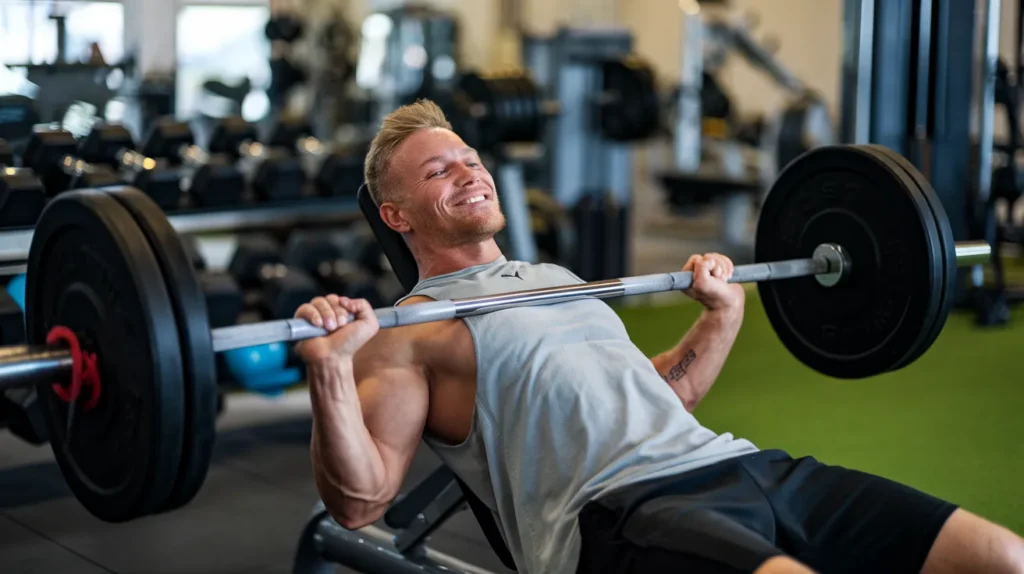
Your front delts and triceps steal the show during most bench press sessions. They take over the movement before your chest gets tired. This happens because most people set up wrong from the start. Your shoulder blades need to stay pulled back and down throughout every rep. When they don’t, your shoulders move forward and dominate the lift.
Watch someone bench press at your gym tomorrow. Their shoulders roll forward at the bottom of each rep. Their elbows flare out wide. Both mistakes shift tension away from the chest. The triceps and front delts handle most of the weight instead.
You can bench press 225 pounds and still have weak pecs. Your other muscles compensate and grow stronger. Your chest barely gets activated. This explains why some people bench heavy for years with minimal chest development.
The fix starts before you even touch the bar. Lie on the bench and squeeze your shoulder blades together hard. Pull them down toward your back pockets. Keep them locked in that position. Now grab the bar and press. Your chest should feel completely different.
You’re Using the Wrong Grip Width and Bar Path
Grip width changes everything about which muscles work hardest. A grip too wide puts extreme stress on your shoulders. A grip too narrow turns the bench press into a triceps exercise. Neither option maximizes chest activation.
Your ideal grip width puts your forearms vertical at the bottom position. Look at your arms from the side when the bar touches your chest. Your forearms should point straight up and down. Not angled in toward your body. Not angled out away from your body. Perfectly vertical.
Most people grab the bar in the same spot every time. They never test different widths. Move your hands one inch wider or narrower next session. Notice where you feel the tension. Your chest will tell you the right answer.
Bar path matters just as much as grip width. The bar shouldn’t travel straight up and down. It needs to move in a slight arc. Touch the bar to your lower chest near your sternum. Press up and slightly back toward your face. The bar should end directly over your shoulders at lockout.
A straight vertical path forces your shoulders to do extra work. The slight arc keeps tension on your pecs throughout the movement. This small change makes a massive difference in chest activation.
FREE! Top Natural Supplement Catalogue!
Why Am I Bench Pressing But My Chest Isn’t Growing? Because You’re Not Eating Enough
Muscle growth requires a calorie surplus. You need to eat more than your body burns. No amount of perfect form will build your chest without enough food. This is the hardest truth for people to accept.
You think you eat a lot. You probably don’t. Track every single thing you eat for three days. Use an app to count the actual calories. Most people discover they eat 500 to 800 calories less than they estimated.
Your chest is a large muscle group. Building it requires significant energy and protein. Aim for at least one gram of protein per pound of body weight. Get that protein from whole foods like chicken, fish, eggs, and beef. Spread it across four or five meals throughout the day.
Total calories matter even more than protein alone. Add 300 to 500 calories above your maintenance level. Eat that amount consistently for four weeks. Track your body weight every morning. If the scale doesn’t move up, add another 200 calories.
Some people refuse to gain any fat while building muscle. They stay in a tiny surplus or eat at maintenance. Progress comes slowly or not at all. You need to choose between staying lean and building muscle quickly. You can’t do both at the same time.
Your Training Volume Is Either Too High or Too Low
Volume means total sets per week for your chest. Too few sets won’t trigger growth. Too many sets prevent recovery. Most people fall into one extreme or the other.
Research shows chest growth happens best between 12 and 20 sets per week. Count every set where you push your chest close to failure. Include all bench press variations, dumbbell presses, and fly movements. Add up the total across all your weekly workouts.
Eight sets per week rarely builds muscle for intermediate lifters. Your chest adapts quickly and stops growing. Twenty five sets per week often causes the opposite problem. Your muscles never fully recover between sessions. You feel sore and weak all the time.
Start with 15 sets per week for your chest. Do five sets across three different exercises. Train your chest twice per week with rest days between sessions. Track your strength and how your chest looks after four weeks.
Adjust based on results. If you’re not growing, add two or three sets per week. If you feel constantly tired and your strength drops, remove a few sets. Your body will respond differently than someone else’s body. Find your personal sweet spot through testing.
Why Am I Bench Pressing But My Chest Isn’t Growing? You Never Train Close Enough to Failure
Easy sets don’t build muscle. You need to push close to the point where you can’t complete another rep. Most people stop their sets way too early. They leave five or six reps in the tank.
Muscle growth happens when you challenge your body beyond its current capacity. Your last rep should feel genuinely hard. Not impossible, but difficult. You should question whether you can get one more rep.
This is called training to technical failure. Stop when you can’t do another rep with good form. Don’t let your back arch off the bench. Don’t let your shoulders roll forward. Don’t bounce the bar off your chest. When form starts breaking down, end the set.
Count how many reps you could have done after stopping. Be honest with yourself. If you stopped at eight reps but could have done twelve, you’re not training hard enough. You should have maybe two reps left maximum.
Fear holds many people back from pushing hard. They worry about failing a rep or looking weak. Get a spotter for your heavy sets. Tell them not to touch the bar unless it starts moving backward. Push yourself to actual failure once per week on your main pressing movement.
You Only Do Flat Bench Press and Nothing Else
The flat barbell bench press is a great exercise. It’s not enough by itself to fully develop your chest. Your chest has different regions that respond to different angles and movements.
The upper chest often lags behind the middle and lower portions. Flat pressing doesn’t hit the upper chest hard. You need incline pressing movements to target that area. Set an adjustable bench to 30 degrees. Use dumbbells instead of a barbell for better range of motion.
Dumbbell work allows each side of your chest to work independently. This prevents your stronger side from compensating for your weaker side. Dumbbells also let you lower the weight deeper than a barbell. The extra stretch at the bottom creates more muscle damage and growth.
Fly movements stretch your chest in ways pressing can’t replicate. Cable flies keep constant tension on your pecs throughout the entire range of motion. Do them at different angles to hit different parts of your chest. High to low cables work your lower chest. Low to high cables target your upper chest.
Build your program around two or three different movements each week. Include one barbell press, one dumbbell press, and one fly variation. This combination covers all angles and stimulation patterns your chest needs.
Why Am I Bench Pressing But My Chest Isn’t Growing? Your Recovery Is Broken
Muscles grow during rest, not during training. Your workout damages muscle fibers. Sleep and nutrition repair them bigger and stronger. Skip the recovery and you skip the growth.
You need at least seven hours of sleep every night. Eight or nine hours is even better for muscle building. Poor sleep suppresses testosterone and growth hormone production while elevating cortisol, a catabolic hormone that breaks down muscle tissue. This hormonal imbalance directly impairs protein synthesis and muscle recovery. One bad night won’t ruin your progress, but chronic sleep deprivation consistently undermines muscle protein synthesis and blocks the hypertrophy adaptations from your training stimulus. Prioritize sleep as seriously as your nutrition and workout programming.
Stress from work or life also prevents muscle growth. Chronic stress keeps cortisol elevated all day. Your body prioritizes survival over building muscle. You can’t train your way out of high stress levels. Find ways to manage it outside the gym.
Training your chest every day seems like it would speed up growth. It does the opposite. Your muscles need 48 to 72 hours between hard training sessions. Hit your chest hard twice per week. Let it recover completely between sessions.
Some people can handle three chest sessions per week. They usually split the volume into lighter and heavier days. One hard session, one moderate session, one light technique session. This works for advanced lifters with years of training experience. Beginners and intermediates do better with two sessions.
Frequently Asked Questions
How long does it take to see chest growth from bench pressing?
You should notice visible changes within eight to twelve weeks of proper training. Strength increases come first, usually within three to four weeks. Muscle size follows if you eat enough calories and protein. Take progress photos every two weeks to track changes you can’t see daily.
Should I feel my chest burning during bench press?
A burning sensation means blood is flowing to your chest muscles. This is a good sign your chest is working. The burn isn’t required for growth though. Focus on feeling tension in your pecs throughout each rep. Tension matters more than burning sensations.
Can I build my chest with just pushups instead of bench press?
Pushups can build your chest if you’re a complete beginner. They stop working after a few months when they become too easy. You need progressive overload to keep growing. Adding weight to bench press is easier than making pushups harder. Use both exercises together for best results.
Why does my left chest look smaller than my right chest?
Most people have natural asymmetry between left and right sides. Your dominant side often develops faster and looks bigger. Use dumbbells for half your pressing work. Each side must handle the weight independently. This evens out imbalances over time without special exercises.
How much weight should I add to my bench press each week?
Add two and a half to five pounds to your bench press each week. This works for beginners in their first few months. Progress slows down after that initial phase. You might add five pounds per month as an intermediate lifter. Focus on adding reps before adding weight to the bar.
Track your bench press form, your total weekly chest volume, and your daily protein intake starting tomorrow.