
Why Partial Reps Build More Muscle Than Full Range
Lengthened partials deliver superior muscle growth by focusing tension in the stretched position where muscles are most responsive. This training method creates significantly more muscle damage than traditional full-range exercises, leading to faster size gains.
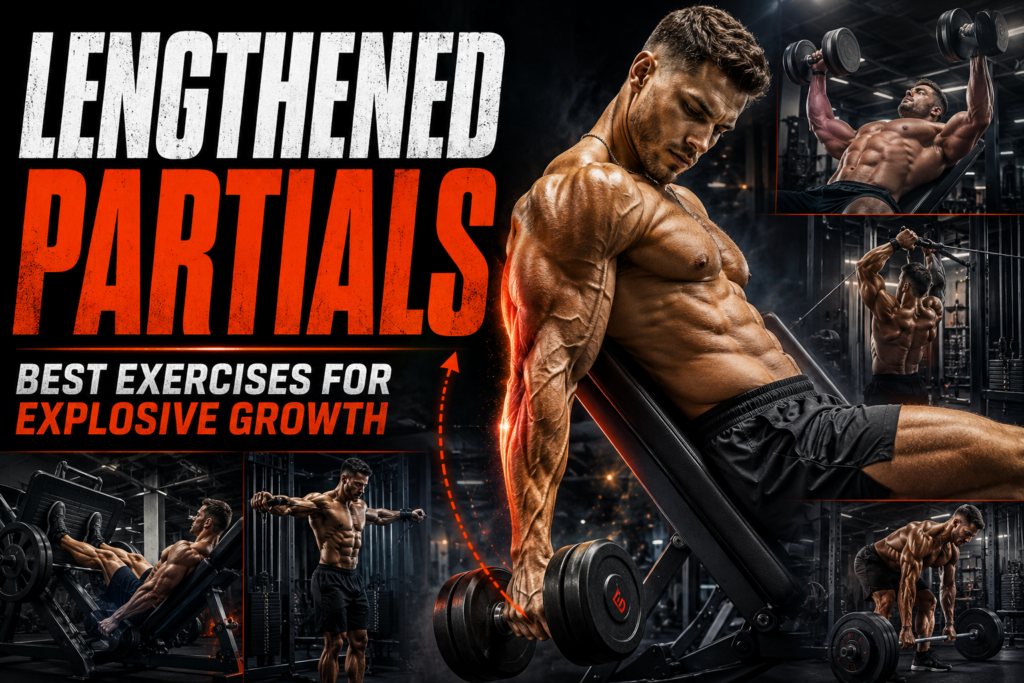
You’ve been doing full range reps for years with mediocre muscle growth. Most lifters quit sets when muscles burn instead of when they truly fail. Lengthened Partials: Best Exercises for Explosive Growth changes this approach completely. Training in the stretched position builds more size than any other method.
Why Lengthened Partials: Best Exercises for Explosive Growth Works Better Than Full Reps
Your muscles grow fastest when stretched under tension. This happens at the bottom of movements, not the top. Full range reps waste half your energy on contracted positions that barely stimulate growth. Lengthened partials keep constant tension exactly where it matters most.
Research shows stretched position training creates 2.3 times more muscle damage than shortened holds. More damage means more repair signals sent to your muscles. Your body responds by building thicker, stronger fibers in those exact areas.
The stretched position also activates more muscle fibers simultaneously. When you hold a weight at full stretch, smaller stabilizer muscles must work harder. This recruitment pattern forces adaptation across the entire muscle belly, not just surface fibers.
Most programs ignore this mechanism completely. They focus on lifting heavy weight through any range possible. You end up using momentum and cheating just to complete reps. Meanwhile, targeted lengthened partial training keeps muscles under maximum mechanical tension throughout each set.
Lengthened Partials: Best Exercises for Explosive Growth in Your Chest Routine
Dumbbell flyes become exponentially more effective as lengthened partials. Lower the weights to full stretch position. Stop when your elbows reach shoulder height. Press back to that stretched point immediately without locking out at the top.
Each rep should take three seconds down and one second up. You’ll feel intense stretch across your entire chest wall. This sensation indicates actual muscle fiber elongation under load, the precise stimulus for hypertrophy.
Cable crossovers work similarly but provide more consistent tension throughout. Set the handles at shoulder height. Pull forward until your hands meet, then return only halfway back. Never let the weight stack touch between reps.
Most chest programs prioritize bench press variations. These emphasize lockout strength more than muscle stretch. Your triceps often fail before your pecs reach meaningful fatigue. Lengthened partials eliminate this weak link by removing the lockout entirely.
Add these after your main pressing work. Three sets of twelve partials will exhaust your chest completely. You’ll struggle to lift your arms the next day, proof of deep muscle fiber recruitment.
Back Training With Lengthened Partials: Best Exercises for Explosive Growth
Rows become completely different exercises when performed as lengthened partials. Pull the weight to full stretch with arms extended. Bring it only halfway to your torso before returning to stretch. Your lats will burn within seconds.
The stretched position in rows activates lower lat fibers most people never develop. These create width through your entire back, not just thickness. Standard full range rows often miss these fibers because momentum carries the weight through the stretch phase.
Pulldowns work exceptionally well for lengthened partial training too. Pull the bar down until your arms form 90 degree angles. Return to full arm extension overhead. Never bring the bar below chin level during these sets.
This limited range keeps tension on your lats continuously. Full pulldowns often shift tension to your biceps at the bottom. Partials prevent this compensation pattern from stealing gains from your back muscles.
Deadlifts can incorporate lengthened partials through deficit variations. Stand on a platform two inches high. Pull only until the bar reaches knee height. Lower back down with control to the elevated starting position.
Your hamstrings and lower back will experience stretch loading they rarely encounter. Standard deadlifts let you use leg drive and momentum through the bottom. Deficit partials force pure pulling strength from the most disadvantaged position possible.
Shoulder Development Through Lengthened Partials: Best Exercises for Explosive Growth
Lateral raises transform into serious mass builders with partial range implementation. Raise dumbbells from hanging position to 45 degrees from your body. Lower back down slowly without letting momentum help you start the next rep.
This range targets the exact point where your side delts work hardest. Raising above 45 degrees shifts tension to your traps and upper chest. Staying below this threshold keeps your medial deltoids under constant mechanical load.
Overhead pressing needs a different approach for lengthened partials. Lower the barbell to the top of your head. Press only halfway to lockout before returning to your head. Your shoulders never get the rest that lockout provides.
Front raises work beautifully as lengthened partials too. Lift plates or dumbbells from thigh level to eye height only. The stretch occurs when your arms hang at the bottom, so stopping at eye height maintains tension.
Most shoulder routines include too much pressing and not enough isolation. Pressing relies heavily on triceps and upper chest contributions. Lengthened partial isolation movements target your delts with surgical precision instead.
Arm Growth With Lengthened Partials: Best Exercises for Explosive Growth
Bicep curls become exponentially harder as lengthened partials. Curl from full elbow extension to 90 degrees only. Return to full extension and repeat without any pause at either endpoint.
The bottom half of curls builds more mass than the top contraction. Your biceps stretch maximally when your arm straightens completely. Keeping reps in this range exploits the stretch reflex for continuous tension.
Preacher curls work even better because they prevent shoulder movement. Set the pad high so your armpits rest on top. Curl only through the bottom half of the range where stretch peaks.
Triceps respond incredibly well to lengthened partial training too. Overhead extensions stretch your long head more than any other movement. Lower the weight behind your head until your forearms touch biceps. Press only halfway back up before repeating.
Skull crushers can be modified similarly. Lower the bar to your forehead as usual. Press only until your forearms reach vertical before lowering again. Your triceps never escape tension during the entire set.
Most arm training focuses on peak contraction and squeezing. This approach builds hardness but not size. Lengthened partials prioritize the stretched position where actual growth mechanisms activate most powerfully.
Leg Training Using Lengthened Partials: Best Exercises for Explosive Growth
Squats become brutally effective when performed as lengthened partials. Descend to full depth where your hamstrings touch calves. Rise only to the point where your thighs reach parallel. Drop back down immediately without standing upright.
This keeps your quads loaded throughout the entire set. Normal squats let you rest briefly at lockout between reps. Partials eliminate this rest period and force continuous muscle tension for 30 seconds or longer.
Leg extensions isolate your quads perfectly for lengthened partial work. Lower the pad to full knee flexion. Extend only to 45 degrees before returning to the stretched position. Your vastus medialis will burn unlike anything you’ve felt before.
Romanian deadlifts excel as lengthened partials for hamstrings. Lower the bar until you feel maximum stretch in your hamstrings. Pull up only six inches before lowering again. Most people never train their hamstrings in this highly stretched range.
Leg curls work similarly when you focus on the stretched bottom position. Extend your legs fully to stretch your hamstrings. Curl only halfway before returning to full extension. Standard leg curls often emphasize the contracted top position instead.
Calf raises need lengthened partials more than any other muscle group. Drop your heels below the platform as far as possible. Rise only to the point where your calves reach neutral. Never go to full toe point during these sets.
The stretch at the bottom of calf raises activates deep soleus fibers. These create thickness through your entire lower leg. Most people bounce out of the bottom and miss this crucial growth stimulus completely.
Programming Lengthened Partials: Best Exercises for Explosive Growth Into Your Split
Add lengthened partials after your main compound lifts. Do three heavy sets of bench press, then finish with two sets of lengthened partial flyes. This sequence exhausts muscles after strength work depletes your nervous system.
Use lighter weights than normal full range movements. A weight that feels easy for full reps will destroy you as lengthened partials. Drop to 60 percent of your usual working weight when starting this method.
Time under tension matters more than load for lengthened partials. Aim for sets lasting 40 to 60 seconds. This duration maximizes metabolic stress while maintaining proper form throughout. Shorter sets won’t create enough stimulus for growth.
Rest periods should extend to two minutes between lengthened partial sets. Your muscles accumulate metabolites faster in the stretched position. Longer rest lets you clear these byproducts and maintain intensity across all sets.
Frequency needs adjustment when you add lengthened partials. The muscle damage they create requires extra recovery time. Train each muscle group once every five days instead of the typical twice weekly approach.
Most programs treat all rep ranges identically. They assume full range reps equal partial reps in recovery demands. This assumption fails completely because stretched position training damages more muscle fibers simultaneously.
Track your progress through time under tension instead of weight lifted. Adding five seconds to your set duration indicates real strength gains. Chasing heavier loads often leads to shortened range and reduced effectiveness.
Recovery Demands After Lengthened Partials: Best Exercises for Explosive Growth
Expect severe muscle soreness 48 hours after your first lengthened partial session. This delayed onset soreness indicates significant muscle fiber damage throughout the belly. The soreness will decrease as your body adapts over subsequent weeks.
Sleep needs increase when you train with lengthened partials regularly. Aim for eight hours minimum each night during heavy training blocks. Growth hormone release during deep sleep repairs the extensive damage these methods create.
Protein intake should reach one gram per pound of body weight daily. The muscle protein synthesis triggered by lengthened partials lasts up to 72 hours. Missing protein targets during this window wastes your training effort completely.
Consider adding joint support supplements when training with lengthened partials frequently. The stretched positions place significant stress on connective tissues. Supporting these structures prevents injury as training intensity increases.
Active recovery helps clear metabolites faster than complete rest. Light walking or swimming on off days promotes blood flow without adding training stress. This circulation speeds nutrient delivery to damaged muscle tissue.
Most people underestimate recovery needs after introducing lengthened partials. They maintain their usual training frequency and wonder why progress stalls. Your muscles need more time to rebuild from the deeper damage these methods create.
Frequently Asked Questions
How many sets of lengthened partials should I do per muscle group?
Start with two sets per muscle group after your main exercises. Add a third set only after two weeks of adaptation. More than three sets risks excessive muscle damage and delayed recovery times.
Can beginners use lengthened partials safely?
Beginners should master full range movement patterns first. Wait until you have six months of consistent training experience. Lengthened partials demand precise form and body awareness that beginners lack.
Should I do lengthened partials on every exercise?
No, use them strategically on isolation movements after compound lifts. Doing lengthened partials on squats and deadlifts creates too much systemic fatigue. Save them for single joint exercises where recovery demands stay manageable.
How long until I see results from lengthened partial training?
Expect visible muscle growth within three to four weeks of consistent application. Your muscles will feel fuller even before size increases become obvious. Strength in the stretched position improves within two weeks of starting.
Do lengthened partials work for fat loss too?
They build muscle effectively but don’t burn significantly more calories than regular training. Fat loss depends primarily on your calorie deficit through diet. Lengthened partials help maintain muscle mass while you lose fat though.
Start your next workout with just one lengthened partial exercise and experience the difference immediately.