
Cardio That Actually Helps You Recover Faster
High-intensity cardio after lifting delays recovery by stressing your nervous system and muscles when they need rest. Low-intensity steady-state exercise like incline walking or light cycling burns fat while preserving your recovery and strength gains.
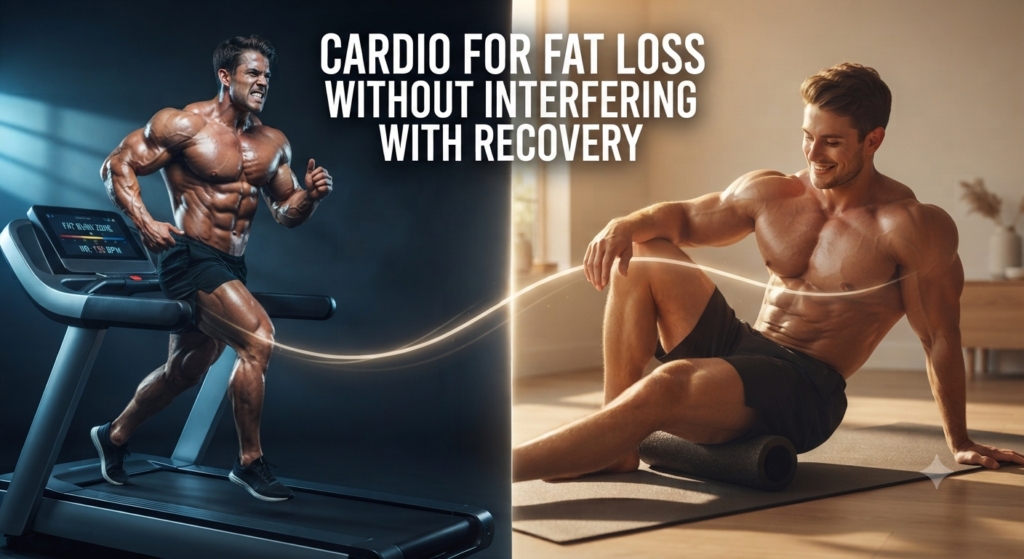
Cardio for Fat Loss Without Interfering With Recovery sounds impossible when you’re lifting four times per week. Your legs feel heavy. Your workouts suffer. The key is matching cardio intensity to your recovery capacity.
Why Most People Choose the Wrong Type of Cardio for Fat Loss Without Interfering With Recovery
You grab the rowing machine after leg day and go hard for 20 minutes. This is wrong. High-intensity cardio immediately after lifting can interfere with recovery. Your nervous system needs rest. Your muscles need repair time. Adding more stress delays both processes.
The fix? Pick low-intensity steady state cardio instead. Walking on an incline works. Light cycling works. Swimming at a comfortable pace works. Low-intensity steady state exercise primarily uses stored fat as fuel during these longer sessions.
You burn calories. You improve blood flow to sore muscles. You avoid adding fatigue that kills tomorrow’s workout.
The Six-Hour Rule for Scheduling Cardio for Fat Loss Without Interfering With Recovery
If you want to get stronger, separate your cardio and strength workouts by more than six hours. This matters more than you think. Your body sends different signals after lifting versus running. When you lift weights, you signal your body to build muscle tissue. Aerobic exercise signals improved oxygen efficiency.
These signals can clash at the molecular level. AMPK increases rapidly after high-intensity endurance training and takes at least 3 hours to return to baseline. Meanwhile, mTORC1 activity lasts 18 hours after strength training. The overlap creates problems.
Morning cardio and evening lifting solves this. Separate days work even better. You give each session the energy it deserves.
For further details see
Active Recovery for Lifters: Methods, Timing & Limits
Heart Rate Zones That Maximize Cardio for Fat Loss Without Interfering With Recovery
Low intensity steady state cardio maintains a heart rate around 50 to 70 percent of maximum heart rate. Calculate your max by subtracting your age from 220. A 30-year-old has a max of 190 beats per minute. Their zone 2 range sits between 95 and 133 beats per minute.
This feels too easy at first. You can hold a conversation. Your breathing stays controlled. LISS keeps you in a fat-burning heart rate zone for the entire workout duration. You accumulate volume without wrecking your central nervous system.
Contrast this with zone 4 or 5 training. You gasp for air. Your legs burn. You add fatigue that directly competes with strength training recovery.
Volume and Duration Guidelines for Cardio for Fat Loss Without Interfering With Recovery
Limit cardio to 2-4 sessions per week, 20-45 minutes each, for most muscle-building goals. This range burns extra calories without creating a recovery deficit. Push beyond this and problems start.
Performing 60-90 plus minutes of cardio daily on top of strength training creates a recovery deficit. Your body can’t keep up. Sleep quality drops. Strength plateaus. Muscle growth stalls.
Three 30-minute walks per week adds 90 minutes of movement. That creates a meaningful calorie deficit. It doesn’t compromise your ability to squat heavy on Friday.
Add one more session if fat loss stalls. Drop a session if strength starts declining. Adjust based on what your body tells you.
Where HIIT Fits Into Cardio for Fat Loss Without Interfering With Recovery
High-intensity interval training is extremely fatiguing and directly competes with strength training for recovery resources. This doesn’t mean avoid it completely. It means use it sparingly. Limiting HIIT to 1-2 sessions per week and avoiding close proximity to heavy leg strength days reduces interference.
Schedule HIIT on upper body days if you must include it. Your legs stay fresh for squat sessions. Your systemic fatigue stays manageable.
Better yet, save HIIT for specific training blocks. Use it when fat loss becomes the primary goal. Drop training frequency to three days per week. Add two HIIT sessions on off days. This works for short periods.
Cardio Placement Within the Same Session for Fat Loss Without Interfering With Recovery
Lifting first preserves your strength performance. Performing resistance training first allows you to use all the energy for heavy lifting. Your form stays sharp. Your power output stays high.
A 20-minute session after lifting is often sufficient to trigger fat burning without causing excessive fatigue. Keep the intensity low. Think of it as active recovery rather than cardio training.
Zone 2 walking for 15 minutes post-workout enhances blood flow. Cardio after resistance training can promote blood flow and aid recovery. This speeds nutrient delivery to damaged muscles.
Never do cardio before lifting if strength matters. You arrive at the squat rack pre-fatigued. Your performance suffers immediately.
How Different Cardio Modes Affect Recovery From Strength Training
Running-based endurance training has a more obvious interference effect on muscle hypertrophy than cycling. The eccentric muscle damage from running impacts leg recovery more severely. Your quads take a beating from both activities.
Cycling allows you to control impact. Upper body ergometers remove leg stress entirely. Rowing hits everything but lets you modulate intensity precisely.
Walking remains king for recovery. Zero impact. Easy to sustain for 30-60 minutes. You can do it daily without consequence. Add an incline to increase calorie burn without adding joint stress.
Swimming works if you have access. The water supports your body weight. Joint stress stays minimal even during longer sessions.
Nutrition Timing Around Combined Training Sessions
Recovery nutrition plays a huge role in preventing any interference between cardio and strength work. Protein after lifting matters more than ever. Aim for 30-40 grams within two hours.
Carbohydrates refill glycogen stores depleted by both activities. Don’t skimp here. Your body needs fuel to recover from the combined stress.
Eating enough total calories makes everything easier. Someone adds excessive cardio while in a caloric deficit, loses muscle, and concludes cardio killed gains. In reality, insufficient calories caused the problem.
Track your weight weekly. Losing more than 1% of body weight per week signals too much stress. Scale back cardio volume before cutting calories further.
When Training Status Changes the Interference Effect
Based on existing data, there’s little concern for an interference effect unless total workload exceeds recovery status, particularly for untrained individuals. Beginners make gains doing almost anything. The interference effect barely applies.
Three recent meta-analyses found that concurrent training did not compromise strength or hypertrophy gains significantly when programmed properly. This reassures most lifters. You’re not sacrificing muscle by adding cardio.
Advanced lifters face more constraints. Recovery capacity becomes the limiting factor. Some interference is acceptable trade-off for higher calorie burn when fat loss is the goal.
Your training age determines how conservative you need to be. Five years of consistent lifting? Monitor recovery carefully. Six months of training? Add cardio without overthinking it.
Signs You’re Doing Too Much Cardio for Your Recovery Capacity
Strength drops over multiple sessions. You hit 225 for eight reps three weeks ago. Now you get six reps. This signals accumulated fatigue.
Sleep quality declines. You wake up multiple times. You don’t feel rested. Your resting heart rate climbs five beats per minute above baseline. These are recovery red flags.
Soreness lasts longer than 48 hours. Motivation disappears. You dread the gym. Leave at least 48 hours between resistance training sessions for major muscle groups. If cardio prevents this, you’re doing too much.
Cut one cardio session immediately. Drop intensity on remaining sessions. Prioritize sleep for one week. Reassess after this recovery period.
Frequently Asked Questions
Can I do cardio every day while lifting weights?
Yes, if you keep intensity very low and sessions under 30 minutes. Walking daily doesn’t interfere with strength training. Higher intensity cardio needs rest days between sessions.
Should I do cardio on rest days from lifting?
Light cardio on rest days promotes active recovery without adding significant fatigue. Keep heart rate in zone 2. Avoid anything that leaves you breathless or extremely sweaty.
How long should I wait after cardio to lift weights?
Wait at least six hours between cardio and strength training for best results. Morning cardio and evening lifting works well. This prevents residual fatigue from compromising your lifts.
Does walking count as cardio for fat loss?
Walking absolutely counts and often works better than intense cardio for fat loss. It burns calories without creating recovery demands. You can walk 60 minutes daily without interfering with strength training.
What heart rate zone burns the most fat without affecting recovery?
Zone 2, which sits at 60-70% of maximum heart rate, burns fat effectively. This intensity feels conversational. It doesn’t tax your nervous system or compete with strength training recovery.
Start with three 30-minute zone 2 cardio sessions this week and track how your strength progresses.