

The FFMI Score That Reveals If Your Gains Are Real
The FFMI Calculator separates actual muscle development from body weight by analyzing lean mass and height, giving you an accurate picture of physique quality. This tool helps you understand genetic potential versus pharmaceutical assistance in seconds, making it essential for serious lifters.
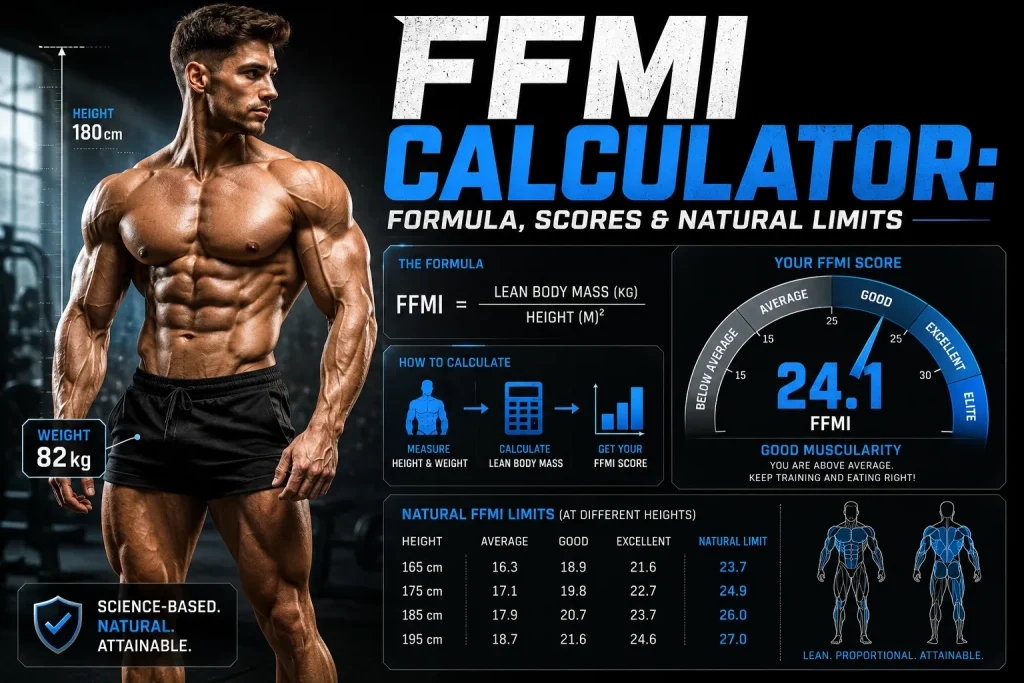
You look at two lifters with the same weight and wonder who built more muscle. The FFMI Calculator: Formula, Scores & Natural Limits reveals the truth behind their physiques. Body fat percentage changes everything about how muscle shows on your frame. This tool separates genetic gifts from pharmaceutical help in seconds.
What the FFMI Calculator: Formula, Scores & Natural Limits Actually Measures
Fat Free Mass Index compares your lean body mass to your height. It removes body weight from the equation entirely. A 200-pound man at 20% body fat carries 160 pounds of lean mass. Another 200-pound man at 10% fat carries 180 pounds of lean mass. They weigh the same but their muscle development differs completely.
The formula divides your fat-free mass in kilograms by your height in meters squared. You then add a correction factor based on your height. Taller lifters get a small adjustment because the basic formula slightly favors shorter builds. The math looks complex but any online calculator handles it instantly.
Your body fat percentage matters more than most people think. Because you will need your body fat percentage for your FFMI calculator go to Here for your Body Fat Calculator .
A five percent error in estimating body fat creates a three-point swing in FFMI. That difference separates average from exceptional results. Get a proper DEXA scan before you celebrate your numbers.
FFMI Calculator: Formula, Scores & Natural Limits for Different Training Levels
An FFMI below 18 suggests you just started lifting seriously. Most untrained men sit between 16 and 17. Women naturally score about three points lower across all categories. These aren’t insults about your genetics.
Scores between 18 and 20 show solid training results. You’ve been consistent for at least two years. Your nutrition supports muscle growth. People notice you lift weights when you wear fitted shirts.
The 20 to 22 range marks exceptional natural development. Maybe five percent of serious lifters reach this level without drugs. You’ve optimized training, diet, and recovery for years. Genetics played a role too.
Anything above 25 raises questions about natural status. Research on drug-tested athletes rarely shows scores past 25. The upper limit for natural lifters sits around 25 to 26 FFMI. Some researchers argue even 24 represents the true ceiling for most people.
Why the FFMI Calculator: Formula, Scores & Natural Limits Beats BMI
Body Mass Index calls muscular athletes obese. It treats fat and muscle as identical. A lean bodybuilder gets the same “overweight” label as someone carrying excess body fat. The system breaks down completely for anyone who trains.
FFMI separates lean mass from fat mass before doing any comparison. Height still factors in but muscle gets measured directly. You can track muscle gain while losing fat. BMI would show this progress as nothing or even register it backwards.
Doctors still use BMI because it needs only height and weight. No body fat testing required. FFMI demands more precise measurements. That extra effort reveals what’s actually happening inside your body.
How Body Fat Errors Wreck Your FFMI Calculator: Formula, Scores & Natural Limits
Handheld bioelectrical impedance analysis (BIA) devices swing five percentage points in either direction due to hydration status and electrolyte balance. You drink water and your body fat “drops” two percent without any actual composition change. Skinfold calipers work better but require skill and consistent pinch sites across triceps, biceps, suprailiac, and abdominal measurements. Most gym trainers lack both the technical proficiency and standardized training protocols. Dual-energy X-ray absorptiometry (DEXA) and hydrostatic weighing provide superior accuracy but demand professional facilities.
Overestimating body fat makes your FFMI look worse than reality. You think you’re 15% but you’re really 12%. Those three percentage points add seven pounds to your calculated lean mass. Your score jumps a full point.
Underestimating fat is more common and more disappointing. Men routinely think they’re 12% when they’re actually 18%. The calculator shows average results even though you’ve trained hard for years. Your actual muscle development might be exceptional.
DEXA scans cost between 50 and 150 dollars in most cities. They measure bone density, lean mass, and fat mass separately. The data feeds directly into FFMI calculations without guesswork. Schedule one every six months if you track progress seriously.
FFMI Calculator: Formula, Scores & Natural Limits Across Different Sports
Bodybuilders peak around 24 to 26 FFMI at competition weight. They drop to extreme body fat levels for shows. Off-season measurements tell a different story with higher fat percentages. The same athlete might show a 22 FFMI in the off-season.
Powerlifters often score lower despite moving bigger weights. They carry more body fat year-round. A 20% body fat percentage is normal for strength athletes. Their absolute strength doesn’t translate directly to FFMI scores.
Endurance athletes rarely break 19 FFMI. Distance running and cycling don’t build substantial muscle mass. Carrying extra lean tissue costs energy during long events. These athletes optimize for different physical adaptations entirely.
CrossFit competitors typically land between 20 and 23. They balance muscle mass with metabolic conditioning. Too much size hurts gymnastics movements and running performance. Their training splits the difference between strength and endurance.
Natural Limits the FFMI Calculator: Formula, Scores & Natural Limits Reveals
Steroid users routinely exceed 27 FFMI while maintaining visible abs. Natural lifters hit a wall around 24 to 25. Anabolic drugs change protein synthesis rates and nitrogen retention. The math doesn’t lie about these differences.
Some researchers studied Mr. America winners from the 1940s and 1950s. These pre-steroid era champions averaged 25.4 FFMI at competition. Modern natural bodybuilding shows nearly identical numbers. The human body hasn’t evolved past these limits.
Claiming natural status with a 28 FFMI insults everyone’s intelligence. Photos can hide body fat percentages through lighting and angles. The calculator works from actual measurements instead of visual tricks. Numbers expose what images conceal.
Genetics create a three to four point range within natural limits. Some men reach 26 FFMI naturally with perfect training and elite genetics. Most top out at 22 or 23 despite years of effort. Both results deserve respect.
Tracking Progress with FFMI Calculator: Formula, Scores & Natural Limits
Your first FFMI measurement establishes a baseline. Write down the date, your exact body fat percentage method, and the source. Three months later, measure everything again using identical methods. Compare the change in FFMI, not body weight.
A 0.5 point gain in FFMI per year shows excellent natural progress. Beginners sometimes add a full point in their first year. Advanced lifters fight for 0.2 points annually. These small numbers represent significant muscle gain.
Fat loss reveals FFMI changes you couldn’t see before. You maintained muscle while dropping 15 pounds of fat. Your FFMI stayed constant but moved you into a leaner category. This counts as real progress even without muscle gain.
Muscle gain while maintaining body fat percentage always improves FFMI. You went from 180 pounds at 12% fat to 190 pounds at 12% fat. Those 10 pounds added pure lean mass to your frame. Your score jumped nearly a full point.
Common Mistakes When Using FFMI Calculator: Formula, Scores & Natural Limits
People compare their current FFMI to stage-ready bodybuilders. Those athletes dehydrated themselves and depleted glycogen for photos. Their everyday FFMI runs two points higher than competition measurements. You’re competing against an illusion.
Ignoring height corrections throws off the entire calculation. A six-foot-four lifter needs the adjustment factor. Skipping it understates their actual development. Short lifters face the opposite problem without corrections.
Trusting gym scale body fat readings creates garbage data. These machines assume average hydration and bone density. Athletes fall outside normal ranges on both factors. Your calculated FFMI becomes meaningless with bad inputs.
Setting unrealistic FFMI goals wastes years of training time. You can’t force your body past genetic ceilings naturally. A 23 FFMI represents elite development for most people. Chasing 26 without drugs leads to frustration and eventual quitting.
Age Changes Your FFMI Calculator: Formula, Scores & Natural Limits
Muscle mass peaks between ages 25 and 35 for most men. Testosterone levels support maximum protein synthesis during this decade. Your highest natural FFMI probably occurs in this window. Earlier or later years face hormonal disadvantages.
Men over 40 lose about one percent of muscle mass yearly without resistance training. Lifting slows this decline but doesn’t stop it completely. Your FFMI at 50 might drop two points from your 30-year-old peak. This reflects biology, not training failure.
Women experience similar patterns shifted about five years earlier. Hormonal changes around menopause affect muscle retention significantly. Consistent training matters more after 45 than during your 20s. The effort required for maintenance increases with age.
Teenagers under 20 still develop their natural muscle base. Comparing your 18-year-old FFMI to adult standards makes no sense. Most young lifters add muscle into their mid-20s regardless of training. Patience wins here.
Frequently Asked Questions
What is a good FFMI score for a natural lifter?
A score between 20 and 22 shows excellent natural development. Most serious lifters never exceed 23 without drug assistance. Scores above 25 almost always indicate steroid use.
How accurate is FFMI for women?
Women typically score three to four points lower than men. A female FFMI of 17 to 19 represents advanced natural training. The same natural limits apply with adjusted reference points.
Can I improve my FFMI in a calorie deficit?
Your FFMI stays the same if you maintain muscle during fat loss. The score might appear to increase as body fat measurements become more accurate. True muscle gain in a deficit is extremely rare.
Does bone structure affect FFMI calculations?
The formula accounts for height but not frame size directly. Wide-shouldered lifters don’t get extra points. Bone mass counts as lean mass in the calculation.
How often should I recalculate my FFMI?
Measure every three to six months for meaningful comparisons. Weekly calculations show mostly water weight and measurement errors. Annual checks work fine for advanced lifters with slower progress.
Calculate your current FFMI today and set realistic muscle-building goals based on natural limits. Here is your FFMI Calculator and your Body Fat Calculator