

Why Drop-Set Deloads Backfire Without This One Rule
The Drop-Set Minimalist Deload reduces weight by 30% and uses single sets per movement, cutting volume roughly 60% while keeping gym frequency intact. This method recovers your joints and sleep without the detrained feeling that comes from aggressive deloads.
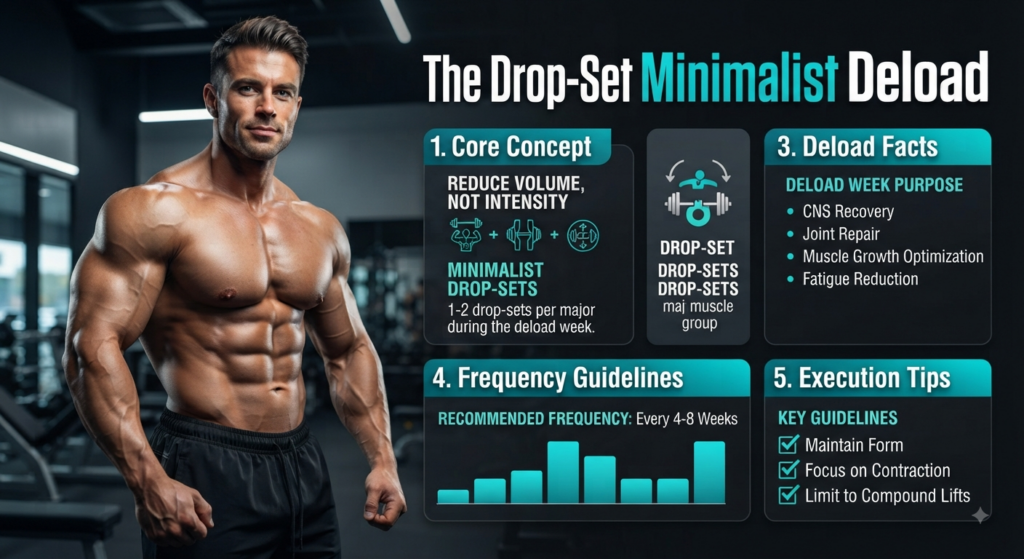
You finish a training block and your joints hurt. Your sleep is worse than usual. The Drop-Set Minimalist Deload fixes this without killing your progress.
What The Drop-Set Minimalist Deload Actually Does
This method cuts training volume by roughly 60 percent. You keep frequency the same. You still hit the gym three or four times per week. Your body gets a break without losing the habit.
The trick is simple. You reduce weight on every exercise by about 30 percent. You perform one set per movement instead of three or four. Your nervous system recovers fast. Your muscles stay engaged enough to maintain size.
Most deloads either cut too much or too little. Cut too much and you feel detrained after a week. Cut too little and you don’t actually recover. The Drop-Set Minimalist Deload sits in the perfect middle zone.
Why The Drop-Set Minimalist Deload Works Better Than Standard Deloads
Standard deloads often keep intensity high and just lower volume. You still lift heavy weights. Your joints don’t get the relief they need. Tendon inflammation stays active.
The Drop-Set Minimalist Deload reduces both volume and load together. Lighter weights mean less stress on connective tissue. One set per exercise means less accumulated fatigue. Your tendons actually heal during this week.
Another problem with normal deloads is mental burnout. You walk into the gym and lift heavy again. It feels like another hard training day. The psychological break never happens.
Dropping weight by 30 percent changes the entire feel. Sessions become easy and quick. You finish in 30 minutes instead of 90. The mental reset is real.
How To Program The Drop-Set Minimalist Deload Into Your Training
Schedule this deload every fourth or fifth week. Athletes over 35 might need it every third week. Younger lifters can sometimes push to week six. Listen to your body.
Take your working weight from the previous week. Multiply by 0.7 to get your deload weight. A 100-kilogram squat becomes a 70-kilogram squat. A 60-kilogram bench press becomes 42 kilograms.
Perform just one working set per exercise. Skip warm-up sets beyond a few light reps. Get in and get out. The session should feel almost too easy.
Keep the same exercise selection. Don’t swap movements during a deload week. Your body needs familiar patterns with reduced stress. Changing exercises adds new stimulus you don’t want.
Rest periods don’t matter much here. Take two minutes between exercises. You’re not chasing a pump. You’re maintaining movement quality while recovering.
Signs You Need The Drop-Set Minimalist Deload Right Now
Your warm-up sets feel heavier than they should. A weight that felt light two weeks ago now grinds. This shows accumulated fatigue in your nervous system.
Sleep quality drops even though your schedule hasn’t changed. You wake up more often at night. Morning heart rate sits five to ten beats higher than normal. These are clear overtraining markers.
Joint pain appears in multiple areas at once. Your knees ache and your elbows hurt too. One sore joint might be an injury. Three or four means systemic inflammation.
Motivation disappears completely. You used to look forward to training sessions. Now you find excuses to skip them. This is mental fatigue talking.
Performance plateaus for three straight weeks. You can’t add weight or reps. Your body is telling you something. The Drop-Set Minimalist Deload resets the system.
Common Mistakes People Make With The Drop-Set Minimalist Deload
Some lifters add extra exercises during the deload week. They figure they have extra energy. They throw in arm work or ab circuits. This defeats the entire purpose.
The point is to reduce total stress. Adding movements increases stress again. Stick to your main lifts only. Leave everything else out.
Another mistake is lifting the deload weight for multiple sets. You think one set feels too easy. You add a second and third set. Now you’ve recreated a normal training day.
Trust the process. One set is enough. The low volume is intentional. Your body recovers between sessions, not during them.
Some people skip the deload entirely when they feel good. This is backwards thinking. Deloads prevent problems before they start. Waiting until you feel terrible means you waited too long.
Get The Best Natural Supplements for All Your Needs!
What Happens To Your Body During The Drop-Set Minimalist Deload
Muscle protein synthesis stays elevated for 48 hours after training. One set per exercise is enough to trigger this response. You maintain muscle mass easily.
Glycogen stores in your muscles refill completely. Hard training depletes glycogen week after week. You never fully top off the tank. The deload week lets glycogen saturate your muscles again.
Cortisol levels drop back to baseline. Chronic training keeps stress hormones slightly elevated. A week of easy work brings them down. Testosterone ratio improves as a result.
Microscopic tears in muscle fibers finish healing. Regular training creates damage faster than repair happens. The deload tips the balance toward recovery. You come back stronger.
Connective tissue adapts slower than muscle. Tendons need lower loads to catch up. The Drop-Set Minimalist Deload gives them that window. Tendinopathy risk decreases.
How The Drop-Set Minimalist Deload Fits Different Training Styles
Powerlifters can use this between competition prep blocks. Run it after a peak and before starting volume work again. Keep the main three lifts. Drop accessories completely.
Bodybuilders benefit by maintaining muscle bellies without joint wear. Drop weight on compound movements. Skip isolation work entirely this week. Your smaller muscles recover faster anyway.
CrossFit athletes should reduce barbell loads and cut metcons to 10 minutes. Keep skill work light. Focus on movement quality over intensity. Your cardio base won’t disappear in seven days.
Strength generalists running full-body routines just reduce load and sets. Keep hitting each muscle group three times weekly. The frequency maintains the adaptation signal.
Olympic weightlifters drop to technique work at 60 percent. One clean and one snatch per session. Skip max effort attempts completely. Your CNS needs this break most.
Measuring Progress After The Drop-Set Minimalist Deload
Your first session back should feel noticeably better. Warm-up weights move faster than before the deload. Bar speed is the clearest indicator of recovery.
Expect to match or beat your pre-deload numbers immediately. Some lifters add five kilograms to their squat right away. The supercompensation effect is real.
Track your rate of perceived exertion during sets. A weight that felt like an 8 out of 10 might now feel like a 6. This means your work capacity increased.
Sleep quality should normalize within two nights. Morning heart rate drops back down. Resting pulse below 60 is a good sign for most people.
Joint pain should disappear or reduce significantly. If pain persists after a proper deload, you might have a real injury. See a professional in that case.
Frequently Asked Questions
How often should I use The Drop-Set Minimalist Deload?
Plan a deload every four to five weeks for most lifters. Older athletes may need one every three weeks. Younger lifters can sometimes extend to six weeks between deloads.
Can I do cardio during The Drop-Set Minimalist Deload week?
Light cardio is fine but keep intensity low. Walking or easy cycling works well. Avoid high-intensity intervals or long runs that create additional fatigue.
Will I lose muscle during The Drop-Set Minimalist Deload?
No, you won’t lose muscle in one week. One set per exercise maintains the growth signal. Your body focuses on recovery instead of breakdown.
What if I feel fully recovered after three deload days?
Complete the full seven days anyway. Deep recovery happens in tissues you can’t feel. Cutting the deload short leaves adaptation incomplete.
Should I eat differently during The Drop-Set Minimalist Deload?
Keep protein intake the same as normal training weeks. You can slightly reduce carbs if you want. Don’t create a large calorie deficit during recovery periods.
Schedule your next Drop-Set Minimalist Deload right now before you forget.