

Why Flexible Dieting Beats Strict Meal Plans
Traditional meal plans fail because they force you to eat the same boring foods daily, but flexible dieting lets you hit your nutrition targets with foods you actually enjoy. By using simple math to fit any food into your calorie budget, you can finally stick to a diet that works with your real life.
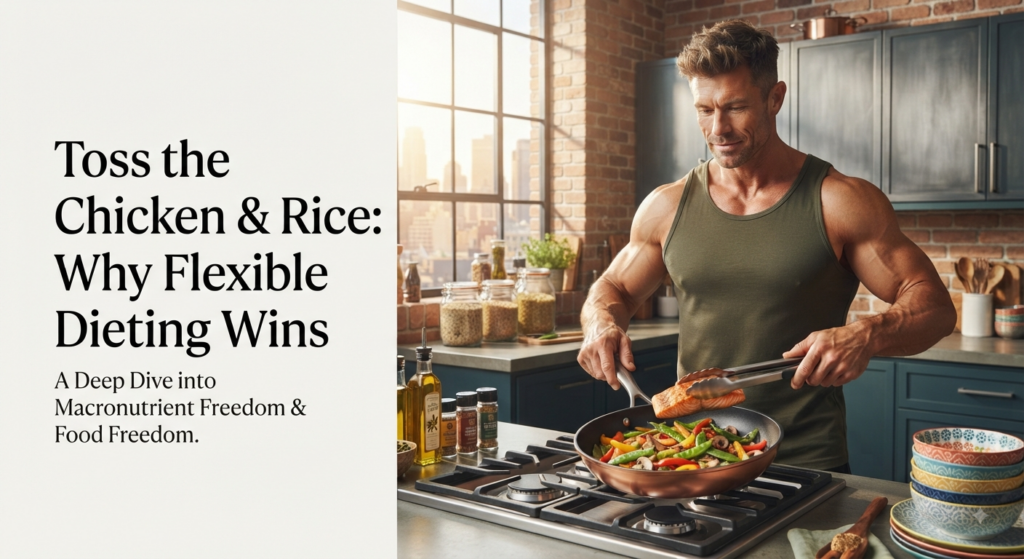
Toss the Chicken & Rice: Why Flexible Dieting Wins because meal plans fail ninety percent of people. You eat plain food for two weeks. Then you quit and blame yourself. The real problem is the plan, not your discipline.
Toss the Chicken & Rice: Why Flexible Dieting Changes Everything
Traditional diet plans lock you into eating the same meals daily. You measure chicken breasts and weigh brown rice portions. This works for bodybuilders preparing for competitions. It fails for normal people with jobs and families.
Flexible dieting flips the script completely. You hit daily targets for protein, carbs, and fats. The food sources? You choose them. Want pizza on Friday? Fit it into your numbers. Craving ice cream? Make it work within your calorie budget.
The approach uses simple math instead of rigid rules. Your body needs certain amounts of each macronutrient. How you deliver those nutrients is up to you. No banned foods exist in this system.
Most people quit diets because restriction breeds rebellion. You tell yourself bread is forbidden. Suddenly you think about bread constantly. Within days you eat an entire baguette. Flexible dieting removes this psychological trap entirely.
How Toss the Chicken & Rice Methods Actually Work
You start by calculating your daily calorie needs. Online calculators provide decent estimates based on age and activity. From there you set macronutrient targets. Protein typically lands around one gram per pound of body weight.
Carbs and fats split the remaining calories. Active people need more carbs for training energy. Sedentary folks often feel better with slightly higher fat intake. Neither approach is wrong.
Track everything you eat using a phone app. MyFitnessPal and similar tools make this process simple. Scan barcodes or search their massive food databases. The app calculates your macro totals automatically.
Hit your protein target first every single day. This preserves muscle mass during fat loss. Carbs and fats matter less for body composition. Get close to your targets without obsessing over perfection.
Weekend meals become guilt-free when planned properly. You save calories during the week for Saturday dinner. Or you eat maintenance calories on social occasions. Your weekly average determines results, not single meals.
Why Traditional Meal Plans Fail Modern Lives
Meal prep companies sell the fantasy of perfect nutrition. They deliver containers of measured portions weekly. You eat what arrives regardless of hunger or preference. This removes all food autonomy.
Real life includes birthday parties and work lunches. Traditional plans offer no strategy for these situations. You either skip social events or break your diet. Both options feel terrible.
Chicken and broccoli gets boring by day four. Your taste buds crave variety and flavor. Boredom leads to binge eating when willpower runs out. The cycle repeats endlessly for serial dieters.
Restaurant meals become impossible to navigate on rigid plans. Does that sauce contain sugar? How much oil did they use? Uncertainty creates anxiety around eating out. Food should bring joy, not stress.
Toss the Chicken & Rice: Why Flexible Dieting Wins comes down to sustainability. You can track macros at any restaurant. Estimate portion sizes and log your best guess. Close enough beats giving up entirely.
The Science Behind Flexible Eating Approaches
Your body breaks all food into basic components through digestion and metabolism. Proteins are broken down into amino acids for muscle repair and enzyme synthesis. Carbohydrates convert into glucose for energy and glycogen storage. Dietary fats become triglycerides for hormone production and cellular function. From a body composition perspective, total caloric intake and macronutrient ratios matter far more than whether calories come from whole foods or processed sources. This is why the IIFYM (If It Fits Your Macros) approach works—metabolic pathways process macro targets identically regardless of food source.
A study compared flexible dieters to rigid meal planners. Both groups ate identical macro totals. The flexible group showed better adherence after twelve weeks. They also reported less food-related anxiety.
Metabolism responds to total energy intake, not meal timing. Eating six small meals offers no advantage over three. Your digestive system works continuously regardless of feeding patterns. Convenience should guide your meal frequency.
Processed foods fit into healthy diets when portions align. Eighty percent whole foods covers micronutrient needs easily. The remaining twenty percent prevents feelings of deprivation. This balance creates long-term consistency.
Weight loss requires a calorie deficit over time. Creating that deficit through flexible food choices improves compliance. Better compliance means you actually reach your goal. The perfect plan you abandon helps nobody.
Toss the Chicken & Rice: Why Flexible Dieting Wins for Fat Loss
Fat loss happens when you eat fewer calories than you burn. The specific foods providing those calories matter surprisingly little. Your body mobilizes stored fat to cover the energy shortfall. This process works identically whether you eat salmon or tacos.
Protein intake preserves muscle during calorie deficits. Aim for high protein regardless of your food preferences. Greek yogurt, protein powder, and lean meats all work. Even plant sources like lentils contribute meaningful amounts.
Satiety varies wildly between food types and individuals. Some people feel full eating potatoes. Others need fatty foods to feel satisfied. Flexible dieting lets you discover your personal satiety triggers. You adjust food choices based on actual hunger patterns.
Energy levels fluctuate based on carb timing for many. Athletes perform better with pre-workout carbohydrates. Office workers often prefer fats for steady afternoon energy. Experiment within your macro targets to find your preference.
The psychological freedom matters more than most realize. Food guilt disappears when nothing is forbidden. You ate dessert but stayed within your numbers? That’s a win, not a failure. This mindset shift prevents the shame spiral.
Common Mistakes When Starting Flexible Nutrition
New trackers obsess over hitting exact macro numbers. They stress when ending the day two grams over. This defeats the entire purpose of flexibility. Get within five grams of each target and move on.
Some people use flexibility as permission to eat junk constantly. Your body needs vitamins and minerals from whole foods. Hitting protein while eating only candy creates micronutrient deficiencies. Balance remains important even with flexible approaches.
Underestimating portions sabotages progress silently. Restaurant meals contain far more calories than you think. That “small” pasta dish often exceeds 1000 calories easily. Use a food scale at home to calibrate your estimates.
Skipping meals to save room for huge dinners backfires. You arrive ravenous and overeat past your targets. Spreading calories across the day prevents this problem. Hunger management matters more than meal timing.
Tracking fatigue hits after several weeks of diligent logging. Taking diet breaks every eight to twelve weeks helps. Eat at maintenance calories for one to two weeks. Then resume your deficit refreshed.
Toss the Chicken & Rice: Why Flexible Dieting Wins Long Term
Five-year diet success rates hover around five percent for traditional plans. People lose weight then regain it plus extra pounds. The restriction-binge cycle damages metabolism over time. Breaking this pattern requires a fundamentally different approach.
Flexible dieting teaches actual nutrition knowledge through tracking. You learn which foods contain protein naturally. You discover that snacks often hide shocking fat content. This education lasts forever, unlike temporary meal plans.
Social life integration determines whether any diet survives. You need to eat with friends without anxiety. Flexible approaches allow restaurant meals and holiday dinners. Life happens around food in every culture.
Maintenance becomes effortless after months of macro tracking. You understand portion sizes instinctively by then. Many people transition to intuitive eating successfully. The tracking phase builds skills that outlast the process.
Your relationship with food improves dramatically over time. Food stops being good or bad morally. It becomes fuel with varying nutritional profiles. This neutral perspective eliminates years of diet trauma.
Tools and Strategies for Tracking Success
Digital food scales cost fifteen dollars and change everything. Weigh foods before cooking for accurate tracking. Cooked weights vary based on water content. Raw weights provide consistent data across meals.
Pre-logging tomorrow’s meals saves daily decision fatigue. You wake up knowing exactly what you’ll eat. Adjustments happen easily if plans change. This strategy prevents end-of-day macro scrambles.
Building a database of frequent meals speeds tracking dramatically. Save restaurant orders and home recipes as custom entries. One-click logging replaces manual entry after several weeks. The process becomes nearly automatic.
Weekly average tracking smooths out daily fluctuations. Some days you eat more, others less naturally. Your weekly total matters more than daily perfection. This perspective reduces unnecessary stress around single meals.
Supplements can fill gaps when whole food intake falls short. Protein powder makes hitting targets easier on busy days. Multivitamins provide insurance against micronutrient deficiencies. Neither replaces actual food in your diet.
Adapting Flexible Methods to Your Lifestyle
Shift workers need different strategies than nine-to-five employees. Your eating window might span midnight to 8am. Macros remain the same regardless of clock time. Adjust meal timing to match your actual schedule.
Parents eating with kids can track family-style dinners. Weigh the full recipe, then your personal portion. Calculate macros based on your percentage of total. This works for casseroles, soups, and mixed dishes.
Travel complicates tracking but doesn’t eliminate it completely. Pack protein bars and portable snacks for flights. Estimate restaurant meals using database entries. Perfection isn’t possible, but effort still matters.
Budget constraints don’t prevent flexible dieting at all. Rice, beans, eggs, and frozen vegetables cost very little. Expensive meal prep services are completely unnecessary. Simple whole foods provide all needed nutrients cheaply.
Toss the Chicken & Rice: Why Flexible Dieting Wins applies to every income level. Track whatever foods you can afford to buy. The principle works identically regardless of grocery budget. Consistency matters more than food quality for fat loss.
Frequently Asked Questions
Do I need to track macros forever to maintain results?
Most people track for three to six months initially. This builds intuition around portion sizes and food contents. Many transition to mindful eating after learning these skills. Others prefer continued tracking for accountability and consistency.
Can flexible dieting work for muscle gain too?
Absolutely, the same principles apply in a calorie surplus. You eat above maintenance while hitting high protein targets. Food choices remain flexible as long as macros align. Muscle growth requires consistency over many months regardless of approach.
What if I don’t want to weigh food constantly?
Start by weighing everything for two to four weeks. This calibrates your estimation abilities for common portions. Then switch to visual estimates using your new knowledge. Occasional weigh-ins confirm your estimates remain accurate over time.
How do I handle meals I didn’t prepare myself?
Search restaurant names in tracking apps for database entries. Use similar items when exact matches don’t exist. Add an estimated 20 percent to account for cooking oils. Close estimates beat skipping meals from your log entirely.
Will eating treats daily prevent fat loss results?
Not if you stay within your calorie and macro targets. Daily desserts fitting your numbers won’t stop progress. The total energy balance determines fat loss outcomes. Food quality affects health markers but not weight changes directly.
Start tracking your current eating habits for three days without changing anything to understand your baseline intake.