
Why Flexibility Trainers Are Hiding This Deep-Stretch Secret
Deep-stretch training is blowing up online because research proves it delivers 30 to 50 percent more muscle growth compared to traditional repetitions. Fitness influencers are sharing these stretch-focused exercises on social media, creating viral content that helps people build muscle faster from home.
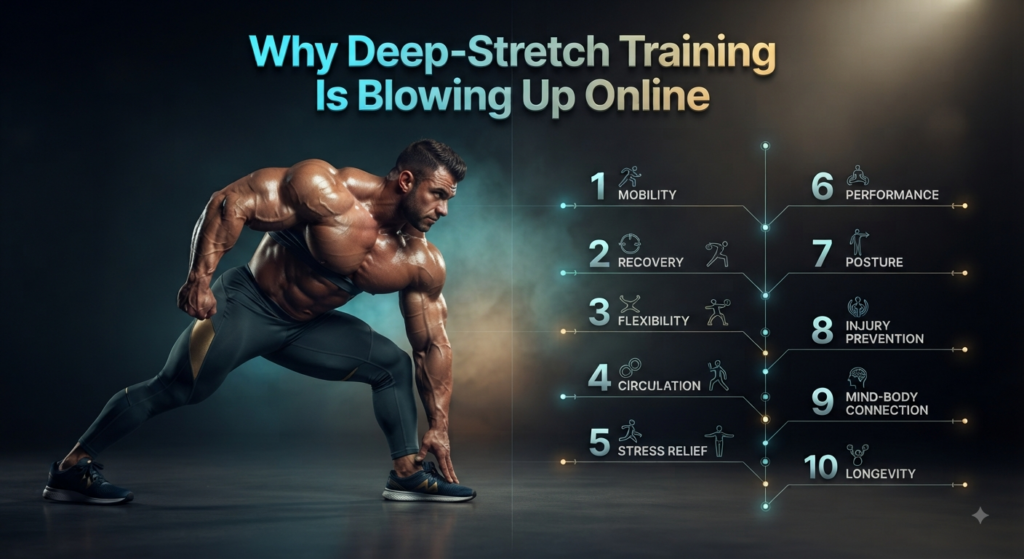
Why deep-stretch training is blowing up online is clear from fitness influencers posting videos where they hold stretches for 20 seconds—clips that rack up millions of views within days as people try the moves at home and wake up the next day feeling tighter muscles everywhere.
Why Deep-Stretch Training Is Blowing Up Online Right Now
Studies confirm that training at longer muscle lengths consistently leads to more muscle growth. Lengthened partials in the stretched position actually resulted in more muscle growth than full range of motion. Research shows stretch-focused training leads to 30 to 50 percent more muscle growth compared to traditional reps. Social media amplified these findings. Coaches started sharing stretch-heavy exercises. The content spread fast.
The assisted stretching industry is growing by more than 20 percent a year. People want results they can see and feel. Deep-stretch training delivers both. The soreness feels different. The pump looks bigger. That makes it perfect for online content.
The Science Behind Why Deep-Stretch Training Is Blowing Up Online
Seated leg curls at long hamstring length grew muscles 14 percent versus 9 percent for short length over 12 weeks. Calf raises in the stretched position grew the medial gastrocnemius 15.2 percent versus 6.7 percent for full range of motion. These numbers tell the whole story. Loading a muscle while it’s stretched triggers more growth.
When a muscle is loaded under tension in a deeply stretched position, passive tension contributes to total mechanical signaling and the titin protein and connective tissue resist stretch and add to the tension. This creates a stronger growth signal. Your body interprets the stretch plus load as damage. It responds by building more tissue.
Exercises that create high tension when a muscle is fully lengthened generally produce more growth than exercises that are hardest in the contracted position. An incline curl beats a preacher curl. An overhead extension beats a pushdown. The deep position wins.
How Influencers Made Why Deep-Stretch Training Is Blowing Up Online Possible
Instagram and TikTok work well for short instructional videos and quick fitness tips because the platform’s feed algorithm prioritizes video completion and watch time. Deep-stretch exercises look dramatic on camera—the extended range of motion catches your eye, and the visible strain on the muscle sells the effort. A 15-second clip communicates intensity and results better than a paragraph ever could. The visual feedback of muscle engagement and the shareable nature of transformation content make deep-stretch training ideal for viral fitness trends.
Creators post before and after comparisons. They show muscle thickness measurements. They film the exercises from angles that highlight the stretch. Comments fill with questions about form and frequency. The algorithm rewards engagement. More people see the content. The cycle continues.
Influencers also simplified the science. They dropped terms like stretch-mediated hypertrophy. Instead they said “go deeper” and “feel the burn at the bottom.” That language works. People understand it immediately. They can apply it the same day.
The Mistakes People Make With Why Deep-Stretch Training Is Blowing Up Online
Training muscles at long lengths creates significant muscle damage and switching your entire routine overnight will cause crippling soreness. Most people ignore this warning. They see a video. They try every exercise at maximum depth. Two days later they can’t walk properly.
The first session of deep-position work will leave you sore so start with bodyweight and add depth across two or three sessions. Smart progression prevents injury. It also keeps you consistent. If you’re too sore to train, you won’t make progress.
Another common error is confusing any stretch with the right stretch. Passive, low-intensity stretch does not appear to confer beneficial changes in muscle size. You need tension. You need load. Just sitting in a split for five minutes won’t build muscle. The resistance matters as much as the position.
Get the Best Natural Supplements for All Your Needs!
Why Deep-Stretch Training Is Blowing Up Online for Home Workouts
Deep deficit push-ups, paused split squats, dead-hang pull-up negatives, and heel-drop calf raises all load the lengthened position. You don’t need a gym. A pair of books under your hands deepens a push-up. A step creates a deficit for calf work. Bodyweight provides the load.
You spend more time under load in the position the research keeps highlighting and it makes lighter loads feel meaningfully harder. This solves the biggest problem with training at home. Most people don’t own heavy dumbbells. Deep-stretch techniques make light weights effective. A 10-pound dumbbell feels brutal when you hold it in a stretched position.
Adding a three-second descent increases time under tension. Pausing for two seconds at the bottom doubles the stretch stimulus. These small changes transform basic movements into serious growth tools. No equipment required.
The Practical Rules for Why Deep-Stretch Training Is Blowing Up Online Success
Prioritize achieving a full, deep stretch on every rep you can. Don’t cut reps short. Don’t bounce out of the bottom. Control the descent. Hold the stretched position. Only then return to the start.
A deep stretch should feel challenging, not painful, and you should not force your joints into uncomfortable positions. There’s a difference between muscle tension and joint strain. Learn to recognize it. If something feels wrong, it probably is. Adjust your form or reduce the depth.
Lengthened partials produce 5 to 15 percent more muscle growth than full range of motion in studies that show effects. That’s real progress. But it’s not magic. You still need to eat enough protein. You still need to sleep. You still need to progress over time. The stretch enhances training. It doesn’t replace fundamentals.
Frequently Asked Questions
Does deep-stretch training work for all muscle groups?
Yes, research shows benefits across hamstrings, calves, quadriceps, triceps, and chest. Some muscles respond better than others. Hip flexors and shoulders show particularly strong results.
How often should you do deep-stretch training each week?
Start with two sessions per muscle group per week. Add a third session only after adapting to the soreness. More isn’t always better with this method.
Can beginners use deep-stretch training safely?
Beginners should start with bodyweight movements and controlled depth. Add load gradually over several weeks. Skip this method entirely if you have joint pain.
What’s the difference between deep-stretch training and regular stretching?
Deep-stretch training uses loaded positions under tension to build muscle. Regular stretching improves flexibility without significant load. They serve completely different purposes.
How long should you hold the stretched position during reps?
Hold for one to two seconds at the deepest point. Longer pauses create more fatigue but don’t necessarily improve results. Focus on control instead of duration.
Pick one exercise you already do and add a two-second pause at the bottom of each rep this week.