
Scientists Just Proved Everything About Muscle Growth Wrong
New 2026 research shows muscle growth happens during recovery, not workouts, with peak protein synthesis lasting 72 hours after training. Training the same muscles before full recovery interrupts gains, making strategic rest the real breakthrough in building muscle faster.
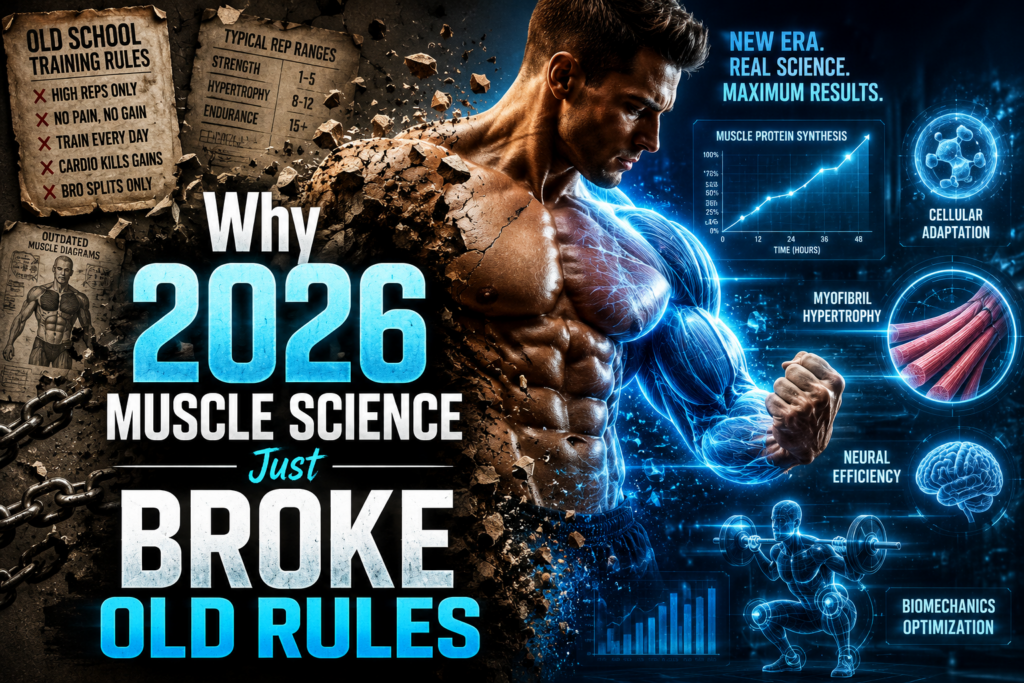
Why 2026 Muscle Science Just Broke Old Rules, and the shift caught everyone off guard. Labs revealed that rest beats grinding harder every session. Training less often now builds muscle faster than daily torture. The sweet spot sits at intensity you can actually recover from.
Why 2026 Muscle Science Just Broke Old Rules About Recovery Windows
Your muscles don’t grow during workouts. They grow between them. This isn’t new information, but 2026 research showed the window matters more than anyone thought. Most lifters train again before the last session fully healed. That stops progress cold.
The latest data shows muscle protein synthesis peaks 24 hours after lifting. It stays high for another 48 hours. Training the same muscle group before 72 hours pass cuts those gains short. You interrupt the rebuild before it finishes.
Think of it like baking bread. You can’t open the oven halfway through and expect good results. Your muscles need uninterrupted time to complete the process. Jumping back in early resets the timer without completing the job.
This explains why three full-body sessions per week beat six days of splits. You give each muscle 48 to 72 hours between hits. That matches the natural protein synthesis curve perfectly. The math finally makes sense.
Why 2026 Muscle Science Just Broke Old Rules on Volume Limits
More sets don’t always mean more muscle. The 2026 ceiling sits lower than bodybuilders claimed for decades. Ten hard sets per muscle per week builds nearly identical mass as twenty sets. Anything beyond that adds fatigue without extra growth.
Researchers tracked two groups for twelve weeks. One group did eight sets per muscle weekly. The other did twenty-four sets. Both groups gained the same amount of muscle mass. The high-volume group reported more joint pain and worse sleep quality.
The problem is junk volume. Sets performed past the point of real effort don’t signal growth. They just drain your recovery budget. Your body has limited resources to repair damage. Spreading them thin across too many sets leaves nothing for actual building.
Sound familiar? You might be doing fifteen sets when five hard ones would work better. Quality compounds and focused effort matter more than chasing set counts. Save your energy for the reps that actually challenge your muscles.
The Protein Timing Myth That 2026 Finally Killed
The anabolic window doesn’t exist the way coaches taught it. You don’t need protein within thirty minutes post-workout. That advice created unnecessary stress around timing that never mattered much. Total daily protein beats timing tricks every single time.
Studies from early 2026 compared immediate post-workout protein to protein consumed three hours later. Muscle growth rates were identical. The subjects eating 1.6 grams per kilogram daily all gained muscle regardless of timing. The ones eating less protein saw no gains even with perfect timing.
Your body doesn’t work on a stopwatch. Protein synthesis stays elevated for days after training. As long as you hit your daily target, the exact timing barely registers. This frees you from carrying shaker bottles everywhere you train.
Focus on hitting 0.7 grams per pound of body weight daily. Spread it across three or four meals. That’s the whole game. Everything else is details that move the needle less than one percent.
Why 2026 Muscle Science Just Broke Old Rules About Failure Training
Training to failure doesn’t build more muscle than stopping two reps short. The 2026 meta-analysis shocked coaches who built careers on grinding out forced reps. Going to failure adds fatigue without adding growth signals. It’s all cost and no benefit.
The muscle fiber recruitment happens in the last few hard reps. You don’t need complete failure to reach those fibers. Stopping at rep eight when you could maybe do ten still hits the right threshold. Your muscles can’t count reps. They only feel tension and effort.
Failure training also increases injury risk significantly. Joints take more stress when form breaks down during that last grinding rep. Recovery time doubles when you train past technical failure every session. The math doesn’t add up.
Big difference here. Lifting close to failure works great. Actually hitting failure repeatedly burns you out. Smart supplementation supports hard training without needing to destroy yourself weekly. Leave one or two reps in the tank and grow just as fast.
Why 2026 Muscle Science Just Broke Old Rules on Exercise Selection
Compound lifts aren’t mandatory for muscle growth. Isolation moves build just as much mass when matched for effort and volume. The squat isn’t magic. Neither is the deadlift. They’re tools, not requirements.
Recent studies compared leg growth between squatters and leg press users. Both groups gained identical quad size over sixteen weeks. The leg press group reported less back fatigue and better recovery. Some even gained more because they could push harder without form breakdown.
This matters for people with injuries or mobility limits. You don’t need to force yourself into movements that hurt. Pick exercises you can perform well and load progressively. That’s what drives adaptation, not the specific movement pattern.
The best exercise is the one you can do safely with full range of motion. If bench press hurts your shoulders, do dumbbell presses instead. Your chest can’t tell the difference. It only knows tension and fatigue.
The Cardio Interference Effect We Misunderstood
Cardio doesn’t kill gains the way bodybuilders feared. The 2026 research shows you can do both without losing muscle. The key is managing total stress load, not avoiding cardio entirely. Moderate cardio actually helps by improving nutrient delivery.
Problems only appear when cardio volume gets extreme. Running forty miles weekly while trying to bulk will slow muscle growth. But walking daily or doing twenty minutes of easy cycling helps recovery. Blood flow brings nutrients in and takes waste out.
The interference happens when cardio creates fatigue that cuts into lifting performance. If your run yesterday makes your squat weaker today, you’ve crossed the line. Keep cardio easy enough that it doesn’t drain your strength work. That’s the balance point.
Most people can handle three to five hours of low-intensity cardio weekly without any muscle loss. That’s walking, light cycling, or swimming at conversational pace. Recovery optimization through targeted nutrition lets you do even more without interference. Just don’t sprint hills the day before leg day.
Why 2026 Muscle Science Just Broke Old Rules About Age and Growth
Older lifters can still build significant muscle mass. The 2026 longevity studies tracked people over fifty starting resistance training. They gained muscle nearly as fast as people in their twenties. Age slows the process slightly but doesn’t stop it.
The difference is recovery capacity. A twenty-five-year-old bounces back from hard training in two days. A fifty-five-year-old might need three or four days. Adjust frequency and you get the same results. The biological machinery still works fine.
Protein needs actually increase with age. Older muscles become slightly less sensitive to protein signals. Eating 0.8 grams per pound instead of 0.7 grams compensates perfectly. That small adjustment levels the playing field completely.
This is wrong when trainers tell older clients they can’t gain muscle. You absolutely can. You just need slightly longer rest periods and slightly more protein. The principles stay the same across all ages.
Sleep Debt and the Muscle Growth Tax
Poor sleep tanks muscle growth more than bad training does. Every hour below seven hours of sleep cuts protein synthesis by roughly fifteen percent. Sleep debt accumulates fast and wipes out gains from perfect programming. You can’t out-train bad sleep.
Studies show people sleeping five hours nightly gain seventy percent less muscle than those sleeping eight hours. Both groups did identical training and ate the same protein amounts. Sleep was the only variable. The difference was massive.
Growth hormone pulses during deep sleep stages. Testosterone production happens mostly while you sleep. Cut sleep short and you kill both hormones. Your body simply can’t build tissue without adequate recovery time in bed.
Worth knowing. One bad night won’t ruin anything. Chronic short sleep over weeks destroys progress completely. Prioritize seven to nine hours nightly before worrying about advanced training techniques. Nothing else matters if you’re sleep deprived.
The Genetic Ceiling Nobody Wants to Discuss
Most natural lifters reach their genetic potential within four to five years of proper training. After that, gains slow to nearly nothing. The 2026 genetic studies confirmed what veteran lifters already knew. You can’t grow forever without pharmaceutical help.
Year one of training typically adds fifteen to twenty pounds of muscle. Year two adds another eight to twelve pounds. By year five, you might gain two pounds if you’re lucky. The curve flattens hard after the newbie phase ends.
This doesn’t mean stop training. Maintenance still requires consistent work. You just need realistic expectations about what’s possible. Chasing another ten pounds after five years of lifting leads to frustration and bad decisions.
The conventional wisdom here is backwards. People think more effort always brings more results. At advanced stages, more effort just means more recovery debt. Training smarter beats training harder once you’re past the intermediate stage.
Frequently Asked Questions
How often should I train each muscle group in 2026?
Train each muscle group two to three times per week. Allow at least 48 hours between sessions for the same muscles. This matches the natural protein synthesis window perfectly.
Does training to failure build more muscle?
No, stopping one or two reps before failure builds identical muscle. Training to failure adds fatigue without extra growth signals. It increases injury risk without improving results.
Can older people still build muscle effectively?
Yes, people over fifty can build significant muscle mass. They need slightly longer recovery periods between workouts. Protein intake should be around 0.8 grams per pound of body weight.
How much protein do I actually need daily?
Aim for 0.7 to 0.8 grams per pound of body weight. Spread this across three or four meals throughout the day. Exact timing matters much less than hitting your daily total.
Will cardio interfere with my muscle gains?
Moderate cardio won’t hurt muscle growth at all. Keep it easy enough that it doesn’t reduce your lifting performance. Three to five hours weekly of low-intensity work is perfectly safe.
Start applying these 2026 principles today by reducing your training volume and increasing your recovery time between sessions.