
Why Gen Z's Fitness Advantage Won't Last
Baby Boomers report the highest activity levels at 80%, while Gen Z leads in gym memberships at 73%, revealing that fitness means different things to each generation. The answer to which generation is fittest depends entirely on how you measure physical activity and health.
Which Generation Is The Fittest?
Which generation is the fittest? It’s a trick question hiding in plain sight. 80% of Baby Boomers consider themselves active, compared to only 66% of Gen Z. But Gen Z has the highest gym membership rates despite calling themselves the least active. The answer changes completely based on what fitness actually means to you.
What Makes Which Generation Is the Fittest So Hard to Answer
80% of Baby Boomers consider themselves active, compared to 76% of Millennials, 73% of Gen X, and 66% of Gen Z. That settles it, right?
Wrong.
73% of Gen Z are gym members, compared to 72% of Millennials, 54% of Gen X, and 42% of Boomers. Boomers think they’re the most active. Gen Z uses gyms the most. Both groups claim to be fit using different measuring sticks.
Baby Boomers are committed to regular physical activity, with 36% using fitness facilities more than 12 times per month and 82% reporting they are on track to meet their fitness goals. Gen Z might swipe into the gym more frequently overall. But Boomers who do go show up with military-grade consistency.
The disconnect reveals something bigger. Generations define fitness differently. They measure it differently. They pursue it for reasons that don’t overlap.
Which Generation Is the Fittest When You Look at Exercise Patterns
50% of Millennials and 49% of Gen Z prefer strength training, compared to 41% of Gen X and 27% of Baby Boomers. Younger people lift weights. Older people move in other ways.
37% of Gen Zers prefer running, compared to only 18% of Gen X and 6% of Boomers. Running popularity drops off a cliff with age. Joints give out. Preferences shift.
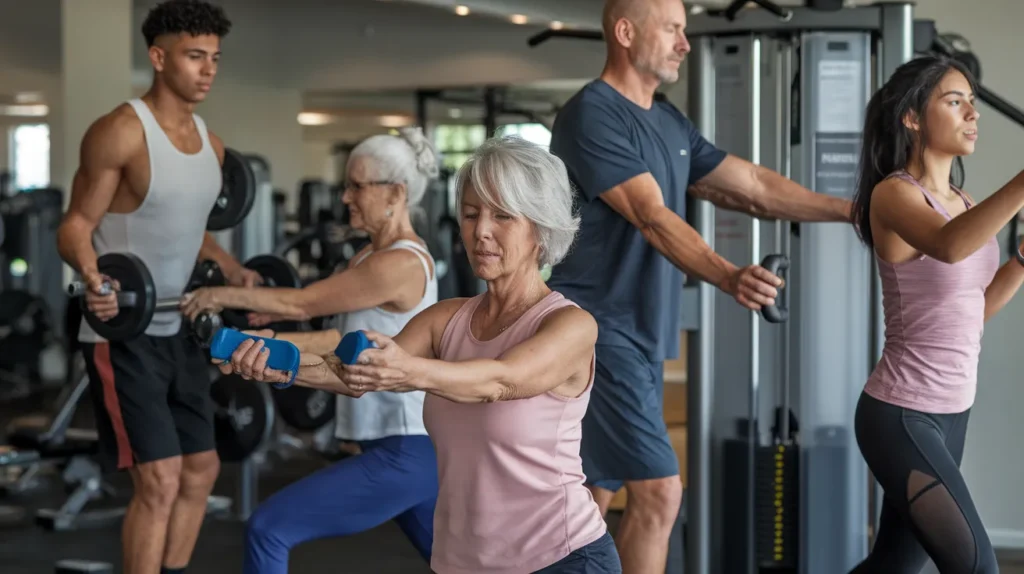
Baby boomers and silent generation members make up 23% of all gymgoers, with their top activities being low-impact forms like walking, aquatic exercise and stationary cycling. They’re at the gym doing water aerobics. Gen Z is at the squat rack. Same building, different planets.
77% of all respondents prefer working out at home, with 43% choosing indoors at home and 34% choosing outdoor settings. Home-based exercise—including bodyweight training, dumbbells, yoga, running routes, and calisthenics—represents the dominant fitness modality across all generations. Most people skip the gym entirely, relying instead on accessible home workouts and outdoor activities. The debate about commercial gym membership and facility access misses the majority of exercisers entirely who build fitness outside traditional gym environments.
Millennials are much more consistent exercisers than Gen Z, who have quite large seasonal swings in their fitness engagement, even after they hit adulthood. Gen Z starts strong in January. By March, half have ghosted their routines.
The Body Composition Data Changes Which Generation Is the Fittest
Generation X males demonstrated an 18.3% prevalence of obesity compared to 9.4% for Boomers at the same age, and modelling indicated Generation X were more likely than Boomers to be overweight or obese. Each generation is heavier than the last at the same life stage.
Adults aged 18 to 39 experienced the greatest increase of median BMI, from 26.1 in 2010 to 27.2 in 2024, while those aged 60 to 75 remained stable over the same period. Younger adults are gaining weight faster than their parents did. The gap widens every year.
The prevalence of obesity in adults ages 40 to 59 was 46.4%, which was higher than 35.5% in adults ages 20 to 39 and 38.9% in those 60 and older. Middle age hits hardest. The 40-59 bracket carries the most excess weight.
Younger generations have overweight and obesity at a younger age, but despite having obesity at an earlier age, they do not reach much higher levels of BMI and obesity at midlife. They start heavy. They plateau heavy. But they don’t spiral into catastrophic weight gain.
Body composition tells a grim story. No generation escapes obesity unscathed. But the younger you are, the earlier it starts.
No matter what generation you are in…
Mental Health Motivations Reveal Which Generation Is the Fittest Differently
73% of Millennials and 70% of Generation Z exercise for mental health benefits. They hit the gym to quiet their minds. Physical results come second.
Research from British Medical Journal (2024) found that regular workouts lower symptoms of anxiety and depression by as much as 30%, a trend especially important for Gen Z dealing with digital stress. Screens wreck their mental health. Exercise is the antidote they reach for.
Baby Boomers and Gen Xers prioritize their physical health. They exercise to fix their backs, lower their blood pressure, and delay death. Mental health is bonus territory.
This split matters more than gym attendance ever could. Millennials and Gen Z view fitness as therapy with weights. Boomers view it as routine maintenance. Same actions, opposite psychology.
Millennials often prioritize fitness for aesthetics or lifestyle balance, while baby boomers lean toward health maintenance and rehabilitation. Millennials want to look good at the beach. Boomers want to climb stairs without gasping.
Where Generations Actually Work Out Affects Which Generation Is the Fittest
85% of Gen Xers prefer to train at home. They’re the home gym generation. Basement treadmills. Garage dumbbells. No commute required.
Generation Z had the most gym-goers, with 29% choosing a commercial gym. They pay for memberships. They show up to group classes. They film content in the mirror.
Baby boomers who belong to gyms tend to visit more frequently than other generations. When Boomers commit to a gym, they become fixtures. Gen Z joins and churns within months.
55% of Gen Z have been members of their gym for less than 12 months. They hop between studios chasing the new thing. Consistency isn’t their strength.
85% of all gym members also now do workouts at home, highlighting the need for digital solutions. The gym versus home debate is outdated. Most people do both.
Cardiovascular Fitness Data Decides Which Generation Is the Fittest Scientifically
Age-related declines in maximal fitness appeared to occur within the first few years of early adulthood and accelerated through midlife. Your peak fitness happens around age 25. Then it’s all downhill.
Cross-sectional studies suggest a 5-10% lower fitness level per decade increase in age across adulthood. Every ten years you age, you lose up to 10% of your cardiovascular capacity. The math is brutal.
By pure cardiovascular standards, Gen Z and young Millennials win. They’re closest to their biological peak. Their hearts pump more efficiently. Their lungs process oxygen faster.
But raw capacity doesn’t equal fitness in practice. A 70-year-old running three times weekly might outperform a sedentary 25-year-old. Age gives you lower ceilings. Training determines where you actually land.
Baby Boomers are staying active well into their 60s and beyond, setting new standards for what aging can look like, with more adults over 60 engaging in regular physical activity than ever before. They’re rewriting the rules for older fitness. Previous generations at 65 were sitting down. This one is training for marathons.
Social Media and Information Sources Make Which Generation Is the Fittest Harder to Compare
Millennials and Gen Z prefer going to a screen for their fitness advice, with 4 out of their top 5 sources coming from online sources like YouTube, TikTok, Instagram, and non-social media online sources. They learn form from influencers. They follow workout splits from strangers.
Baby Boomers prefer in-person advice, with 3 of their top 5 sources being an expert or someone they know like a friend, family member, coach or instructor, or personal trainer. They trust credentials. They hire trainers. They listen to their doctors.
80% of Millennials and Gen Z gym-goers share their workout routines or achievements on social media. They post gym selfies. They document every PR. Their fitness has an audience.
This creates performance fitness versus private fitness. Younger generations train in public. Older generations train in silence. You can’t compare what you can’t see.
The information quality gap is massive. TikTok fitness advice ranges from brilliant to dangerous. A certified trainer filters bad information automatically. Gen Z has more fitness content. Boomers have better fitness guidance.
Frequently Asked Questions
Which generation goes to the gym most often?
73% of Gen Z are gym members, the highest of any generation. However, 36% of Baby Boomers use fitness facilities more than 12 times per month. Gen Z joins more. Boomers attend more consistently when they do join.
Are younger generations less fit than older ones?
Generation X showed higher obesity rates than Baby Boomers at the same age, with 18.3% obesity prevalence compared to 9.4%. Gen Z has taken the lead as the nation’s biggest exercisers at 63%, with the figure rising by 2%. Younger people weigh more but also exercise more frequently.
Why do different generations work out?
73% of Millennials and 70% of Gen Z exercise for mental health benefits. Baby Boomers and Gen Xers prioritize their physical health. Younger people treat exercise as mental healthcare. Older people treat it as physical maintenance.
Which generation has the best cardiovascular fitness?
Age-related declines in maximal fitness appeared to occur within the first few years of early adulthood and accelerated through midlife. Younger adults have higher cardiovascular capacity simply due to age. But training matters more than age for actual fitness levels.
Do Baby Boomers exercise more than Gen Z?
80% of Baby Boomers consider themselves active compared to 66% of Gen Z. However, 73% of Gen Z are gym members compared to 42% of Boomers. Boomers self-report higher activity but Gen Z uses formal fitness facilities more.
Stop comparing gym selfies to walking groups and decide what fitness actually means for your life stage.