
One Testosterone Hack That Works in 72 Hours
Resistance training, particularly weightlifting targeting large muscle groups, provides the most significant testosterone boost, with studies showing a 30% spike within minutes of exercise. Your body achieves this by slowing testosterone clearance from your blood rather than producing drastically more of the hormone.
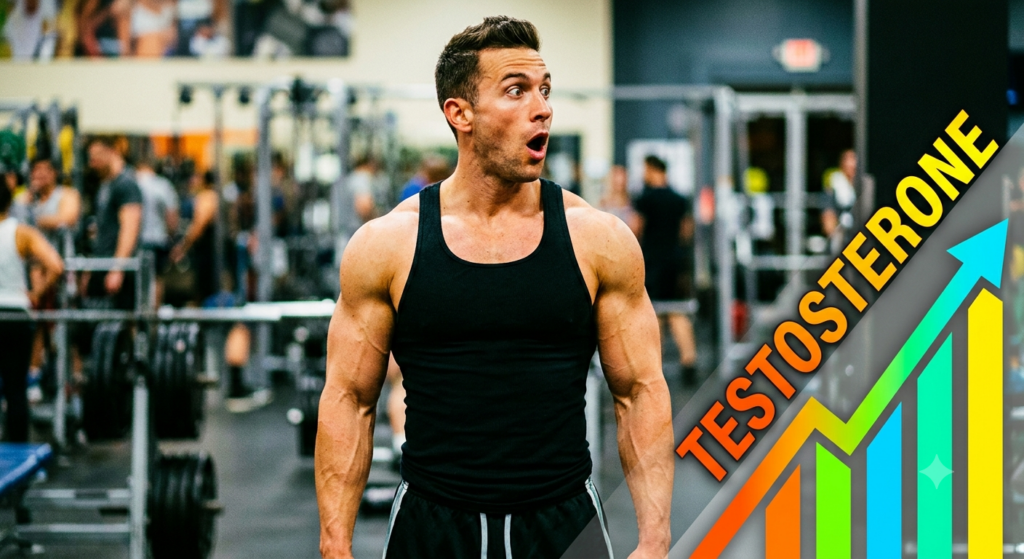
What raises your testosterone the most? Men asking this question want the big hitters. Some strategies work moderately. Others barely move the needle. Resistance training, such as weightlifting, has been shown to boost testosterone levels in the short term.
How Heavy Weight Training Changes What Raises Your Testosterone the Most
One study of junior Olympic weightlifters found that levels of testosterone increased from a baseline of about 16 nmol/L to about 21 nmol/L just five minutes after exercise. That’s roughly a 30 percent spike. It’s temporary but consistent. The effect happens because your body slows down how fast it clears testosterone from your blood. You don’t make drastically more. You just hold onto it longer.
The effect is more significant when you target large muscle groups with heavy weights over smaller muscles. Leg exercises outperform arm curls. Your quadriceps and hamstrings are massive muscles. They demand more hormonal response than your biceps.
See The Natural Solutions to Increase Your Testosterone Levels!
In order for resistance exercises to increase the testosterone hormone acutely or chronically, the training must be of sufficient volume and high intensity. What does that mean in practice? You need to lift heavy enough that you can only do five to ten reps. Rest periods matter too. Shorter rest between sets seems to push testosterone higher.
Men with obesity saw similar increases in both groups of men immediately after exercise. However, the levels were lower in men with obesity after about 30 minutes of recovery. Leaner men keep elevated testosterone longer after they finish lifting.
Why Sleep Determines What Raises Your Testosterone the Most Overnight
Mean testosterone levels increased as a log-linear function of time (hours) across both sleep periods, from 15.3 to 25.3 nmol/liter during night sleep. That’s a 65 percent rise while you’re asleep. Sleep is when your body manufactures most of your daily testosterone supply.
8 consecutive nights of experimentally-induced sleep restriction to 5 h/night caused reductions of up to 15% in testosterone levels in 10 healthy young men. One week of bad sleep drops testosterone noticeably. This isn’t theory. It was measured in controlled lab conditions.
Total sleep deprivation reduced the male testosterone levels, while short-term partial sleep deprivation has no significant effect on male serum testosterone. Missing one or two hours per night for a few days won’t wreck you. Going a full 24 hours or more without sleep will.
A significant part of testosterone production happens during deep sleep. When sleep disruptions occur, the body’s ability to release and regulate this hormone becomes compromised. You need uninterrupted deep sleep. Waking up constantly prevents your body from completing its hormone cycles.
Sleep apnea disrupts this process severely. It wakes you up dozens of times per night. Each interruption cuts into testosterone production. Treating the apnea often brings testosterone back up.
What Raises Your Testosterone the Most When You Fix Nutrient Deficiencies
If you have a zinc and/or vitamin D deficiency, zinc and/or vitamin D supplementation are proven strategies to counter the harmful health effects, including reductions in testosterone levels. This only works if you’re actually deficient. Taking more when your levels are normal does nothing.
Zinc directly supports hormone production, making it more effective for correcting deficiencies linked to androgen imbalance. Vitamin D works indirectly by stabilizing hormone-binding proteins and regulating enzymes. Zinc helps your body make testosterone. Vitamin D helps regulate how testosterone moves through your blood.
We found no significant treatment effect on serum TT or on the remaining secondary outcome variables. Vitamin D treatment had no effect on serum TT levels in middle-aged healthy men with low TT levels. This was a controlled trial on 94 men. They took vitamin D for months. Testosterone didn’t budge.
The difference matters. Men who test low for zinc or vitamin D often see testosterone climb when they supplement. Men with normal levels see nothing. Testing your actual nutrient status tells you if this strategy will work.
Zinc prevents the excessive function in the body of an enzyme called aromatase, which converts testosterone into estrogen. More zinc means less conversion. You keep more of the testosterone you produce.
What Raises Your Testosterone the Most by Cutting Body Fat Percentage
Among males, testosterone levels showed a significant negative correlation with TPF, while a positive correlation was observed between LMP and testosterone levels. Higher body fat means lower testosterone. More lean muscle means higher testosterone. The relationship is strong and consistent.
This study looked at nearly 6,000 men. The pattern held across all of them. Fat tissue contains aromatase enzyme. That enzyme converts testosterone into estrogen. More fat means more conversion.
Testosterone and SHBG both showed a 23% genetic correlation with body fat, and SHBG showed a 29% link with whole body fat. Some of this relationship is genetic. But environment still plays the bigger role.
Losing 10 pounds of fat won’t turn you into a testosterone machine overnight. But dropping from 25 percent body fat to 15 percent will change your hormone profile noticeably. The effect compounds over time.
Belly fat seems particularly harmful. It’s more metabolically active than fat on your legs. It produces more of the enzymes that break down testosterone.
What Raises Your Testosterone the Most Through Stress and Cortisol Control
Sleep deprivation generates stressful stimuli intrinsically, due to circadian desynchrony and thereby increases the activation of the Hypothalamus-Pituitary Adrenal axis, which increases the production of corticosterone. The elevated level of corticosteroids results in a reduction in testosterone production. High cortisol suppresses testosterone production directly.
Your body can’t run both systems at full power simultaneously. When cortisol goes up, testosterone production shuts down. This happens during chronic stress. It happens during sleep deprivation. It happens when you overtrain without recovery.
Ashwagandha and Rhodiola are adaptogenic herbs that stand out for their robust evidence in lowering cortisol by 16% while boosting free testosterone levels. These adaptogens reduce the hypothalamic-pituitary-adrenal (HPA) axis activation that triggers excessive cortisol production during chronic stress. By suppressing elevated cortisol through stress hormone regulation and improving parasympathetic nervous system tone, these supplements allow normal testosterone production to resume. The mechanism works indirectly—they don’t manufacture testosterone but rather remove the hormonal brake that stress and high cortisol create.
Chronic stress from work or relationships will tank your testosterone over months. Short bursts of stress during exercise might briefly spike cortisol but don’t cause problems. The pattern matters more than individual moments.
Recovery days between workouts let cortisol drop back down. Training seven days per week keeps it elevated. Your testosterone suffers when you never let your body recover.
What Raises Your Testosterone the Most With Compound Movements and Volume
All three training protocols were found to raise testosterone acutely. It was stated that testosterone responses decreased from a 120 seconds rest period to a 60 seconds rest period. Shorter rest periods between sets create a bigger testosterone response. 60 seconds works better than two minutes.
This contradicts what many people do in the gym. They rest three or four minutes between heavy sets. That builds strength efficiently. It doesn’t create the hormonal response you want for testosterone.
Full body workouts trigger more testosterone than isolated body parts. Training chest and triceps on Monday doesn’t demand much from your endocrine system. Squatting heavy, then deadlifting, then pressing all in one session does.
Volume means total weight lifted. Three sets of ten reps at 200 pounds equals 6,000 pounds of volume. Higher volume sessions produce bigger acute testosterone spikes. This has limits though.
Training to complete failure on every set backfires. Your cortisol shoots up too high. Testosterone drops in response. Stop one or two reps before failure. Keep volume high without destroying yourself.
Supplements That Actually Work When Examining What Raises Your Testosterone the Most
Out of 28 total compounds, only two (HMB and Betaine) consistently increased serum total testosterone in placebo-controlled human trials. Five others may offer modest benefits, primarily in men with low testosterone or infertility. Most testosterone supplements don’t work. Only a handful have real evidence.
This herb stands out for its robust evidence in boosting free testosterone (up to 37% in stressed or aging men). Clinical trials confirm its role in enhancing libido, mood, endurance, and muscle gains. Tongkat Ali has the strongest research backing. It works best in older men or stressed men.
Ashwagandha shows similar effects in research studies. Both supplements seem to work by lowering cortisol. Lower cortisol allows normal testosterone production to resume.
D-Aspartic acid was popular five years ago. Recent research shows it doesn’t work in men with normal testosterone. It might help men with clinical hypogonadism. The supplement industry still sells it heavily despite weak evidence.
The remaining 21 “boosters” including Vitamin D, Tribulus, ZMA, Creatine, Fenugreek, Maca, and DAA failed to reliably raise testosterone in nutrient-sufficient adults. If you eat reasonably well, these won’t help. They only work when fixing an existing deficiency.
Frequently Asked Questions
Does lifting weights permanently increase testosterone or just temporarily?
Lifting weights creates temporary spikes lasting several hours after training. Chronic resistance training over months may raise baseline testosterone modestly. The acute effect is more reliable than long-term changes.
Can I raise testosterone naturally or do I need hormone replacement?
Most men can raise testosterone 20 to 40 percent through sleep, fat loss, and training. Men with clinical hypogonadism below 300 ng/dL may need medical treatment. Natural methods work best for men starting between 300 and 600 ng/dL.
How long does it take to see testosterone increase from these methods?
Exercise creates immediate spikes within minutes. Sleep changes show effects within one week. Fat loss takes six to twelve weeks to impact testosterone measurably. Consistency matters more than any single action.
Will taking testosterone supplements from the store actually work?
Most over-the-counter supplements don’t work according to controlled studies. Only Tongkat Ali and Ashwagandha show reliable effects. They work by lowering cortisol rather than directly boosting testosterone production.
What testosterone level should I aim for naturally?
Normal ranges span 300 to 1,000 ng/dL. Most healthy men land between 400 and 700 ng/dL. Getting above 600 ng/dL naturally is realistic with proper training and recovery. Expecting levels above 800 ng/dL without medical intervention is unrealistic for most people.
Start with sleep and resistance training before spending money on supplements or tests.