
Women's Weight Workout: Why Lighter Isn't Better
The ideal beginner weight workout for women focuses on compound movements that work multiple muscle groups at once, saving time while building real strength faster. Start with exercises like goblet squats and Romanian deadlifts to learn proper movement patterns before progressing to single muscle exercises.
What Is The Ideal Beginner Weight Workout For Women
You walk into the gym for the first time. The weight rack looks like a math problem. Every dumbbell makes you wonder if you’ll look ridiculous. What is the Ideal Beginner Weight Workout for Women ends up being simpler than you think.
What is the Ideal Beginner Weight Workout for Women Regarding Exercise Selection
Train Regularly but…
Compound movements work multiple muscle groups at once and give the most benefit for your time. Squats hit your legs and core together. Rows engage your back and arms simultaneously. Chest presses work shoulders and triceps in one movement. This approach saves you time and builds real strength faster.
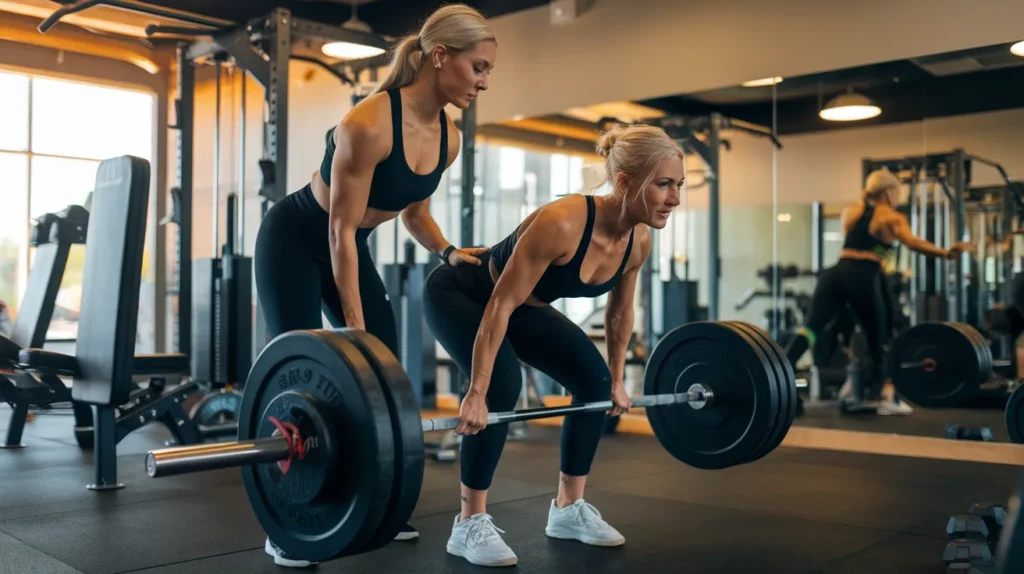
Single muscle exercises come later. Your body needs to learn basic patterns first. A goblet squat teaches you how to sit back properly. A Romanian deadlift shows you the hip hinge. These movements appear in everyday life when you pick things up.
Start with light weights and put form first, weight later. Your nervous system hasn’t learned to recruit muscle efficiently yet. The first few weeks train your brain more than your muscles. Movement quality matters more than the number on the dumbbell.
Starting Weight Numbers That Actually Work for Women
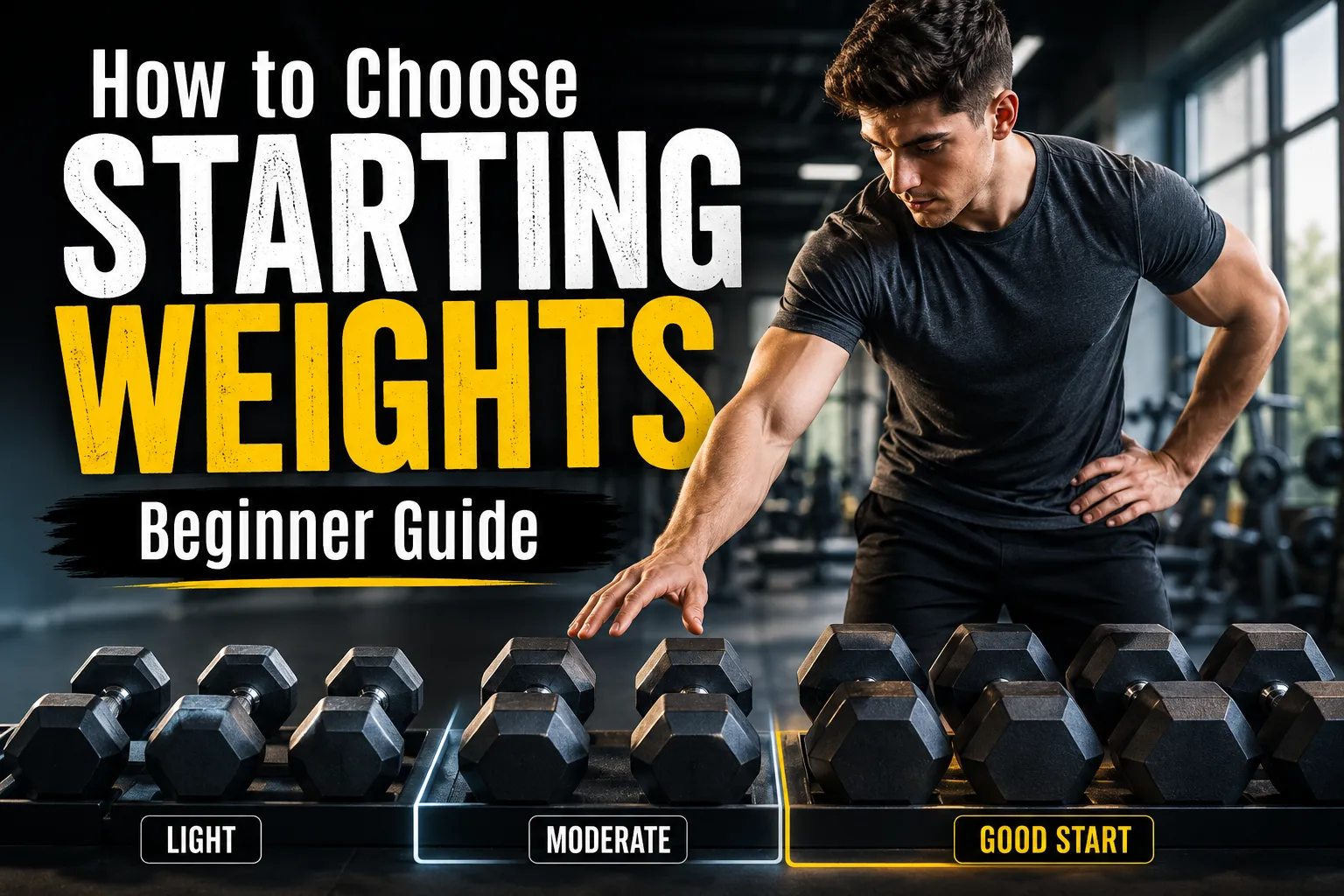
Beginners should aim to start with 5-10 lbs for upper body exercises and 10-20 lbs for lower body exercises. Your legs can handle more load than your arms. Women tend to have a higher concentration of their lean body mass in their lower bodies, so lower body workouts often require heavier weights than upper body workouts.
These numbers give you a starting point. Your actual weight depends on the specific movement. A bicep curl uses less than a squat. A shoulder press feels different than a chest press. Test the weight before you start your first set.
The sweet spot is controlled resistance where the first few reps feel easy, but the final few feel doable only with proper form. Your last two reps should make you slow down and focus. You should not struggle through rep three of twelve. You should not breeze through all twelve without effort.
What is the Ideal Beginner Weight Workout for Women in Terms of Sets and Reps
A good general guideline for strength training is to do 2-3 sets of 8-12 reps for each exercise. This range builds both strength and muscle. Lower reps with heavier weight build pure strength. Higher reps with moderate weight improve endurance and muscle tone.
Eight reps minimum keeps the weight challenging. Twelve reps maximum prevents the workout from becoming cardio. Stay in this zone for at least your first eight weeks. Your body responds well to this stimulus when you’re new.
Rest matters between sets. Take 60 to 90 seconds. Your muscles need time to clear waste products. Rushing between sets ruins your form on the next round. Your muscles grow and repair during rest, not during the workout, so neglecting rest days can lead to overtraining, burnout, and stalled progress.
Weekly Training Frequency That Produces Results
Train 2-3 times per week as this frequency allows your body to recover and adapt while avoiding burnout. Two sessions work if you’re completely new to lifting. Three sessions become manageable after your first month. Four sessions can wait until month three.
Full-body workouts with at least one full rest day between sessions work well for beginners. Monday, Wednesday, Friday gives you balance. Tuesday, Thursday, Saturday works equally well. Your muscles need 48 hours to repair between training the same areas.
Aim for 45-60 minutes, including warm-up and cool-down. Even 30 minutes is effective when done right. Don’t add extra time just to feel accomplished. Short and focused beats long and scattered.
What is the Ideal Beginner Weight Workout for Women Means for Progressive Overload
Progressive overload is the gradual increase of stress placed on your body during training. Beginners should focus on reps and form first, then once you can complete the top end of your rep range consistently, up the weight. You hit 12 reps easily on squats for two workouts in a row. Add five pounds next session.
Women can safely add 2.5-5 pounds to lower body exercises and 1-2.5 pounds to upper body movements weekly without risking burnout. Small jumps keep you progressing without injury. Big jumps wreck your form and stall your gains. Patience wins here.
You don’t need to add weight every single week. Doing 12 or 15 reps instead of 10 is progressive overload, even if you’re using the exact same weight. Adding one more set counts. Slowing down your reps counts. Multiple paths lead to the same destination.
How Tracking Transforms What is the Ideal Beginner Weight Workout for Women
Use a simple notebook or a fitness app to log your exercises, sets, reps, and the weight you lifted for each session. Write down what you actually did. Your memory lies about last week’s weights. Your notebook doesn’t.
If you don’t write down weight, reps, sets, tempo, and rest, you cannot progress on purpose because you lose the exact numbers to beat each week. Tracking transforms guessing into intentional programming. You identify which exercises respond quickly to progressive overload and which plateau faster. You spot performance trends—maybe bench press climbs steadily while rows stall—and adjust your approach accordingly. This data-driven feedback loop accelerates strength gains and prevents wasted effort on ineffective strategies.
This data shows you what works for your body. Maybe your squats jump up fast. Maybe your shoulder press moves slowly. Every woman responds differently. Your log reveals your specific patterns within weeks.
Recovery Mistakes That Kill Progress for Beginners
Every 10 to 12 weeks, pull your load or volume back by about 30 to 50% for a week so your muscles, joints, and nervous system can recharge. This deload week feels wrong to beginners. You worry you’ll lose gains. You won’t. You’ll come back stronger.
Sleep builds muscle more than your workout does. Seven hours minimum. Eight hours better. Your body releases growth hormone during deep sleep. Skip sleep and your weights stay stuck. Eat enough protein too. Your muscles need raw materials to repair.
Muscle is built during recovery, not during the workout, so more training paired with less food backfires. Eating too little while training hard drains you. Your body can’t build and starve simultaneously. This mistake shows up everywhere with women new to weights.
The Mental Game Nobody Mentions About Lifting
Even if you’re stepping into the weights section for the first time ever, the gym is full of people who have been in your exact same shoes and have been beginners before. That guy benching 200 pounds started with the bar. Every single person there had a first day.
Comparison kills your progress faster than bad form. Your squat doesn’t need to match the woman next to you. Her year two doesn’t compare to your week two. Stay in your lane. Focus on beating last week’s version of yourself.
Simplify your routine and make sure you’re still making space for having fun, because we often stick to routines we think we should be doing versus the ones we find enjoyable. Enjoyment keeps you consistent. Consistency builds results. Forced routines fall apart by month two.
Frequently Asked Questions
How long until I see visible changes from beginner weight training?
Strength improvements appear within 2-4 weeks of consistent progressive overload training as neuromuscular adaptations occur. Visible physical changes typically appear after 6-8 weeks, while significant body composition changes require 12-16 weeks of sustained progressive training.
Will lifting weights make me bulky as a woman?
Women don’t have the hormonal profile with high testosterone levels to develop muscle mass like men, so it becomes very difficult for women to gain significant muscle size. Lifting builds lean muscle and improves tone. Bulking requires years of specific training and eating.
Can I do the same beginner program for 12 weeks straight?
Your goal should be to improve on some facets of the workouts each week, like doing one more rep on some sets or adding weight because you gained strength. The only way to know you improved is to do the same workouts and track the progress.
What if I can’t complete all my reps with good form?
A dumbbell is too heavy if you can’t complete your reps without breaking form by compensating, rushing, or losing control. It’s too light if you finish all your sets without any real effort. Drop the weight immediately and finish your sets properly.
Should I do cardio along with my weight training?
Cardio fits around your lifting schedule. Keep it light on lifting days. Save harder cardio for rest days from weights. Your recovery capacity is limited. Prioritize what matters most for your goals. Strength comes from the weights.
Pick three exercises from this article, write down your starting weights, and complete your first workout this week.