
The 3 Muscle-Building Exercises Everyone Skips
Compound exercises that work multiple joints and muscle groups are the fastest way to build muscle because they allow you to lift heavier weight and create high muscle tension. Squats, deadlifts, and bench presses form the foundation of any effective muscle-building program by targeting large muscle groups simultaneously.
What Exercises Build Muscle The Fastest?
What exercises build muscle the fastest? You walk into the gym and see hundreds of machines. Most people waste a year doing random exercises. The answer is compound exercises and progressive overload.
What exercises build muscle the fastest through multi-joint movements
Compound exercises involve multiple joints and muscle groups. Working many muscles together lets you lift heavier weight, and heavier resistance creates high muscle tension. This is key for growth.
Squats, deadlifts, and bench presses form the foundation. The squat hits your legs, glutes, and core. The deadlift trains your back, hamstrings, and grip. The bench press develops chest, shoulders, and triceps.
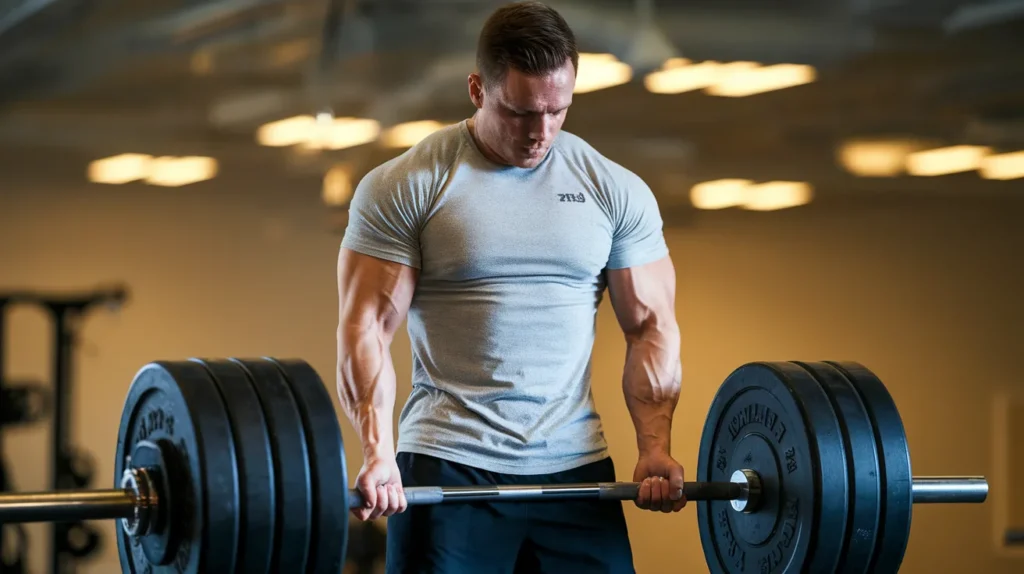
A barbell deadlift recruits your glutes, hamstrings, back, and core. This lets you move serious weight. Lifting more weight translates to strong stimulus for muscle fibers.
Compare this to leg extensions. You work one muscle. You lift less total weight. You get less growth stimulus per minute.
How progressive overload determines what exercises build muscle the fastest
Progressively increasing loads compels your muscles to adapt by growing bigger and stronger. Your body doesn’t change unless you force it. Without progressive overload, you do the same workout indefinitely, and your muscles stop growing.
Muscle growth appears more pronounced when resistance exercise is progressively overloaded. Studies confirm this. Two groups train for eight weeks. One group increases weight. The other keeps weight constant.
The group adding weight gains more muscle. Simple.
You add weight to the bar each week. You add reps when you can’t add weight. When you perform 15-20 reps but started at 12, increase weight by 5-10%. Drop back to 8-12 reps with the heavier load.
Track every workout. Write down sets, reps, and weight. A workout log pinpoints when progress stalls, signaling time to adjust your overload method.
What exercises build muscle the fastest based on training volume
Most lifters grow best with 10-20 hard sets per muscle per week. Hard means close to failure. Not warmups. Not easy sets.
The minimum threshold for muscle growth seems between 6 and 12 weekly sets. Below six sets, you maintain muscle. You don’t build it. Performing 10-19 sets per week allows significant muscle growth stimulus with sufficient recovery.
Split this across multiple sessions. Better to spread volume throughout the week, doing 4-8 sets per workout 2-4 times weekly. Each set stays effective.
Don’t do 20 sets of chest in one day. Your later sets become junk volume. You accumulate fatigue. You don’t stimulate more growth.
Sets of 6-30 reps build muscle efficiently. The range is wide. You can work in different zones. Rep range doesn’t matter for muscle growth up to 30 reps per set.
Rest periods that maximize what exercises build muscle the fastest
Rest 2 to 3 minutes between sets for muscle mass. Your muscles partially recover. You lift heavier on the next set. You get more quality work.
Short rests feel harder. They create metabolic stress. But resting 2-5 minutes lets you lift more weight and do more reps. More weight means more tension.
Allow 48-72 hours rest for each muscle group between training sessions. Don’t train chest hard two days in a row. Muscle grows during recovery, not during the workout.
Sleep matters more than most realize. Muscle protein synthesis peaks between 24 and 48 hours post-exercise. Your body builds muscle while you sleep. Sleep plays an important role in cellular repair, regeneration, and hormone regulation.
Skip sleep and you waste your gym time.
Why the big three answer what exercises build muscle the fastest
Build Muscles Fast Right Here!
Strength gains are greater for squat and deadlift compared with bench press. Beginners see strength gains within 2-3 weeks and visible muscle development within 6-8 weeks. You add 5-10 pounds weekly as a beginner.
The big three lifts build a strong, muscular physique, but won’t optimize muscle growth speed in non-novice trainees. Advanced lifters need accessory work. But beginners? The big three cover everything.
Squats, deadlifts, and bench press hit nearly every major muscle group. You don’t need 15 exercises. Three movements done hard build serious mass.
The exercises teach proper movement patterns. Learning to deadlift properly teaches you how to position your body for bent over barbell rows. Your form transfers to other lifts.
Focus beats variety for beginners. Master three lifts. Get strong on them. Add weight every week. This beats program-hopping.
Common mistakes that slow what exercises build muscle the fastest
You skip progression. You bench 135 pounds for a year. Your muscles adapt in month two. They have no reason to grow after that.
You add too many isolation exercises too soon. Beginners do squats, then leg extensions, leg curls, and calf raises. Isolation exercises don’t recruit as many muscle fibers and take up much more time.
You change programs every month. Switching programs every few weeks prevents real progress. Stick with a plan for 8-12 weeks minimum.
You use terrible form to lift heavier weight. The weight goes up. The muscle stimulus goes down. You shift tension to joints and connective tissue.
You train to complete failure every single set. This works short term. Long term, you accumulate fatigue faster than you accumulate gains. Stop one to two reps short of failure.
Frequently Asked Questions
Can you build muscle with only three exercises?
Yes, squats, deadlifts, and bench press work nearly every muscle group. Beginners build significant strength and muscle using just these three movements. Advanced lifters benefit from adding accessory work for specific weak points.
How many times per week should I train each muscle?
Train each muscle group two to three times weekly for best results. Spread your weekly sets across multiple sessions rather than one long workout. Allow 48-72 hours between sessions targeting the same muscles.
Do I need to feel sore to build muscle?
No, soreness doesn’t equal muscle growth. Progressive overload drives growth, not soreness. You can build muscle without being sore every session. Beginners feel more soreness than experienced lifters.
How long before I see muscle growth results?
Beginners see visible muscle development within 6-8 weeks of consistent training. Strength gains appear within 2-3 weeks. Take progress photos and measurements monthly to track changes you might not notice daily.
Should I do cardio if I want to build muscle fast?
Light cardio won’t hurt muscle gains and improves recovery. Keep cardio sessions short and low intensity. Excessive cardio interferes with recovery and reduces the energy available for weight training.
Start with squats, deadlifts, and bench press, add weight each week, and track your workouts.