
Weight Rules Just Flipped Why 2026 Changes Everything
Weight Isn’t Overload The New 2026 Rules reveals that muscle growth depends on training effort and proximity to failure, not the amount of weight lifted. Light weights with high reps build equal muscle mass compared to heavy lifting when you push your muscles to full engagement.
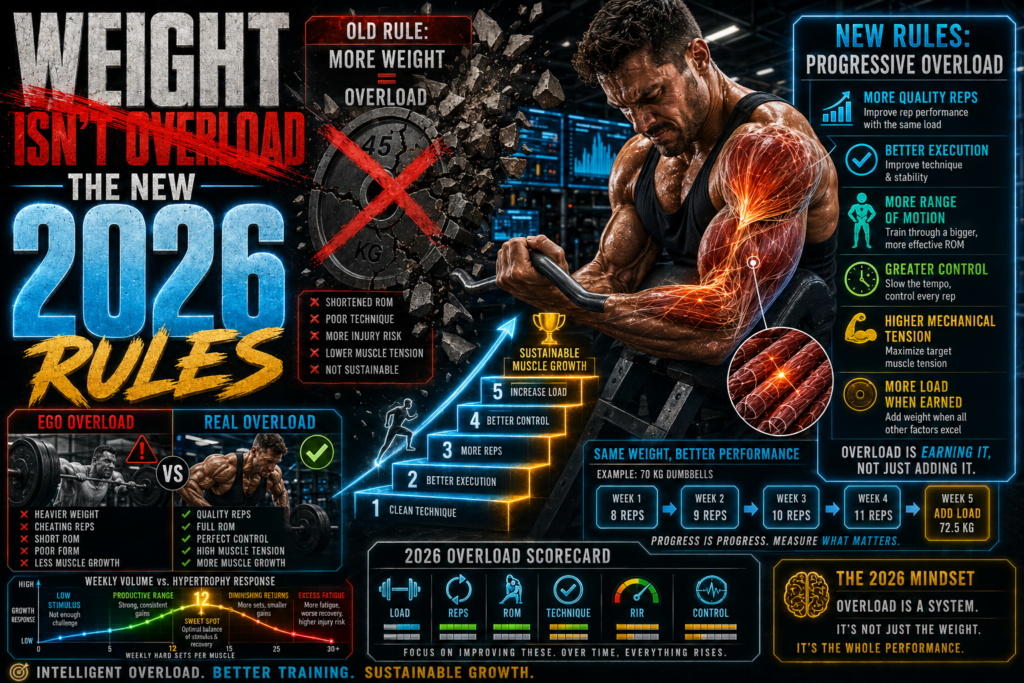
Weight Isn’t Overload The New 2026 Rules marks a turning point in fitness culture, where the old idea of lifting heavier to grow stronger no longer applies universally. Science now shows that effort matters more than the number on the barbell, as your muscles respond to tension and fatigue rather than raw weight alone.
What Weight Isn’t Overload The New 2026 Rules Actually Mean
The fitness world changed its approach this year. Researchers confirmed that training to near failure produces muscle growth regardless of load. You can lift light weights for high reps and build just as much muscle as heavy lifters. The key is pushing close enough to failure that your muscles fully engage.
This shifts the entire conversation around training. Previously, people believed only heavy weight created real results. Now we know that a 30-pound dumbbell taken to exhaustion works just as well as a 70-pound one. The difference lies in how hard you push each set, not the load itself.
Most gym equipment focuses on weight progression. But your body doesn’t count pounds. It responds to mechanical tension and metabolic stress. When you reach true muscular failure, your body adapts by building new tissue. The weight is just one tool to create that stimulus.
If adding weight is not the complete definition of overload, the next step is understanding which improvements actually matter for hypertrophy. Progressive Overload Is Evolving: What Builds Muscle provides the broader framework for evaluating progression and building a sustainable muscle-growth strategy.
How Weight Isn’t Overload The New 2026 Rules Change Training Programs
Traditional programs added five pounds every week. This approach works until it doesn’t. Eventually, joints hurt and recovery takes longer. The new framework suggests varying intensity instead of always chasing heavier loads.
You might do sets of 25 reps one day and sets of eight another day. Both sessions build muscle if you train hard enough. The lighter day lets your joints recover while still creating growth. The heavier day builds strength without requiring maximum loads every session.
This makes training more sustainable. People in their 40s and 50s can keep progressing without constant joint pain. Beginners don’t need to rush into heavy weights before mastering movement patterns. Everyone benefits from understanding that effort drives results more than external load.
Many athletes now use lighter weights during deload weeks but maintain high effort. They reduce load by 30 percent but still train near failure. This keeps the growth stimulus active while giving tissues time to repair. Recovery improves without losing progress.
Why Weight Isn’t Overload The New 2026 Rules Matter for Recovery
Heavy lifting taxes your nervous system significantly. A set of three reps at 90 percent of your max drains you differently than 20 reps at 50 percent. Both can build muscle, but the lighter set recovers faster. Your joints and tendons especially benefit from reduced load.
Tendon injuries often come from excessive weight, not excessive effort. Tendons adapt slower than muscles. When you constantly chase heavier weights, tendons can’t keep pace. Using lighter loads with high reps gives tendons time to strengthen without constant strain.
Sleep quality also improves with this approach. Heavy training activates your sympathetic nervous system intensely. Lighter, high-rep training still fatigues muscles but doesn’t overstimulate your nervous system. You fall asleep easier and wake up less sore.
People who switch to this method often report feeling better overall. They train just as hard but recover faster between sessions. This lets them train more frequently without overtraining symptoms. Consistency matters more than any single workout, and better recovery enables consistency.
Weight Isn’t Overload The New 2026 Rules Applied to Real Workouts
A practical example shows how this works in practice. Take a leg press session. You could load 400 pounds and do eight reps. You could also load 200 pounds and do 25 reps to failure. Both stimulate muscle growth equally if effort matches.
The 400-pound version compresses your spine more. It requires more warm-up sets to perform safely. If you miss a rep, you risk injury. The 200-pound version feels safer and lets you focus purely on muscle contraction. Most people find the lighter version more productive long-term.
Another example involves shoulder training. Heavy overhead presses strain the rotator cuff. Lighter lateral raises taken to failure build shoulder size without that risk. You can train shoulders three times weekly with light loads but only twice with heavy ones.
This doesn’t mean never lifting heavy. Strength still matters for some goals. But muscle growth no longer requires maximum weights every session. You can build size with moderate loads and save heavy lifting for when it serves a specific purpose.
How Weight Isn’t Overload The New 2026 Rules Affect Supplementation
Training intensity and effort level matter more than ever under this framework. Your body needs to recover from high-effort sets regardless of load used, making recovery supplementation more relevant than before. Your muscles still experience micro-tears and metabolic fatigue, requiring amino acids, micronutrients, and adequate rest for muscle protein synthesis and tissue rebuilding after intense training sessions.
Many people now focus on supplements that support recovery rather than just pre-workout energy. Joint health products gain importance when training volume increases. Products like NuviaLab Flex help maintain joint function during higher-frequency training blocks. Cartilage and connective tissue need support when you train multiple times weekly.
Protein timing becomes simpler with this approach. You don’t need excessive amounts after lighter sessions. But you still need adequate daily intake to support muscle protein synthesis. Around 1.6 grams per kilogram of body weight covers most people’s needs effectively.
Energy management shifts too. Heavy lifting requires more immediate carbohydrates for ATP production. Lighter, high-rep training uses glycogen differently but still depletes it. You need carbs either way, just distributed differently around your training window.
Common Mistakes with Weight Isn’t Overload The New 2026 Rules
The biggest error is not training hard enough. People hear they can use light weights and assume easy training works. It doesn’t. You must push close to failure for this approach to succeed. That last few reps should feel extremely difficult.
Another mistake involves never varying rep ranges. Some people do only high reps forever. Your body adapts to any single stimulus over time. Mix ranges between eight and 30 reps across different exercises and sessions. Variety prevents adaptation plateaus.
Some lifters abandon strength work entirely. While muscle growth doesn’t require maximum loads, strength still has value. Being stronger makes every rep range more effective. Include some heavier sets periodically to maintain your strength base.
People also forget to track progression properly. With varied rep ranges, you can’t just add weight each week. Instead, track reps completed at a given weight. If you did 15 reps last week, aim for 17 this week. Progress shows in many forms beyond just load increases.
Weight Isn’t Overload The New 2026 Rules for Different Body Parts
Legs respond extremely well to higher-rep training. Muscles like quads have high endurance capacity. Sets of 20 reps create enormous growth stimulus without the spinal loading of heavy squats. Many bodybuilders now do leg extensions and leg presses in the 15 to 30 rep range primarily.
Back muscles benefit from varied approaches. Heavy rows build thickness effectively. But lighter, high-rep pulldowns create width without grip fatigue. Combining both approaches in the same week produces better results than either alone.
Chest training shifts dramatically under these rules. You don’t need to bench press 300 pounds for chest development. Pushups to failure, cable flies for 20 reps, and moderate dumbbell presses all work equally well. Shoulders stay healthier with this variety too.
Arms grow with almost any rep range if effort is high. Biceps and triceps respond to metabolic stress very effectively. Sets of 15 to 25 reps create huge pumps and significant growth. The small joints of your elbows also appreciate the reduced load stress.
Long-Term Results from Weight Isn’t Overload The New 2026 Rules
People following this framework for six months report consistent progress. They add muscle without the constant injuries that plague heavy-only lifters. Joint health stays better because load stays reasonable. Training becomes sustainable for decades, not just years.
Strength doesn’t disappear with this method. Most people maintain their heavy-lift numbers while focusing on higher-rep work. Some even improve because better recovery lets them train more frequently. A stronger base supports everything else you do in training.
Body composition improves steadily with this approach. Higher training volume burns more calories during workouts. Better recovery means you can add extra sessions without overtraining. This creates a larger weekly calorie deficit while building muscle simultaneously.
Mental enjoyment increases for many people. Training no longer feels like a constant test of maximum strength. You can focus on movement quality and muscle contraction. Workouts become meditative rather than purely competitive. This psychological shift helps people stick with training long-term.
Nutrition Timing with Weight Isn’t Overload The New 2026 Rules
Pre-workout nutrition matters less with lighter loads. You don’t need massive glycogen stores for moderate weights. A small meal two hours before training provides enough energy. Some people even train fasted successfully with this approach.
Post-workout nutrition still matters significantly. Your muscles need amino acids to rebuild after high-effort training. A meal with 30 grams of protein within two hours supports recovery optimally. Add carbohydrates to replenish glycogen if training volume is high.
Daily nutrition consistency trumps any specific timing window. Getting adequate protein and calories throughout the day matters more than perfect timing. Your body builds muscle over 24-hour periods, not just immediately after training. Focus on daily totals first, then refine timing second.
Hydration becomes more important with higher rep ranges. Metabolic waste products accumulate during long sets. Water helps flush these from muscle tissue. Drinking half your body weight in ounces daily supports this process effectively. Consider supplements like NuviaLab Immune to support overall recovery processes during intense training phases.
Programming Frequency Under Weight Isn’t Overload The New 2026 Rules
Training frequency can increase with this approach. Lighter loads recover faster than heavy ones. You might train each muscle group three times weekly instead of twice. This adds volume without excessive fatigue.
Each session doesn’t need maximum volume. Three moderate sessions beat one exhausting session weekly. Spreading volume across multiple days keeps quality high throughout each workout. Fatigue doesn’t accumulate as heavily within single sessions.
Rest days still matter but look different. You might do upper body while lower body recovers. Active recovery days with walking or stretching help without preventing adaptation. Complete rest once or twice weekly still benefits most people.
Deload weeks become more strategic. Instead of reducing volume, you maintain volume but reduce intensity. Do the same exercises and reps but stop further from failure. This maintains movement patterns while giving your body a break. Many people use NuviaLab Vitality during these periods to support energy levels without relying on stimulants.
Häufig gestellte Fragen
Can beginners use Weight Isn’t Overload The New 2026 Rules safely?
Yes, beginners benefit greatly from this approach. Learning movement patterns with lighter weights reduces injury risk. They can focus on form while still building muscle effectively. Starting lighter also prevents the intimidation many beginners feel in gyms.
Do I need to train to complete failure every set?
Not every set requires absolute failure. Training within one or two reps of failure produces similar results. Complete failure works well on final sets of exercises. Earlier sets can stop slightly short while still stimulating growth.
How long until I see results from this training method?
Most people notice strength improvements within two weeks. Visible muscle growth appears after six to eight weeks typically. Body composition changes become obvious after three months of consistent training. Progress depends on nutrition, sleep, and training consistency.
Will I lose strength if I use lighter weights?
Strength maintenance or improvement is common with this approach. Including some heavier sets weekly preserves maximum strength. Most people find their strength improves because recovery allows more frequent training. Strength is skill-specific, so occasional heavy practice maintains it.
Can advanced lifters benefit from Weight Isn’t Overload The New 2026 Rules?
Advanced lifters often gain the most from this method. They already possess good strength bases. Adding high-rep work provides new stimulus their bodies haven’t adapted to. Many competitive bodybuilders now use this as their primary training approach.
Start your next workout with moderate weight and push the set hard to see how your body responds to this new training philosophy.