

The Mini-Cut Trick That Preserves Muscle While Dropping Fat Fast
Discover how to create a moderate calorie deficit of 500-700 daily to lose 1-1.5 pounds weekly while preserving muscle mass during your mini-cut. Calculate your maintenance calories accurately and follow a proven framework to drop fat fast in just 4-6 weeks without sacrificing strength gains.
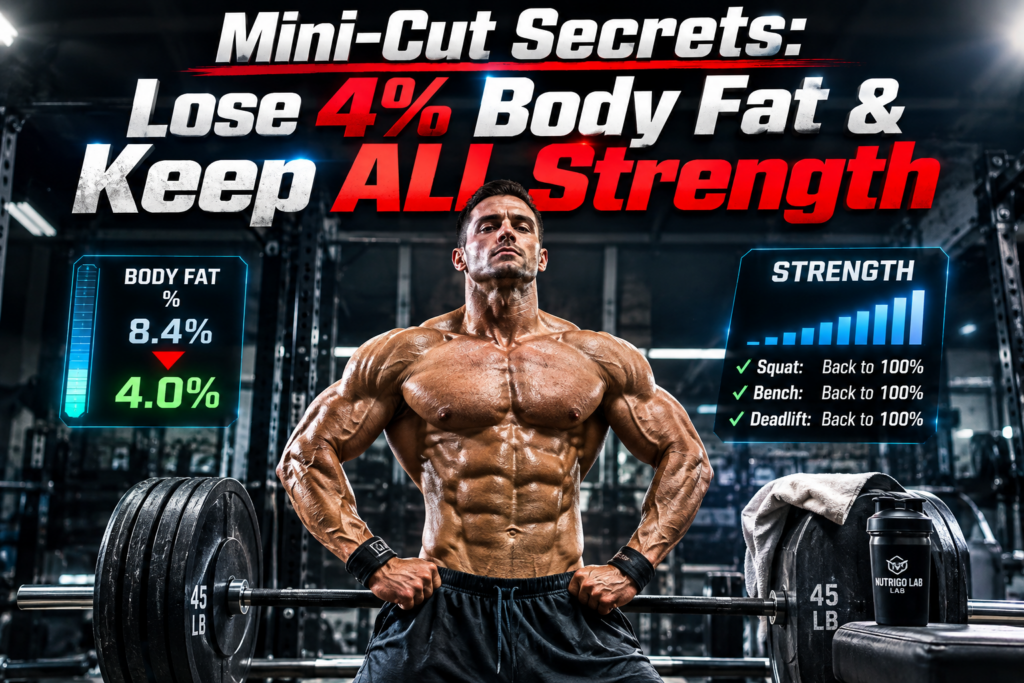
You’re three weeks out from vacation and need to drop fat fast. Bulking season left you stronger but softer than planned. Mini-Cut Secrets: Lose 4% Body Fat & Keep ALL Strength gives you a proven framework. The trick is eating enough to fuel your lifts while staying aggressive.
Mini-Cut Secrets: Lose 4% Body Fat & Keep ALL Strength Through Calorie Math
A mini-cut lasts four to six weeks maximum. You create a moderate deficit of 500 to 700 calories daily. This pace lets you drop one to one and a half pounds weekly. Faster cuts burn muscle alongside fat.
Calculate your maintenance calories first. Track everything you eat for five days without changing habits. Add those five days together and divide by five. That number is your true baseline.
Subtract 600 calories from that baseline to start your mini-cut. Protein stays high at one gram per pound of body weight. Carbs drop by 100 to 150 grams from maintenance levels. Fat fills the remaining calories at 0.3 grams per pound minimum.
Weigh yourself every morning after using the bathroom. Take the weekly average to track real progress. Daily weight swings mean nothing due to water and digestion changes.
If you lose more than two pounds in week one, you cut too hard. Add back 200 calories immediately. Losing strength means you’re undereating for your training volume.
Training Adjustments During Mini-Cut Secrets: Lose 4% Body Fat & Keep ALL Strength
Your workout volume must drop by 20 to 30 percent. Keep the same weights on the bar but reduce total sets. A deficit drains recovery capacity even when protein stays high.
Cut your accessory work first. Main lifts stay at full intensity with slightly fewer sets. Drop from five sets to three on your compound movements. Skip the fourth and fifth exercises entirely.
Rest periods get longer during a mini-cut. Take three to four minutes between heavy sets instead of two. This protects strength output when glycogen runs lower than normal.
Cardio stays minimal. Two 20-minute walks daily burn extra calories without taxing recovery. High-intensity cardio competes with lifting for the same energy systems.
Training frequency can stay the same. Four lifting days per week works well during a mini-cut. The reduced volume per session makes this sustainable.
Never test one-rep maxes while cutting. Your nervous system won’t perform optimally in a deficit. Save max attempts for after you return to maintenance calories.
Protein Timing and Mini-Cut Secrets: Lose 4% Body Fat & Keep ALL Strength
Spread protein across four meals minimum during a mini-cut. Each meal should contain 30 to 50 grams depending on bodyweight. This distribution keeps muscle protein synthesis elevated throughout the day.
Eat your largest protein serving within two hours after training. Post-workout muscles are most sensitive to amino acids during this window. A 200-pound lifter needs 50 grams of protein here.
Casein protein before bed slows muscle breakdown overnight through its slow digestion rate and sustained amino acid release. Mix 40 grams with water 30 minutes before sleep to provide a steady stream of leucine and other essential amino acids during the fasting period. Greek yogurt works as a whole food alternative with similar micellar casein content and similar muscle protein synthesis benefits. This nighttime protein feeding is especially critical during caloric deficits when your body is more catabolic during extended periods without food.
Morning protein matters more during cuts than bulks. Eating 40 grams at breakfast stops the overnight fasting state. Your body switches from breaking down muscle to building it.
Leucine content determines protein quality for muscle retention. Whey, eggs, and chicken rank highest with three grams per serving. Plant proteins need larger servings to match this leucine dose.
Stop Killing Your Gains: Fix Energy, Muscle & Libido Now
Mini-Cut Secrets: Lose 4% Body Fat & Keep ALL Strength With Strategic Refeeds
Refeeds are planned high-carb days that restore glycogen and hormones. Schedule one refeed every five to seven days during your mini-cut. This prevents metabolic slowdown and maintains training performance.
Eat at maintenance calories on refeed days. Add 150 to 200 grams of carbs above your cut levels. Drop fat intake by 30 grams to keep calories controlled.
Choose low-fat carb sources like white rice, potatoes, and rice cakes. Fat slows digestion and reduces the glycogen refill effect. You want fast-absorbing carbs on these days.
Time your refeed the day before your hardest training session. Leg day benefits most from topped-off glycogen stores. Your performance stays nearly identical to maintenance eating.
Don’t refeed based on feelings or cravings. Stick to the calendar schedule regardless of hunger levels. Random refeeds turn into diet breaks that stall fat loss.
Track refeed days in your calorie app like any other day. Guessing portions on high-carb days leads to accidental surpluses. The structure keeps you progressing toward that 4% drop.
Sleep and Recovery for Mini-Cut Secrets: Lose 4% Body Fat & Keep ALL Strength
Sleep duration must increase during a mini-cut. Aim for eight hours minimum per night. Less sleep raises cortisol and tanks testosterone by 15% within one week.
Room temperature affects sleep quality during cuts. Keep your bedroom at 67 degrees Fahrenheit for optimal rest. Heat disrupts deep sleep stages where growth hormone peaks.
Magnesium glycinate at 400mg before bed improves sleep depth. Take it with your casein protein shake. This combination supports overnight muscle retention.
Stress management becomes critical when calories drop. Ten minutes of breathing exercises daily lowers cortisol measurably. High cortisol accelerates muscle loss during deficits.
Avoid training closer than four hours to bedtime. Evening workouts spike adrenaline and core temperature. Both delay sleep onset and reduce total rest time.
Tracking Progress Beyond the Scale With Mini-Cut Secrets: Lose 4% Body Fat & Keep ALL Strength
Take front, side, and back photos every seven days. Use the same lighting, time, and location each week. Visual changes show before scale weight drops significantly.
Measure waist circumference at belly button height. Check this Sunday mornings after using the bathroom. Losing one inch off your waist equals roughly 3% body fat.
Track bar speed on your main lifts each session. Slower reps signal fatigue or insufficient calories. Add 100 calories if your speed drops noticeably.
Monitor gym performance with a simple rating system. Score each workout from one to ten based on energy. Three sessions below seven means you need a refeed sooner.
Log daily energy levels and mood in your phone notes. Persistent low energy indicates your deficit is too aggressive. Mini-cuts should feel challenging but not exhausting.
Skinfold calipers give reliable body fat tracking at home. Measure the same three sites weekly for consistency. Chest, abdomen, and thigh provide accurate trend data.
Exiting Your Mini-Cut Without Rebound Weight Gain
Reverse out of your deficit slowly over two weeks. Add back 200 calories in week one. Add another 200 in week two until you hit maintenance.
Increase carbs first when adding calories back. Protein stays at one gram per pound throughout. Fats return to 0.4 grams per pound last.
Expect two to four pounds of water weight immediately. Glycogen stores refill and pull water into muscles. This is not fat regain despite what the scale shows.
Resume normal training volume gradually. Add one set per exercise in week one. Return to full volume by week three of maintenance eating.
Wait at least eight weeks before starting another mini-cut. Your metabolism needs time at maintenance to recover fully. Back-to-back cuts guarantee strength loss.
Use the next two months to build strength at your new body composition. You’ll be leaner and lift heavier than before the cut. This is when real progress shows.
Frequently Asked Questions
How long should a mini-cut last to lose 4% body fat?
A mini-cut typically lasts four to six weeks maximum. Most people lose 4% body fat within five weeks. Going longer risks metabolic adaptation and strength loss.
Can I gain muscle during a mini-cut?
Building new muscle in a deficit is nearly impossible for trained lifters. Beginners might add small amounts while losing fat. Focus on keeping existing muscle instead.
What happens if I lose strength during my mini-cut?
Strength loss signals your deficit is too aggressive for your training. Add 200 calories immediately and reduce workout volume by one set. Monitor performance for three sessions before changing again.
Should I do cardio during Mini-Cut Secrets: Lose 4% Body Fat & Keep ALL Strength?
Keep cardio to two 20-minute walks daily during a mini-cut. Walking burns calories without impacting lifting recovery. Intense cardio competes with strength training for adaptation resources.
How much protein do I need to keep all my strength?
Eat one gram of protein per pound of body weight daily. A 180-pound lifter needs 180 grams spread across four meals. Lower protein intake increases muscle loss during cuts.
Start your mini-cut tomorrow with a 600-calorie deficit and watch your body composition transform in five weeks.