
The Protein Timing Trick Most Lifters Get Wrong
Most people fail at muscle gain because they eat protein only at dinner, missing critical amino acid windows throughout the day. A strategic 7-day high-protein meal plan distributes 25-35g of protein every 3-4 hours to maximize muscle tissue growth.
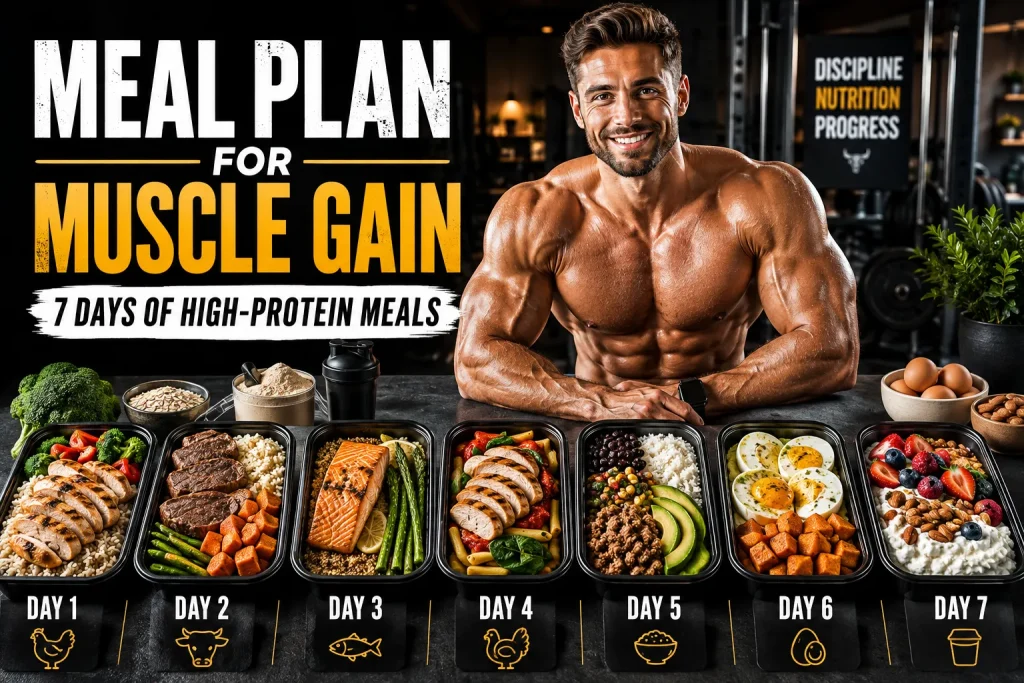
You walk into the gym twice a week but your arms look the same. Your protein shake sits empty but the scale hasn’t moved up. A Meal Plan for Muscle Gain: 7 Days of High-Protein Meals turns nutrition from guesswork into a system. Eating more protein than your body burns builds new muscle tissue.
Why Your Current Meal Plan for Muscle Gain Fails
Most people eat protein at dinner and ignore it the rest of the day. Your muscles need amino acids every three to four hours. Skipping breakfast means you lose eight hours of muscle building overnight. Then you wait until lunch to eat again.
Timing matters as much as total protein intake. Your body can only process about 25 to 35 grams of protein per meal. Eating 100 grams at dinner doesn’t make up for zero at breakfast. The excess converts to energy or gets stored as fat.
Carbs get blamed but they refill glycogen stores after training. Without carbs your body breaks down muscle for energy during workouts. Fat intake affects hormone production including testosterone. All three macros play a role in muscle growth.
How Much Protein You Actually Need in Your Meal Plan for Muscle Gain
Research shows 0.7 to 1 gram of protein per pound of body weight. A 180 pound man needs 126 to 180 grams daily. Most people eat half that amount without tracking. Chicken breast has 31 grams per 100 grams of meat.
You’d need to eat 400 to 600 grams of chicken daily. That’s 14 to 21 ounces spread across multiple meals. Eggs add 6 grams each. Greek yogurt provides 10 grams per 100 grams. The numbers add up fast when you plan properly.
Supplements like protein powders from quality brands fill gaps between meals. They don’t replace whole foods but they make hitting targets easier. One scoop typically contains 20 to 25 grams. Mix it with water or milk after training.
Meal Plan for Muscle Gain Day One Through Three
Day one starts with four whole eggs scrambled with spinach and cheese. Add two slices of whole grain toast with peanut butter. Total protein hits 35 grams before you leave the house. Carbs provide energy for your morning workout.
Mid morning snack includes Greek yogurt with granola and berries. This adds another 15 grams of protein. Lunch features 200 grams of grilled chicken breast with brown rice and broccoli. You’re at 100 grams of protein by 1pm.
Afternoon brings a protein shake with a banana. Dinner serves 200 grams of salmon with sweet potato and asparagus. Evening snack offers cottage cheese with almonds. Day one total reaches 165 grams of protein.
Day two swaps eggs for oatmeal with protein powder mixed in. Lunch changes to ground turkey with quinoa and peppers. Dinner features lean beef with pasta and green beans. The variety prevents boredom while maintaining protein targets.
Day three introduces tuna for lunch and pork chops for dinner. Breakfast keeps eggs but adds turkey sausage. Each day hits similar protein totals with different food sources. Your body gets all essential amino acids from varied proteins.
Meal Plan for Muscle Gain Day Four Through Seven
Day four brings back chicken but in different forms. Breakfast uses chicken sausage with hash browns and vegetables. Lunch serves chicken thighs instead of breast for more flavor. Dinner features a chicken stir fry with rice noodles.
Day five focuses on fish with salmon at breakfast mixed into an omelet. Tuna salad appears at lunch with whole grain crackers. Dinner serves white fish like cod with roasted potatoes. Omega 3 fatty acids support recovery and reduce inflammation.
Day six reintroduces red meat with a breakfast steak and eggs. Lunch brings a turkey burger with sweet potato fries. Dinner serves lamb chops with couscous and roasted vegetables. Higher fat content supports testosterone production.
Day seven combines favorites from the previous six days. Breakfast repeats the best option from your experience. Lunch uses whichever protein you enjoyed most. Dinner celebrates the week with your preferred meal. This flexibility keeps the plan sustainable.
Carb Timing in Your 7 Days of High-Protein Meals
Your body needs carbs most around training time. Eat 30 to 50 grams one to two hours before lifting. This tops off glycogen stores for maximum performance. Rice, oatmeal, and potatoes work well pre workout.
Post workout carbs matter even more for muscle growth. Your muscles absorb nutrients faster in the 30 minutes after training. Pair 40 to 60 grams of carbs with protein. White rice digests faster than brown for this window.
Evening carbs don’t make you fat despite popular belief. Total daily calories determine fat gain. Carbs at dinner help you sleep better. They increase serotonin production in your brain. Just keep portions reasonable.
Shopping List for Your Meal Plan for Muscle Gain
Buy chicken breasts in bulk at warehouse stores. Ground turkey costs less than whole cuts. Eggs keep for three weeks in the fridge. Greek yogurt lasts 10 days after opening. Stock up on what’s on sale.
Frozen vegetables cost less and last months without spoiling. Broccoli, spinach, and peppers work in multiple meals. Brown rice and quinoa store for years in sealed containers. Sweet potatoes stay fresh for two weeks. Oatmeal never goes bad.
Canned tuna provides cheap protein in emergencies. Peanut butter adds calories and healthy fats. Cottage cheese offers slow digesting protein before bed. Protein powder becomes cost effective when you calculate price per gram. One container lasts two to three weeks.
Meal Prep Strategy for 7 Days of High-Protein Meals
Sunday afternoon becomes your prep time. Cook all chicken breasts at once in the oven. Grill multiple portions of salmon and beef. Boil a dozen eggs for quick snacks. This takes two hours total.
Portion everything into containers immediately after cooking. Label each with the day and meal name. Stack them in the fridge in order. Grab and go in the morning. No thinking required.
Rice cookers make carbs hands off. Start it and walk away for 20 minutes. Chop all vegetables on Sunday. Store them in bags separated by meal. Prep work upfront saves 45 minutes daily during the week.
Adjusting Your Meal Plan for Muscle Gain Based on Results
Weigh yourself every Monday morning after using the bathroom. Track the average over four weeks. Gaining 0.5 to 1 pound per week means you’re building muscle. Faster gains usually include more fat.
No weight gain after four weeks means you need more calories. Add one extra meal or make portions 20% larger. Gaining more than 1.5 pounds weekly means too many calories. Cut one snack or reduce carb portions slightly.
Strength increases matter more than scale weight. If your bench press goes up 10 pounds, the plan works. Measurements track progress better than weight alone. Measure your arms, chest, and thighs monthly. Photos show changes you miss in the mirror.
Common Mistakes That Ruin High-Protein Meal Plans
People buy too many different ingredients their first week. Fifteen types of vegetables spoil before you use them. Stick to five proteins and five carb sources. Simplicity beats variety when starting out.
Skipping meals because you’re not hungry sabotages muscle gain. Your appetite adjusts to current intake levels. Eating more feels uncomfortable at first. Push through for two weeks and hunger increases naturally.
Drinking calories from juice or soda fills you up without protein. One can of soda has 150 calories of pure sugar. That’s space for 25 grams of protein wasted. Water, black coffee, and unsweetened tea work best. Save calories for actual food.
Supplements That Support Your Meal Plan for Muscle Gain
Whey protein digests fast and contains all essential amino acids. Use it right after training. Casein protein digests slowly over six to eight hours. Take it before bed to feed muscles overnight.
Creatine monohydrate increases strength and muscle size reliably. Studies show 3 to 5 grams daily works. It costs about 20 cents per day. The effect builds over weeks of consistent use.
Many lifters benefit from comprehensive supplements that combine multiple ingredients for better results. Vitamin D supports testosterone if you live in northern climates. Omega 3 supplements replace fish if you don’t eat it. Multivitamins cover basic nutritional gaps from imperfect eating.
Eating Out While Following 7 Days of High-Protein Meals
Restaurants serve protein portions larger than home cooked meals. Steakhouses make hitting targets easy. Order an eight ounce steak with baked potato and vegetables. Skip the bread basket to save room.
Mexican restaurants offer burrito bowls with double chicken. Ask for extra rice and beans. Hold the sour cream and cheese to reduce fat. Chipotle style places show nutrition info online.
Breakfast diners serve eggs any style you want. Order a four egg omelet with turkey and vegetables. Add toast and hash browns for carbs. Total cost runs under 12 dollars. One meal covers 50 grams of protein easily.
How Training Intensity Affects Your Meal Plan for Muscle Gain
Lifting four days per week needs more calories than two days. Your body burns energy repairing damaged muscle tissue. Rest days still require full protein intake. Muscle building happens during recovery, not during workouts.
Heavy compound movements like squats and deadlifts demand more carbs. These exercises use multiple muscle groups simultaneously. Isolation work like bicep curls needs less fuel. Match carb intake to training volume.
Cardio burns calories that must be replaced for muscle gain. Running three miles uses about 300 calories. Add that back through an extra snack. Too much cardio makes gaining muscle harder. Limit it to two or three short sessions weekly.
Budget Friendly Options for High-Protein Meals
Canned tuna costs one dollar per can with 25 grams of protein. Eggs run three dollars per dozen. Each egg provides six grams. Dried beans cost pennies per serving after soaking and cooking.
Chicken leg quarters sell for under two dollars per pound. They have more fat than breast but work fine. Ground beef at 80/20 ratio costs less than lean cuts. Drain the fat after cooking to reduce calories.
Buying a whole chicken and cutting it yourself saves 40%. Use the carcass for bone broth. Freeze portions you won’t eat within three days. Nothing goes to waste. Your grocery bill stays under 50 dollars weekly.
Tracking Progress Beyond the Scale
Take front, side, and back photos every two weeks. Wear the same clothes and use the same lighting. Compare photos monthly to see real changes. The mirror lies because you see yourself daily.
Keep a training log with weights and reps. Write down every workout. Progress means lifting heavier or doing more reps. If your squat goes from 135 to 185 pounds, you built muscle. The numbers don’t lie.
How your clothes fit reveals body composition changes. Shirts get tighter in the chest and arms. Pants fit tighter in the thighs. The scale might only show five pounds gained. Your body changed more than weight suggests.
Long Term Sustainability of Your Meal Plan for Muscle Gain
Eating the same seven days forever leads to burnout. Rotate in new recipes every two weeks. Try different protein sources like bison or duck. Experiment with new vegetables and grains. Variety prevents quitting.
Schedule one flexible meal weekly where rules don’t apply. Eat pizza, burgers, or whatever you crave. One meal won’t ruin progress. It makes the other 20 meals easier to follow. Mental breaks matter as much as physical recovery.
Building muscle takes months and years, not weeks. Your first month shows small gains. Month three brings noticeable size. After six months people comment on your physique. Stay consistent and results compound over time. Quality products like those from trusted supplement companies can support your progress when combined with proper nutrition.
Frequently Asked Questions
Can I build muscle without eating meat?
Yes, plant proteins like beans, lentils, and tofu provide complete nutrition. You need to eat larger volumes to match meat protein. Combine different plant sources throughout the day. Supplement with pea or rice protein powder.
How soon will I see muscle growth results?
Strength increases appear within two to three weeks of consistent training. Visible muscle size takes six to eight weeks. Most people notice changes around week four. Progress photos reveal what the mirror hides.
Do I need to eat immediately after working out?
The post workout window lasts several hours, not just 30 minutes. Eating within two hours works fine for most people. Protein and carbs together improve recovery. Don’t stress if you can’t eat instantly.
Can I drink alcohol while following this meal plan?
Alcohol slows muscle protein synthesis and reduces testosterone temporarily. One or two drinks weekly won’t ruin progress. Heavy drinking multiple times weekly will limit gains. Save it for special occasions.
What if I miss a meal during the day?
One missed meal doesn’t destroy your progress. Eat a slightly larger meal later to compensate. Missing meals regularly prevents muscle growth. Prep and planning eliminate most missed meals.
Start your first prep session this Sunday and commit to following the plan for four full weeks.