

Why You're Wasting Strength Lifting Wrong
Lift heavy, waste less by mastering time under tension—the real driver of muscle growth, not just the weight on the bar. Controlled reps with deliberate tension make every second count, turning your workout into maximum gains.
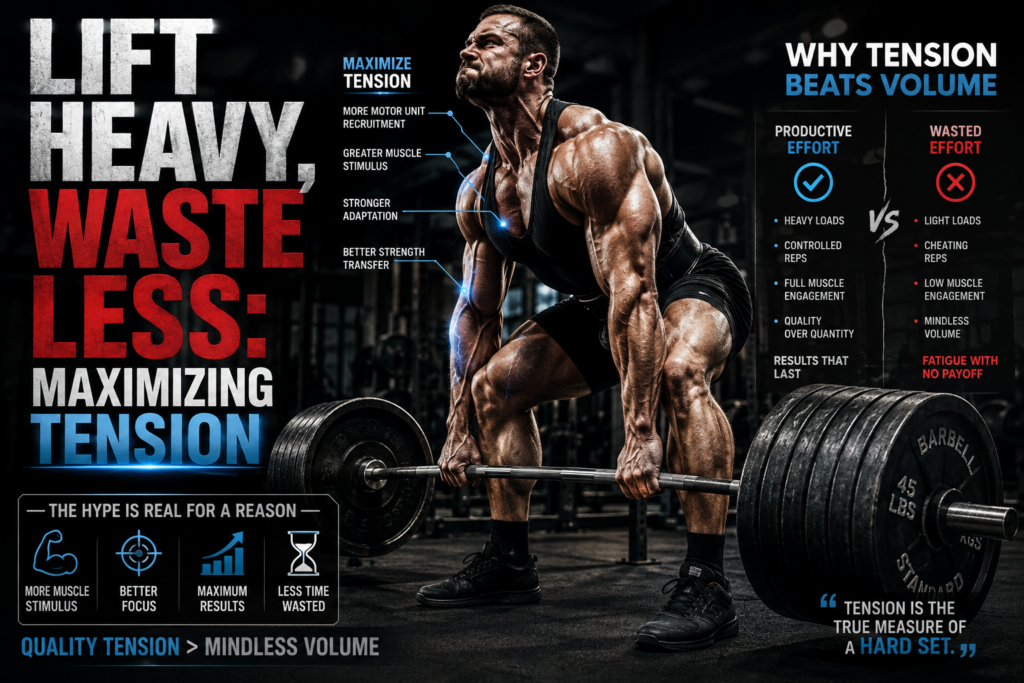
You walk into the gym with one goal tonight. Lift Heavy, Waste Less: Maximizing Tension is about getting more from each rep. Most lifters chase numbers but ignore what builds muscle. The weight matters less than how you use it.
Why Lift Heavy, Waste Less: Maximizing Tension Changes Everything
Tension drives muscle growth better than anything else. You can lift a car off the ground with momentum. That doesn’t mean your muscles worked hard. Time under tension dictates how much your fibers strain and tear. Those microtears heal bigger and stronger when you rest.
Heavy weight gives you a starting point. What you do with that weight determines your results. A fast rep with poor form wastes half the effort. A controlled rep with deliberate tension makes every second count. Your muscles can’t tell the difference between 80 kilos and 100 kilos if you throw the weight around.
Sound familiar?
Wasted reps add up over weeks and months. You show up five days a week but plateau after three months. The problem isn’t your program or your genetics. You’re leaking tension at every step of the movement. Fix that leak and you gain without changing a single exercise.
How Tension Escapes During Your Heaviest Sets
Momentum steals tension from the muscle. You bounce the bar off your chest during bench press. The stretch reflex does half the work for you. Your pecs never fully engage because physics handled the hardest part. The same thing happens when you swing dumbbells during curls.
Lockout points kill tension just as fast. You press a weight overhead and lock your elbows completely. Your skeleton holds the load now instead of your shoulders. Muscles rest for a full second at the top. That’s one second of zero growth stimulus per rep.
Breathing patterns matter more than most lifters realize. You hold your breath for six reps straight during squats. Oxygen debt forces you to stop early. Your legs had three more reps in them but your lungs gave out. Controlled breathing keeps tension smooth and sustainable.
Grip issues end sets before muscles fail. Your forearms burn out during deadlifts while your back feels fresh. The weight drops because your hands opened. Your target muscles never reached true failure. Straps solve this but most people skip them out of pride.
Lift Heavy, Waste Less: Maximizing Tension Through Tempo Control
Tempo refers to how fast you move the weight. A slow eccentric phase builds more muscle than a fast one. Lowering a weight for three seconds creates more damage than dropping it in one. The negative portion of any lift offers huge growth potential that most people ignore.
Try this during your next workout. Pick a weight you normally lift for eight reps. Lower it for four seconds on every single rep. You’ll barely hit five reps with the same load. Those five reps will hurt more than your usual eight ever did.
The concentric phase needs speed but not sloppiness. Explode upward with intent but stay tight throughout. Fast doesn’t mean jerky or uncontrolled. Think of a compressed spring releasing energy in one smooth burst. Your muscles contract hard when you move with purpose.
Pauses at the bottom reset momentum completely. Stop for one full second in the hole of a squat. Your legs have to restart the movement from zero velocity. No bounce means pure muscular effort to stand back up. Adding pauses to any exercise makes lighter weights feel brutal.
Lift Heavy, Waste Less: Maximizing Tension With Joint Positioning
Joint angles determine which muscles take the load. Your elbows flare out wide during overhead press. Suddenly your triceps do most of the work instead of your shoulders. A small adjustment inward shifts tension back to the deltoids where you want it.
Foot placement changes everything during lower body lifts. A narrow stance squat hits your quads harder than a wide stance. Wide stance recruits more glutes and adductors. Neither is wrong but each targets different areas. Match your stance to your weak points.
Wrist position affects pulling movements more than you’d think. A neutral grip during rows keeps tension on your lats. A supinated grip shifts work to your biceps. Your back never fully engages when your arms take over. Grip choice isn’t just about comfort.
Spinal position leaks force in every compound movement. A rounded back during deadlifts turns your spine into a lever. Your erectors strain to hold position instead of moving weight. A neutral spine channels all your power into the bar. One cue fixes a dozen problems.
Lift Heavy, Waste Less: Maximizing Tension Beyond the Gym
Recovery determines whether tension translates into growth. You break muscle down during training. Sleep and nutrition build it back up stronger. Skip either one and you just accumulate damage without adaptation. Seven hours of sleep isn’t a suggestion for serious lifters.
Protein intake needs to match your training volume. Your body can’t rebuild tissue without raw materials. Aim for two grams per kilo of body weight daily. Spread it across four meals instead of cramming it into two. Consistent supply beats occasional floods of amino acids.
Stress management affects your hormones directly. High cortisol from work or life drama kills testosterone production. Low testosterone means weak recovery no matter how well you eat. Managing stress isn’t soft advice, it’s biochemistry. Meditation or walking helps more than another supplement.
Supplements fill gaps but don’t replace fundamentals. A quality joint support formula helps you train harder without pain. Products designed for active recovery can reduce inflammation between sessions. Nothing replaces food and sleep though.
Programming Around Lift Heavy, Waste Less: Maximizing Tension Principles
Your program structure should reflect tension goals. Five sets of five reps works for strength. Three sets of twelve with slow tempo works better for size. Match your rep scheme to whether you want neural adaptation or muscular damage. They require different approaches.
Exercise order impacts how much tension you can create. Compound lifts come first when you’re fresh. Isolation work finishes off muscles that are already fatigued. Doing curls before deadlifts means your grip fails early. Sequence matters as much as exercise selection.
Deload weeks prevent your body from adapting to constant tension. Push hard for three weeks straight. Take one week at sixty percent intensity. Your nervous system recovers while your muscles consolidate gains. Skipping deloads leads to injuries and stalls within months.
Progressive overload doesn’t always mean adding weight. You can add one rep per set instead. You can slow down your tempo by one second. You can reduce rest time by fifteen seconds. All three increase tension without touching the loading. Weight is just one variable among many.
Fixing Form Breaks That Kill Tension Mid-Set
Video yourself lifting from multiple angles. What feels tight might look loose on camera. Your hips shoot up first during squats even though it feels smooth. The footage shows the truth your proprioception misses. Record every heavy session for two weeks.
Fatigue changes your form in predictable ways. Your first rep looks perfect. Your sixth rep involves three compensations. Identifying those compensations tells you which muscles need extra work. Weak points reveal themselves under fatigue before anywhere else.
Cueing systems keep your mind on one thing per set. Think “chest up” for the entire squat set. Next set think “knees out” instead. One mental focus beats trying to remember five cues at once. Your brain can’t process multiple commands while lifting heavy.
Partner feedback catches issues you can’t feel. A training partner watches your bar path during bench press. They notice the bar drifts toward your face on the descent. You had no idea until they mentioned it. External eyes spot internal blind spots.
Metabolic Factors Supporting Tension-Based Training
Glycogen stores fuel high tension work better than fat does. Carbs before training provide ATP and phosphocreatine for sustained muscular contractions. Training fasted depletes muscle glycogen and impairs strength performance on compound lifts. It sabotages the neuromuscular coordination needed to maintain tension throughout heavy sets because your muscles lack fuel. Consume 20-40 grams of simple carbs 30-60 minutes pre-workout, or a mixed meal with carbs and protein two hours before lifting for optimal performance and sustained tension capacity.
Hydration affects muscle contraction quality directly. Dehydrated muscle tissue can’t generate full force. You lose two percent of strength for every percent of body weight lost to water. Sip water between sets instead of chugging it after training. Consistent intake beats post-workout flooding.
Electrolyte balance matters during longer sessions. Sodium and potassium regulate nerve signals to muscles. Cramping mid-set means your electrolytes crashed. A pinch of salt in your water bottle prevents this. Proper supplementation strategies help maintain balance during intense phases.
Blood flow to working muscles improves with proper warm-up sets. Cold muscles can’t achieve peak tension safely. Three warm-up sets with increasing weight prepares tissue better than static stretching. Movement-based preparation beats holding stretches for strength work.
Mental Approaches to Sustaining Maximum Tension
Visualization before heavy sets primes your nervous system. Close your eyes and picture the entire lift. See yourself hitting depth and driving up smoothly. Your brain rehearses the motor pattern before your body executes it. This isn’t mystical, it’s motor learning science.
Arousal levels need calibration for different lifts. High arousal helps you grind through a max deadlift. Too much arousal makes you shake during precise overhead work. Match your mental state to the movement demands. Calm focus beats amped-up chaos for most exercises.
Intention changes how muscles fire during any movement. Think about squeezing the muscle instead of moving the weight. Your mind-muscle connection improves when you focus internally. External focus works for strength but internal focus builds size. Choose based on your current goal.
Consistency compounds results faster than intensity alone. Training three times weekly for a year beats six times weekly for two months. Your body adapts to regular stimulus better than sporadic punishment. Supporting your recovery between sessions makes consistency possible long-term. Show up tired and you’ll skip within weeks.
Frequently Asked Questions
How much weight should I lift to maximize tension?
Use a weight you can control for eight to twelve reps. The load should challenge you without breaking your form. If you can’t feel the target muscle working, the weight is wrong. Adjust based on muscle engagement rather than ego.
Does lifting slower always build more muscle than lifting fast?
Slower eccentrics build more muscle in most cases. The concentric phase benefits from controlled speed with explosive intent. A three-second lower and one-second press works well for size. Pure strength training sometimes needs faster concentrics.
Can I maximize tension without lifting heavy weights?
Yes, through tempo manipulation and constant tension techniques. Lighter weights with four-second eccentrics create serious growth stimulus. Eliminating lockouts keeps muscles under load throughout the set. Tension matters more than absolute load.
How do I know if I’m wasting tension during a set?
Record your sets and watch for momentum or rest points. If you bounce weights or lock out completely, you’re wasting tension. Muscle burn and pump indicate good tension. Lack of fatigue despite heavy weight suggests wasted effort.
What’s the biggest mistake people make with tension-focused training?
They add too much weight too soon. Ego takes over and form collapses within three reps. Start lighter than you think you need. Add weight only when you maintain perfect tension throughout every rep.
Pick one exercise tomorrow and slow your tempo by two seconds on the way down.