
The Hydration Amount Bodybuilders Won't Tell You About
Muscle tissue is 75% water, and proper hydration is essential for repairing the micro-tears created during workouts. Most lifters need 35-45 milliliters per kilogram of body weight daily, plus an additional 500-1000 milliliters per hour of intense training.
How Much Water Should I Drink For Muscle Growth?
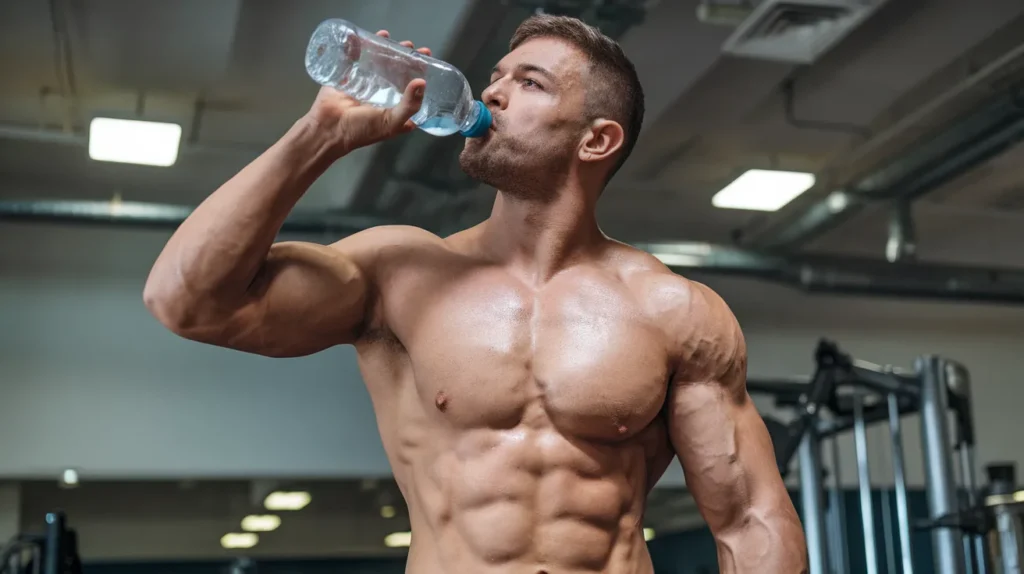
How much water should I drink for muscle growth? Muscle tissue is 75% water. Your workouts create small tears that need water to repair. The baseline answer is simpler than you think.
How Much Water Should I Drink for Muscle Growth Daily?
Most lifters focused on muscle gain need 35 to 45 milliliters per kilogram of body weight per day. For a 90 kilogram lifter training 90 minutes, that equals roughly 4.5 to 5 liters daily. Bodybuilders need a minimum of 3 liters each day, with adjustments depending on climate and exercise intensity.
Your needs increase on training days. Add 500 to 1000 milliliters for each hour of hard work.
Women should aim for about 2.7 liters of water daily and men aim for about 3.7 liters. That’s the general population baseline. You’re lifting heavy. You need more.
Why Water Controls How Much Muscle You Build
Muscle protein synthesis rates are reduced when participants were dehydrated by just 2% body mass. Dehydrated muscle cells shrink, which signals a catabolic state and slows recovery. This isn’t theory. 1.5% dehydration decreases muscle strength after 1 rep.
When cell volume drops due to dehydration, your body interprets it as a catabolic signal with elevated cortisol that actively suppress anabolic signaling. Your body switches from building mode to survival mode. Less water means less growth.
Water makes up 76% of muscle mass. You’re not just drinking for performance. You’re drinking to physically construct new tissue.
Timing Your Water Intake for Muscle Growth
Athletes should drink 16 to 24 fluid ounces of water within the 2 hours prior to training. At 10 to 20 minutes prior to exercise consume another 7 to 10 fluid ounces of water. Start hydrated. Most people walk into the gym already behind.
All athletes should consume approximately 6 to 12 fluid ounces every 10 to 20 minutes throughout their training. Don’t wait until you’re thirsty. Thirst is a late sign of dehydration.
Athletes should replace every 1 pound loss in weight with 16 to 24 fluid ounces of water within 2 hours post-training. Weigh yourself before and after. That weight drop is almost entirely water loss.
Stay Hydrated while incorporating the Best Weight Lifting Solutions Here!
How Dehydration Sabotages Muscle Protein Synthesis
Dehydration impairs protein synthesis, with rates reduced when participants were dehydrated by just 2% body mass. Two percent is nothing. That’s 1.5 kilograms for a 75 kilogram lifter.
If a cell is dehydrated, it can’t function optimally, potentially affecting the rate and efficiency of protein synthesis as insufficient hydration can slow down the delivery of amino acids to the muscles. Your muscles can’t use the protein you eat. It sits there waiting for water to transport it.
A reduction in cell volume correlates with a catabolic environment, which favors muscle protein breakdown, rather than anabolic environment. You’re literally breaking down more tissue than you build.
Water, Glycogen Storage, and Recovery Between Sessions
Each gram of glycogen is stored with 3 grams of water, and rapid glycogen synthesis requires both carbohydrates and adequate water. Eat carbs but skip water? Your glycogen stores refill slower.
A depleted athlete who eats carbohydrates but is dehydrated will replenish glycogen slower than one who is adequately hydrated. This matters most when you train frequently. Your second session suffers when your first session’s recovery was dehydrated.
Athletes who are well-hydrated post-exercise experience DOMS of lesser severity and shorter duration than those who are dehydrated. You’ll feel better and bounce back faster.
Extra Water Needs When Building Muscle
Higher protein diets require more water for kidney function and nitrogen excretion, especially if you’re eating 2 grams of protein per kilogram of body weight. You’re breaking down more amino acids. Your kidneys need more water to process them.
This is especially important if you’re using creatine or other supplements that affect intramuscular water retention. Creatine pulls water into muscle cells. Give it the water it needs.
Enhanced perspiration during vigorous exercise sessions means you lose more fluid through sweat loss, which increases fluid replacement needs and accelerates dehydration risk. Environmental factors like ambient temperature, humidity levels, and gym ventilation directly impact sweat rates and electrolyte loss. Hot gym conditions, intense training density, and prolonged sessions can increase fluid losses by 1-2 liters per hour, requiring proportional increases in water intake to maintain hydration status and support muscle protein synthesis during recovery.
How Much Water Should I Drink for Muscle Growth With Electrolytes?
More than 70% of skeletal muscles are composed of water, and muscles need a proper balance of water and electrolytes, including minerals such as sodium and potassium. Electrolytes like sodium, potassium, magnesium, and calcium play a vital role in muscle recovery by helping regulate hydration and nerve function.
If you only replace fluids with plain water, the sodium levels in your body get diluted and drop, leading to an imbalance of equilibrium. Water alone isn’t enough during long training sessions. You need sodium back.
Low sodium or potassium can trigger painful, sudden contractions. Ever cramped mid-set? Low electrolytes are usually why.
Measuring Your Hydration Status
Common signs include dark yellow urine, persistent fatigue even after rest days, muscle cramps during or after training, and noticeably slower recovery between sessions. Your urine color tells you everything. Pale yellow is the goal.
Weigh yourself naked before and after training. Every kilogram lost is roughly one liter of fluid.
When you’re under-hydrated, cortisol spikes and higher cortisol levels can hinder an anabolic state. Your body chemistry shifts against you.
Frequently Asked Questions
Can I drink too much water when building muscle?
More water doesn’t equal faster muscle gains, as excessive water can dilute electrolytes, leading to hyponatremia. Stay within the recommended ranges. Balance matters more than excess.
Does cold water build muscle faster than warm water?
For muscle growth purposes, total daily volume matters more than temperature. Temperature is irrelevant. Drink whatever gets you to your daily target.
How much water should I drink for muscle growth if I’m 80 kilograms?
A practical target for most people focused on hypertrophy is 35 to 45 milliliters per kilogram of body weight per day, which works out to roughly 3 to 4 liters for an 80 to 90 kilogram individual. That’s 2.8 to 3.6 liters for 80 kilograms.
Why do my muscles feel flat when I don’t drink enough water?
Muscle tissue is approximately 75% water, and dehydrated muscle cells shrink, which signals a catabolic state and slows recovery. Muscles literally deflate without water.
Should I drink more water on rest days?
Protein synthesis, glycogen replenishment, inflammation clearance, and cell volumization all require adequate water, and dehydration measurably slows recovery. Yes, rest days still demand high water intake for repair.
Start tracking your daily water intake tomorrow and weigh yourself before and after your next training session to find your personal baseline.