
Why Most Calf Exercises Are Wasting Your Time
Your calves are resistant to growth because they’re constantly conditioned through daily activities and composed mostly of slow-twitch muscle fibers. The solution is to stop training them once weekly and start hitting them with different, more frequent training strategies.
How do I grow my calves? You look in the mirror and see chicken legs. Your quads are fine. Your calves look exactly the same as two years ago. The key is to stop training them once weekly and start hitting them differently.
Why Your Calves Refuse To Grow When Everything Else Does
Your calves walk you around all day long. They move you up stairs. They get you out of chairs. They’re already strong from that constant work. Calves are used constantly during walking, running, jumping, and standing, meaning they’re already conditioned to endurance work from birth. Your calves can handle way more than the single lazy workout most people give them.
The calves comprise mostly slow-twitch muscle fibers, which are slightly more resistant to hypertrophy. This is bad news if you’re trying to build size fast. But it doesn’t mean growth is impossible.
Most stubborn calves are not a genetic dead end, they are just trained poorly. Most people do the opposite: a few bouncy, half-range sets at the end of leg day, once a week, and then they blame genetics. That approach won’t work.
How Do I Grow My Calves With Two Completely Different Muscles
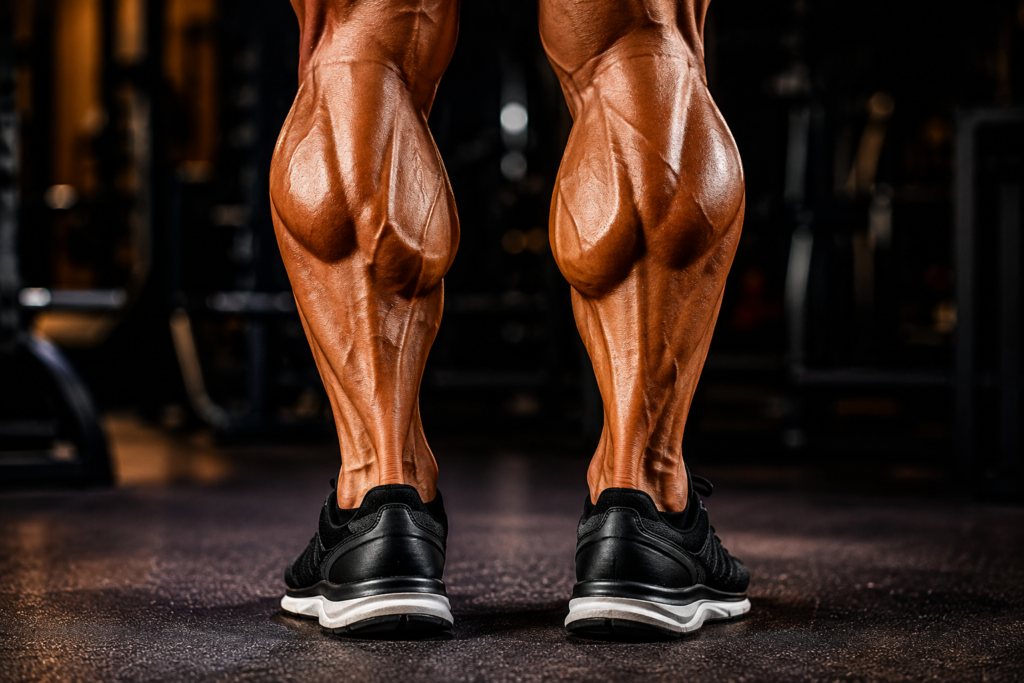
Your calf has two muscles that need two different approaches. The gastrocnemius and soleus are the two prominent players when we look at building calf muscles, with the gastrocnemius being the bulkier, biarticular muscle that crosses both the knee and ankle joint, making it most noticeable for creating that defined calf peak. The gastrocnemius is what you see when you flex your calf. The soleus sits underneath—a monoarticular muscle that crosses only the ankle joint and contributes to overall calf thickness and shape from underneath.
Standing calf raises target both muscles because the knee is straight, while seated calf raises focus primarily on the soleus because the knee is bent at 90 degrees. Knee position changes everything.
Standing raises give you the diamond shape on the back of your leg. Seated raises add thickness underneath. Skip either one and you’re leaving half your calf undeveloped. Standing calf raises grow your gastrocnemius, while the muscle growth seen in the soleus is the same from doing only seated or only standing calf raises.
Most people skip seated work entirely. This is wrong. You need both positions.
How Often Should I Train To Actually Grow My Calves
It’s recommended that you train your calves at least twice per week to see muscle growth. But you can push this much higher. Calves recover quickly because they’re designed to be used all day every day, so you can hit them multiple times a week.
Most individuals can recover from calf training at a timecourse that allows for 3-6 sessions of calves per week. Four times weekly is realistic for most people. Six times is aggressive but doable.
Training calves once weekly is a waste of time. They recover too fast. You’re giving them six days off when they could handle two.
Professional athletes and competitive bodybuilders often perform 15-25 weekly sets for calf development, significantly higher than typical muscle group recommendations, because this increased volume accounts for the calf muscles’ high endurance capacity. Start lower than that. Add sets as you adapt. But know that calves respond to volume.
The Rep Scheme Mistake That Keeps How Do I Grow My Calves From Working
The acute variables for muscular hypertrophy are 6-12+ reps, for 4-5 sets. But calves often respond better to higher reps. For the calves, you may see better results using a higher rep range to increase time under tension.
Try sets of 15 to 20 reps. Try sets of 25 to 30 reps. Mix both in the same week. Calves can handle the burn because they’re built for endurance.
Few calf training behaviors are as useless as bouncing your way through 20 rapid, shallow calf raises, because the burning sensation you feel is your Achilles tendon doing most of the work. Pause at the top. Hold the stretch at the bottom. Control the entire movement.
Three things make the difference: full range with a deep stretch at the bottom and a full contraction at the top, no bouncing, and high frequency. Most people bounce because the weight is too heavy. Drop the weight. Do the movement right.
How Do I Grow My Calves If Genetics Are Against Me
Genetics play a massive role in your calf development because genetics play a massive role in ALL muscle development. Some people have longer tendons. Some people have shorter muscle bellies. Guys with naturally skinny calves tend to have a longer calf tendon along with shorter calf muscles that insert higher up on their lower leg. This makes growth harder but not impossible.
Genetics alone do not seal your fate when it comes to calf development. You won’t build calves like someone with perfect insertions. But you can add size if you train them properly. Many people underestimate how much disciplined training can improve their calf size beyond what they assumed was genetically possible, and consistency over months or years combined with smart programming often surprises those who thought their calves were doomed by DNA alone.
Set realistic goals. You might not get massive calves. But you can get bigger calves than you have now.
The Single-Leg Trick That Forces Growth In Stubborn Calves
Train one leg at a time. For each calf, perform one set of raises with the toes of that foot pointed out, one with toes straight forward, and one with toes pointed in, because each angle shifts the emphasis to a different area of the muscle. This takes longer but it works.
Your left calf is probably weaker than your right. Your body compensates during regular raises. Single-leg work fixes this. You can’t cheat when only one leg is moving.
Load is easier to control with single-leg raises. You can focus on form. You can feel the muscle working. Most people skip this because it’s tedious. That’s why their calves don’t grow.
What To Eat When You’re Trying To Grow Your Calves
Daily protein targets of roughly 1.6 to 2.2 grams per kilogram bodyweight help building calf muscles. For a 75 kilogram person, that’s 120 to 165 grams of protein daily. Spread this across four meals. Don’t dump it all in one sitting.
You’ll need plenty of protein for muscle repair and growth, ample carbohydrates for energy to power through your intense workouts, and healthy fats to balance hormone production. Carbs fuel your training. Fats support recovery. Protein builds tissue.
Drink enough water. Dehydration kills performance. It also increases cramping risk in calves specifically. Keep a bottle with you. Aim for clear urine.
No supplement will grow your calves if your training frequency is wrong. Fix the training first. Then worry about nutrition details.
Frequently Asked Questions
How long does it take to see calf growth?
Most people see noticeable changes after 8 to 12 weeks of consistent training. Calves grow slower than other muscles. Expect small gains over several months, not dramatic changes in weeks.
Can I train calves every day?
Yes, you can train calves daily if you manage volume correctly. Keep daily sessions short with moderate intensity. Avoid training to failure every single day or recovery will suffer.
Why do my calves cramp during calf raises?
Cramping usually means dehydration, low electrolytes, or poor warm-up. Drink more water throughout the day. Add a pinch of salt to meals. Stretch your calves before training.
Should I train calves on leg day or separately?
Train them separately if possible. Your calves get better attention when you’re fresh. Training them after squats means you’re already fatigued and form suffers.
Do calf raises actually work for growth?
Calf raises work if you do them with full range, controlled tempo, and high frequency. They don’t work if you bounce through half reps once weekly. The exercise isn’t the problem.
Start training your calves three times this week with controlled reps and full range.