
The Forearm Exercise Everyone Gets Wrong
Getting bigger forearms requires direct isolation work targeting the flexor, extensor, and brachioradialis muscles. Wrist curls, wrist extensions, and reverse curls performed with slow tempo and proper form deliver the muscle growth results you’re looking for.
How Do I Get Bigger Forearms?
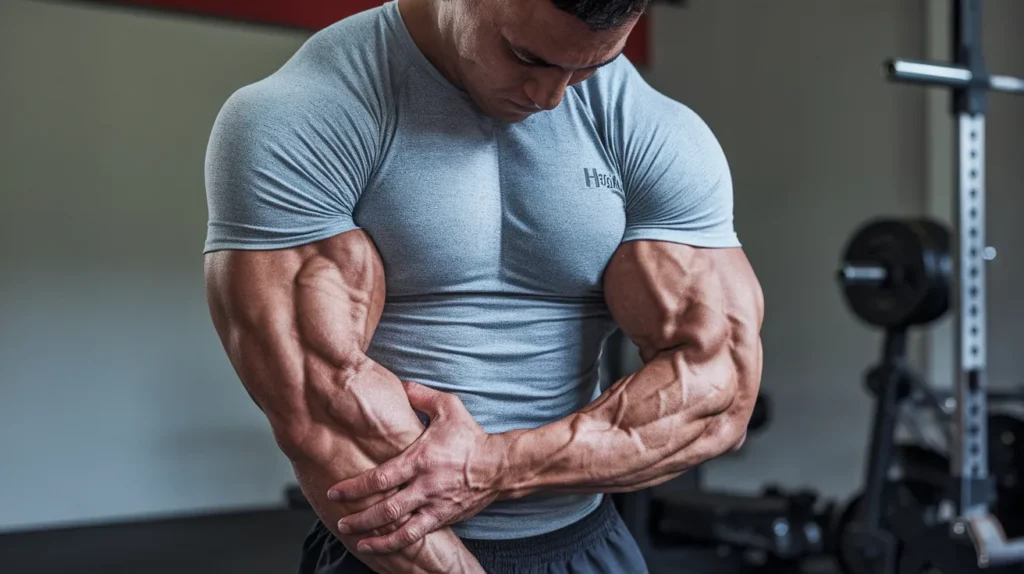
You look at someone with thick forearms and wonder why yours look half that size. Maybe you lift regularly but your lower arms stay stubbornly small. How do I get bigger forearms? The answer is direct isolation work.
How do I get bigger forearms with the right exercises?
Three movements cover everything you need. Wrist curls, wrist extensions, and reverse curls target the complete forearm structure. Wrist curls target the flexor muscles on the underside directly. Reverse wrist curls work the extensors on top of the forearm. Reverse curls hit the brachioradialis muscle running along your thumb side. That muscle adds visible size to the lower arm.
Slow tempo during wrist curls increases time under tension, a key driver of muscle growth. Rest your forearms on a bench with a barbell on your fingers, flex your wrists, squeeze at the top. Light to moderate weights in the 12 to 15 or 15 to 20 rep range work best with good form. The burn you feel shows muscle recruitment. Forget heavy weights here.
If forearm muscle size matters more than grip goals, wrist curls with finger flexion train finger flexors plus other forearm muscles. Grip work builds strength but won’t produce noticeably bigger forearms. Static holds help you lift heavier on deadlifts. They don’t create the size you see in the mirror.
Training frequency that makes forearms grow
Most people recover from forearm training fast enough to train them three to six sessions per week. Most benefit from two to four forearm sessions weekly. These muscles recover fast because they’re well supplied with blood.
Local recovery happens rapidly in the well-vascularized forearms, allowing productive sets when the burn from the last set fades. You can rest as little as 10 seconds between sets. Sporadic forearm training produces sporadic results because these muscles respond well to consistent, regular stimulus through brief, frequent sessions.
Aim for 12 to 20 total sets per week distributed across three to four sessions. A total weekly volume of 10 to 15 sets works, around three to five sets per session, taking about 10 minutes. Split your work across multiple days rather than cramming it into one marathon session.
Pulling exercises give your forearms substantial indirect stimulation, so consider overall training volume when planning dedicated forearm work. Rows and pulldowns already stress these muscles. Account for that when adding direct work.
How do I get bigger forearms despite genetic limits?
People with short muscle bellies and long tendons struggle to build forearms because growth potential is limited when you don’t have much muscle tissue to start with. Bodybuilders known for forearm development have long muscle bellies and short tendons, equaling great growth potential. You can’t change your tendon insertions.
Taller, lankier people are sometimes more genetically predisposed to have skinny forearms, the ectomorph body type known for being long and lean with less ability to put on muscle mass. People are born with big forearms, some can grow them, but most with big forearms already had them, and some can’t grow them. This is the hard truth.
But genetics set the ceiling, not the floor. Your genetics set the upper limit for forearm potential while training and lifestyle are the construction crew. Consistent progressive overload through grip-intensive training can push past genetics, with studies confirming direct grip training increases forearm circumference significantly within 12 weeks. Most people never reach their genetic ceiling anyway.
Within eight to 12 weeks, grip and forearm size improve measurably with consistent training. Track your circumference monthly. Measure at the widest point. Stop comparing yourself to someone with different insertions.
Your Natural Supplements for Forearm Growth in 2026
Rep ranges and tempo for size versus strength
Your forearms might need sets of 15, 20, or even 30 reps to feel the pump and trigger adaptation. Heavy, low-rep work builds structural strength of tendons and thick muscle fibers, while higher rep work increases blood flow and metabolic stress. Mix both approaches in your program.
Use controlled tempos like a three-second lowering phase to enhance muscle engagement. The lowering phase provides valuable training stimulus, and rushing through it or dropping weights sacrifices half the benefit through controlled eccentrics throughout full range of motion. Count to three on the way down every single rep.
Heavy farmer’s walks serve a different purpose than wrist curls. Farmer’s carries build stability using five to 10 reps. They strengthen connective tissue but won’t pump blood into the muscle bellies. Save them for the end of your session.
Avoiding overtraining and tendon pain
Forearms aren’t immune to overtraining despite their high training frequency tolerance, with persistent soreness, reduced grip strength, or sharp pains signaling excessive volume. Pain is usually a sign of tendon inflammation, so reduce frequency and focus on lighter weights with higher reps rather than training through it.
Allow at least 48 hours between high-intensity forearm sessions unless using low-load maintenance work. Daily heavy wrist curls wreck your tendons. The ideal training frequency for most lifters is three to four times per week, alternating between light, high-rep sessions and heavier resistance workouts.
Listen to your body on rest periods. If you can normally wrist curl 95 pounds for 15 reps, schedule your next forearm workout when you’ve recovered enough to hit that same performance. Fatigue takes longer to clear than muscle growth happens. Recovery limits your frequency more than growth cessation does.
Balancing forearm work with other training
Place direct forearm work at the end of sessions to ensure grip is fresh for main compound lifts. Frying your forearms before deadlifts ruins your pulling strength. Your grip fails before your back does.
Deadlifts, pull-ups, bench press, and many exercises rely on strong grip, and while these muscles get worked holding equipment, they often don’t progress fast enough without specific training. Supersets and compound movements like deadlifts and pull-ups naturally engage forearm muscles. This indirect work counts toward total volume.
Aim for around three forearm exercises per workout for growth. More than that risks diminishing returns. Two direct movements plus indirect work from your back training covers everything. Keep it simple.
Frequently Asked Questions
Can I train forearms every day?
You can train them daily with light work. Heavy sessions need 48 hours between them. Alternating intensity prevents tendon inflammation.
Why won’t my forearms grow despite training them?
Short muscle bellies and long tendons limit growth potential. Some people lack the genetic structure for large forearms. Progressive overload still helps within your limits.
How long until I see forearm growth?
Measurable size improvements appear within eight to 12 weeks of consistent training. Track circumference monthly at the widest point to monitor progress.
Should I use heavy or light weights for forearms?
Use both. Heavy loads build tendon strength with five to 10 reps. Light weights with 15 to 30 reps create metabolic stress for size.
Do wrist straps prevent forearm growth?
Straps let you lift heavier on back exercises but reduce forearm stimulus. Use them on heavy sets, then add direct forearm work after.
Start with three sets of wrist curls and three sets of reverse wrist curls twice per week.