
Bodybuilders Skip Fiber—Here's Why That Ruins Gains
Fiber for bodybuilding is often overlooked despite its critical role in nutrient absorption and digestive health. Proper fiber timing and intake directly impact protein utilization and training performance.
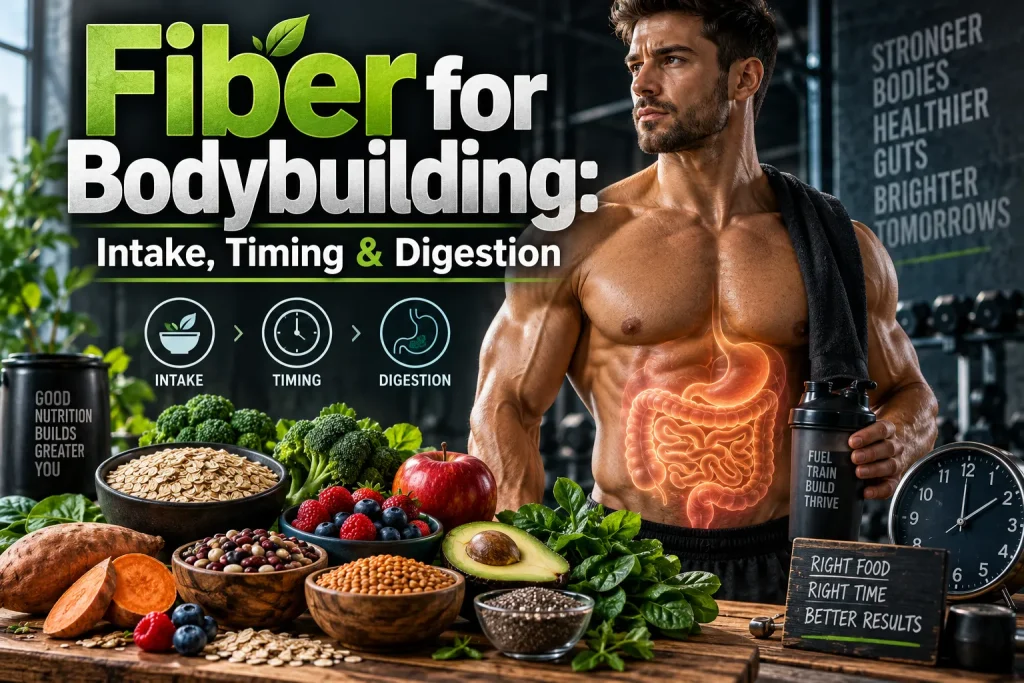
Fiber for Bodybuilding: Intake, Timing & Digestion often gets dismissed by lifters chasing protein numbers. Most gym goers track macros religiously but ignore this performance factor. Gut issues during training sessions reveal the cost of poor fiber strategy. The difference between adding fiber randomly versus timing it properly changes everything.
Fiber for Bodybuilding: Intake, Timing & Digestion
Protein and carbohydrates usually receive most of the attention in bodybuilding nutrition. Protein supplies amino acids needed to support muscle protein synthesis, while carbohydrates help fuel demanding resistance-training sessions and replenish glycogen. But there is another nutritional variable that bodybuilders should pay attention to: dietary fiber.
Getting the right amount of fiber can support digestive regularity, satiety, metabolic health, and the gut microbiome. Getting too much—particularly at the wrong time—can leave a lifter feeling bloated, excessively full, or uncomfortable during training.
This creates an important practical question: how much fiber should a bodybuilder eat per day, and when should it be consumed?
The answer is not simply “more fiber is better.”
Bodybuilders need enough fiber to support health and digestion without allowing an extremely high-fiber diet to interfere with calorie intake, gastrointestinal comfort, or workout nutrition.
This guide explains fiber intake for bodybuilding, fiber timing around workouts, digestion on high-protein diets, fiber during bulking and cutting, and how to increase fiber without causing unnecessary bloating.
Why Is Fiber Important for Bodybuilders?
Dietary fiber refers primarily to carbohydrate components of plant foods that resist digestion in the small intestine.
Unlike digestible carbohydrates, fiber is not simply broken down into glucose and absorbed. Different types of fiber behave differently as they move through the gastrointestinal tract.
Some fibers add bulk to stool. Others absorb water or form gels. Fermentable fibers can be metabolized by intestinal bacteria, producing compounds including short-chain fatty acids.
This makes fiber relevant to far more than bowel movements.
A review examining diet, exercise, and the gut microbiota in athletes noted that common athletic dietary practices—including high protein consumption, high simple-carbohydrate intake, food restriction, and low fiber intake—may influence the intestinal microbiome. The authors identified adequate dietary fiber and dietary variety as potentially important components of athlete nutrition.
For bodybuilders, this becomes particularly relevant because bodybuilding diets can become extremely repetitive.
Chicken, rice, whey protein, eggs, lean beef, and similar foods may make tracking calories and macros convenient, but a diet built almost entirely around refined carbohydrates and animal protein can contain surprisingly little fiber.
How Much Fiber Should a Bodybuilder Eat Per Day?
There is currently no universally established fiber requirement specifically for hypertrophy training.
A practical starting point is therefore the general recommendation of approximately 14 grams of fiber per 1,000 calories consumed.
That produces useful estimates:
| Daily Calories | Approximate Fiber Target |
|---|---|
| 1,800 calories | 25 g |
| 2,000 calories | 28 g |
| 2,500 calories | 35 g |
| 3,000 calories | 42 g |
| 3,500 calories | 49 g |
| 4,000 calories | 56 g |
These numbers should not be treated as rigid bodybuilding requirements.
A 250-pound bodybuilder consuming 4,500 calories during an aggressive mass-gaining phase does not necessarily need to chase an enormous fiber number simply because calorie intake is high.
Individual tolerance matters.
A recent review specifically examining dietary fiber in sport highlights this balancing act. Moderate fiber intake may support gastrointestinal and metabolic health, whereas excessive intake can increase gastrointestinal discomfort or make consuming sufficient energy more difficult. The authors discuss the potential usefulness of adjusting fiber intake according to an athlete’s individual requirements and training demands.
That concept is particularly applicable to bodybuilding.
The best fiber intake for muscle gain is therefore not necessarily the highest amount you can tolerate. It is an amount that supports health and regular digestion while still allowing you to comfortably consume the calories, protein, carbohydrates, and fats required for your goal.
Track fiber the same way you track protein. Most nutrition apps show fiber content for each food. Hitting your number daily prevents the digestive chaos that derails training. Quality supplements can fill gaps when whole food sources fall short.
Fiber During a Bodybuilding Bulk
Fiber management becomes especially important during a calorie surplus.
Bulking diets can require substantial food volume. A natural bodybuilder eating 3,500 calories may already struggle to finish every meal.
Now imagine trying to obtain those calories primarily from extremely high-fiber foods.
Large quantities of beans, lentils, oats, high-fiber cereals, vegetables, berries, and whole grains can dramatically increase meal volume and fullness.
That may sound beneficial, but during a bulk it can become counterproductive.
If your calorie target is difficult to reach because you constantly feel full, replacing some extremely fibrous foods with easier-to-digest carbohydrate sources can make the diet more manageable.
For example, a bodybuilding diet does not need to choose exclusively between brown rice and white rice.
You could eat higher-fiber foods during several meals while using lower-fiber carbohydrate sources around training or during meals where appetite is limited.
The objective is fiber distribution, not fiber maximization.
Fiber During a Cutting Phase
The situation often reverses during fat loss.
When calories decrease, hunger typically becomes a much bigger problem.
Fiber-rich foods can become valuable because many provide substantial food volume for relatively few calories.
Vegetables, berries, legumes, whole grains, potatoes with their skins, and certain fruits can help make a reduced-calorie bodybuilding diet more satisfying.
Fiber therefore becomes a useful tool for bodybuilding cutting diet hunger control.
But even during a cut, more is not automatically better.
Suddenly doubling your fiber intake because you have started eating enormous salads and bowls of vegetables can produce bloating, gas, or changes in bowel habits.
Increase fiber progressively rather than transforming your diet overnight.
Metabolic rate can drop during extended cuts. Supporting your system with adequate fiber keeps digestion active. Good gut transit signals to your body that food isn’t scarce. This may help preserve metabolic rate slightly during deficits.
Should You Eat Fiber Before a Workout?
This is where fiber timing for bodybuilding becomes useful.
Fiber does not need the type of precise anabolic timing sometimes discussed with protein or carbohydrates. However, meal timing can affect digestive comfort during resistance training.
A very large, high-fiber meal immediately before training may sit heavily in the stomach for some people.
Exercise itself changes gastrointestinal physiology. Research has long documented changes in gastrointestinal blood flow, motility, absorption, and secretion during exercise. Earlier research reviewing digestion, absorption, and exercise also noted that high-fiber foods consumed before strenuous exercise can contribute to gastrointestinal symptoms in susceptible athletes.
That does not mean bodybuilders should eliminate fiber from every pre-workout meal.
Instead, consider the size of the meal, how close it is to training, the fiber source, and your personal tolerance.
If you eat three hours before lifting and digest the meal comfortably, moderate fiber may present no problem.
If you eat 45 minutes before a demanding leg workout, a giant bowl containing beans, bran cereal, vegetables, and seeds probably isn’t the most comfortable choice.
A Practical Pre-Workout Fiber Strategy
The closer a meal gets to training, the more useful simplicity can become.
For example, a meal several hours before training might contain lean protein, rice or potatoes, vegetables, and fruit.
A snack closer to training might emphasize easily tolerated protein and carbohydrates while containing less fat and fiber.
This allows you to obtain plenty of fiber across the entire day without forcing large quantities into the immediate pre-workout period.
Importantly, fiber timing is individualized.
Sports-nutrition guidance emphasizes that nutritional strategies should account for the athlete and training situation rather than applying one rigid formula to everyone. The joint Academy of Nutrition and Dietetics, Dietitians of Canada, and American College of Sports Medicine position statement emphasizes appropriately chosen amounts, types, and timing of foods and fluids to support athletic performance and recovery.
Your digestive response is therefore useful information.
If your normal pre-workout oatmeal works perfectly, there is little reason to remove it simply because it contains fiber.
What About Fiber After a Workout?
Post-workout fiber is usually less complicated.
You do not need to avoid vegetables, fruit, oats, or other fiber-containing foods because you just finished training.
The bigger nutritional priorities are meeting your overall energy and macronutrient requirements.
For protein specifically, the International Society of Sports Nutrition position stand concludes that approximately 1.4–2.0 grams of protein per kilogram of body weight per day is sufficient for building and maintaining muscle for most exercising individuals.
Fiber should complement those nutritional priorities rather than compete with them.
If an enormous high-fiber post-workout meal makes you so full that you cannot eat enough calories or protein later, reduce the fiber content of that particular meal and consume more fiber elsewhere.
Does Fiber Interfere With Protein Absorption?
Bodybuilders sometimes worry that eating fiber alongside protein will prevent their body from absorbing the amino acids.
For ordinary mixed diets, this concern is generally exaggerated.
Fiber can influence digestion and nutrient absorption in different ways depending on the type and quantity consumed, but that does not mean eating vegetables beside chicken or oats with whey suddenly makes the protein useless.
The more important bodybuilding consideration is indirect.
If extremely high fiber intake causes severe fullness, gastrointestinal discomfort, or reduces total food intake, it could make hitting your calorie and protein targets harder.
That matters far more practically than trying to micromanage every gram of fiber around every protein feeding.
High-Protein Bodybuilding Diets and Constipation
Some lifters notice constipation after substantially increasing protein intake.
Protein itself should not automatically be blamed.
Often the entire diet changed simultaneously.
A person might replace oatmeal with eggs, fruit with protein bars, beans with chicken, and whole-grain foods with shakes. Protein increases dramatically while fiber-rich foods disappear.
Fluid intake may also be inadequate.
The result can be a diet containing impressive macros but poor digestive balance.
Rather than immediately reducing protein, examine the entire diet.
Are you eating fruit?
Vegetables?
Whole grains?
Legumes?
Nuts and seeds?
Are you drinking enough fluid?
Increasing fiber gradually while maintaining appropriate hydration can often make a bodybuilding meal plan much easier to tolerate.
Persistent constipation, significant abdominal pain, bleeding, or unexplained changes in bowel habits should be discussed with a qualified healthcare professional rather than treated simply as a bodybuilding nutrition problem.
Soluble vs Insoluble Fiber for Bodybuilding
Fiber is often divided broadly into soluble and insoluble categories, although real foods usually contain combinations of different fibers.
Soluble fibers can dissolve or form gels in water, and some are readily fermented by intestinal bacteria.
Common sources include oats, barley, beans, lentils, apples, citrus fruits, and certain seeds.
Insoluble fibers tend to contribute more strongly to stool bulk.
Sources include wheat bran, many whole grains, vegetable skins, nuts, and various vegetables.
Bodybuilders generally do not need to calculate separate gram targets for each category.
A more practical strategy is eating a variety of minimally processed plant foods.
Dietary diversity provides different fiber substrates to intestinal microorganisms rather than relying on one isolated fiber source.
Fiber and the Bodybuilder’s Gut Microbiome
The relationship between training, nutrition, and intestinal bacteria has become an increasingly active area of sports-nutrition research.
A 2024 review of the athlete gut microbiota discusses how exercise and dietary patterns can influence microbial composition and metabolic activity, including the production of short-chain fatty acids.
Another review examining dietary patterns, gut microbiota, and sports performance emphasizes that the relationship is complex and that more high-quality clinical research is needed before specific microbiome changes can be confidently translated into performance recommendations.
That distinction is important.
You do not need to chase exotic “microbiome hacks” to build muscle.
A more defensible strategy is maintaining dietary variety and consuming adequate fiber while meeting the established fundamentals of bodybuilding nutrition.
Best High-Fiber Foods for Bodybuilders
Useful fiber sources include:
- Oats and barley
- Potatoes and sweet potatoes
- Beans, chickpeas, and lentils
- Whole-grain breads and cereals
- Berries
- Apples, pears, oranges, and kiwifruit
- Broccoli, carrots, peas, and leafy vegetables
- Avocado
- Almonds and other nuts
- Chia and flax seeds
You do not need all of them.
Rotating several different plant foods throughout the week is generally more practical than attempting to obtain most of your fiber from one giant serving of bran or a fiber supplement.
How to Increase Fiber Without Bloating
One of the most common mistakes is increasing fiber too quickly.
Your digestive system may need time to adjust, particularly when fermentable carbohydrates increase substantially.
If your bodybuilding diet currently contains only 10–15 grams of fiber, jumping immediately to 40–50 grams may produce considerable gas and bloating.
Increase intake gradually.
Spread fiber across several meals instead of consuming most of it at dinner.
Drink sufficient fluid.
Experiment with cooked versus raw vegetables because some people tolerate cooked foods more easily.
Also pay attention to individual trigger foods.
Current guidance on exercise-associated gastrointestinal symptoms emphasizes individualized assessment because gastrointestinal responses vary considerably among athletes. A recent sports-dietetics position statement on exercise-associated gastrointestinal problems discusses strategies including dietary modification and “gut training” while emphasizing individual tolerance.
Can Bodybuilders Eat Too Much Fiber?
Yes.
Fiber is beneficial, but excessive intake can create problems—especially when calorie requirements are high.
Potential signs that your fiber intake is unnecessarily high include persistent bloating, excessive gas, abdominal discomfort, feeling uncomfortably full after every meal, difficulty reaching your calorie target, or bowel habits that worsen rather than improve.
This is particularly relevant during bulking.
A bodybuilder does not earn bonus points for forcing down 70 grams of fiber when 30–40 grams provides comfortable digestion and a nutritionally diverse diet.
Nutrition should support training, not turn eating into an endurance event.
Frequently Asked Questions
How much fiber should I eat for bodybuilding?
A practical starting point is roughly 14 grams per 1,000 calories, adjusted according to total energy intake, food choices, training schedule, and gastrointestinal tolerance. There is currently no universally accepted bodybuilding-specific fiber requirement.
Is fiber good for muscle growth?
Fiber does not directly stimulate muscle protein synthesis like resistance training and amino acids do. Its value is primarily supportive: digestive health, dietary quality, satiety, metabolic health, and potentially a healthier gut microbial environment.
Should I avoid fiber before lifting weights?
Not necessarily. Moderate amounts may be perfectly comfortable several hours before training. Very large high-fiber meals immediately before exercise may cause bloating or gastrointestinal discomfort in susceptible lifters.
Is fiber better when bulking or cutting?
It matters during both phases for different reasons. During cutting, fiber-rich foods can improve fullness and make a calorie deficit easier to manage. During bulking, sufficient fiber remains important, but excessive fiber can make consuming enough calories difficult.
Because managing hunger can make a calorie deficit easier to sustain, lifters exploring additional appetite and weight-management strategies may also want to read African Mango Extract for Natural Weight Management.
Can a high-protein bodybuilding diet cause digestive problems?
It can if the overall dietary pattern becomes poorly balanced. High-protein diets sometimes displace fruits, vegetables, legumes, and whole grains, reducing fiber intake. Examining fiber, hydration, total food intake, and individual food tolerance can help identify the real issue.
Final Takeaway: Optimize Fiber Instead of Maximizing It
Fiber deserves a place in a well-designed bodybuilding diet, but the goal should be appropriate intake rather than maximum intake.
Consume enough fiber to support digestive regularity, dietary quality, satiety, and gut health. Spread fiber-rich foods across the day, emphasize a variety of plant sources, and increase intake gradually when necessary.
Then adjust fiber according to your bodybuilding phase.
During a cut, higher-volume fiber-rich foods can help control hunger. During a bulk, excessive fiber may make an already-large calorie target unnecessarily difficult to reach. Around workouts, reducing very large fiber loads may improve digestive comfort without requiring you to eliminate fiber from your diet.
Ultimately, the best fiber intake for bodybuilding is the amount you can digest comfortably while consistently hitting your calorie, protein, carbohydrate, fat, and micronutrient requirements.
Muscle growth still depends primarily on progressive resistance training, adequate energy and protein, recovery, and consistency.
Fiber helps make the nutritional foundation supporting that process healthier—and considerably easier to live with over the long term.