

The 6-Meal Myth That's Costing You Gains
The popular 6-meal-a-day rule for muscle building originated from flawed studies and supplement industry marketing. What actually matters for maximizing gains is your total daily protein intake, not how frequently you eat.
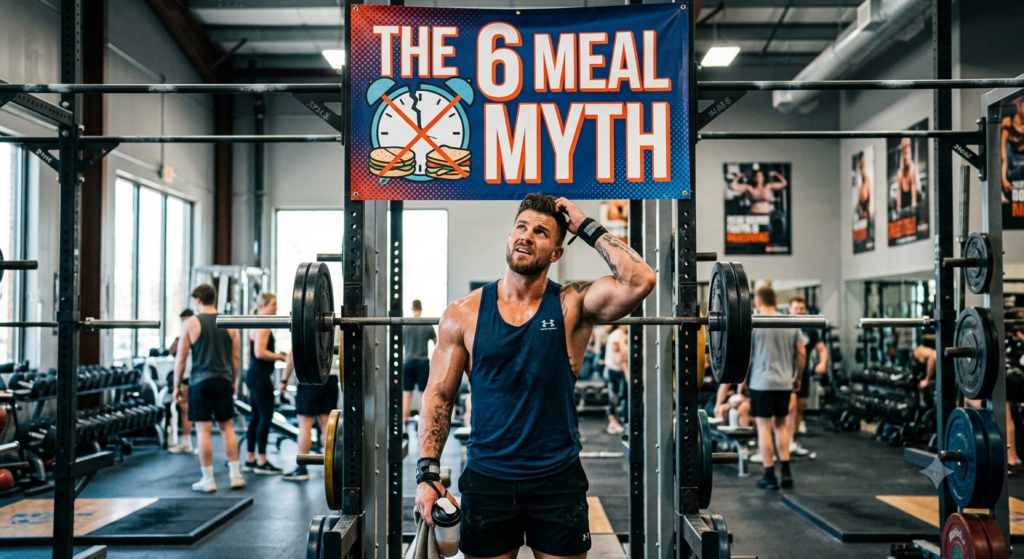
Do I need to eat 6 meals a day to maximize gains? Bodybuilders have carried Tupperware everywhere for decades. The fear is real: skip a meal and lose muscle. Total daily protein intake matters far more than when you eat it.
The Origin of the 6 Meal Rule and Why It Stuck
A famous study on boxers compared groups eating 2 meals versus 6 meals daily. The 2 meal group lost more muscle than the 6 meal group. Trainers took this and ran with it. The advice spread through gyms worldwide.
Both groups received inadequate protein to begin with. This was the real problem. When protein is too low, meal frequency becomes a damage control strategy. You’re trying to prevent muscle loss instead of building new tissue.
The supplement industry loved this message. Six meals meant six chances to sell protein powder. The 5 to 6 small meals approach was propagated by the supplement and fitness industry. They created a solution to a problem that didn’t exist.
What Happens When You Eat Protein Throughout the Day
The muscle protein synthesis response to a mixed meal lasts only 3 hours. This drives the argument for eating every few hours. Each protein dose triggers a wave of muscle building.
Current research suggests 3 grams of leucine maximizes the muscle building response. It takes just 20 grams of protein before the body uses further amino acids for energy. This creates what researchers call the muscle-full effect.
Consuming moderate protein 3 times daily stimulates muscle protein synthesis more than skewing consumption toward the evening meal. Muscle protein synthesis was about 25 percent greater when protein was distributed evenly across meals.
But here’s the catch. Those studies used whey, a fast-absorbing protein that quickly saturates receptors. Real meals with meat, eggs, and whole foods digest slower. The 20 gram limit doesn’t apply the same way.
Do I Need to Eat 6 Meals a Day to Maximize Gains or Can Fewer Work
Eating three to six meals per day with protein likely maximizes theoretical benefits of nutrient timing. Three works. Six works too. The range is wide for a reason.
Alterations in nutrient timing and frequency appear to have little effect on fat loss or lean mass retention. Research shows strong evidence against the idea that you need 4 or more meals for maximum growth.
The Norwegian Meal Frequency Project compared bulking strength trainees consuming either 3 or 6 meals with the same macros. No difference in muscle gains appeared. Both groups built muscle at identical rates.
More frequent consumption of meals containing 30 to 45 grams of protein produced the greatest association with leg lean mass. Notice it says association. People who eat protein regularly tend to train harder and care more about their nutrition overall.
The Metabolism Myth Around Frequent Eating
Each meal increases your metabolic rate through the thermic effect of food. The thermic effect of food is proportional to the energy intake from your meal. Six small meals create six small spikes. Three large meals create three large spikes.
Researchers fed participants 2 or 6 meals with identical total energy in a whole body calorimeter. Total energy expenditure was exactly the same in both groups.
Eating food six times a day does not increase overall metabolic rate more than eating three times. Research shows meal frequency does not affect energy expenditure when all else is equal.
When calories are controlled and meal frequencies vary between 1 to 6 or more meals per day, there is no significant difference in metabolic rate. The metabolic boost idea falls apart under scrutiny.
Make sure you get the nutrition you need but
Do Not Neglect Natural Scientifically Proven Solutions
Do I Need to Eat 6 Meals a Day to Maximize Gains with Intermittent Fasting
Researchers compared different meal schedules and concluded having several meals spread out builds more muscle than intermittent fasting. Fasting creates longer periods without amino acid supply, potentially disrupting muscle protein synthesis windows. Intermittent fasting protocols like 16:8 (16-hour fast, 8-hour eating window) and alternate-day fasting compress nutrient timing into shorter feeding periods, which may limit opportunities for consistent anabolic stimulation compared to distributed protein intake across 3-6 meals.
A systematic review analyzed eight trials combining fasting with resistance training. Lean body mass was generally maintained. Five studies reported significant fat loss. Only one study showed a lean mass increase.
In an 8-week study on men following a 16:8 schedule, participants lost about 1.6 kg of fat while maintaining lean mass. Maintenance is different from growth. People trying to gain muscle face different challenges.
Ten days of alternate day fasting showed no differences in daily muscle protein synthesis rates compared to an energy balanced diet. Short term studies show one thing. Long term muscle building is another.
A daily loss in muscle protein synthesis cannot be compensated for during the following day feeding, even when calories are doubled. This suggests extended fasting windows create problems that refeeding can’t fully fix.
How Much Protein Per Meal Actually Matters
It seems pragmatic to consume at least 20 to 25 grams of protein with each main meal. Muscle protein synthesis can be maximally stimulated by 20 grams of high quality protein per meal, three to four times per day.
A threshold for total daily protein intake has been reported to be approximately 1.6 grams per kilogram per day for hypertrophy outcomes. Hit this number first. Worry about distribution second.
The importance of timing depends largely on when a pre-workout meal was consumed and total daily protein. If you eat a solid meal within five hours of training, immediate post-workout protein becomes less critical.
Muscle protein synthesis decreases overnight until you consume about 3 grams of leucine. This means breakfast protein helps you exit the catabolic state from sleep.
Practical Meal Frequency for Real Muscle Gains
Focus on meeting your total protein, carbohydrate, and fat requirements over the course of the day as a whole. Lay it out in a way that fits your schedule and falls into your natural hunger pattern.
Do I need to eat 6 meals a day to maximize gains? No. Three to four protein feedings work perfectly well. Consuming 20 to 30 grams of protein every 3 to 4 hours maximizes muscle-building potential.
Most people flat out don’t eat enough protein because it’s hard to eat the needed amount in just 2 to 3 meals. This is where meal frequency helps. More meals make hitting your protein target easier.
Six meals can work if you like eating that often. Three works if you prefer larger meals. The magic happens when you hit your daily protein target consistently. A sufficient amount is key, in whatever distribution works best for your lifestyle.
Frequently Asked Questions
Will eating 6 meals a day help me build muscle faster?
No, eating 6 meals won’t build muscle faster than 3 to 4 meals. Total daily protein intake matters most. Spread protein across meals to make hitting your target easier.
Does meal frequency affect my metabolism?
No, meal frequency does not significantly change your metabolic rate. Six small meals and three large meals burn the same total calories. The thermic effect is proportional to total food intake.
Can I build muscle eating only 2 meals per day?
Yes, but it becomes harder to consume enough protein and calories. Most people struggle to eat adequate protein in just two sittings. Three to four meals work better for most lifters.
How long does protein synthesis last after eating protein?
Muscle protein synthesis peaks within 3 hours after consuming protein. The effect depends on protein quality and total meal composition. Whole food meals digest slower than isolated protein sources.
Should I eat protein before bed to prevent muscle loss?
Eating protein before bed can support overnight muscle protein synthesis. Your body doesn’t go into starvation mode during sleep. A pre-bed protein serving helps if it fits your daily target.
Track your total daily protein intake for one week to see if you’re actually hitting your target.