
Strong Bones Aren't Built by Resting
The LIFTMOR trial proved that women with osteoporosis can safely lift heavy weights, with zero serious injuries after eight months of deadlifts, squats, and overhead presses. Postmenopausal women who trained regularly experienced significant increases in bone density, challenging the outdated advice to avoid heavy lifting.
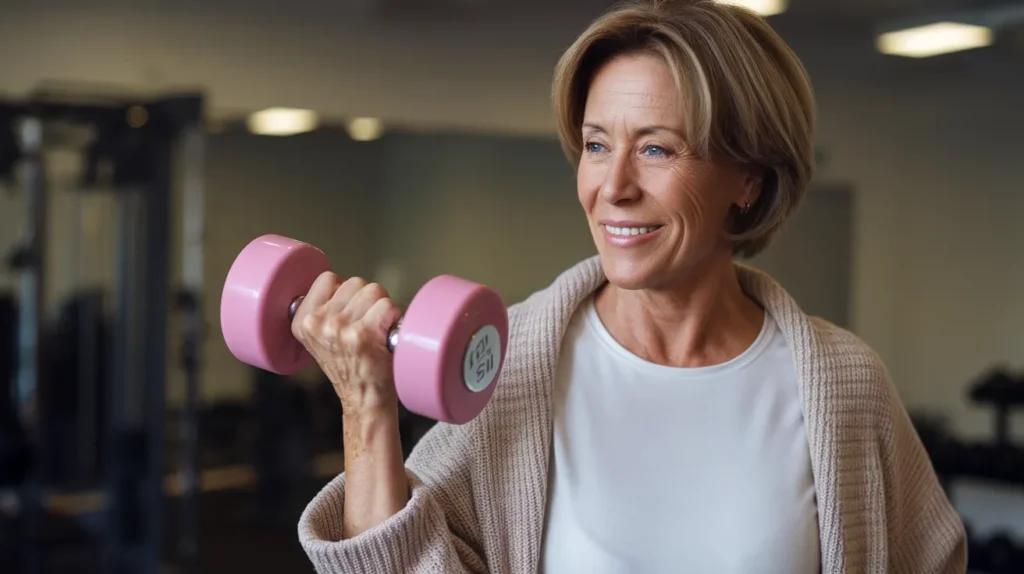
Can Older Women Or Those With Osteoporosis Lift Heavy?
Can older women or those with osteoporosis lift heavy? Your doctor might have told you to be careful. But the science says the exact opposite. The right strength training can rebuild bone.
Can Older Women or Those with Osteoporosis Lift Heavy Without Breaking Bones?
The LIFTMOR trial challenged the belief that people with osteoporosis should avoid lifting heavy weights. Women in the study trained twice per week for eight months doing deadlifts, squats, and overhead presses. There were zero serious injuries related to the interventions. These women had osteoporosis. They lifted heavy. Their bones got stronger.
Heavy weight means 85 percent of the maximum weight a patient can lift. This isn’t light dumbbells. Postmenopausal women who trained for a year saw significant increases in bone density in the spine and hips. Those are the exact spots osteoporosis hits hardest. Walking doesn’t do this. Gentle yoga doesn’t do this. You need real load.
Most people hear osteoporosis and think fragile. They stop lifting groceries. They avoid stairs. A blanket message of avoidance undermines the very forces bones need to stay strong.
Why Progressive Overload Matters for Bone Density in Older Women
Bone tissue responds to progressive overload, the idea of gradually increasing a physical challenge. Simple daily walking delivers cardiovascular benefits but for many long-term walkers it provides relatively low stimulus for bone remodeling. Your bones adapt to what you demand from them. Give them the same walk every day and they stop adapting.
Your skeleton needs dynamic, repetitive force to respond. Key parameters include magnitude, frequency, and cyclicity. Magnitude means how heavy. Frequency means how quickly you move through repetitions. Cyclicity means the repetitive nature of the movement. All three matter.
Evidence shows a linear relationship between bone density change and total weight lifted in a one-year strength training program. Lift more weight and your bones respond more. Women saw a 1.82 percent increase in bone density after six months of strength training. That sounds small. But it adds up over years.
Can Older Women or Those with Osteoporosis Lift Heavy Safely with Proper Training?
Moderate to high intensity resistance training provides the greatest effect when combined with weight bearing impact. So long as exercise is built up gradually, the risk of vertebral fracture is negligible. The key phrase is built up gradually. You don’t start with a 200-pound deadlift.
Women completed two sets of six to eight repetitions in eight core exercises at 70-80 percent of one repetition maximum. Three times weekly. That’s the protocol that worked in multiple studies. Women can reap bone-building benefits with just two or three 20- to 30-minute weightlifting sessions per week.
Using weights, even after vertebral fractures, can be useful for improving bone and muscle strength. No specific weight limits or restrictions are recommended. The consensus is clear. Good technique matters more than arbitrary weight limits.
What Movements Should Women with Osteoporosis Actually Avoid?
It is activities that involve rapid, repetitive, sustained, weighted, or end range of motion twisting or flexion of the spine that may need to be modified. Movements most likely to precipitate a vertebral compression fracture are combined spinal flexion and rotation with load. Think picking up a heavy bag while twisting to one side.
Forward bending of the spine while carrying an object increases the risk of anterior compression fractures. Loaded forward bending is the problem. Not all bending. Generic advice like don’t bend or twist is difficult to operationalize and may create fear.
Health Solutions for women of All Ages…
Activities such as jumping, running, and jogging can lead to fractures in weakened bones, particularly in advanced osteoporosis with low bone mineral density. However, there is no absolute contraindication to moderate impact exercise for these patients. The distinction between osteopenia (mild bone loss), osteoporosis, and severe osteoporosis with prior vertebral compression fractures determines appropriate exercise intensity. Context matters. Severity matters. A woman with mild bone loss and no fracture history can tolerate higher-impact activities than someone with multiple existing fractures. Individual fracture risk assessment and T-scores guide safe progression into weight-bearing and impact activities.
How Strength Training Changes More Than Just Bone for Women Over 50
Strength training slows bone loss while increasing muscle strength, improving balance, and providing pain relief. Maintaining strong muscles through weight training helps keep up balance and coordination. Falls cause fractures. Strength prevents falls. The chain of protection goes beyond bone density numbers.
By age 70, we only have about 50 to 55 percent of our muscle mass left. Muscle loss accelerates bone loss. They feed each other. The profound interaction between muscle and bone induces a negative resonance between the two tissues. Lose muscle and you lose bone faster. Build muscle and you protect bone.
Some research suggests that strength training may improve cognitive skills for older adults. Strength training helps reduce signs and symptoms of arthritis, obesity, depression, and sleep difficulties. The benefits extend far beyond what shows up on a bone scan.
Can Older Women or Those with Osteoporosis Lift Heavy Without Professional Guidance?
It is worthwhile to talk to a physical therapist or personal trainer with experience working with osteoporosis. The LIFTMOR trial used exercises under professional supervision. Supervision matters at the start. You need someone to teach proper form and assess your specific risk.
An initial assessment of osteoporosis risk factors should occur based on bone mineral density, previous fracture, and fall history. Not everyone with osteoporosis faces the same risk. How much impact is unsafe depends on your history of fractures and severity of your osteoporosis. Individual assessment beats generic rules.
Exercises, volume, intensity, and progression should be aligned with the patient’s goals and abilities. There’s no age limit to weightlifting, but after consulting with your doctor, start slow and increase weight slowly. The progression principle applies even more strictly here. Rush it and you create risk. Build it properly and you create strength.
Frequently Asked Questions
Is lifting weights safe for women over 60 with low bone density?
Yes. Research shows supervised strength training at 70 to 80 percent intensity is safe. Studies report zero serious injuries when women train with proper form and progression.
How heavy should older women with osteoporosis lift?
Most studies use 70 to 85 percent of one repetition maximum. This means challenging weight, not light dumbbells. You should lift enough to feel genuine effort.
Will strength training reverse bone loss in postmenopausal women?
It can slow and sometimes reverse bone loss. Women in studies gained 1 to 2 percent bone density yearly. This offsets typical age-related loss and builds long-term protection.
What exercises should women with osteoporosis never do?
Avoid loaded forward bending combined with twisting. Skip exercises that force your spine into extreme flexion under weight. Specific movements matter more than blanket bans.
How often do older women need to lift weights for bone health?
Two to three sessions per week of 20 to 30 minutes each. This frequency matches successful study protocols. More isn’t always better for bone adaptation.
Find a qualified trainer who understands osteoporosis and start with supervised sessions to learn proper form.