

The 3-Workout Week That Beats 5-Day Routines
Three focused weekly workouts provide enough muscle-building stimulus while allowing proper recovery time between sessions. Daily training often backfires, but this strategic approach lets your muscles grow stronger on rest days.
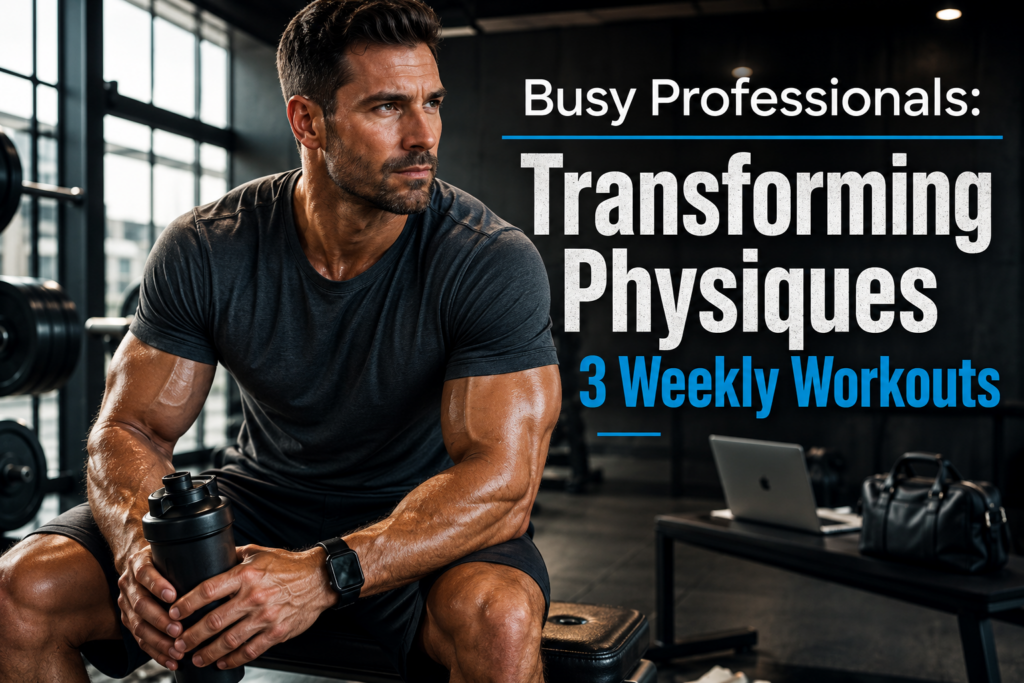
You checked your calendar and found three open slots this week. Most workout plans ask for five or six days. Busy Professionals: Transforming Physiques 3 Weekly Workouts proves you can build serious muscle with less time. Three focused sessions beat seven rushed ones every single time.
Why Busy Professionals: Transforming Physiques 3 Weekly Workouts Works Better Than Daily Training
Your muscles grow during rest, not during the workout itself. Training tears down muscle fibers. Recovery builds them back stronger. Most people miss this completely.
Three sessions per week give you enough stimulus to grow. They also provide enough recovery between sessions. You train Monday, Wednesday, and Friday. Your body repairs itself on the off days.
Daily workouts sound productive but they backfire fast. You never fully recover. Performance drops. Strength stalls. Injuries creep in from accumulated fatigue.
Research shows muscle protein synthesis stays high for 48 hours after training. You don’t need another workout before that window closes. Three days covers your entire week with proper spacing.
Professional athletes train this way during off seasons. They know more isn’t always better. Smart beats hard when time is limited.
The Three Session Split for Busy Professionals: Transforming Physiques 3 Weekly Workouts
Session one targets your upper body pushing muscles. This means chest, shoulders, and triceps. You do four to five exercises total. Each movement hits multiple muscle groups at once.
Bench press comes first when energy is highest. Add overhead press for shoulders. Finish with dips for triceps. Keep rest periods under two minutes. Your entire workout takes 45 minutes.
Session two focuses on lower body and core strength. Squats or leg press start the workout. Romanian deadlifts hit hamstrings and glutes. Add calf raises and planks. Your legs drive overall muscle growth better than any other body part.
The third session covers pulling movements for your back and biceps. Deadlifts or rows build thickness. Pull ups create width. Bicep curls finish the session. Back training burns more calories than you’d expect.
This split covers every major muscle group twice per week. Each session stays under one hour. You’re in and out before meetings pile up.
Exercise Selection That Actually Fits Reality
Compound movements give you the most return per minute invested. These exercises use multiple joints and muscle groups together. Isolation work takes too long for three weekly sessions.
Squats work quads, glutes, hamstrings, and core in one movement. Bench press hits chest, shoulders, and triceps together. Rows build back, biceps, and grip strength simultaneously.
You need just five exercises per workout. More than that adds fatigue without adding results. Choose one exercise per major movement pattern.
Machines work fine when free weights feel risky or unavailable. A leg press builds legs through similar muscle activation patterns as squats do, though with slightly reduced stabilizer muscle engagement. Chest press machines create muscle tension and progressive overload similar to barbells. Smith machines offer a middle ground between fixed machines and free weights for safety-conscious lifters. Don’t let equipment gatekeeping stop you from training—mechanical tension is what drives hypertrophy regardless of the tool.
Home workouts need different selections but follow the same rules. Push ups replace bench press. Bodyweight squats substitute barbell versions. Pull up bars cost thirty dollars and last forever.
The best exercise is the one you’ll actually do. Consistency matters more than perfect form on exotic movements.
Progression Methods for Busy Professionals: Transforming Physiques 3 Weekly Workouts
Add weight to the bar every week when possible. Even two pounds counts as progress. Small jumps compound over months into major strength gains.
Track every single workout in a notebook or app. Write down exercises, weights, and reps completed. You can’t improve what you don’t measure.
Some weeks you’ll feel stronger than others. Sleep and stress affect performance more than most people admit. One bad session doesn’t erase weeks of progress.
When weight stops increasing, add reps instead. Move from three sets of eight to three sets of ten. Then increase weight and drop back to eight reps. This cycle never stops working.
Deload every fourth week by cutting volume in half. Use the same weights but do fewer sets. Your joints and nervous system need this recovery. You’ll come back stronger the following week.
Progress photos reveal changes the mirror hides. Take front, side, and back pictures monthly. Compare these instead of checking daily. Visual proof keeps you motivated between workouts.
Nutrition Timing Around Your Training Schedule
Eat protein within two hours after each workout session. Your muscles use amino acids to repair damage. Twenty to thirty grams hits the sweet spot for most people.
Pre workout meals matter less than most fitness articles claim. Training fasted works fine for morning sessions. Your body has enough stored energy for one hour workouts.
Total daily protein matters more than timing around workouts. Aim for your body weight in grams. A 180 pound person needs 180 grams daily. Spread this across three to four meals.
Carbs fuel hard training sessions better than fats do. Eat rice, potatoes, or oatmeal a few hours before lifting. Save higher fat meals for rest days and evenings.
Hydration affects strength more than people realize. Drink half your body weight in ounces daily. Add another 16 ounces during your workout. Dehydration cuts performance by 10 to 20 percent.
Skip the expensive supplements pushed by fitness influencers. Protein powder saves time but whole foods work equally well. Creatine is the only supplement with decades of solid research.
Time Management Strategies That Make Busy Professionals: Transforming Physiques 3 Weekly Workouts Sustainable
Schedule workouts like client meetings that can’t be moved. Block calendar time three days per week. Treat these appointments as non negotiable commitments.
Early morning sessions eliminate excuses that pile up later. Train at 6 AM before emails flood your inbox. Evening workouts get cancelled when work runs late.
Keep a gym bag packed in your car always. Remove the friction of gathering clothes and shoes. You’ll skip fewer sessions when everything stays ready.
Choose a gym less than 15 minutes from home. Commute time kills consistency faster than anything else. Proximity beats fancy equipment every single time.
Lunch break workouts fit tight schedules surprisingly well. Train from noon to 12:45 PM. Shower quickly and eat at your desk. Most offices stay quiet during midday anyway.
Home gyms cost less than annual memberships after two years. A barbell, rack, and bench cover 90 percent of exercises. You save commute time and monthly fees simultaneously.
Recovery Tactics Between Sessions
Sleep determines whether you build muscle or waste time. Aim for seven to eight hours nightly. Growth hormone peaks during deep sleep stages.
Active recovery on off days beats complete rest. Walk for 20 to 30 minutes. Light movement increases blood flow without adding training stress.
Stretching feels good but doesn’t prevent injuries like people claim. Save static stretches for after workouts. Dynamic warm ups before lifting actually reduce injury risk.
Stress from work slows muscle recovery just like training stress. Manage deadlines and client demands where possible. Your body can’t distinguish between physical and mental stress.
Massage guns and foam rollers might help soreness. The science remains unclear despite heavy marketing. Use them if they make you feel better. Skip them if not.
Cold showers and ice baths probably hurt muscle growth. Inflammation signals your body to adapt and grow. Blocking this process blocks your gains.
Realistic Results for Busy Professionals: Transforming Physiques 3 Weekly Workouts
Beginners gain muscle fastest in their first six months. You might add 10 to 15 pounds of lean mass. Strength jumps dramatically during this honeymoon phase.
Intermediate lifters progress slower but still see monthly improvements. Expect two to three pounds of muscle yearly. Strength increases continue at a steadier pace.
Body fat changes depend entirely on your eating habits. Training builds muscle but doesn’t burn enough calories to erase bad nutrition. You can’t outwork a poor diet.
Visible abs require low body fat percentages. Men need to reach 10 to 12 percent. Women show definition around 18 to 20 percent. This takes months of consistent eating, not just training.
Energy levels improve within two weeks of starting. You’ll sleep better and handle stress easier. These changes show up before visible muscle growth.
Clothing fits differently before the scale moves much. Shirts feel tighter in shoulders and chest. Pants fit looser in the waist. Trust how clothes fit over what numbers say.
Frequently Asked Questions
Can three workouts per week really build muscle?
Yes, three sessions provide enough training stimulus for muscle growth. Your muscles need recovery time between workouts to actually grow. Training more often without proper rest actually slows your progress down.
How long should each workout last?
Each session should take 45 to 60 minutes total. This includes your warm up and cool down time. Longer workouts add fatigue without improving results for most people.
What if I miss one of my three weekly sessions?
One missed workout won’t ruin your progress at all. Just continue with your next scheduled session as planned. Consistency over months matters more than perfect weekly attendance.
Should I do cardio on my off days?
Light cardio like walking helps recovery without interfering with muscle growth. Avoid intense running or cycling that might hurt your leg workouts. Keep cardio easy and short on rest days.
When will I see visible changes in my body?
Most people notice strength gains within two to three weeks. Visible muscle changes typically appear after six to eight weeks. Progress photos help you see changes your mirror might miss.
Pick your three workout days right now and block them on your calendar for the next month.