
Muscle Growth Needs Stress, Not Tension—Here's Why
Mechanical tension is the primary driver of muscle growth from resistance training, not stress alone. When you subject muscles to force, they stretch and overload, triggering the repair and growth process that builds bigger muscles.
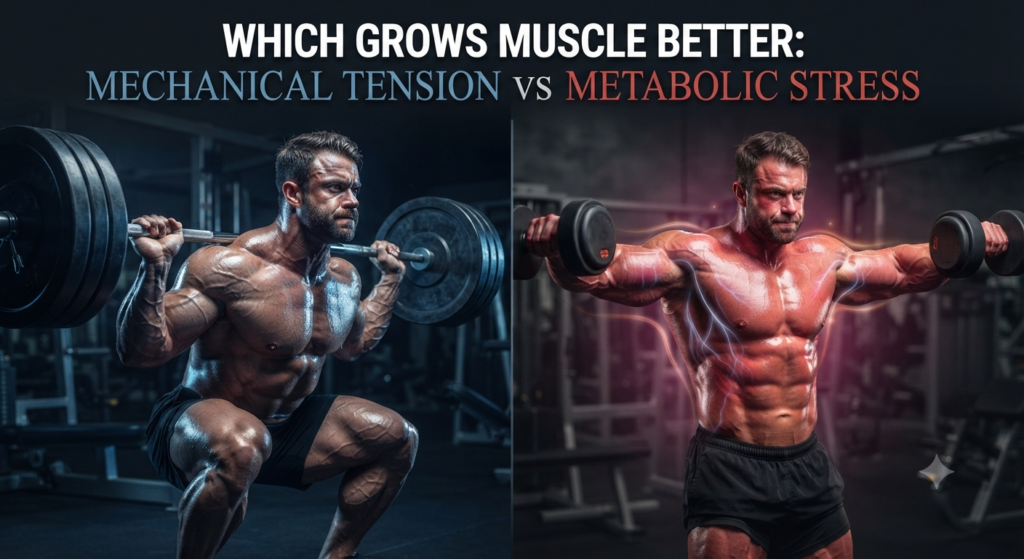
Which Grows Muscle Better: Tension or Stress? You’ve probably heard gym bros argue both sides endlessly. Some swear heavy weights are the only answer. Others chase the pump with light weights until their arms burn. Recent research confirms that mechanical tension is the primary driver of muscle growth from resistance training.
What Mechanical Tension Actually Does to Which Grows Muscle Better: Tension or Stress
Mechanical stress happens when you subject your muscles to force. This causes the muscle fibers to stretch and overload. Think of it like bending a steel bar. The bar doesn’t want to bend. It resists. Your muscles do the same thing when you lift.
This overload causes small amounts of damage to muscle fibers. This damage triggers the repair and growth process, replacing damaged fibers with new, stronger ones. You get the most mechanical tension with high loading, meaning 60 to 70 percent of your one rep max.
The physical strain activates mTOR, which signals cells to grab protein and start rebuilding muscle. This happens directly from the force itself. No tricks needed. Just weight on the bar.
How Metabolic Stress Creates the Pump in Which Grows Muscle Better: Tension or Stress
Metabolic stress is that burn and pump from high rep sets with shorter rest periods. It occurs during anaerobic exercise when metabolic byproducts like lactate, hydrogen ions, and inorganic phosphate accumulate faster than your body can clear them. This creates the characteristic muscle “burn” sensation. Additionally, metabolic stress triggers cellular swelling through fluid accumulation in the sarcoplasm, increased blood flow and nutrient delivery to working muscles, and the release of growth factors like vascular endothelial growth factor (VEGF). Your muscles feel like they’re on fire because of these metabolite accumulations and the osmotic pressure from cellular swelling.
Blood rushes into working muscles and the fibers literally swell, stretching cell membranes. This swelling signals the release of hormones like growth hormone and IGF-1. Sounds impressive. But does it actually build muscle?
Claims that metabolic stress, cell swelling, or the pump meaningfully contribute to growth lack scientific evidence. The research is clear on this. Metabolite buildup and the pump have minimal effects that are indirect at best.
Why Heavy Weights Win at Which Grows Muscle Better: Tension or Stress
Heavy weights for low reps recruit the greatest amount of type 2 fast twitch muscle fibers. These fibers are also the largest muscle fibers. Bigger fibers mean more growth potential. Simple math.
When it comes to building maximal strength, the low rep heavy weight group has the clear advantage. Strength matters for long term gains. Being strong is critical for long term muscle growth. You can’t keep adding size if you can’t lift progressively heavier loads.
Acute increases in testosterone, growth hormone, or IGF-1 after exercise don’t influence muscle protein synthesis or growth outcomes. That pump you chase? Those hormones you feel surging? They don’t translate to actual tissue. The weight on the bar does.
When Light Weight High Reps Work for Which Grows Muscle Better: Tension or Stress
Recent research shows that light weight with high reps, performed until failure, was equally effective in stimulating muscle proteins as heavy weight with low reps. But there’s a catch. You have to go to complete failure. Not just close. Complete.
Stopping well short of failure, with two to eight more reps in the tank, won’t be challenging enough to stimulate growth. But when lighter loads are taken until you physically cannot perform another rep, that can activate the same muscle building process. Most people don’t push this hard.
Using lighter loads is less taxing on joints and your nervous system, making recovery easier. This matters if you’re older. It matters if you’re injured. It matters if you train six days a week.
The Training Volume Trap in Which Grows Muscle Better: Tension or Stress
Muscle growth is a result of total training volume, which accounts for reps completed, sets performed, and weight lifted. More total work equals more growth. But you can’t just add sets forever.
It’s tough to sustain the necessary volume for optimal growth if you focus solely on heavier weights for low reps. Five sets of three reps gets exhausting. Your nervous system quits before your muscles do. You need recovery days that eat into your training frequency.
Lifting lighter weights for higher reps lets you accumulate volume while reducing the taxing effects on your nervous system. You can train more often. You can do more sets per session. The total work adds up faster.
Rep Ranges That Actually Matter for Which Grows Muscle Better: Tension or Stress
Lifting heavier weights for one to six reps builds maximal strength. Lifting moderate weights for eight to twelve reps builds muscle. Lifting lighter weights for twelve plus reps builds muscular endurance. This is the standard continuum.
Hypertrophy training sits around three to four sets of eight to twelve reps with 30 to 60 seconds rest. As you close out the final reps, you should reach failure, and if it’s too easy, increase weight. Don’t stay comfortable.
Sets of one to four reps with heavy weights are unlikely to provide necessary muscle fiber stimulation for robust growth. You need more time under tension. You need more total reps. Pure strength work leaves gains on the table.
Smart Program Design Combining Both Approaches
Integrating both mechanical tension and metabolic stress into a balanced training program ensures maximum strength and size gains. Don’t pick one. Use both strategically. Heavy compound lifts build strength and size. High rep isolation work creates muscle fullness and endurance.
Start your workout with heavy squats or deadlifts. Three to five sets of four to six reps. This is where you build your foundation. Then move to accessory work. Three to four sets of ten to fifteen reps. This is where you add volume without frying your system.
Realistic expectations are modest, around one to two kilograms of fat free mass gained after eight to twelve weeks. Don’t expect miracles. Expect steady progress. The people who chase both tension and volume consistently get the best results over time.
Frequently Asked Questions
Which is better for muscle growth, tension or metabolic stress?
Mechanical tension is the primary driver of muscle growth. Metabolic stress has minimal direct effects on building muscle tissue. Heavy weights that create high tension produce better long term results than chasing the pump.
Can you build muscle with light weights and high reps?
Yes, but only if you train to complete failure. Light weights must exhaust the muscle entirely to match heavy weight results. Most people don’t push hard enough with light weights to see optimal growth.
How many reps should I do to build the most muscle?
Eight to twelve reps per set works best for most people. This range balances mechanical tension with enough volume. Going heavier builds more strength. Going lighter builds more endurance.
Do hormones from metabolic stress help build muscle?
No. Acute hormone increases after exercise don’t influence actual muscle protein synthesis. The temporary spike in growth hormone or testosterone from high rep training doesn’t create growth. Only mechanical tension from lifting does.
Should I train to failure on every set?
Not on heavy compound lifts. Training to complete failure every set increases injury risk and hurts recovery. Save failure training for lighter isolation exercises at the end of your workout.
Start your next workout with heavy compound lifts for low reps, then finish with higher rep accessory work.