

Why Modern Bodybuilders Are Doing Less Work for Better Gains
Old School vs. Today: The Evolution of Bodybuilding shows how training philosophies have dramatically changed from the social, high-volume approach of the 1970s to today’s science-backed periodization methods. Understanding these shifts in emphasis—from symmetry to mass, and from lengthy rest periods to tracked, efficient sessions—helps you optimize your training for your specific goals.
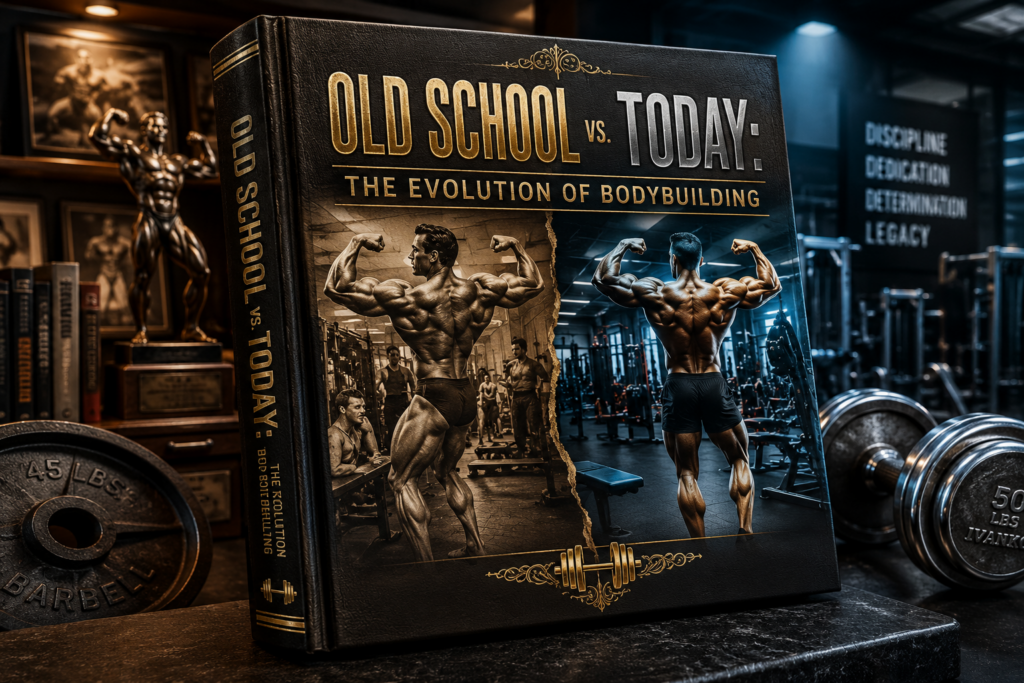
Old School vs. Today: The Evolution of Bodybuilding reveals a stark contrast between eras. The golden age emphasized symmetry and proportion. Modern athletes chase mass and extreme conditioning. Understanding these shifts helps you train smarter for your goals.
Old School vs. Today: The Evolution of Training Philosophy
Arnold and his peers trained twice daily at Gold’s Gym Venice. They spent three hours per session. Volume reigned supreme in that era. Each muscle group received 20 to 30 sets.
Rest periods stretched longer back then. Bodybuilders chatted between exercises for five minutes. They treated the gym like a social club. Training felt less rushed.
Today’s athletes follow science-backed periodization programs. They track every rep and set on smartphone apps. Training sessions rarely exceed 90 minutes. Intensity trumps volume in modern programs.
Recovery protocols now include cryotherapy and compression therapy. Old schoolers just ate steak and slept. The contrast couldn’t be sharper.
You’ll find modern bodybuilders obsessing over time under tension. They count tempo as four seconds down, two seconds up. Golden age lifters simply moved weight without timing anything. Instinct guided their training decisions.
Nutrition Strategies From Then to Now
Bodybuilders in the 1970s ate whole foods exclusively. Chicken, rice, eggs, and steak filled their plates. They consumed six meals daily without tracking macros. Portion sizes came from eyeballing food.
Supplements barely existed during the golden era. Protein powder tasted like chalk mixed with dirt. Most competitors skipped it entirely. They built physiques on real food alone.
Modern nutrition involves precise macro counting through apps. Athletes weigh food on digital scales to the gram. Meal timing follows specific protocols around training. Carb cycling and refeed days dominate current strategies.
Today’s supplement industry offers hundreds of products. Pre-workouts, intra-workouts, and post-workouts all promise results. Branch chain amino acids and creatine are standard. The average competitor spends $300 monthly on supplements.
Old school bodybuilders never heard of intermittent fasting. They ate breakfast within 30 minutes of waking. Skipping meals seemed crazy to them. Consistent feeding built their muscle mass.
Gut health wasn’t discussed in gyms decades ago. Now probiotics and digestive enzymes are commonplace. Modern athletes address inflammation through specific food choices. Gluten-free and dairy-free diets appear frequently on prep plans.
Old School vs. Today: Physique Standards and Aesthetics
Frank Zane won Mr. Olympia at 185 pounds. His waist measured 29 inches on stage. Judges rewarded proportion and flow between muscle groups. Symmetry mattered more than sheer size.
The golden age celebrated the V-taper physique. Wide shoulders tapered to tiny waists. Abs showed definition without extreme conditioning. Bodybuilders looked athletic and approachable.
Modern Mr. Olympia competitors weigh 280 pounds. Their waists measure 36 inches despite low body fat. Mass dominates judging criteria now. Bigger always wins on today’s stages.
Distended midsections plague current top professionals. Growth hormone and insulin cause this issue. Classic physique division emerged to combat this trend. It rewards old school aesthetics with size limits.
Conditioning standards reached extreme levels in recent years. Competitors show striated glutes and cross-striations everywhere. Body fat drops below 4 percent for shows. This wasn’t necessary in previous decades.
Vascularity expectations changed dramatically over time. Golden era bodybuilders showed some veins. Modern athletes display roadmaps across their entire bodies. Judges now expect visible veins in abs.
Get Your Creatine + More: adds energy, strengthens and builds muscle mass, raises libido, improves body performance
Chemical Enhancement Across Eras
Testosterone and Dianabol were primary compounds in the 1970s. Dosages stayed relatively modest by today’s standards. Most competitors used 200 to 400 milligrams weekly. Cycles lasted 8 to 12 weeks before shows.
Blood work didn’t guide drug protocols back then. Bodybuilders experimented without medical supervision. Side effects were accepted as part of the game. Health monitoring was essentially nonexistent.
The pharmaceutical landscape exploded in modern bodybuilding. Athletes stack five to eight compounds simultaneously. Dosages reach grams per week for professionals. Year-round use replaced cycling on and off.
Growth hormone entered the sport in the 1980s. It changed physiques forever. Muscle bellies grew thicker and rounder. Insulin joined protocols in the 1990s.
Modern competitors work with coaches who are also chemists. Protocols adjust weekly based on bloodwork results. Ancillary drugs manage side effects from main compounds. The complexity increased a hundredfold.
Old School vs. Today: The Evolution of Bodybuilding shows dramatically different health outcomes. Golden era athletes lived longer on average. Many current professionals face serious health issues young. Heart problems appear more frequently now.
Competition Preparation Methods
Bodybuilders once dieted for 12 to 16 weeks. They reduced calories gradually without dramatic drops. Cardio meant walking or light jogging. Prep seemed almost relaxed compared to today.
Water manipulation lasted only two days before shows. Athletes drank gallons then cut water completely. Sodium loading wasn’t part of their strategy. Diuretics were used but less aggressively.
Peak week protocols now span 10 to 14 days. Coaches manipulate water, sodium, and carbs precisely. Athletes deplete glycogen then carb load strategically. Timing matters down to the hour.
Modern prep includes 60 to 90 minutes of daily cardio. Some competitors do two cardio sessions daily. Fasted morning cardio became standard practice. This intensity was unheard of decades ago.
Posing practice consumed minimal time in the golden age. Bodybuilders learned mandatory poses and basic routines. They focused more on training than presentation. Stage presence developed naturally.
Today’s athletes hire posing coaches months before shows. They practice transitions for hours weekly. Routine choreography rivals dance performances. Presentation became as important as physique development.
Old School vs. Today: The Business and Media Side
Prize money was laughable in the 1970s. Mr. Olympia paid $1,000 to winners. Bodybuilders needed day jobs to survive. The sport existed purely for passion.
Muscle magazines provided the only media coverage. Photos took weeks to publish after contests. Fans waited months for training articles. Information spread slowly through the community.
Social media transformed how athletes build brands. Instagram followings translate directly to income. Sponsored posts pay more than contest winnings. A single post can earn $5,000 for top athletes.
Online coaching exploded as a revenue stream. Bodybuilders train hundreds of clients remotely. Monthly coaching fees range from $200 to $500. This income didn’t exist 20 years ago.
Supplement sponsorships provide stable income now. Companies pay athletes $50,000 to $500,000 annually. Free products and exposure come with deals. Golden era bodybuilders never saw such contracts.
YouTube channels and podcasts create additional revenue. Athletes monetize their knowledge and personalities. Some earn six figures from content creation alone. The business side now rivals the athletic side.
Training Equipment and Gym Culture Changes
Gold’s Gym Venice featured basic barbells and dumbbells. Machines were rare in the golden era. Free weights built every champion back then. Gyms smelled like iron and sweat.
Training partners pushed each other through brutal sets. Forced reps and negatives required human spotters. The gym functioned as a tight community. Everyone knew everyone’s lifting numbers.
Modern facilities offer specialized machines for every angle. Hammer Strength and cybex dominate gym floors. Cable systems provide constant tension options. Equipment variety exploded over decades.
Private training facilities replaced public gym culture. Top bodybuilders train in exclusive spaces now. The communal atmosphere largely disappeared. Training became more isolated and individual.
Old School vs. Today: The Evolution of Bodybuilding changed workout atmosphere and community dynamics completely. Music blasted from boom boxes in the 1970s, creating a shared energy and camaraderie among lifters. Now everyone wears wireless headphones and noise-cancelling earbuds, isolating themselves during training sessions. Group motivation techniques like spotting partnerships and forced rep training gave way to individualized workouts. The loss of gym banter, training buddies who pushed each other through heavy compound lifts, and the communal feedback on form and progress means social interaction and peer accountability dropped significantly.
Cameras were banned in gyms during the golden age. Privacy mattered to serious lifters. Today’s athletes film every set for social media. The gym became a content creation studio.
Frequently Asked Questions
Were old school bodybuilders actually natural?
No, top competitors used testosterone and Dianabol regularly. Dosages were lower than modern standards. The myth of natural golden era bodybuilders is false. They just used fewer compounds overall.
Why did physiques look better in the 1970s?
Judges rewarded symmetry and proportion over mass. Lower drug dosages prevented distended midsections. Athletes prioritized aesthetics in their training approach. The judging criteria shaped how bodybuilders developed physiques.
Can you build a classic physique with modern methods?
Yes, but you must focus on specific body parts. Emphasize shoulders and back over legs. Keep your waist small through core work. Avoid excessive growth hormone and insulin use.
How much did golden age bodybuilders actually train?
Most trained twice daily for three hours total. They hit each muscle group twice weekly. Volume was extremely high by today’s standards. Recovery ability came from youth and moderate drug use.
Is modern bodybuilding healthier than the old school era?
No, health markers are worse for modern competitors. Drug dosages increased dramatically over decades. Heart problems appear more frequently in current athletes. Blood work helps but doesn’t prevent all issues.
Study both eras and blend the best elements into your own training approach today.