

The Creatine Shift: Why Female Athletes Are Outpacing Men
Women are driving a 120% surge in creatine sales by using this supplement to combat age-related muscle loss and support menopause recovery. Clinical research shows creatine supplementation helps postmenopausal women gain lean muscle mass, increase strength, and reduce inflammation when combined with resistance training.
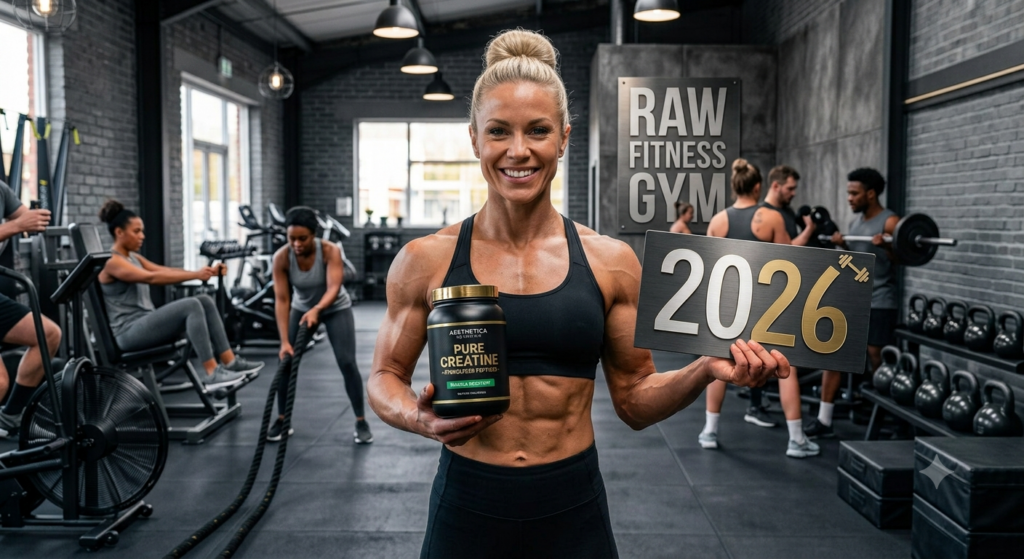
Why Women Are Taking Creatine in 2026 isn’t hard to explain. Sales jumped 120% as women drove a new wave of interest. The supplement once marketed exclusively to male bodybuilders now sits in purses next to multivitamins. Women tend to have lower creatine stores than men.
Why Women Are Taking Creatine in 2026 for Menopause Support
Women can expect to lose 3 to 5% of their muscle mass per decade, starting in their 30s. The loss speeds up after menopause. Postmenopausal women who supplement with creatine during resistance training gain more lean mass and strength than those who train without it.
Creatine supplementation in older women was shown to counteract menopause-related decreases in muscle, bone, and strength, with results showing the supplement was effective in reducing inflammation, oxidative stress, and serum markers of bone resorption. This explains why women over 40 make up the fastest-growing group of new users.
A study of 33 women found that 5 grams a day of creatine for women who were also doing a supervised resistance training program had a 3.4% improvement in bone density at the femoral neck. Bone density matters. Every percentage point you preserve reduces fracture risk.
Women exhibit 70 to 80% lower endogenous creatine stores compared to males. Your body simply produces less of it. Food sources don’t close the gap unless you eat red meat daily.
The Brain Benefits Driving Why Women Are Taking Creatine in 2026
Several studies have found that women have lower levels of creatine in the brain, particularly in the frontal lobe, which controls mood, cognition, memory and emotion. This gap matters during perimenopause when brain fog becomes a daily frustration.
Creatine supplementation may affect cognitive processes related to sleep deprivation, which could have important implications for sleep quality, continuity, and quantity. Women dealing with disrupted sleep during hormonal transitions see real improvements.
Multiple randomized controlled trials examining creatine monohydrate as an adjunctive treatment with selective serotonin reuptake inhibitors (SSRIs) and other antidepressant medications found reduced depressive symptoms and faster treatment response in female adolescents and adults with major depressive disorder. Creatine acts as a mood support through ATP energy production in the brain rather than replacing pharmacological treatment—it enhances medication efficacy and accelerates symptom improvement during perimenopause and hormonal transitions when depression risk increases.
Cognitive benefits showed up most clearly in sleep-deprived people, vegetarians, and older adults under cognitive load. If you fit any of these categories, the evidence stacks up quickly.
Why Women Are Taking Creatine in 2026 Instead of Complex Stacks
3 to 5 grams of creatine monohydrate per day, every day. That’s the dose. No loading phase needed and time of day doesn’t matter. Simple beats complicated when adherence determines results.
Gummies have emerged as the fastest-growing format, with North America seeing a 59% increase in new creatine gummy products over the past year. You don’t need a shaker bottle or a post-workout routine.
Many women skip creatine because they assume complexity. They picture loading protocols and precise timing windows. The reality works better. Consistency wins over optimization.
A 2025 review of multiple studies suggests you’re about as likely to experience stomach issues with creatine as you are with a placebo. The horror stories don’t match the data. Most women notice nothing except better training sessions.
Women, Get your Creatine Energy Complex Here!
Why Women Are Taking Creatine in 2026 Without Gaining Bulk
Women have approximately 15 to 20 times lower testosterone than men, making significant muscle bulk from creatine physiologically implausible. This myth refuses to die despite zero supporting evidence.
Creatine supports ATP energy production during training, allowing harder sessions that over time can support lean muscle development, and the muscle comes from the work, not the powder. You control the stimulus through your training choices.
The 1 to 2 pound water bump in week one sits inside muscle cells and isn’t bloat. The scale moves slightly. Your clothes fit the same. The water helps your muscles perform better.
These side effects don’t seem to happen in women, but may happen in men at higher doses of 20 grams per day. Research on women shows different outcomes than research on men. This matters when evaluating claims.
The Training Performance Shift in Why Women Are Taking Creatine in 2026
Women can often perform more reps, lift slightly heavier weights, and recover better between sets, typically leading to increased strength and better muscle tone. The difference shows up session to session, not month to month.
Regularly taking the supplement leads to around 20% greater performance gains. That’s not marginal. Twenty percent more progress compounds over months of consistent training.
Creatine was especially helpful in the final push of intense exercise like cycling or triathlons. The benefit appears when you need it most. Final reps matter more than easy ones.
The energy system creatine supports runs out after about 10 seconds of max effort. You replenish it faster with supplementation. This means higher quality work during the hardest parts of your session.
Why Women Are Taking Creatine in 2026 for Hormonal Health
More women in the UK are exploring the benefits of creatine for their hormonal health. Search data confirms the trend. Women aren’t just copying fitness influencers anymore.
Due to hormone-related changes to creatine kinetics and phosphocreatine resynthesis, supplementation may be particularly important during menses, pregnancy, post-partum, during and post-menopause. Your body’s relationship with creatine shifts across your lifespan.
Fluctuating estrogen levels can affect a woman’s ability to store and use creatine effectively, which may explain why women might perform differently athletically or feel more tired during certain points in their menstrual cycle. Supplementation smooths out these fluctuations.
Your natural creatine production changes with your hormones. External supplementation keeps stores stable when internal production drops. This creates consistent energy availability throughout your cycle.
The Safety Profile Behind Why Women Are Taking Creatine in 2026
Creatine is one of the most studied and well-researched supplements available on the market. Decades of research provide clear answers about long-term safety.
A review of over 680 studies on creatine showed no significant difference in side effects between those taking creatine and those taking a placebo. The placebo group reported problems at the same rate. That’s remarkable for any supplement.
Decades of research showing chronic creatine supplementation at recommended doses had no effect on kidney function, and the only people who may not be able to take creatine are those with preexisting kidney or liver abnormalities. If your kidneys work normally, creatine doesn’t harm them.
Gender-specific research shows similar side effect profiles between men and women, with no evidence of unique risks for females. Women don’t face hidden dangers that studies on men missed. The research includes both groups.
Frequently Asked Questions
What dose of creatine should women take daily?
The standard effective dose for women is 3 to 5 grams per day of creatine monohydrate, taken daily. You don’t need a loading phase. Consistent daily use achieves the same muscle saturation within three to four weeks.
Will creatine make women gain weight or look bulky?
Women have far lower testosterone levels than men and naturally do not develop large muscle mass from strength training or creatine supplementation, and the initial weight gain from creatine is water retention in muscle tissue, not fat or muscle bulk.
Can creatine help with brain fog during menopause?
Creatine supplementation seems to improve cognitive performance and brain function while reducing mental fatigue, particularly in stressful times. Women experiencing brain fog from hormonal changes often report improvements.
Is creatine safe for women to take long term?
There were no significant side effects associated with creatine at recommended doses. Long-term studies confirm safety in healthy individuals. Consult your doctor if you have existing kidney conditions.
Does creatine work differently during different menstrual cycle phases?
Recent research has begun to account for hormonal fluctuations, enhancing the understanding of creatine’s applications. Hormone fluctuations affect how your body uses creatine. Supplementation helps maintain consistent stores throughout your cycle.
Start with 3 to 5 grams of creatine monohydrate daily and track your training performance over four weeks.