
Protein Timing Window Narrower Than You Think
The anabolic window myth has been overstated—your body maintains enhanced protein synthesis for 24-72 hours after resistance exercise, not just minutes. Spreading protein across real meals throughout the day proves more effective for muscle growth than timing protein around your workout.
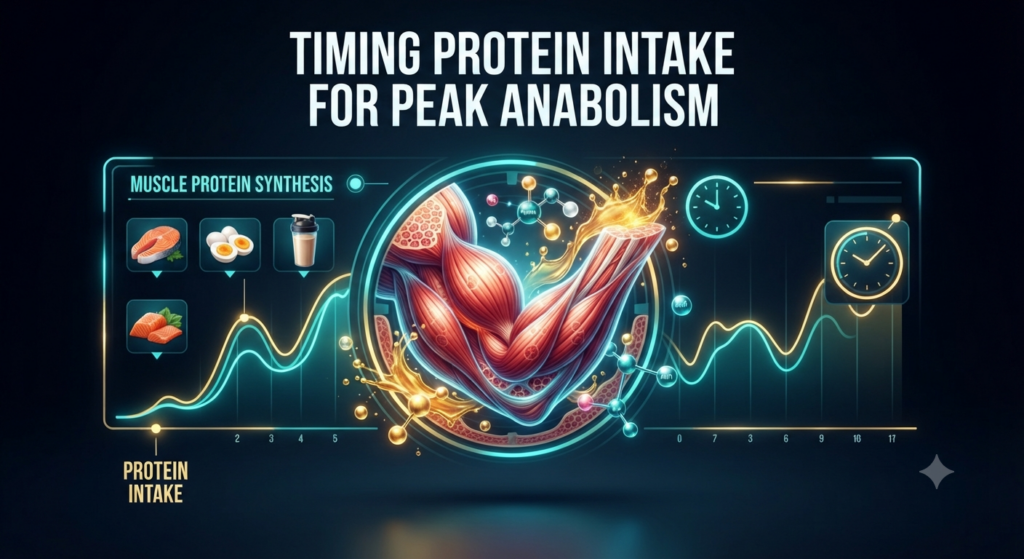
Timing protein intake for peak anabolism doesn’t require the frantic scramble many believe necessary after exercise. Spreading your daily protein across real meals beats racing the clock, since the tight window you fear exists only in marketing.
The Post-Workout Rush Is Bad Advice for Timing Protein Intake for Peak Anabolism
Evidence-based support for an “anabolic window of opportunity” is far from definitive. The actual window of enhanced protein synthesis following resistance exercise extends for 24 to 72 hours. You’ve been told to rush. The science says relax.
In resistance-trained men consuming high-protein diets, timing of protein around exercise did not affect gains in muscle mass or strength. The studies that created panic used fasted trainees. If you’ve eaten protein within 3-4 hours before training, post-workout timing becomes far less critical for muscle protein synthesis. Most people train fed.
The hypothesis is based largely on the pre-supposition that training is carried out in a fasted state. Early morning workouts on an empty stomach might need faster protein. Post-workout nutrition is keenly important when training is performed in the fasted state. Otherwise, you have hours to eat.
How Distribution Across Meals Changes Timing Protein Intake for Peak Anabolism
Distributing protein intake across multiple meals is beneficial for maximizing muscle protein synthesis, with 0.40 to 0.55 grams per kilogram of body weight distributed across 4 meals daily. A 75-kilogram person needs 30 to 41 grams per meal. That’s four real meals, not shakes between snacks.
Muscle protein synthesis needs about three hours after stimulation before it can be started up again, with protein doses roughly every three hours. This refractory period explains why pounding two shakes an hour apart wastes the second dose. Your muscles need recovery between protein feedings.
A diet providing 30-33 grams of protein at each main meal showed greater 24-hour muscle protein synthesis rates compared to 11, 16, and 63 grams at breakfast, lunch, and dinner respectively. Even distribution wins. Loading dinner loses.
Most people skip breakfast protein and overload dinner. Many people have a small amount of protein at breakfast, slightly more at lunch, and most at dinner, rather than spreading intake evenly. You might be getting 90g of protein daily, but only optimizing muscle protein synthesis once when you could be stimulating it throughout the day.
Meal Size Limits When Timing Protein Intake for Peak Anabolism
Muscle protein synthesis is maximized in young adults with an intake of approximately 20-25 g of high-quality protein. Linear increases in muscle protein synthesis response occurred with meals from 5 g up to 20 g of protein with no significant increase from 20 g to 40 g. The ceiling is real but flexible.
These findings are specific to fast-digesting proteins without other macronutrients, as slower-acting protein sources consumed in combination with other macronutrients would delay absorption. A whey shake alone hits the ceiling fast. A steak with potatoes and vegetables absorbs slowly, buying more synthesis time.
To maximize anabolism, consume protein at 0.4 g/kg/meal across a minimum of four meals to reach 1.6 g/kg/day, with an upper intake of 2.2 g/kg/day necessitating a maximum of 0.55 g/kg/meal. For that 75-kilogram person, that’s 30 grams minimum and 41 grams maximum per meal. Not hard to hit with real food.
While consumption of higher protein doses results in greater amino acid oxidation, not all additional ingested amino acids are oxidized as some are utilized for tissue-building purposes. Eating 50 grams in a meal won’t all build muscle, but it won’t vanish either.
Nighttime Strategy for Timing Protein Intake for Peak Anabolism
Protein ingestion resulted in greater mitochondrial and myofibrillar protein synthesis rates when compared with placebo during sleep. Your muscles don’t stop working overnight—in fact, overnight muscle protein synthesis rates are surprisingly low compared to daytime rates, especially after resistance training. Pre-sleep protein intake before the overnight recovery window fixes this synthesis gap and extends the anabolic response beyond training hours.
Consuming 20-40 g of casein approximately 30 min before sleep improves protein synthetic response during an overnight recovery period in healthy young adult men. Ingesting 40 grams of casein before sleep increases overnight myofibrillar protein synthesis rates in healthy older men. Both young and old trainees benefit.
At least 40 g of protein is required to display a robust increase in muscle protein synthesis rates throughout overnight sleep. Twenty grams helps. Forty grams works better. Twenty grams, with or without 1.5 g of added leucine, did not beat placebo. Don’t skimp here.
Casein works best because it digests slowly. The overnight muscle protein synthetic response to whey and casein protein does not differ. Greek yogurt, cottage cheese, or casein powder all work. Pick what you’ll actually eat before bed.
Age Shifts Requirements for Timing Protein Intake for Peak Anabolism
Adults over 65 benefited significantly more from consuming protein within one hour of exercise, compared to a four-hour delay. This effect was not seen in younger adults. Young muscles forgive slack timing. Old muscles demand precision.
Older adults face anabolic resistance. Their muscles respond less to the same protein dose. A protein intake of 30-40 g per meal is suggested to maximally stimulate muscle protein synthesis in older adults. Younger people can get away with 20 grams. Older trainees need 30 or more.
The threshold rises with age. Skipping breakfast protein hurts worse at 70 than 30. Protein intake at breakfast and lunch is often low and offers a great opportunity to improve daily protein intake. Starting the day with eggs or Greek yogurt matters more as decades pass.
Frequently Asked Questions
Does the 30-minute anabolic window actually exist?
No, the strict 30-minute window is a myth created by supplement companies. The enhanced period for protein synthesis lasts 24 to 72 hours after training. If you ate protein a few hours before your workout, immediate post-workout timing matters very little.
How much protein can your body use in one meal?
Most people max out muscle protein synthesis at 20-40 grams per meal. Larger amounts still get absorbed and used by your body for other functions. The sweet spot is 0.4 grams per kilogram of body weight per meal.
Should you eat protein before bed for muscle growth?
Yes, consuming 40 grams of slow-digesting protein before sleep increases overnight muscle protein synthesis. Casein protein, Greek yogurt, or cottage cheese work well. This matters most if you train in the evening.
How many hours apart should you space protein meals?
Wait at least three hours between protein-rich meals for best results. Muscle protein synthesis needs this refractory period to reset. Eating protein every hour wastes the doses that land during this reset window.
Does protein timing matter more as you age?
Yes, older adults need stricter timing and higher doses per meal. People over 65 should eat protein within one hour after training. They also need 30-40 grams per meal versus 20-25 for younger people.
Start tracking your protein across four daily meals instead of obsessing over post-workout shakes.