

The Carb Timing Gap Costing You 20% Performance
Your muscles deplete glycogen faster than you think, causing performance drops mid-workout. Discover the science behind intra-workout carbs and when to refuel for maximum real-world output.
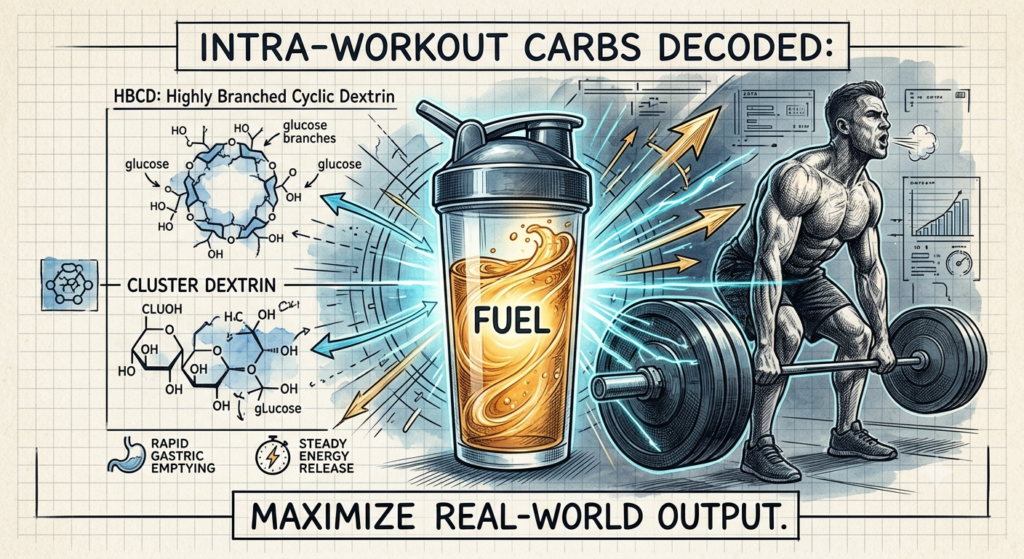
Intra-Workout Carbs Decoded: Maximize Real-World Output starts with this truth: your muscles run dry faster than you think. Most gym sessions fail not from poor effort but depleted glycogen. The fix isn’t complicated once you know when to refuel.
Why Your Second Set Feels Harder Than It Should
You start your workout strong. Then set three arrives and everything slows down. Your form breaks and your reps drop without explanation. This happens because muscle glycogen drops faster during intense training than most people realize.
Your body stores about 400 to 500 grams of glycogen total. Hard training burns through 60 grams per hour on average. Heavy compound movements burn even more. After 45 minutes your tank hits halfway empty.
Intra-workout carbs step in right when your muscles need fuel most. They prevent the performance cliff that hits between minute 40 and 60. You maintain force output instead of grinding through weak sets.
This isn’t about building muscle directly. It’s about completing your planned volume without compromise. More completed reps means better stimulus over time.
Intra-Workout Carbs Decoded: Real Training Sessions That Need Them
Not every workout needs carbs during training. A 30-minute arms session doesn’t drain enough glycogen to matter. You finish before stores run low.
Workouts over 75 minutes change the equation completely. Leg days with squats and Romanian deadlifts deplete glycogen fast. Back sessions with heavy rows and pull variations do the same. These sessions benefit most from mid-workout fuel.
High-volume programs multiply the effect. German Volume Training pushes 10 sets per exercise. That volume empties your reserves quickly. Carbs during training keep output high across all sets.
Athletes doing two sessions daily face even steeper demands. Morning strength work burns glycogen. Afternoon conditioning demands more. Intra-workout carbs bridge the gap between sessions.
Temperature matters too. Training in heat accelerates glycogen use by 15 to 20 percent. Summer garage gym sessions drain you faster than climate-controlled spaces.
How Much You Actually Need Per Hour
The standard recommendation is 30 to 60 grams per hour. That range is too wide to be useful. Your actual need depends on body weight and training intensity.
A 150-pound lifter doing moderate hypertrophy work needs about 30 grams hourly. A 200-pound athlete pushing heavy compound movements needs 50 grams. Strongman training or CrossFit competitions can push requirements to 90 grams.
Start with 0.4 grams per kilogram of body weight per hour. A 180-pound lifter weighs roughly 82 kilograms. That’s about 33 grams of carbs each hour. Test this amount first.
Intra-Workout Carbs Decoded: Maximize Real-World Output means matching carbs to actual work done. Track your session duration and intensity. Adjust your intake based on how later sets feel.
Too much causes stomach discomfort. Your gut slows digestion during hard training. Keep amounts moderate to avoid cramping or bloating.
Sources That Absorb Fast Without Gut Issues
Simple sugars win here. Dextrose and maltodextrin absorb faster than complex carbs. They spike blood sugar quickly and reach muscles within minutes.
Highly branched cyclic dextrin gained popularity for good reason. It passes through your stomach faster than regular maltodextrin. Less sits in your gut causing discomfort. Athletes doing intense cardio notice the difference most.
Fruit juice works but comes with drawbacks. Fructose absorbs slower than glucose through different intestinal transport mechanisms compared to glucose transporters. High amounts can cause GI distress and osmotic diarrhea from unabsorbed sugars. Apple juice at 12 grams per 100ml dilutes your carb intake too much—you’d need excessive volume to hit your hourly targets, increasing bloating risk. Whole fruits like bananas or dates have the same absorption lag plus fiber that slows gastric emptying during training.
Sports drinks like Gatorade provide about 14 grams per 240ml serving. You’d need multiple bottles per hour to hit targets. That’s expensive and inconvenient compared to powder.
Gummy candies sound appealing but chewing mid-set interrupts training flow. Liquid carbs mix into water and sip easily between exercises. Convenience matters when you’re managing rest periods.
Intra-Workout Carbs Decoded: Timing Your Sips Between Sets
Don’t wait until you feel tired to drink. By then glycogen already dropped. Start sipping 20 minutes into your session instead.
Small frequent sips beat large gulps. Take 100 to 150ml every 10 minutes. This steady stream keeps blood sugar stable without overwhelming your stomach.
Mix your carbs before training starts. Powders dissolve better in room temperature water than cold. Clumpy drinks sitting at the bottom waste your money.
Front-load slightly on leg days. Take a bigger sip after your warm-up sets. Squats and deadlifts drain glycogen faster than isolation work. Early fuel prevents the crash.
Stop drinking 15 minutes before your session ends. Your body doesn’t need carbs when only cool-down work remains. Save those calories for post-workout nutrition instead.
Stop Feeling Fatigue: The Proven Formula to Build Muscle, Boost Libido, and Surge Energy
What Happens to Performance Without Mid-Workout Fuel
Research shows force production drops 12 to 18 percent when glycogen depletes. Your muscles physically can’t contract as hard. Weight that moved easily becomes a grind.
Your form degrades next. Tired muscles recruit stabilizers poorly. Your squat depth gets shallow. Your bench press bar path drifts forward. Injury risk climbs.
Mental focus fades alongside physical output. Your brain runs on glucose too. Decision-making slows when blood sugar drops. You misjudge rest periods and skip planned sets.
Recovery between workouts extends when you train depleted. Your body needs extra time to rebuild glycogen stores. Training frequency drops as a result.
Intra-Workout Carbs Decoded: Maximize Real-World Output prevents all these issues with one simple habit. Fuel during training and maintain peak output longer.
How This Strategy Fits With Fasted Training Goals
Some people train fasted for fat loss. Intra-workout carbs seem to contradict that approach. The conflict is less dramatic than it appears.
Fasted training works through elevated adrenaline and growth hormone. Those hormones stay elevated even with small carb intake. Under 30 grams barely impacts fat oxidation during your session.
The real fat loss happens through total daily calorie deficit. Missing one high-quality training session hurts progress more than skipping carbs helps. Performance should win this decision.
Metabolic flexibility matters more than rigid fasting rules. Training your body to switch fuel sources has value. But sabotaging every hard session teaches nothing useful.
Compromise works well here. Train fasted twice weekly for adaptation. Use intra-workout carbs on your hardest sessions. You get benefits from both approaches.
Intra-Workout Carbs Decoded: Pairing With Electrolytes and Hydration
Carbs work better when electrolyte balance stays intact. Sodium helps absorb glucose in your intestines. Add 300 to 500mg per hour of training.
Potassium prevents cramping during high-rep sets. Aim for 100 to 200mg hourly. Most carb powders skip this mineral entirely. Add it separately.
Magnesium supports muscle contraction and ATP production. Just 50mg per serving makes a measurable difference. Deficiency shows up as weak contractions first.
Water intake scales with carb amount. Every gram of carbohydrate pulls about 3 grams of water into muscles. Drink 400 to 600ml per hour minimum.
Dehydration blocks carb absorption. Even 2 percent body weight loss from sweat impairs performance. Monitor your water bottle as closely as your carb intake.
Cost Comparison Against Pre-Made Sports Drinks
A tub of maltodextrin costs about 20 dollars for 2000 grams. That’s 40 servings at 50 grams each. Each workout costs 50 cents.
Gatorade bottles run roughly 2 dollars each with only 28 grams of carbs. You’d need two bottles per session. That’s 4 dollars per workout.
Fancy intra-workout products with added BCAAs cost 40 to 60 dollars monthly. The amino acids provide minimal benefit if you eat enough protein daily. You’re paying for marketing.
Highly branched cyclic dextrin costs triple what maltodextrin does. It’s worth the premium only if regular dextrin upsets your stomach. Most people tolerate cheap options fine.
Make your own mix with dextrose and table salt. Add flavoring drops for taste. Total cost drops under 30 cents per session.
Frequently Asked Questions
Do intra-workout carbs cause fat gain during a cut?
No, they don’t cause fat gain if you account for them in daily totals. Fat loss depends on total calorie deficit over time. Count your intra-workout carbs as part of your daily carb allowance. Performance stays high while body fat still drops.
Can I use fruit instead of powdered carbs?
Fruit works but digests slower than simple sugars. Bananas take 30 to 45 minutes to break down fully. Powdered dextrose hits your bloodstream within 10 minutes. Fruit is better for pre-workout timing instead.
Will intra-workout carbs help with muscle growth?
They help indirectly by letting you complete more total volume. More reps at higher intensity creates better growth stimulus. The carbs themselves don’t build muscle. They just prevent performance from dropping mid-session.
How do I know if I need intra-workout carbs?
Track your performance across sets during long workouts. If your reps drop by 20 percent after 45 minutes, you need fuel. Consistent output from start to finish means your pre-workout meal sufficed.
What’s the best carb source for endurance athletes?
Highly branched cyclic dextrin works best for runners and cyclists. It empties from your stomach faster than maltodextrin. Less gut discomfort during continuous movement. Maltodextrin still works fine for lifting.
Mix 40 grams of dextrose into your water bottle before your next long training session and notice the difference yourself.