

The Bodybuilding Meal Plan Top Athletes Won't Share
A 7-day bodybuilding meal plan transforms random eating into strategic muscle building by optimizing protein timing every 3-4 hours and carb cycling around your workouts. Most lifters eat enough protein but spread it incorrectly throughout the day, missing crucial growth signals that proper meal timing delivers.
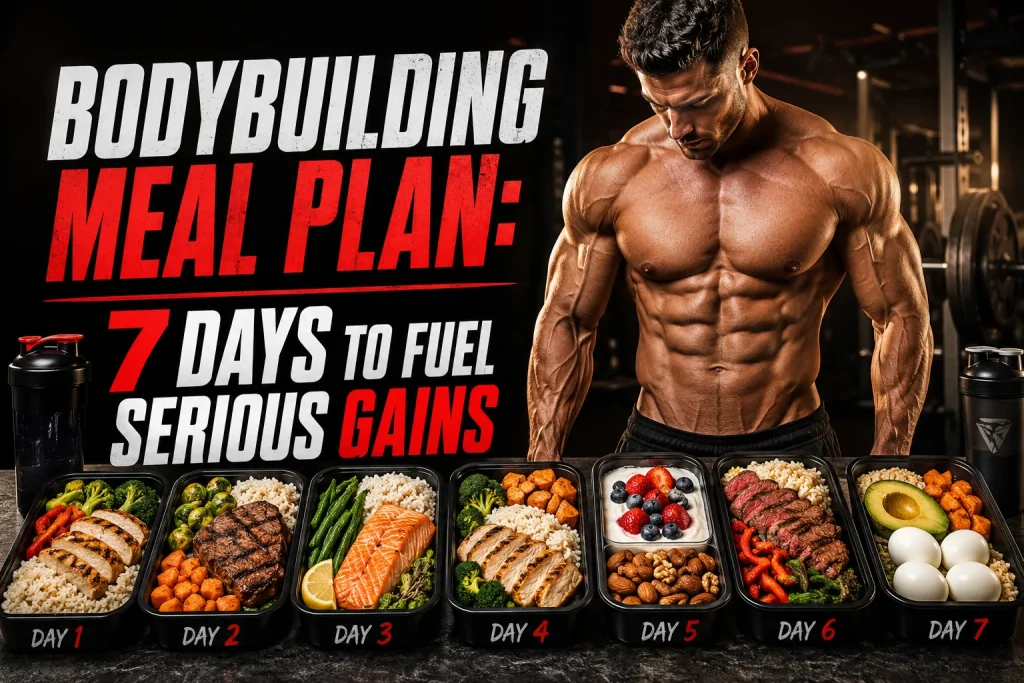
You track every rep in the gym but eat whatever fits your schedule. Your body needs fuel on a strict timeline to grow. A bodybuilding meal plan 7 days to fuel serious gains turns random eating into strategic muscle building. Protein timing matters more than total protein when building mass.
Why a Bodybuilding Meal Plan 7 Days to Fuel Serious Gains Changes Everything
Most lifters eat enough protein but spread it wrong across the day. Your muscles respond best to protein doses every three to four hours. Less frequent feeding means missed growth signals. Your body can only process about 30 to 40 grams of protein per meal for muscle building.
Carbs fuel your workouts but timing them poorly wastes their potential. You need carbs before training for energy and after training for recovery. Eating them at dinner when you’re sitting on the couch does nothing for gains. The window matters as much as the amount.
Fat intake gets ignored by many bodybuilders chasing low body fat percentages. Your hormones need dietary fat to function properly. Testosterone production drops when fat intake falls below 20 percent of total calories. Without proper hormone levels, muscle growth stalls no matter how hard you train.
A structured week removes guesswork from your nutrition completely. You know exactly what to eat and when to eat it. Meal prep becomes simple when you follow the same rotation. Your body adapts to the routine and digestion improves over time.
A seven-day menu is most useful when you understand the nutritional principles behind the foods and portions it contains. Bodybuilding Meal Plan: What Natural Lifters Should Eat explains the broader bodybuilding nutrition framework you can use to customize this weekly plan around your own calorie and muscle-building needs.
Building Your Bodybuilding Meal Plan 7 Days to Fuel Serious Gains Foundation
Calculate your calorie needs before planning a single meal. Multiply your body weight in pounds by 16 to 18 for bulking. A 180 pound lifter needs roughly 2,880 to 3,240 calories daily. Adjust based on how your weight moves each week.
Protein should hit one gram per pound of body weight minimum. That same 180 pound lifter needs 180 grams spread across five to six meals. Each meal contains 30 to 36 grams of complete protein sources. Chicken, fish, eggs, and lean beef work best for clean calories.
Carbohydrate needs vary based on training volume and intensity. Start with two grams per pound on heavy training days. Drop to one gram per pound on rest days. Rice, oats, potatoes, and fruit provide clean carb sources without excess sugar.
Fill remaining calories with healthy fats from whole food sources. Nuts, avocado, olive oil, and fatty fish provide essential fatty acids. These fats support hormone production and reduce inflammation from hard training. Aim for 0.4 to 0.5 grams per pound of body weight.
Many bodybuilders find that supplements designed for muscle building help them meet their macro targets more easily throughout the week.
Sample Bodybuilding Meal Plan 7 Days Structure
Day one starts your week with high carbs to fuel intense training. Breakfast includes oats with whey protein and berries for quick energy. Mid morning brings chicken breast with rice and vegetables. Lunch combines lean beef with sweet potato and a side salad.
Your pre workout meal comes two hours before training. Rice cakes with almond butter provide fast carbs without stomach upset. Post workout nutrition hits within 30 minutes of finishing your last set. Whey protein with dextrose or a banana kickstarts recovery immediately.
Dinner focuses on protein and vegetables with moderate carbs. Salmon with quinoa and broccoli delivers complete nutrition without excess calories. Your final meal before bed emphasizes slow digesting protein. Cottage cheese or casein protein prevents muscle breakdown during sleep.
Day two through four follow similar structure with different protein sources. Turkey, white fish, and eggs rotate through your meals. Carb sources alternate between rice, oats, potatoes, and whole grain pasta. This variety prevents boredom and provides different micronutrients.
Days five and six match your heaviest training sessions. Carbs increase slightly to support the extra work volume. Add an extra serving of rice or oats to your post workout meal. Your body needs this fuel to recover from brutal leg or back sessions.
Day seven drops carbs lower as a planned rest day. Protein stays constant but you cut one carb serving from lunch. Fats increase slightly to maintain total calories. This gives your insulin sensitivity a break while supporting recovery.
Meal Timing in Your Bodybuilding Meal Plan 7 Days to Fuel Serious Gains
Your first meal should happen within 30 minutes of waking up. Overnight fasting puts your body in a catabolic state. Protein and carbs immediately reverse this and start building mode. Waiting two hours wastes valuable morning anabolic potential.
Space meals three to four hours apart for optimal protein synthesis. Eating every two hours sounds good but provides no extra benefit. Your body needs time to digest and utilize nutrients properly. Six meals daily works better than eight small snacks.
Train at the same time each day when possible. Your body adapts to expect nutrients at specific times. This consistency improves digestion and nutrient absorption rates. Your pre workout meal becomes more effective through repeated timing.
Never train on an empty stomach expecting better fat loss. Fasted training reduces workout intensity and limits muscle building signals. You need glycogen in your muscles to push heavy weights. Lower intensity means less growth stimulus regardless of diet.
The post workout window isn’t magical but it matters more than people claim. You have roughly two hours of elevated protein synthesis after training. Getting protein and carbs in that timeframe maximizes the response. Waiting four hours means you’re halfway to your next natural synthesis spike.
Adjusting Your Bodybuilding Meal Plan 7 Days for Real Results
Track your body weight first thing every morning after using the bathroom. Record all seven days and calculate the weekly average. Compare weekly averages rather than day to day fluctuations. Water weight can swing three to five pounds in 24 hours.
Aim for 0.5 to 1 pound of gain per week during a bulk. Faster gains mean you’re adding excess body fat unnecessarily. Slower gains suggest you need more calories or better recovery. Adjust total daily calories by 200 in either direction as needed.
Take progress photos every two weeks in identical lighting and poses. The mirror lies because you see yourself daily. Photos reveal actual changes your eye misses in real time. Compare month to month rather than week to week for clear differences.
Strength numbers should climb steadily on your main compound lifts. Adding five pounds monthly to your bench or squat indicates proper fueling. Stalled lifts for three consecutive weeks means something needs adjustment. Usually it’s either total calories or carb timing around training.
Digestion issues signal you’re eating too much at once. Spread the same total food across more frequent smaller meals. Some people handle three large meals better than six smaller ones. Find what works for your gut and stick with it.
Common Mistakes That Sabotage Your Bodybuilding Meal Plan 7 Days to Fuel Serious Gains
Copying a professional bodybuilder’s diet from a magazine guarantees failure. Those athletes use performance enhancing drugs that change nutrient needs completely. Their recovery capacity far exceeds natural lifters. You need a plan designed for your actual physiology.
Obsessing over clean foods while missing calorie targets wastes your effort. Your muscles don’t care if carbs come from sweet potato or white rice. Total macros matter far more than food sources for muscle growth. Hit your numbers first, then worry about food quality.
Skipping meals because you’re not hungry stops your progress immediately. Appetite isn’t reliable when you need to eat for growth. Many hard gainers simply don’t feel hungry enough naturally. You have to eat by the clock, not by feel.
Changing your plan every week chasing the newest nutrition trend creates chaos. Your body needs consistency to adapt and respond optimally. Give any approach at least four to six weeks before judging results. Impatience kills more progress than bad programming.
Using quality nutritional support products can bridge gaps when whole food intake falls short on busy days.
Food Prep Strategies for Your Bodybuilding Meal Plan 7 Days
Cook all protein sources for the week in one three hour session. Bake chicken breasts, grill lean beef, and hard boil two dozen eggs. Store everything in individual containers for grab and go convenience. This single session eliminates daily cooking stress.
Prepare carb sources in bulk using a rice cooker and slow cooker. Ten cups of rice feeds you for days when portioned correctly. Slow cook five pounds of sweet potatoes while you prep protein. Both store well and reheat quickly in any microwave.
Chop vegetables once weekly and store them in sealed containers. Broccoli, peppers, and spinach last five to seven days when stored properly. Pre chopped vegetables remove excuses when you’re tired after training. Convenience drives consistency more than motivation ever will.
Invest in quality food storage containers that seal properly. Glass containers avoid plastic chemicals but weigh more for transport. BPA free plastic works fine and costs less for tight budgets. Buy enough containers to hold three full days of meals minimum.
Keep emergency backup meals ready for unexpected schedule changes. Canned tuna, rice cakes, and protein powder travel anywhere without refrigeration. These prevent you from skipping meals when life gets chaotic. One missed meal won’t ruin progress but three weekly definitely will.
Supplements That Support a Bodybuilding Meal Plan 7 Days to Fuel Serious Gains
Whey protein powder turns hitting daily protein targets from hard to easy. Mix it with water post workout or add to oatmeal. Each scoop provides 25 to 30 grams of complete protein. Choose unflavored if you plan to cook with it regularly.
Creatine monohydrate might be the only supplement with decades of solid research. Five grams daily increases strength and muscle fullness noticeably. Take it any time of day with or without food. The timing myth has been thoroughly debunked by research.
A basic multivitamin fills micronutrient gaps from repeated meal patterns. Eating the same foods weekly can create minor deficiencies over time. One tablet daily provides insurance against these gaps. Don’t expect it to boost performance, just prevent deficiency.
A quality pre-made supplement stack can simplify meeting your macronutrient and micronutrient targets, though whole foods should remain your foundation. Look for products containing proven ingredients like beta-alanine for workout endurance, branched-chain amino acids (BCAAs) for muscle preservation during training, and citrulline malate for improved blood flow and pump. Ensure any supplement formula provides transparent labeling of active ingredients and dosages. However, remember that supplements amplify a solid meal plan—they don’t replace hitting your daily protein, carbohydrate, and fat targets through real food sources. Use them strategically to fill gaps on busy days, not as a substitute for disciplined eating habits.
Fish oil reduces inflammation from heavy training and supports joint health. Take three to four grams daily of combined EPA and DHA. Buy quality brands that test for mercury and other contaminants. Cheap fish oil often causes stomach upset and tastes terrible.
Vitamin D3 levels run low in most people, especially during winter months. Low D3 correlates with reduced testosterone and poor recovery. Supplement with 2,000 to 5,000 IU daily year round. Test your blood levels once yearly to confirm proper dosing.
Frequently Asked Questions
How much protein do I really need for muscle growth?
Aim for one gram per pound of body weight daily minimum. Research shows no additional benefit beyond 1.2 grams per pound for natural lifters. Spread this protein across five to six meals throughout the day. Eating it all in two meals wastes the muscle building potential.
Can I build muscle while losing fat at the same time?
Beginners and detrained lifters can achieve both simultaneously for several months. Advanced lifters must choose either gaining muscle or losing fat. Your body resists doing both because they require opposite metabolic states. Focus on one goal at a time for better results.
Do I need to eat immediately after working out?
The post workout window extends roughly two hours, not 30 minutes. Getting protein and carbs within that timeframe maximizes muscle protein synthesis. Waiting four hours or more reduces the anabolic response significantly. Sooner is better but not absolutely critical like old myths claimed.
Should I eat carbs at night or avoid them?
Carb timing around training matters more than avoiding them at night. Your body uses carbs based on activity level, not the clock. Eating carbs before bed won’t make you fat if calories are controlled. Total daily intake determines body composition, not meal timing alone.
How long before I see results from proper meal planning?
Strength increases appear within two to three weeks of proper fueling. Visible muscle growth takes four to six weeks to become noticeable. Full physique transformation requires consistent effort for three to six months minimum. Track weekly progress to stay motivated through the slower visible changes.
Start your structured eating plan this Sunday and measure your results after four full weeks of consistency.