
Bodybuilders Eating Wrong Foods at Right Times, Here's Why
A strategic bodybuilding meal plan for maximum muscle growth delivers the amino acids your muscles need when protein synthesis peaks, fixing what training alone cannot achieve. Proper meal timing and macronutrient distribution across the day ensure your muscles get the nutrients they need to grow, not random eating throughout the day.
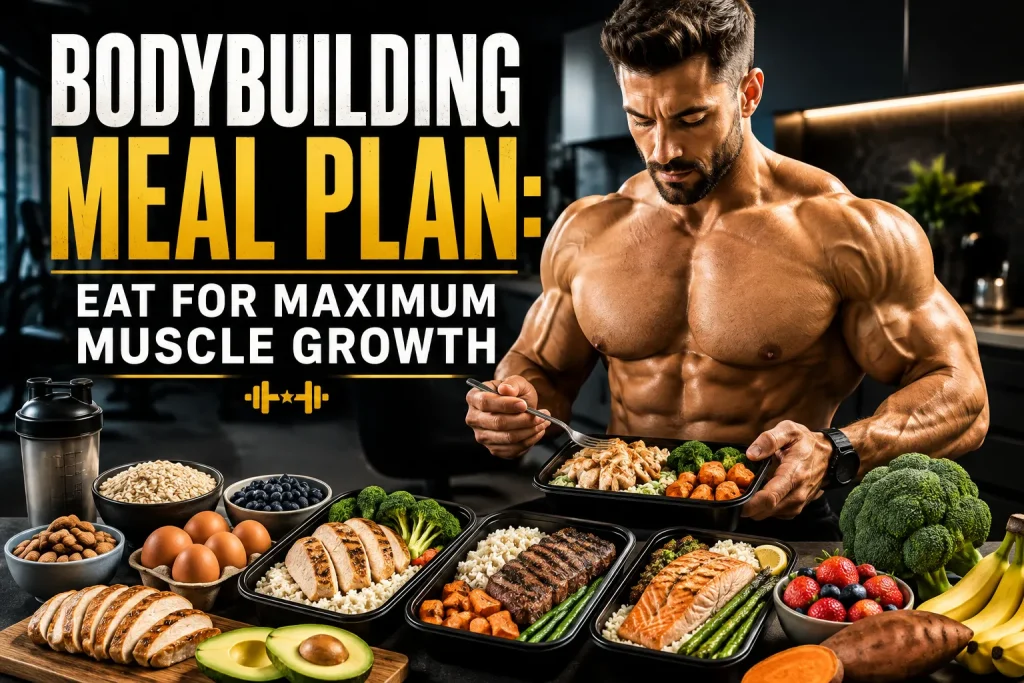
You walk into the gym six days a week but still look flat. Your training splits are perfect, recovery protocols dialed in, yet muscle refuses to grow. A Bodybuilding Meal Plan Eat for Maximum Muscle Growth fixes what training alone cannot. Muscle tissue forms in the kitchen before the weights ever validate it.
Why a Bodybuilding Meal Plan Eat for Maximum Muscle Growth Beats Random Eating
Most lifters eat enough protein but miss their growth window entirely. You slam chicken breast after every session and wonder why size stalls. The problem sits in meal timing and macronutrient distribution across the day.
Your muscles need amino acids present when protein synthesis peaks. That window opens immediately after training and stays elevated for 24 hours. Eating randomly means some meals land when your body can’t use them. Other critical hours pass with zero nutrients available.
A structured meal plan spaces protein intake every three to four hours. This keeps amino acid levels steady throughout the entire day. Your body never enters a fasted state where muscle breakdown exceeds synthesis. Even when you sleep, the right pre-bed meal continues feeding growth.
Carbohydrate timing matters just as much as protein frequency does. Training depletes glycogen stores in your muscles and liver completely. You need 100 to 150 grams of fast carbs within two hours. This refills energy reserves and drives nutrients into muscle cells aggressively.
A muscle-growth meal plan works best when it is built on a complete understanding of bodybuilding nutrition and food selection. Bodybuilding Meal Plan: What Natural Lifters Should Eat provides the broader framework for choosing foods and structuring an effective diet for natural bodybuilding.
Calculating Your Calorie Target for a Bodybuilding Meal Plan Eat for Maximum Muscle Growth
Muscle growth demands a calorie surplus between 200 and 500 daily. Too little and your body refuses to build new tissue. Too much and fat accumulation buries the muscle you work for.
Start by finding your maintenance calories using a simple formula. Multiply your body weight in pounds by 15 for a baseline. A 180-pound lifter needs roughly 2,700 calories to maintain current mass. Add 300 calories to enter a lean bulking phase.
Track your weight every morning after using the bathroom. Take the average across seven days to eliminate daily fluctuations. If you gain more than one pound per week, reduce calories. Slower than half a pound weekly means you need more food.
Protein intake should hit one gram per pound of body weight. That same 180-pound lifter eats 180 grams of protein daily. Carbohydrates fill most remaining calories at two grams per pound minimum. Fats make up the rest at 0.4 grams per pound.
Structuring Meals in Your Bodybuilding Meal Plan Eat for Maximum Muscle Growth
Five to six meals across the day keeps nutrient delivery constant. Eating three large meals creates long gaps where protein synthesis drops. Your body can only absorb 30 to 40 grams of protein effectively per sitting.
Breakfast sets the tone after an overnight fast lasting eight hours. You need 40 grams of protein and 60 grams of carbs immediately. Eggs, oatmeal, and berries deliver this combination without digestive stress.
Mid-morning and mid-afternoon snacks prevent muscle breakdown between main meals. Greek yogurt with honey or a protein shake with banana works. These smaller feedings contain 20 to 30 grams of protein each.
Your post-workout meal is the most anabolic window of the day. Consume 40 grams of protein and 80 grams of fast-digesting carbs here. White rice, chicken breast, and a sports drink spike insulin hard. This hormonal response shuttles nutrients into starving muscle cells within minutes.
Dinner focuses on slower-digesting proteins and fibrous carbohydrates for sustained release. Salmon with sweet potato and broccoli provides this balance perfectly. You still hit 40 grams of protein but digestion extends over hours.
The final meal before bed prevents overnight catabolism from destroying progress. Casein protein powder or cottage cheese releases amino acids for eight hours. Add a tablespoon of almond butter for healthy fats that slow digestion further.
Knowing what to eat is only the first step—the harder part can be turning those nutritional targets into practical meals day after day. Seven-Day Bodybuilding Meal Plan provides a full week of meal-planning ideas that can make consistent bodybuilding nutrition easier to organize.
Best Protein Sources for a Bodybuilding Meal Plan Eat for Maximum Muscle Growth
Whole food proteins beat supplements for overall nutrient density and satiety. Chicken breast delivers 30 grams of protein per four-ounce serving. It contains zero carbs and minimal fat, making macro calculations simple.
Lean beef provides protein plus creatine and iron you can’t get elsewhere. Ground beef at 93% lean offers 24 grams per serving. The small amount of fat helps with testosterone production naturally.
Fish like salmon and tuna supply protein with omega-3 fatty acids. These fats reduce inflammation from intense training and support joint health. A six-ounce salmon fillet contains 40 grams of complete protein.
Eggs remain the gold standard for amino acid profile completeness. One whole egg has six grams of protein with all essential amino acids. The yolk contains vitamins that support muscle function and hormone production.
Dairy products like Greek yogurt and cottage cheese work for quick meals. Greek yogurt packs 20 grams of protein per cup with probiotics. Cottage cheese before bed releases casein protein slowly throughout the night.
Plant proteins can supplement but shouldn’t form your entire intake alone. Quinoa and lentils lack some amino acids that animal proteins provide. Combining different plant sources throughout the day solves this limitation.
Carbohydrate Strategy in Your Bodybuilding Meal Plan Eat for Maximum Muscle Growth
Carbs fuel your workouts and trigger insulin release for muscle building. You need more carbs on training days than rest days. This matches nutrient intake to actual energy expenditure and recovery demands.
Fast-digesting carbs belong immediately after you train and nowhere else. White rice, white potatoes, and cereal spike blood sugar intentionally here. This insulin surge drives amino acids and glucose into muscle cells.
Slow-digesting carbs power your workouts when eaten two hours before training. Oatmeal, brown rice, and sweet potatoes provide sustained energy without crashes. These complex carbs prevent mid-workout fatigue and maintain lifting intensity.
Fibrous vegetables should appear in every meal despite minimal calories. Broccoli, spinach, and peppers provide vitamins that support protein metabolism. Fiber also slows digestion and keeps you feeling full longer.
Fruit timing matters based on training schedule and insulin sensitivity. Berries with breakfast provide antioxidants that reduce workout inflammation damage. Bananas post-workout deliver quick carbs plus potassium for muscle contractions.
Eating enough to support muscle growth does not require an uncontrolled calorie surplus that adds unnecessary body fat. Bodybuilding Meal Plan Without the Fat explains how to structure a muscle-building diet around a more controlled surplus while keeping the focus on lean mass gains.
Fat Intake for Hormone Production and Recovery
Dietary fats support testosterone production which directly impacts muscle growth rates. Men need at least 0.4 grams per pound of body weight. Dropping fats too low crashes hormone levels within two weeks.
Saturated fats from egg yolks and red meat boost testosterone naturally. You need some saturated fat despite mainstream health advice saying otherwise. About 30% of total fat intake should come from these sources.
Monounsaturated fats from olive oil and avocados reduce inflammation from training. Two tablespoons of olive oil on salads provides nine grams. Half an avocado adds 15 grams with fiber and potassium.
Omega-3 fatty acids from fish oil reduce muscle soreness significantly. Studies show three grams daily cuts recovery time by a full day. Fatty fish twice weekly or supplements designed for athletes deliver this amount.
Trans fats and excessive omega-6 oils sabotage recovery and promote inflammation. Avoid vegetable oils, fried foods, and processed snacks completely. These fats interfere with the anti-inflammatory benefits of good fats.
Meal Prep Strategies for Consistency
Cooking once for multiple days eliminates decision fatigue and missed meals. Sunday meal prep for Monday through Thursday keeps you on track. Thursday evening you prep again for Friday through Sunday.
Cook proteins in bulk using simple seasoning that won’t get boring. Bake six chicken breasts at once with just salt and pepper. You can add different sauces later to create variety across meals.
Batch-cook carbs like rice and potatoes in large quantities simultaneously. A rice cooker handles five cups of dry rice without supervision. Roast a sheet pan of sweet potatoes while chicken bakes.
Portion meals into containers immediately while food is still hot. Glass containers work better than plastic for reheating and longevity. Label each container with the day and meal number.
Prep vegetables fresh daily instead of storing them cooked for days. Pre-washed spinach and pre-cut broccoli take two minutes to steam. Fresh vegetables taste better and retain more vitamins than reheated ones.
Supplements That Support Your Bodybuilding Meal Plan Eat for Maximum Muscle Growth
Whey protein powder fills gaps when whole food isn’t convenient. One scoop provides 25 grams of fast-absorbing protein in seconds. Use it immediately after training when speed matters most.
Creatine monohydrate increases strength and muscle volume through water retention. Five grams daily saturates your muscles within two weeks of loading. This supplement has more research backing it than any other.
A quality multivitamin prevents micronutrient deficiencies from restricted diets. Hard training increases vitamin needs beyond what most people consume. One pill daily covers nutritional gaps that slow recovery.
Branched-chain amino acids (BCAAs) during workouts prevent muscle catabolism under intense training stress. Sip 10 grams mixed in water throughout your training session to maintain positive nitrogen balance. BCAAs are especially important during longer workouts exceeding 90 minutes when glycogen depletion accelerates muscle breakdown. Leucine, isoleucine, and valine work synergistically to trigger mTOR signaling and preserve lean mass during caloric deficits or extended training sessions.
Pre-workout formulas with caffeine boost training intensity and mental focus. Take one serving 30 minutes before your first exercise starts. Avoid products with proprietary blends that hide ingredient amounts poorly.
Recovery supplements like Bulk Extreme combine multiple ingredients for comprehensive muscle support. These formulas often include adaptogens and minerals that individual supplements miss. They simplify supplementation when taking five separate pills feels overwhelming.
Adjusting Your Bodybuilding Meal Plan Eat for Maximum Muscle Growth Over Time
Your calorie needs increase as muscle mass grows over months. Every 10 pounds of muscle requires an additional 60 daily calories. Recalculate your targets every four to six weeks based on progress.
Strength plateaus signal inadequate fueling more often than poor programming does. If your lifts stall for three consecutive weeks, add 200 calories. This small increase often breaks through without adding excess fat.
Fat gain accelerating beyond one pound per week means calories are too high. Drop total intake by 200 and reassess after two weeks. Prioritize cutting carbs and fats while maintaining protein at one gram per pound.
Energy levels throughout the day reveal whether meal timing needs adjustment. Afternoon crashes suggest lunch needs more slow-digesting carbs and fats. Poor workout performance indicates your pre-training meal needs more carbohydrates.
Digestive issues point to food intolerances or portions that are too large. Bloating after dairy means lactose intolerance requires alternative protein sources. Splitting larger meals into smaller ones often solves volume problems.
Common Mistakes That Sabotage Muscle Growth
Undereating protein is the single most common error preventing muscle gain. You might think you eat enough but tracking reveals the truth. Most beginners consume barely 100 grams daily when they need 180.
Skipping post-workout nutrition wastes the most anabolic window of your day. Your muscles are primed to absorb nutrients for two hours after training. Missing this window cuts potential growth by up to 30%.
Inconsistent meal timing creates gaps where muscle breakdown exceeds protein synthesis. Going six hours between meals on busy days erases morning progress. Set phone alarms to remind you when meals are due.
Copying someone else’s meal plan ignores your individual calorie and macro needs. A 200-pound bodybuilder needs different amounts than a 150-pound beginner. Calculate your own targets based on current weight and goals.
Changing your plan every two weeks prevents you from seeing what works. Your body needs four to six weeks to respond to any nutritional approach. Stick with one plan long enough to measure actual results.
Neglecting micronutrients while obsessing over macros causes invisible deficiencies that limit recovery. Zinc and magnesium deficiencies are common in hard-training lifters who ignore vegetables. These minerals directly affect testosterone and sleep quality.
Sample Day of Eating for Maximum Muscle Growth
Meal one at 7am contains four whole eggs scrambled with one cup oatmeal. Add one cup of mixed berries on top of the oatmeal. This provides 40 grams protein and 65 grams carbs to start your day.
Meal two at 10am is one cup Greek yogurt with two tablespoons honey. This quick snack delivers 25 grams protein and 35 grams carbs. Preparation takes under one minute between morning tasks.
Meal three at 1pm features six ounces grilled chicken breast with eight ounces sweet potato. Add one cup steamed broccoli and one tablespoon olive oil for fats. You get 45 grams protein and 50 grams carbs here.
Meal four happens immediately after your 4pm training session ends. Mix two scoops whey protein with one large banana and 12 ounces white rice. This massive meal contains 60 grams protein and 110 grams carbs.
Meal five at 7pm is six ounces salmon with one cup quinoa. Include two cups mixed green salad with olive oil dressing for healthy fats. This dinner provides 45 grams protein and 40 grams carbs.
Meal six at 10pm before bed is one cup cottage cheese. Mix in two tablespoons natural peanut butter for sustained protein release overnight. You get 35 grams slow-digesting protein that feeds muscle for eight hours.
This sample day totals roughly 3,200 calories with 250 grams protein. Carbohydrates reach 300 grams with fats around 70 grams for the day. These numbers work for a 180-pound lifter in a growth phase.
Tracking Progress Beyond the Scale
Body weight alone hides whether you’re gaining muscle or just fat. Take progress photos every two weeks in identical lighting and poses. Visual changes often appear before the scale moves significantly.
Measuring body parts reveals growth in specific muscle groups you target. Track arms, chest, thighs, and waist every four weeks using a tape measure. Your waist should stay relatively stable while other measurements increase.
Strength gains in compound lifts indicate real muscle tissue formation. Log your weights for squat, bench, and deadlift each week in a training journal. Adding 20 pounds to your bench over eight weeks confirms muscle growth.
Recovery speed between workouts improves when nutrition supports adaptation properly. Notice whether soreness resolves in two days versus four days previously. Faster recovery means your meal plan supplies adequate nutrients for repair.
Sleep quality and energy levels throughout the day signal proper fueling. Waking refreshed and maintaining focus until evening suggests adequate calories and carbs. Constant fatigue despite good sleep means you’re probably undereating for your activity level.
Frequently Asked Questions
How much protein do I need for maximum muscle growth?
You need one gram of protein per pound of body weight daily. A 170-pound person should eat 170 grams of protein each day. Spread this across five to six meals for best absorption and muscle protein synthesis.
Should I eat carbs before bed or avoid them?
Eating carbs before bed does not cause fat gain if you’re within calorie targets. Your body composition depends on total daily calories, not specific meal timing. Carbs with your final meal can actually improve sleep quality through serotonin production.
How many calories above maintenance should I eat to build muscle?
Add 200 to 400 calories above your maintenance level for lean muscle growth. This creates a surplus that supports new tissue without excessive fat gain. Beginners can use 300 calories as a safe starting point.
Can I build muscle while eating less frequently?
Eating less frequently makes hitting protein targets harder and creates longer fasting gaps. Muscle protein synthesis drops when amino acids aren’t available every few hours. Five to six meals daily keeps your body in an anabolic state consistently.
Do I need supplements or can I build muscle with food alone?
You can build muscle with whole foods alone if you meet calorie and protein targets. Supplements add convenience and fill nutritional gaps when schedules get busy. Whey protein and creatine offer the most research-backed benefits for muscle growth.
Start tracking your meals today to see where your current eating falls short of growth needs.