
Why Most Obesity Programs Fail (And How You Won't)
Most diets fail because they don’t address how your body defends its weight through hormones and hunger signals. Lasting weight loss requires combining eating changes with movement and mental strategies that create fat-burning windows throughout your day.
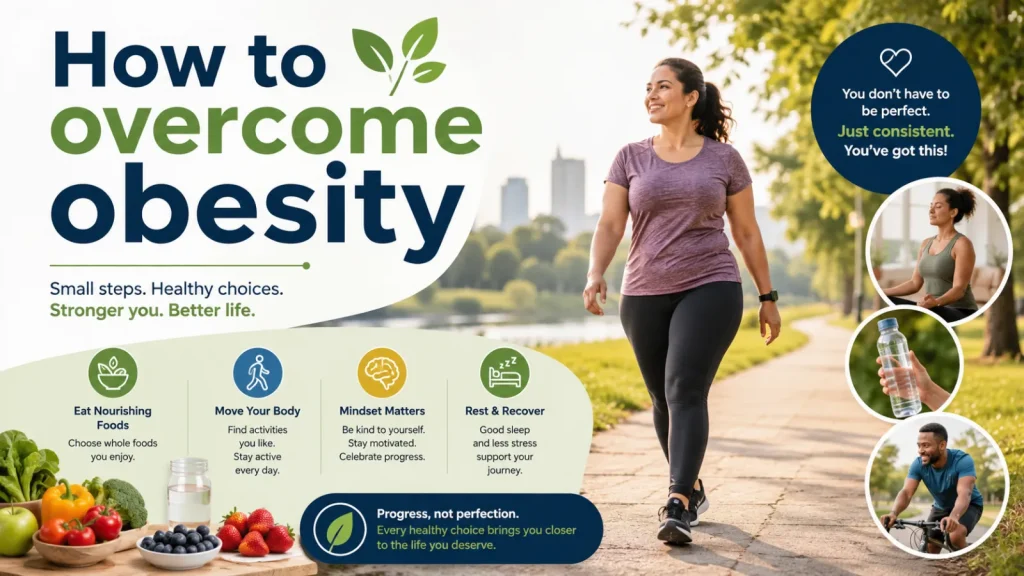
Most diets promise quick fixes but leave you heavier six months later. How to overcome obesity requires a complete shift in how you live. Your body defends its weight with powerful hormones and hunger signals. The only lasting solution combines eating changes with movement and mental strategies.
How to Overcome Obesity Through Daily Eating Patterns
Your body releases insulin every time you eat. High insulin levels block fat burning completely. When you snack six times per day, insulin stays elevated constantly. Your fat cells never get the signal to release stored energy.
Eating three meals without snacks gives insulin time to drop between meals. This creates windows where your body can actually burn fat. Studies show people who stop snacking lose more weight than frequent eaters.
Protein keeps you full longer than carbs do. A breakfast with eggs prevents hunger for four to five hours. Toast and juice leave you starving by mid-morning. Your next meal becomes a desperate grab for anything available.
Processed foods contain engineered combinations of sugar, fat, and salt. These combinations override your natural fullness signals. You can eat an entire bag of chips without feeling satisfied. Real foods like steak or potatoes have built-in stopping points.
Fiber slows digestion and feeds healthy gut bacteria. Vegetables, beans, and whole grains all provide fiber naturally. Most people eat less than half the fiber they need. Adding two cups of vegetables to each meal changes everything.
Movement Strategies to Overcome Obesity Without Gym Memberships
Walking burns calories without triggering intense hunger afterward. Hard exercise makes many people ravenous for hours. They end up eating more calories than they burned. Walking 30 minutes daily creates a calorie deficit you can sustain.
Muscle tissue burns calories even while you sleep. Every pound of muscle uses about six calories per day at rest. Fat tissue burns almost nothing. Building muscle gradually raises your baseline calorie burn.
You don’t need weights to build muscle. Bodyweight exercises like pushups and squats work perfectly. Three sessions of 15 minutes per week maintains muscle during weight loss. Without this, you lose muscle along with fat.
Daily steps matter more than occasional intense workouts. Someone walking 8,000 steps daily burns more weekly calories than weekend warriors. Consistency beats intensity for long-term fat loss. Track your steps and aim for gradual increases.
Standing desks and walking meetings add movement without dedicated exercise time. You can burn 50 extra calories per hour just by standing. Over a year, that’s enough to lose five pounds. Small changes compound when you maintain them.
How to Overcome Obesity by Fixing Sleep and Stress
Sleep deprivation raises ghrelin, the hormone that triggers hunger. One night of poor sleep increases cravings for sugary foods. Chronic short sleep makes weight loss nearly impossible. Your body constantly demands quick energy from food.
Adults need seven to nine hours of sleep nightly. Going to bed at the same time helps regulate hunger hormones. Dark bedrooms and cool temperatures improve sleep quality. Better sleep means fewer cravings the next day.
Stress triggers cortisol release throughout the day. High cortisol promotes fat storage around your midsection. It also increases appetite, especially for comfort foods. Managing stress is not optional for weight loss.
Deep breathing activates your parasympathetic nervous system. This counters the stress response within minutes. Five deep breaths before meals helps you eat slower. Slower eating allows fullness signals to reach your brain.
Social stress from weight stigma creates a vicious cycle. Shame about your body increases stress eating. Finding supportive communities breaks this pattern. Online groups or local classes provide accountability without judgment.
Mental Techniques for Long-Term Weight Control
Your environment determines most eating decisions, not willpower. Keeping cookies visible on the counter guarantees you’ll eat them. Moving tempting foods out of sight cuts consumption by half. Rearrange your kitchen to make healthy choices automatic.
Portion sizes have doubled since the 1980s. Restaurant meals now contain enough food for two people. Splitting entrees or boxing half immediately prevents overeating. Your stomach adapts to smaller portions within two weeks.
Food journals reveal patterns you can’t see otherwise. You might discover you eat more on stressful workdays. Weekends might involve mindless snacking while watching TV. Awareness of patterns lets you plan specific solutions.
All-or-nothing thinking sabotages progress. One cookie doesn’t ruin your entire week. Eating normally at your next meal gets you back on track. Perfectionism leads to giving up completely after small slips.
Setting process goals works better than outcome goals. You control whether you walk daily. You don’t fully control the scale number. Focus on actions you can take, not results you hope for.
How to Overcome Obesity When Previous Diets Failed
Extreme calorie restriction slows your metabolism permanently. Your body adapts by burning fewer calories at rest. This makes regaining weight almost inevitable. Moderate deficits of 300 to 500 calories prevent metabolic slowdown.
Rapid weight loss comes mostly from water and muscle. Losing more than two pounds weekly means you’re losing muscle tissue. Slower loss preserves the muscle that keeps metabolism high. Patience produces lasting results.
Diet breaks every four to six weeks prevent metabolic adaptation. Eating at maintenance calories for one week resets hunger hormones. This sounds counterintuitive but actually speeds long-term progress. Your body stops fighting the calorie deficit.
Banned food lists create psychological deprivation. Telling yourself you can never have pizza makes pizza irresistible. Planning occasional treats within your calorie budget maintains sanity. Deprivation always leads to binges eventually.
Weight fluctuates three to five pounds daily from water and digestion. Daily weigh-ins cause unnecessary stress and confusion. Weekly averages show the actual trend. Focus on the direction, not daily noise.
Medical and Supplement Considerations
Certain medications cause weight gain as a side effect. Antidepressants, steroids, and diabetes drugs often increase appetite. Ask your doctor about alternatives if medication caused weight gain. Never stop prescribed medications without medical guidance.
Thyroid problems slow metabolism and make weight loss harder. Simple blood tests can detect thyroid issues. Treatment with thyroid hormone restores normal metabolism. Untreated thyroid problems explain some cases of resistant weight gain.
Most weight loss supplements don’t work despite marketing claims. The few that show effects produce minimal results. Caffeine slightly increases calorie burn through thermogenesis, adding perhaps 50-100 calories daily. Green tea extract containing EGCG (epigallocatechin gallate) might help marginally, particularly when combined with exercise. Conjugated linoleic acid (CLA) and glucomannan fiber show modest evidence in research. However, these supplements provide only a 3-5% improvement over placebo at best. No supplement replaces the fundamental requirement of calorie deficit, whole food nutrition, and behavioral change. FDA regulation of supplements remains loose, and ingredient quality varies significantly between brands. Always verify third-party testing and discuss any supplements with your healthcare provider before use.
Prescription weight loss medications work for some people. They reduce appetite or block fat absorption. These drugs help when combined with lifestyle changes. They’re not magic pills that work alone.
Bariatric surgery remains the most effective obesity treatment. Gastric bypass produces 60 to 70 percent excess weight loss. Surgery changes gut hormones that control hunger. It’s an option when other methods fail.
Building Sustainable Habits to Overcome Obesity
Habit formation takes about two months on average. The first three weeks feel difficult and require conscious effort. After that, new behaviors start feeling automatic. Focus on one habit change at a time.
Tying new habits to existing routines increases success rates. Always eat vegetables right after serving your protein. Walk immediately after your morning coffee. These triggers make habits stick faster.
Social support doubles your chances of maintaining weight loss. Tell friends and family about your goals. Join groups with similar health objectives. Accountability makes you follow through on tough days.
Tracking progress through photos shows changes the scale misses. You lose inches before pounds sometimes. Monthly progress pictures capture body composition improvements. These visuals motivate you during scale plateaus.
Learning how to overcome obesity means accepting imperfect progress. Some weeks you’ll maintain instead of losing. Life events will disrupt your routine occasionally. Getting back on track matters more than never slipping.
Frequently Asked Questions
What is the fastest way to overcome obesity?
The fastest sustainable method combines moderate calorie reduction with daily walking. Aim for one to two pounds lost per week. Faster weight loss typically rebounds within months. Consistency over months beats intensity over weeks.
Can you overcome obesity without exercise?
You can lose weight through diet alone. However, exercise preserves muscle during weight loss. It also improves mood and reduces stress eating. Movement makes maintaining weight loss much easier long-term.
How long does it take to overcome obesity?
Losing 50 pounds safely takes about six to twelve months. Losing 100 pounds typically requires 12 to 24 months. The timeline depends on your starting weight and deficit size. Focus on building permanent habits rather than speed.
Why do most people regain weight after losing it?
Most diets are too restrictive to maintain forever. People return to old eating patterns after reaching goals. Sustainable weight loss requires permanent lifestyle changes. Treat this as learning new habits, not temporary dieting.
Do genetics make it impossible to overcome obesity?
Genetics influence your weight but don’t determine it completely. Some people have slower metabolisms or stronger hunger signals. However, environment and behavior still control most outcomes. Genetic factors make it harder, not impossible.
Start today by choosing one eating change and one movement goal you can maintain this week.