
Why Recovery Actually Stunts Your Growth
Your muscles grow during recovery, not in the gym—sleeping 7-9 hours is essential for growth hormone and testosterone production. Most lifters sacrifice sleep for training, cutting their gains by up to 70% and sabotaging muscle-building progress.
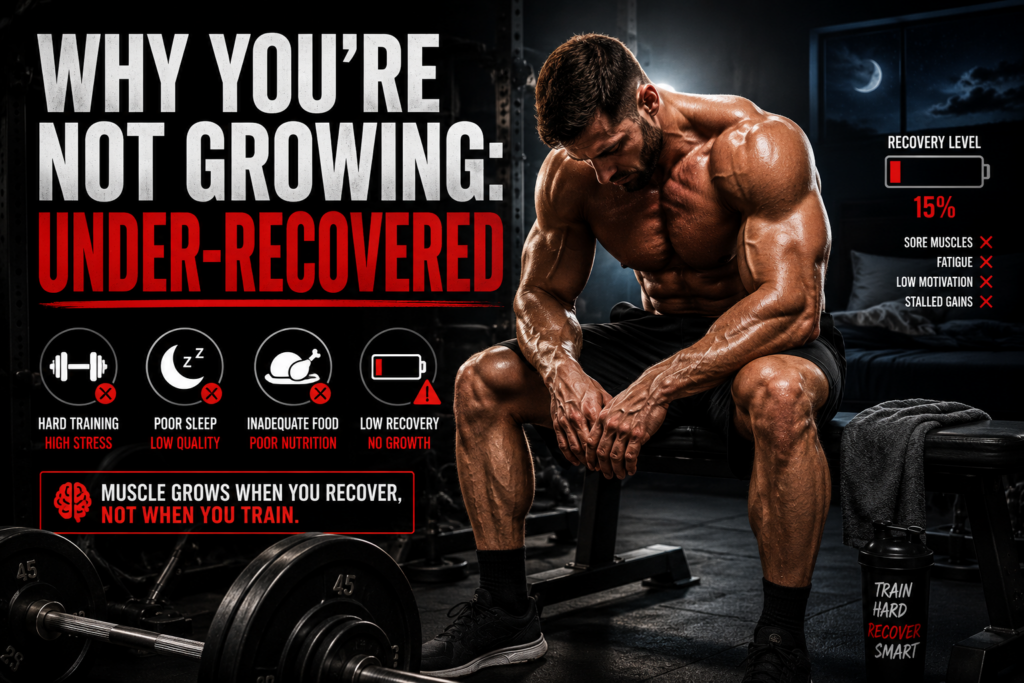
You train hard but your muscles stay flat and tired—Why You’re Not Growing Under Recovered hits when you ignore rest days. Sleep and nutrition matter more than extra sets because recovery is where muscle growth actually happens.
Why You’re Not Growing Under Recovered: The Sleep Problem
Most lifters sleep five or six hours a night. They think more gym time beats more bed time. This is completely backwards.
Your body releases growth hormone during deep sleep. This happens mostly in the first four hours. Without enough deep sleep, growth hormone drops by 70 percent.
Testosterone production also drops when you’re short on sleep. One study showed men sleeping five hours had 15 percent lower testosterone. That’s a massive difference for muscle building.
You need seven to nine hours every night. Not just on weekends. Every single night of the week.
Poor sleep also kills your workout performance the next day. You lift lighter weights for fewer reps. Your form breaks down faster under fatigue.
Set a consistent bedtime and stick to it. Turn off screens an hour before bed. Keep your room dark and cool.
Your Nutrition Gaps Stop Muscle Repair
You can’t build muscle in a calorie deficit. Your body needs extra energy to create new tissue. Most people eat at maintenance or below.
Protein timing matters more than people admit. You need 20 to 40 grams within two hours post workout. This window is when muscle protein synthesis peaks.
But one protein shake isn’t enough for the day. Spread your intake across four or five meals. Your muscles can only use about 40 grams at once.
Carbs get ignored by people chasing fat loss. Big mistake. Carbs refill glycogen stores that fuel your training. Low glycogen means weak lifts and poor recovery.
Fats matter too for hormone production. Testosterone needs dietary fat to maintain healthy levels. Aim for 0.4 to 0.5 grams per pound of bodyweight.
Many people also forget about micronutrients during recovery phases. Vitamins and minerals like magnesium, zinc, vitamin D, and iron support hundreds of enzymatic processes involved in muscle protein synthesis and repair. Magnesium aids muscle relaxation and sleep quality, while zinc supports testosterone production and immune function during intense training cycles. Without adequate micronutrient intake, your body struggles to fully utilize dietary protein and replenish depleted energy stores. A quality multivitamin or targeted micronutrient supplementation can fill these gaps effectively when whole food sources fall short.
Why You’re Not Growing Under Recovered: Training Too Often
You hit the gym six or seven days a week. Each session feels productive in the moment. But your weekly gains stay stuck at zero.
Muscle damage happens in the gym. Muscle growth happens outside the gym. You need 48 to 72 hours between hitting the same muscle group.
Some people run high volume programs designed for enhanced lifters. Natural athletes can’t recover from 20 sets per body part twice weekly. You’re not on the same playing field.
Your central nervous system needs recovery too. Heavy deadlifts and squats tax your CNS hard. Push too often and your coordination suffers first.
Then your sleep quality drops from CNS fatigue. You end up in a recovery hole that takes weeks to climb out of.
Three to five training days work better for most people. Build in at least two full rest days. Active recovery like walking is fine on off days.
Ignoring Stress Outside The Gym
Your body doesn’t separate gym stress from life stress. Both drain the same recovery resources. Work deadlines hit your gains just like extra sets do.
High cortisol from chronic stress breaks down muscle tissue. It also blocks testosterone production. You’re fighting an uphill battle when stress stays elevated.
Sleep suffers when you’re stressed about work or relationships. Racing thoughts keep you awake at night. Poor sleep then makes stress worse the next day.
You need stress management practices that actually work. Ten minutes of daily breathing exercises lower cortisol measurably. So does a 20 minute walk outside.
Some people add meditation or yoga on rest days. Others just spend time with friends away from gym talk. Find what works for your personality.
Cut out unnecessary stressors where possible. Stop doomscrolling news before bed. Limit time with people who drain your energy.
Why You’re Not Growing Under Recovered: The Overtraining Signs You Miss
Your morning heart rate jumps 10 beats higher than normal. This is your body screaming for rest. Most people ignore it and train anyway.
Persistent muscle soreness lasting four or five days isn’t normal. That’s a sign you exceeded your recovery capacity. Back off the volume immediately.
Your grip strength drops noticeably during warm up sets. CNS fatigue shows up here first. It’s a clear signal to take the day off.
Mood changes are another red flag people dismiss. You feel irritable and unmotivated about training. Your enthusiasm for the gym disappears completely.
Injuries start appearing from nowhere. A shoulder twinge becomes tendonitis. Your knee starts clicking during squats. These aren’t random bad luck.
Track your reps and weight each session. Stalling for three workouts in a row means something’s wrong. Add a deload week immediately.
You might also notice your appetite disappears despite heavy training. This hormonal disruption signals serious overtraining. Take five to seven days completely off.
Recovery Tools That Actually Work
Foam rolling breaks up muscle adhesions after hard training sessions. Spend 10 minutes on major muscle groups post workout. It improves blood flow to damaged tissue.
Contrast showers work better than ice baths for most people. Three minutes hot followed by one minute cold. Repeat this cycle three times after training.
Massage guns became popular for good reason. They increase circulation without the pain of deep tissue work. Use them for two minutes per muscle group daily.
Compression garments help some people recover faster between sessions. The science is mixed but many athletes report less soreness. Try them for a month and track results.
Proper supplementation makes a real difference when diet falls short. Magnesium improves sleep quality and muscle relaxation. Zinc supports testosterone production during recovery periods.
Using targeted supplements for recovery can accelerate the repair process significantly. Look for products with proven ingredients like vitamin D and adaptogens.
Why You’re Not Growing Under Recovered: The Deload Strategy
A deload week means cutting volume by 50 percent. You keep the same weights but do half the sets. This lets your body catch up on accumulated fatigue.
Most people need a deload every four to six weeks. Advanced lifters might need it every three weeks. Beginners can go eight weeks between deloads.
Don’t skip deload weeks to speed up progress. You’ll just force an unplanned break later through injury. Planned recovery beats forced recovery every time.
Some people deload by cutting weight instead of volume. They use 60 to 70 percent of normal loads for regular sets. Both approaches work fine.
A deload week also helps you practice perfect form. Lighter weights let you focus on movement quality. This prevents bad habits from forming under fatigue.
Fixing Your Recovery Starting Today
Start by auditing your actual sleep hours this week. Track it honestly in a notebook each morning. Most people overestimate by an hour or more.
Then calculate your real protein intake for three days. Use a tracking app to get accurate numbers. You’ll probably find you’re eating less than you thought.
Add one full rest day this week if you’re training six or seven days. Do nothing physical except light walking. Just this change can restart stalled progress.
Schedule your training around your highest stress days at work. Don’t do heavy squats the day before a big presentation. Time your hardest sessions for lower stress periods.
Consider adding a comprehensive supplement designed to support recovery and reduce inflammation. Products with ingredients like shilajit and adaptogens help your body handle training stress better. Quality recovery supplements bridge the gap between good nutrition and optimal results.
Take progress photos and measurements every two weeks. Compare them honestly to see if your current approach works. Change your plan if you see no improvement after a month.
Frequently Asked Questions
How many rest days do I need each week?
Most people need at least two full rest days weekly. Advanced lifters training with high intensity might need three. Your body can’t build muscle without adequate time between sessions.
Can I still make gains if I only sleep six hours?
Six hours limits your muscle growth significantly compared to eight hours. Growth hormone and testosterone both drop with insufficient sleep. You’ll make much faster progress with proper sleep.
What’s the fastest way to know if I’m overtraining?
Check your resting heart rate each morning before getting up. A jump of 10 or more beats above normal signals overtraining. Persistent soreness lasting over three days is another clear sign.
Should I take a full week off from training?
Take a full week off every 12 to 16 weeks. This lets your joints and connective tissue recover fully. Your strength usually bounces back higher after the break.
Do recovery supplements really help muscle growth?
Quality supplements with proven ingredients can speed recovery between workouts. They work best when combined with proper sleep and nutrition. Supplements support your recovery plan but don’t replace it.
Track your sleep hours tonight and add one extra rest day this week to start recovering properly.