
Partial Reps Build Bigger Biceps Faster Than Full Range
Lengthened partials trigger superior bicep growth by loading your muscles in the stretched position where they experience maximum tension and micro-damage. This training method outperforms full range work because the bottom portion of standard curls creates minimal muscle stress, making targeted partial reps the optimal strategy for faster arm gains.
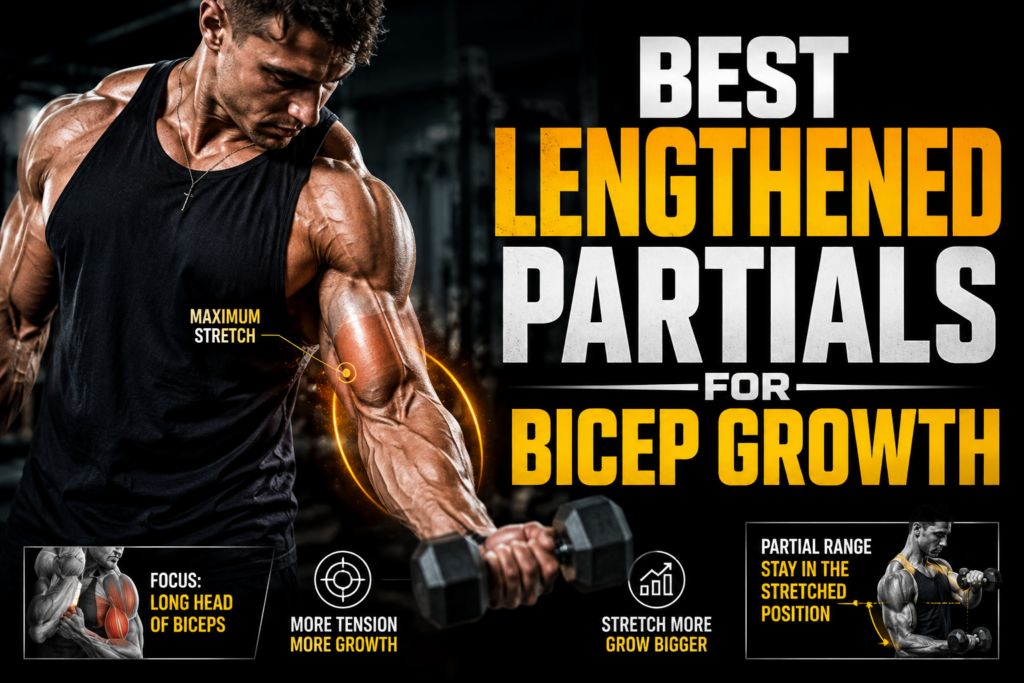
Best Lengthened Partials for Bicep Growth can transform your arm training in weeks. Most lifters miss out on serious muscle gains here. The stretched position triggers hypertrophy better than any other range. You need specific exercises that load the biceps when they’re fully lengthened.
Why Best Lengthened Partials for Bicep Growth Beat Full Range Work
Your biceps grow fastest when stretched under tension. Full range reps don’t maximize this effect. The bottom portion of most curls creates minimal tension on the muscle. Lengthened partials keep constant stress exactly where you need it.
Research shows stretched position training builds more muscle. The muscle fibers experience micro-damage in the lengthened state. This damage signals your body to add new tissue. You get better results in less time.
Most people only feel biceps working at the top. That’s when tension actually decreases due to leverage. The bottom half is where growth happens. Stop wasting energy on the easy part of the movement.
Incline Dumbbell Curl Partials for Maximum Stretch
Set your bench to 45 degrees or lower. Lower works better for this purpose. Grab dumbbells and let your arms hang completely straight. Your biceps should feel stretched before you even start.
Curl only the bottom third of the movement. Stop when your forearms reach parallel to the floor. Lower back down with control over three seconds. The constant tension burns but builds serious size.
Your elbows stay behind your torso throughout the set. This position keeps your biceps stretched the entire time. You can’t cheat or use momentum here. Every rep counts double compared to standing curls.
Use lighter weight than normal curls. Your biceps work much harder in this range. Start with 60% of your regular curl weight. Add weight only when you complete 12 clean reps.
Best Lengthened Partials for Bicep Growth Using Cable Curls
Stand facing away from a low cable pulley. Grab the handle and step forward two feet. Your arm should be straight and pulled back behind your body. You’ll feel an immediate stretch in the bicep.
Curl just the first few inches of movement. Keep your elbow locked in position behind you. The cable provides constant tension that dumbbells can’t match. Your biceps have nowhere to rest during the set.
This variation hits the long head of the bicep perfectly. That’s the portion that creates the peak everyone wants. Regular curls miss this muscle fiber recruitment pattern. Three sets twice per week makes visible changes.
Don’t let your elbow drift forward during reps. Your upper arm stays completely still throughout the movement. Only your forearm moves through the partial range. Lock everything else in place for maximum effect.
Preacher Curl Bottom Range Technique
Most people do preacher curls wrong for growth. They focus on squeezing at the top. The real value sits at the bottom position. Set up with your arms fully extended over the pad.
Curl only 6 to 8 inches from full stretch. Your forearms never pass 45 degrees from the pad. Return to full stretch after each rep. The constant lengthened position creates serious muscle damage.
Your biceps can’t escape tension on a preacher bench. The pad prevents any momentum or body English. You’re forced to use pure muscle contraction. That’s exactly what builds size fast.
The bottom portion feels hardest because it is. Your biceps generate the most force here when trained properly. Supporting your recovery with quality supplements helps maximize these demanding sessions. Most people avoid this range because it’s uncomfortable.
Best Lengthened Partials for Bicep Growth With Barbell Drag Curls
Stand holding a barbell with hands shoulder width apart. Pull your elbows back as you curl the bar up. The bar drags along your torso the entire movement. This keeps your biceps in a lengthened position throughout.
Stop the movement when the bar reaches your lower chest. Don’t curl to your shoulders like regular barbell curls. The partial range maintains constant tension on stretched fibers. Lower the bar slowly back to your thighs.
Your elbows travel behind your body during this exercise. That backward position stretches the long head significantly. You’ll feel this in places standard curls never touch. The pump arrives within two sets.
Drag curls look unusual but they work incredibly well. Other gym members might stare at first. Let them keep doing their momentum curls. You’ll be the one with bigger arms in 8 weeks.
Spider Curl Partials for Lower Bicep Development
Lie face down on an incline bench set to 45 degrees. Let your arms hang straight down toward the floor. Your chest and stomach press against the bench for stability. Grab dumbbells with a neutral or supinated grip.
Curl just the bottom third of the range. Your biceps stay stretched through the entire set. The angle prevents any rest at the top. You can’t use your shoulders or back to assist.
This position isolates your biceps better than almost any exercise. Your arms have no mechanical advantage to rely on. Pure muscle contraction moves the weight. That’s why lighter loads feel so challenging here.
Focus on the eccentric lowering portion especially. Take four seconds to return to full stretch. The negative phase under stretch builds the most muscle. Don’t rush through these critical seconds.
Programming Best Lengthened Partials for Bicep Growth Into Your Routine
Add lengthened partials twice per week for biceps. Monday and Thursday works well for most schedules. Your muscles need 72 hours between these intense sessions. More frequency prevents proper recovery and growth.
Pick two exercises from the options above per session. Do three sets of 8 to 12 reps each. Rest two minutes between sets to recover fully. Your biceps need complete ATP restoration between efforts.
Start each bicep workout with a lengthened partial exercise. Your muscles are fresh and can handle maximum tension. Save full range movements for after partials. Or skip full range work entirely for faster gains.
Track your weights and reps in a training log. Add one rep each week when possible. Once you hit 12 reps, increase the weight by 5 pounds. Progressive overload remains the key to continuous growth.
Most people see visible changes within three weeks. Your arms look fuller even without a pump. The long head development creates that peak you want. Real growth takes consistent effort over 8 to 12 weeks.
Best Lengthened Partials for Bicep Growth Nutrition Support
Lengthened partials create serious muscle damage and inflammation. Your body needs extra protein to repair these fibers. Aim for 1 gram per pound of body weight daily. Spread this across four to five meals.
Carbohydrates fuel the intense contractions these exercises demand. Eat 30 to 50 grams of carbs two hours before training. Your muscles need glycogen to complete the difficult sets. Low carb diets sabotage your performance here.
Post-workout nutrition matters more with lengthened partials than regular training. Consume 25 grams of fast-digesting protein within 30 minutes. Add 40 grams of simple carbs to spike insulin. This combination stops muscle breakdown immediately.
Consider supplements designed specifically for muscle recovery and growth. Creatine monohydrate, beta-alanine, and branched-chain amino acids (BCAAs) support intense training demands and muscle protein synthesis. Quality supplementation matters when you’re pushing your muscles this hard with lengthened partial training. Your standard multivitamin won’t provide the targeted micronutrients needed for eccentric muscle damage recovery and hypertrophy adaptation.
Common Mistakes That Kill Your Results
Using too much weight ruins the entire purpose. Your ego wants to lift heavy loads. Your biceps need proper tension in the stretched position. Drop the weight by 40% from your normal curls.
Moving too fast through reps wastes the exercise benefits. Each partial rep should take three seconds down. The eccentric phase builds the most muscle tissue. Rushing eliminates this crucial growth stimulus.
Letting your elbows drift forward reduces the stretch. Your upper arm must stay locked in position. Any elbow movement turns this into a regular curl. You lose the lengthened position that makes this work.
Training biceps every day prevents growth completely. Your muscles need rest to rebuild bigger and stronger. More training doesn’t equal more growth. Twice weekly sessions with full recovery builds arms faster.
Skipping warm-up sets invites injury to the bicep tendon. The stretched position creates significant strain on connective tissue. Do two sets of 15 reps with very light weight. Your tendons need blood flow before heavy loading.
Measuring Progress With Best Lengthened Partials for Bicep Growth
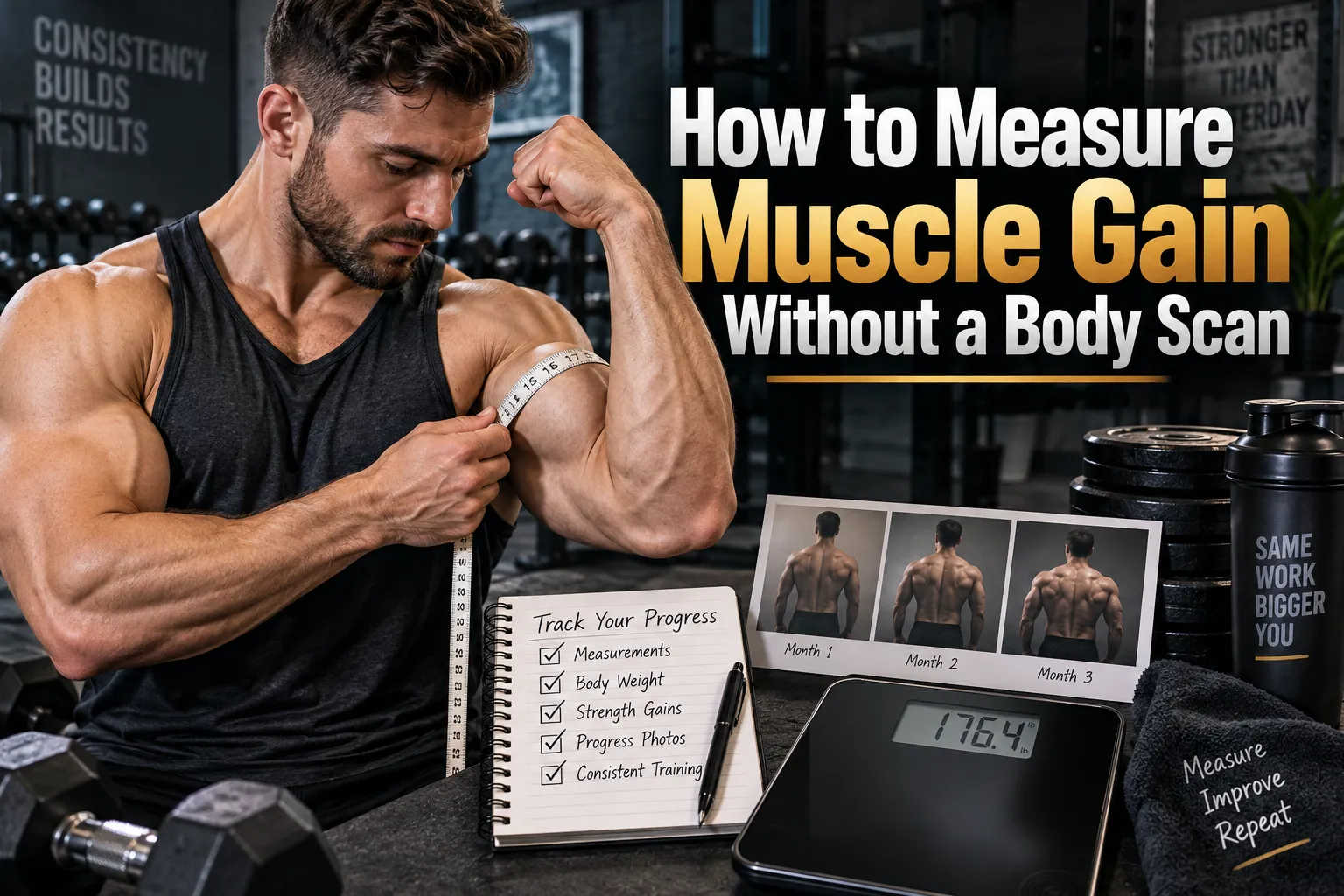
Take arm measurements every two weeks in the same conditions. Measure cold without a pump first thing in morning. Flex your bicep hard and measure the peak. Write down both flexed and relaxed measurements.
Progress photos reveal changes your eyes miss daily. Take pictures every 10 days in identical lighting. Use the same angle and arm position each time. Side by side comparisons show real development.
Strength increases indicate muscle growth is happening. Add reps each week on your lengthened partial exercises. When you hit 12 reps, add weight. This progressive pattern confirms you’re building tissue.
The mirror test works but can mislead you. You see yourself daily so changes seem invisible. Trust your measurements and photos over subjective feelings. Numbers don’t lie about your progress.
Your shirts should feel tighter in the sleeves. This real-world feedback confirms actual growth. Friends and family will notice and comment. That’s when you know the training and nutrition strategy is working properly.
Frequently Asked Questions
How often should I do lengthened partials for biceps?
Twice per week provides optimal results for most people. Your biceps need 72 hours to recover from the intense damage. More frequent training actually slows down your growth rate.
Can I replace all my bicep exercises with lengthened partials?
Yes, lengthened partials can be your only bicep work. They provide enough stimulus for complete development. Many advanced lifters use only this method with excellent results.
How long before I see results from lengthened partial training?
Most people notice visible changes within three to four weeks. Full development takes 8 to 12 weeks of consistent training. Stick with the program even when progress seems slow.
Should I feel pain in my elbow during lengthened partials?
Muscle burn is normal but joint pain is not. Stop immediately if your elbow hurts during the exercise. Reduce weight and check your form before continuing training.
What weight should I use for lengthened partial bicep exercises?
Start with 60% of your normal curl weight. The stretched position makes exercises much harder than they appear. Add weight only after completing 12 perfect reps per set.
Start your next bicep workout with one lengthened partial exercise and watch your arms grow faster than ever before.