
Why Your Pump Isn't Building Real Muscle
The pump you feel after curls isn’t real muscle growth—it’s just temporary fluid buildup from blood rushing into tissue. Discover why relying on the pump as progress feedback misleads your training and how to measure actual bicep gains instead.
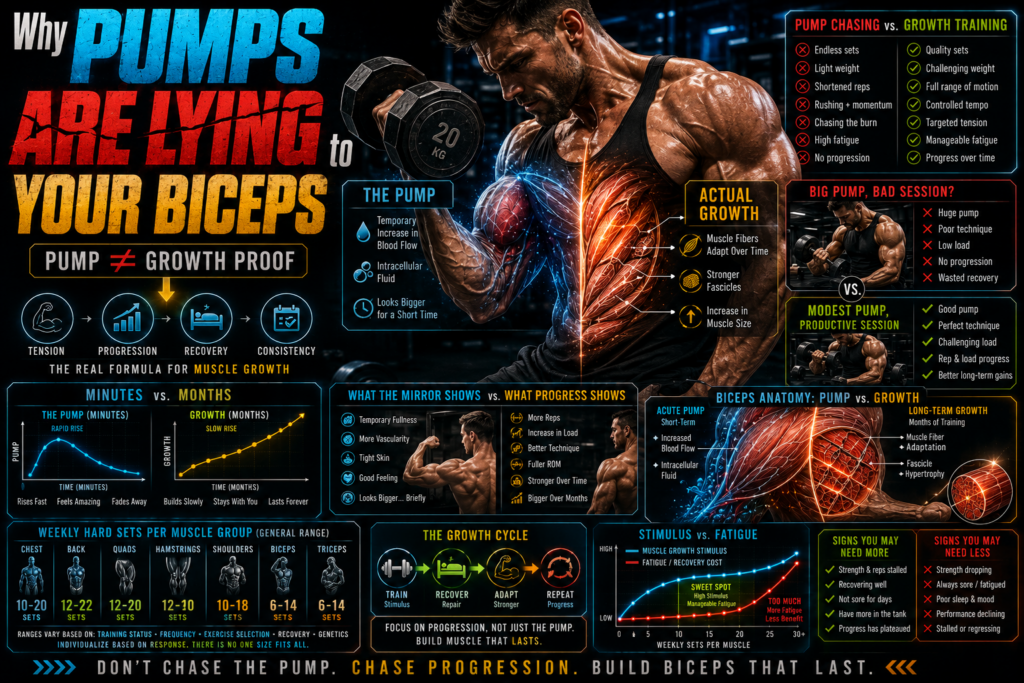
Why-Pumps-Are-Lying-to-Your-Biceps is a reality most gym goers ignore. You chase that tight skin feeling after curls. You flex in the mirror and think progress happened. The pump fades within an hour and reveals nothing changed.
Why Pumps Are Lying to Your Biceps About Actual Growth
A pump happens when blood rushes into muscle tissue during exercise. Your biceps swell up and feel hard. The skin stretches tight over the muscle belly. This feels like real growth but it’s just temporary fluid.
The swelling comes from plasma leaking into muscle cells. Your body sends more blood to working muscles. Metabolic waste products build up in the tissue. All of this creates that full feeling you associate with a good workout.
Here’s the problem with relying on pumps as feedback. The sensation disappears within thirty to ninety minutes after training. Your arms shrink back to their normal size. No actual muscle fiber was built during that pump session.
Real muscle growth happens through a different process entirely. You need to damage muscle fibers through progressive tension. The body repairs these fibers and makes them slightly bigger. This process takes days and weeks, not minutes.
Many people train specifically to maximize the pump feeling. They use light weights for high repetitions. They chase that burning sensation and tight skin. Their biceps never actually grow larger over time.
You can get a massive pump without triggering any growth response. The two processes are not connected the way most people think. A pump might indicate you worked the muscle, but it doesn’t guarantee hypertrophy.
The Real Signals Your Biceps Need for Size
Progressive overload drives actual muscle growth in your arms. You must lift heavier weights over time than before. You could also do more repetitions with the same weight. Either approach forces adaptation.
Your biceps grow when they face a challenge they can’t handle. The muscle fibers tear on a microscopic level. Your body repairs them and adds a little extra size. This happens during rest days, not during the workout itself.
Protein synthesis increases after you damage muscle tissue through training. Your body builds new muscle proteins for several days. This process requires adequate protein intake and recovery time. The pump you felt during training has nothing to do with this repair.
Time under tension matters more than the pump sensation. Keeping your biceps under load for forty to seventy seconds per set works well. The weight should challenge you within that timeframe. Light weights that only create a pump won’t provide enough stimulus.
Mechanical tension creates the strongest growth signal for muscle tissue. You achieve this by lifting heavy loads through a full range of motion. The muscle fibers must work hard against resistance. This stress triggers the adaptation response your body needs.
Many lifters never increase the weights they use for curls. They perform the same routine with the same dumbbells for months. Their biceps adapt to this stress within a few weeks. No further growth occurs after that initial adaptation period.
Why Pumps Are Lying to Your Biceps About Training Frequency
A great pump might make you think you trained your biceps hard enough. You feel satisfied with the workout and wait a week before training arms again. This extended rest period wastes potential growth time.
Research shows you can train muscle groups twice per week effectively. Your biceps recover faster than you think they do. The pump fades in an hour, but full recovery takes about forty-eight hours. You could train arms again much sooner than most people do.
Some lifters chase pumps in every single workout throughout the week. They do a few sets of curls daily to feel that tightness. This approach doesn’t allow proper recovery time between sessions. Their biceps never get the rest needed to actually grow.
The sweet spot sits at two to three bicep sessions per week. Each session should include real progressive overload with challenging weights. You need at least one full rest day between arm workouts. This schedule maximizes growth while allowing adequate recovery.
Volume matters more than pump intensity for building bigger arms. Ten to twenty sets per week for biceps produces good results. You could split this across two or three workouts. Chasing a pump with thirty sets in one day doesn’t work better.
Why Pumps Are Lying to Your Biceps About Exercise Selection
Isolation movements like concentration curls create incredible pumps in your biceps. The blood pools in one specific area. Your arm feels like it might explode from the pressure. This sensation tricks you into thinking the exercise is superior.
Compound pulling movements actually build more total bicep mass over time. Rows and pullups involve multiple muscle groups working together. Your biceps handle heavier loads during these exercises. The growth stimulus increases even though the pump feels less intense.
You can curl twenty-pound dumbbells for a great pump. You might use a hundred-pound barbell for rows. Your biceps work much harder during the rowing movement. The lighter curl weight simply doesn’t provide enough mechanical tension for growth.
Cable curls with constant tension create phenomenal pumps throughout the movement. Your biceps never rest at any point in the range of motion. This feels productive but doesn’t necessarily build more size. A barbell curl with heavier weight often works better despite less pump.
Exercise variety helps, but not for the reasons most people think. Different movements stress the bicep from different angles throughout its length. This comprehensive development requires multiple exercises over time. The pump you feel during any single movement doesn’t indicate complete development.
Many people design their entire arm routine around pump maximization. They select exercises that create the most swelling and tightness. Their biceps look impressive for an hour after training. Six months later, their arms measure exactly the same size as before. Supporting your training with quality supplements designed for muscle vitality can help bridge nutritional gaps that limit growth.
Why Pumps Are Lying to Your Biceps About Nutrition Timing
The post-workout pump makes many lifters rush to consume protein immediately, believing the swollen muscle requires urgent nutrient delivery during this supposed “anabolic window.” They think maximizing insulin response and amino acid availability during peak vascularity accelerates muscle protein synthesis. This urgency creates unnecessary stress around meal timing and often leads to suboptimal decisions like skipping whole food meals for liquid supplements solely to rush nutrition timing.
Your muscles stay sensitive to protein for at least twenty-four hours after training. The anabolic window is much wider than the pump duration. Eating protein within two hours helps, but it’s not critical. Total daily protein intake matters far more than precise timing.
Some people skip meals before training to maximize their pump sensation. They think an empty stomach enhances the blood flow to muscles. This approach often reduces performance and limits the weight you can lift. Lower training intensity means less growth stimulus overall.
Carbohydrates before training actually improve your ability to generate force. Better performance means heavier weights and more mechanical tension. This drives more growth than any pump enhancement from training fasted. The temporary aesthetic difference doesn’t translate to long-term size gains.
Hydration affects pump intensity significantly but doesn’t change growth outcomes. Well-hydrated muscles swell more during training. Dehydrated muscles pump less but can still grow if the training stimulus is adequate. Chasing a bigger pump through water manipulation wastes energy.
Daily protein intake should reach about one gram per pound of body weight. This supports muscle repair and growth after training damages the tissue. Whether you consume this before, during, or after your pump doesn’t matter much. Consistency over weeks and months determines your results. Quality nutrition forms the foundation, and targeted nutritional support can help optimize your body’s recovery systems.
Why Pumps Are Lying to Your Biceps About Rest Periods
Short rest periods between sets create massive pumps in your biceps. Blood accumulates in the muscle without time to leave. The burning sensation intensifies with each subsequent set. This feels like productive training but often limits your strength.
Longer rest periods allow you to lift heavier weights on each set. Your biceps recover enough strength to maintain performance. The pump feels less intense throughout the workout. The total mechanical tension applied to the muscle increases substantially.
Thirty-second rest periods might give you the best pump of your life. You won’t be able to use challenging weights by your third set. Your biceps fatigue from metabolic stress rather than mechanical overload. This creates lots of discomfort but minimal growth stimulus.
Two to three minutes between heavy sets preserves your strength levels. You can use similar weights across all your working sets. The cumulative tension on your biceps increases dramatically. The pump feels less extreme, but actual muscle damage increases.
Metabolic stress from short rests does contribute to muscle growth. However, it’s the weakest of the three main growth mechanisms. Mechanical tension and muscle damage matter much more. Prioritizing rest periods that maximize pump over those that maximize load is backwards.
Why Pumps Are Lying to Your Biceps About Progress Tracking
Many people gauge their workout quality by how pumped they feel afterward. A great pump means a great workout in their mind. A weak pump suggests they didn’t train hard enough. This feedback loop ignores all the metrics that actually matter.
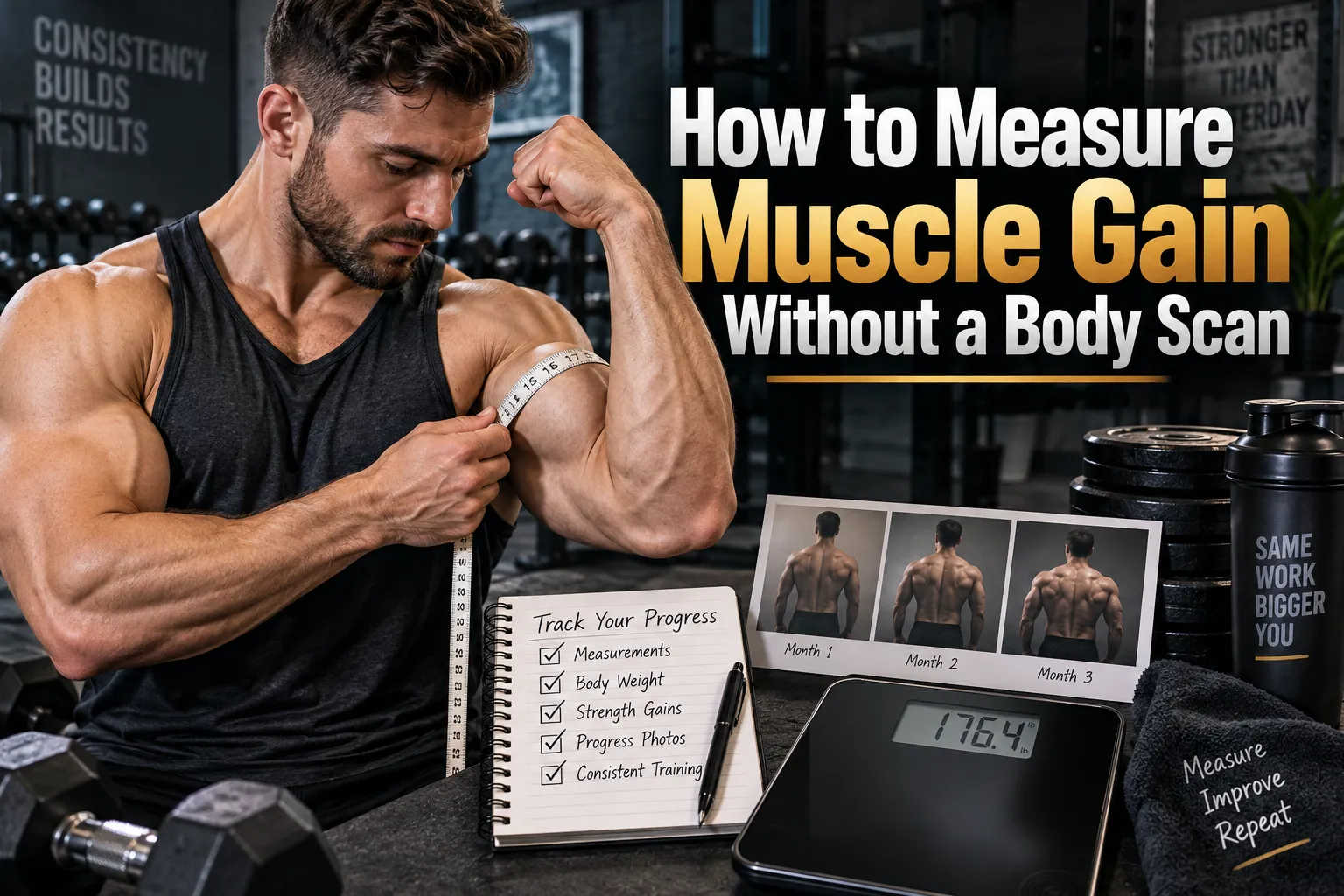
Arm measurements taken right after training show inflated numbers from the pump. You might measure half an inch larger than your actual size. These measurements feel motivating but represent temporary fluid, not muscle. The same arm measures smaller the next morning.
Tracking the weights you lift tells you if you’re getting stronger. Strength increases correlate closely with muscle growth in most people. If your barbell curl went from sixty pounds to ninety pounds, your biceps grew. The pump you felt during those workouts is irrelevant to this outcome.
Progress photos taken immediately post-workout show your best possible appearance. Your biceps look full and peaked from the pump. These photos don’t represent your actual development. Morning photos before training show your true size.
The pump varies wildly based on hydration, carbohydrate intake, and sleep quality. You might get a better pump on a day you trained poorly. You might get a weak pump after your most productive workout. This inconsistency makes it useless as a progress indicator.
Write down the weight and repetitions for each exercise in a training log. Compare these numbers month to month and year to year. If the numbers increase, your muscles are growing. If they stagnate, change your approach regardless of how good the pump feels. Enhanced recovery through comprehensive nutritional formulas can support consistent strength progression when training intensity plateaus.
Frequently Asked Questions
Can I build bigger biceps without ever getting a pump?
Yes, you can build substantial bicep size without chasing pumps. Focus on progressive overload with challenging weights instead. The pump is a side effect, not a requirement for growth.
Does a better pump mean I’m training my biceps correctly?
No, pump intensity doesn’t indicate training quality or effectiveness. You could get a great pump using poor form and light weights. Proper progressive overload matters more than how tight your skin feels.
Why do my biceps look bigger after working out but stay small?
The temporary size comes from blood and fluid in the muscle tissue. This swelling disappears within an hour after training ends. Actual muscle growth requires weeks of consistent progressive overload and proper recovery.
Should I change my workout if I stop getting good pumps?
Only change your workout if your strength stops increasing over time. A reduced pump might mean better adaptation to the training stimulus. Track your lifting performance, not your pump sensation.
How long does it take to see real bicep growth?
Most people notice visible changes after six to eight weeks of proper training. You need consistent progressive overload and adequate protein intake throughout this period. Arm measurements might increase by a quarter inch in this timeframe.
Start tracking the actual weight you lift instead of chasing temporary pump sensations in your next arm workout.