

Why Planned Deloads Backfire for Most Athletes
Reactive deloads and planned weeks are two distinct training strategies that can make or break your progress in the gym. Understanding when to use each method helps you recover properly and maintain consistent gains without hitting training plateaus.
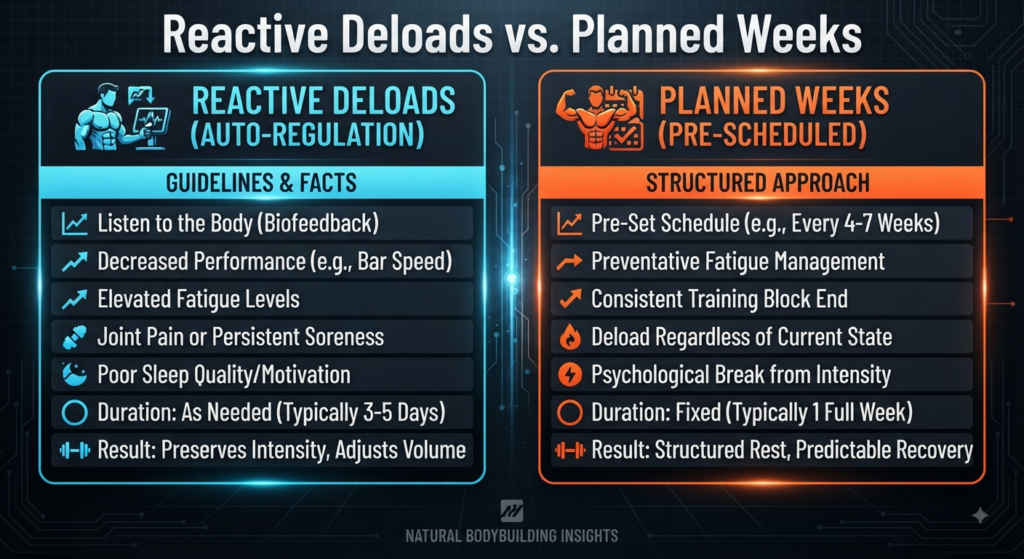
Reactive Deloads vs. Planned Weeks might seem like a minor programming detail. Most lifters ignore the difference until they hit a wall. Your choice between these two approaches can make or break months of progress. The best programs use both at the right times.
What Reactive Deloads vs. Planned Weeks Really Means for Your Training
Planned deloads follow a fixed schedule regardless of how you feel. You might program a light week every fourth or fifth week. This happens whether you’re crushing weights or already feeling fresh. The calendar decides when you back off.
Reactive deloads work differently. You monitor fatigue markers and cut volume when specific signals appear. Joint pain that lasts between sessions is one red flag. Sleep quality dropping for three nights straight is another. You deload based on what your body tells you.
The planned approach gives structure. You know exactly when lighter weeks arrive. This helps with scheduling around work trips or family events. You can plan social activities during deload weeks without guilt.
Reactive methods demand more self-awareness. You need to track how you feel daily. Morning heart rate, grip strength, and mood all provide useful data. Most lifters skip this tracking and guess instead.
When Planned Deloads Work Better Than Reactive Approaches
Beginners lack the training age to read fatigue signals accurately. They can’t distinguish between normal workout soreness and real overtraining. A planned deload every fourth week removes guesswork. They follow the program without second-guessing every session.
Contest prep demands planned deloads. Bodybuilders and powerlifters work backward from competition dates. The deload must happen two weeks before the meet. There’s no room for reactive adjustments that might fall too close to showtime.
High-stress life periods benefit from scheduled breaks. Tax season, job changes, or moving homes drain recovery capacity. You know these events are coming. Plan a deload to coincide with peak life stress.
Team sports athletes often need fixed schedules. The coach programs team training around game schedules. Individual lifters can’t just deload whenever they feel like it. The whole squad follows the same periodization.
How Reactive Deloads vs. Planned Weeks Affect Recovery Timing
Planned deloads sometimes arrive too early. You’re still feeling strong and making gains. Backing off now wastes a productive week. You could have added another personal record to the log.
The opposite problem hits just as often. You need a break by week three. The planned deload sits one week away. Pushing through that extra week can lead to injury. Many lifters have learned this lesson the hard way.
Reactive timing catches fatigue right when it peaks. You drop volume before performance actually declines. This prevents the hole that takes two weeks to climb out of. Recovery happens faster because you never dug too deep.
Real-world variables change weekly. You slept poorly due to a sick kid. Work stress spiked unexpectedly. A planned program can’t account for these random hits. Reactive adjustments let you adapt to life as it happens.
The Signals That Tell You Reactive Deloads vs. Planned Weeks Matter
Resting heart rate tells a clear story. Measure it every morning before getting out of bed. A jump of seven beats per minute for three days signals accumulated fatigue. Time to pull back on volume.
Grip strength drops before you notice it consciously. Squeeze a hand dynamometer each morning. A drop of ten percent from your baseline means your nervous system needs rest. This happens even when motivation feels normal.
Session performance reveals trends faster than how you feel. You attempt the same weight you hit last week. Today it moves slower despite good sleep and nutrition. Two sessions like this back-to-back warrant a reactive deload.
Joint pain patterns differ from muscle soreness. Sore muscles improve with a warm-up. Achy joints stay achy or get worse during the session. Knee or elbow pain lasting into rest days screams for volume reduction.
Mood changes show up in your training log. You start skipping warm-up sets. You cut sessions short without good reason. Irritability around training means your stress bucket is full. Don’t wait for the planned deload two weeks away.
Combining Reactive Deloads vs. Planned Weeks in Your Program
The smartest approach uses both methods together. Set planned deloads every fifth week as a safety net. Between those planned breaks, stay alert for reactive signals. You get structure plus flexibility.
This hybrid prevents two common mistakes. You won’t skip deloads entirely when feeling good. You also won’t push through obvious fatigue just because the plan says so. The planned week acts as a backstop.
Advanced lifters often extend the planned interval. They might program light weeks every sixth or seventh week. Their superior body awareness catches problems earlier. Reactive adjustments handle most fatigue before it compounds.
The reactive component typically means cutting one or two sessions short. You don’t take a full week off. Maybe you drop two working sets from each exercise. Small adjustments prevent the need for full emergency deloads.
Some coaches program deload ranges instead of fixed weeks. The program says deload during weeks four through six. The athlete picks the exact timing based on feel. This middle ground works well for intermediate lifters.
Supporting Your Recovery During Reactive Deloads vs. Planned Weeks
Volume reduction is only half the deload equation. What you do outside the gym matters just as much. Sleep becomes the top priority during any deload type. Aim for an extra hour per night during light weeks.
Nutrition needs shift when training volume drops. You need fewer total calories but similar protein intake. Don’t slash protein along with carbs. Your body uses that protein for tissue repair. Cut carbs by about twenty percent instead.
Active recovery fills the gap left by reduced training. Light walking, swimming, or cycling keeps blood moving. This speeds waste product removal without adding training stress. Thirty minutes of easy movement works well.
Mobility work finally gets the attention it deserves. You have extra time and energy during deload weeks. Address those tight hips or stiff shoulders you’ve been ignoring. This prevents the issues from becoming injuries later.
Supplements can bridge the gap during fatigue periods. Quality recovery formulas provide the micronutrients your body needs. Magnesium, vitamin D, and adaptogens support the recovery process. They work best when combined with proper deload timing.
Common Mistakes With Reactive Deloads vs. Planned Weeks
Many lifters confuse reactive deloads with skipping workouts randomly. A true reactive deload follows specific triggers. Random training based on motivation is just inconsistency. Track your signals or stick to planned deloads.
Some athletes deload too conservatively. They cut volume to almost nothing for entire weeks. A proper deload reduces volume by forty to sixty percent. You still train. The sessions just create less fatigue than they remove.
Waiting too long to react defeats the purpose. You notice three warning signs but push through anyway. By the time you deload, you’re already overtrained. Reactive means responding early, not waiting for catastrophe.
The opposite error is deloading at every minor hiccup. One bad session doesn’t warrant a volume cut. You need consistent signals over several days. Single data points lie. Trends tell the truth.
Lifters often forget to track anything during planned deloads. They view it as wasted time. Actually, deload weeks provide your clearest data. You see how your body responds to reduced stress. This information shapes future program design.
Frequently Asked Questions
How often should I take a deload week?
Most lifters benefit from a deload every four to six weeks. Beginners do well with every fourth week. Advanced athletes might stretch to every sixth or seventh week. Your training age and life stress determine the exact timing.
Can I do cardio during a deload week?
Light cardio helps recovery during deloads. Keep intensity low and duration moderate. Walking, easy cycling, or swimming work well. Avoid high-intensity intervals that add fatigue instead of removing it.
What if I feel great during my planned deload?
Take the deload anyway. Feeling great means the deload is doing its job. Skipping it because you feel good defeats the purpose. Use the extra energy for mobility work or life activities.
How much should I reduce volume during a reactive deload?
Cut volume by forty to sixty percent for reactive deloads. Keep intensity relatively high but do fewer sets. Two working sets per exercise often suffices. The session should feel easy but not pointless.
Do deloads slow down muscle growth?
Deloads actually speed up long-term growth. They prevent injuries that sideline you for weeks. The brief reduction in volume lets your body catch up. You come back stronger than if you pushed through.
Start tracking your morning heart rate and grip strength this week to build your reactive deload system.