
Why Your Sleep Isn't Building Muscle Like It Should
Most lifters train hard but ignore the recovery metrics that actually drive muscle growth between sessions. Learn how HRV tracking reveals hidden fatigue signals your body sends before performance crashes.
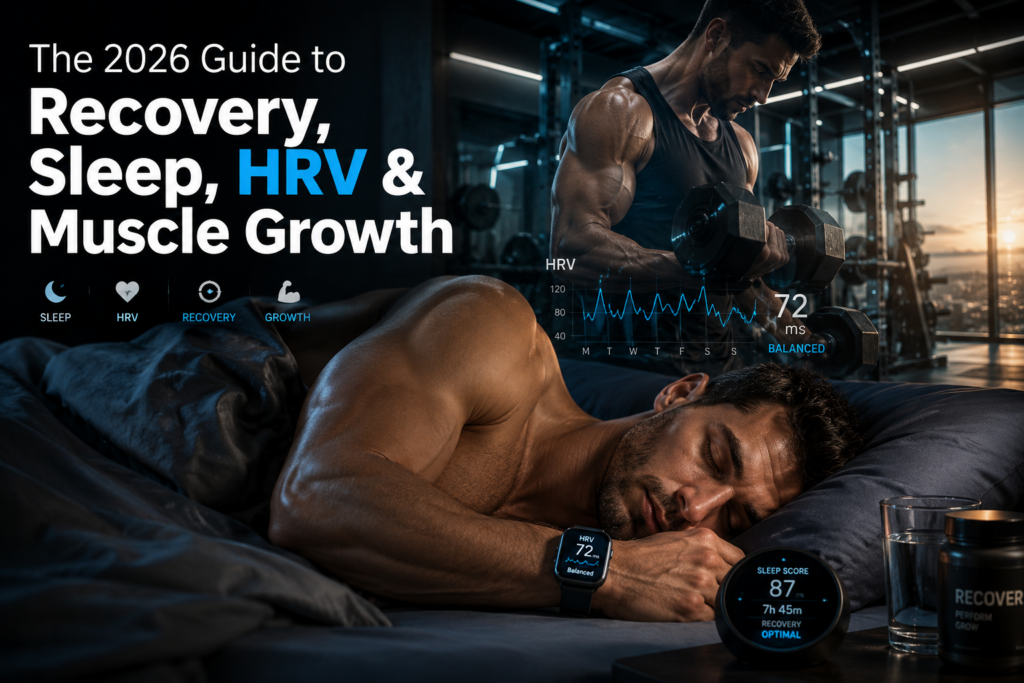
The 2026 Guide to Recovery, Sleep, HRV & Muscle Growth addresses a problem most lifters ignore. You train five days a week but grow during the 48 hours between sessions. Missing one key recovery metric costs you months of progress. Fix that gap first.
Why HRV Tracking Beats Guesswork in The 2026 Guide to Recovery, Sleep, HRV & Muscle Growth
Coaches track your morning HRV supine for two minutes right after waking under standardized conditions. You track your seven-day rolling average and watch for a sustained drop of 10% combined with elevated resting heart rate and poor sleep. That combination flags accumulated fatigue before you feel it.
HRV doesn’t predict performance but shows a window into fatigue. It reflects your nervous system and won’t always correlate with muscle soreness. A low reading means your body absorbed more stress than it processed.
Your HRV drops after a hard leg session. It stays low for two days. That’s normal. A sustained downward trend alongside feeling rundown signals you should ease up or take an extra recovery day. Teams using integrated HRV feedback had 22% fewer soft-tissue injuries and 15% better season-long performance consistency versus fixed-schedule groups in a 2026 study.
People in HRV-guided training groups experienced similar improvements in muscle hypertrophy, strength, VO2 max, body composition, and fitness with a lower training load compared to a predefined training group. However, there was not an identifiable difference between an individual’s muscle hypertrophy and strength responses after HRV-guided programming compared to fixed programming. The win is avoiding overtraining while maintaining gains.
Deep Sleep Drives Protein Synthesis in The 2026 Guide to Recovery, Sleep, HRV & Muscle Growth
Deep sleep is the most important phase for physical recovery where growth hormone is generated. The pituitary gland secretes about 70% of human growth hormone during the deepest stage of NREM sleep which stimulates tissue growth and helps repair muscles. Miss deep sleep and protein synthesis rates drop regardless of protein intake.
Blood flow to muscles increases during deep sleep enabling more efficient delivery of oxygen and nutrients while flushing out metabolic waste. NREM stage 3 is when the majority of human growth hormone is secreted and the pituitary gland pulses HGH in large amounts during these deep cycles. This is when the heaviest muscle repair work happens.
A lack of sleep disrupts the hormonal environment necessary for protein synthesis and chronic sleep restriction leads to sustained reductions of testosterone which can stall progress in muscle gain. You can eat 200 grams of protein daily. Without seven hours of sleep you still won’t optimize tissue repair.
Each full sleep cycle takes about 90 minutes and in a regular seven to eight hours of rest you’ll complete at least five full cycles. Each cycle runs roughly 90 minutes and cutting sleep short means fewer complete cycles and less time in the stages that matter most. Wake up after five hours and you miss the final REM-heavy cycles entirely.
Pre-Sleep Protein Timing in The 2026 Guide to Recovery, Sleep, HRV & Muscle Growth
Muscle protein synthesis rates are low during overnight sleep even when dietary protein is ingested after exercise. Recent work has shown that overnight muscle protein synthesis rates are restricted by the level of amino acid availability. Dietary protein ingested prior to sleep is effectively digested and absorbed during the night thereby increasing plasma amino acid availability and stimulating post-exercise muscle protein accretion during overnight sleep.
Recent studies investigating the impact of pre-sleep protein ingestion suggest that at least 40 grams of protein is required to display a robust increase in muscle protein synthesis rates throughout overnight sleep. When combined with resistance training, 20 and 40 grams of protein intake for women and men 30 minutes before bed led to increased muscle mass and strength.
When applied during a prolonged period of resistance-type exercise training, protein supplementation prior to sleep can further augment gains in muscle mass and strength. This doesn’t replace post-workout nutrition. It extends the anabolic window through the night when you would otherwise go eight hours without amino acids.
Casein works best here because it digests slowly. Whey hits your bloodstream in 30 minutes then drops. Casein provides steady amino acid release for six hours. Take it 30 minutes before bed with minimal liquid to avoid waking up for bathroom trips.
Cold Plunge Timing Mistakes in The 2026 Guide to Recovery, Sleep, HRV & Muscle Growth
Cold water immersion actively works against hypertrophy when timed poorly. If you’ve focused on strength training and want to grow muscle, avoiding an ice bath within four hours of your workout is important because cold exposure can reduce the inflammation needed for muscle growth. The inflammatory response you’re trying to suppress is the same signal that triggers adaptation.
Cold water immersion works well for extreme soreness management after unusually high-volume training or in competitive scenarios where performance tomorrow matters more than long-term adaptation and should be used strategically on rest days, not routinely after every training session. If your top goal is muscle growth, frequent cold immersion immediately after resistance training may reduce some hypertrophy-related signals in certain contexts so if you lift for strength and size, use cold strategically shorter or save it for later in the day.
Cold plunges are especially effective for reducing delayed onset muscle soreness, a common issue after high-intensity workouts. Use them the morning after a brutal squat session. Skip them immediately post-lift. Save them for occasional sessions when you’re especially sore, after endurance training, or when you need a mental refresh and think of them as a powerful reset button, not an everyday solution if your main goal is muscle growth.
Follow the Guide for 2026 but Do Not Forget This…
Sauna Use After Training in The 2026 Guide to Recovery, Sleep, HRV & Muscle Growth
Sauna and heat therapy show neutral effects on hypertrophy without the adaptation-blunting concerns of cold exposure. Unlike ice baths, saunas are generally safe after training and they enhance blood flow to aid in healing and repairing damaged tissue, eliminate waste metabolites from exercise, and trigger heat shock protein (HSP) expression and growth hormone release to facilitate recovery and adaptation. The vasodilation from sauna increases nutrient delivery to muscle tissue while supporting mitochondrial function and cellular repair pathways without suppressing the inflammatory signaling needed for strength and size gains.
The heat from a sauna increases blood flow bringing essential nutrients to muscles while promoting the removal of inflammatory byproducts like lactic acid and saunas also trigger the release of growth hormone which plays a key role in muscle regeneration and tissue repair. This makes sauna compatible with hypertrophy goals unlike cold exposure.
Starting with a sauna can be an incredible way to warm your body up before exercise as heat increases circulation, loosens tight muscles, and gets your joints moving more smoothly and spending time in the sauna helps you step into your workout already feeling limber and ready to go. Twenty minutes pre-workout works. Fifteen minutes post-workout speeds recovery without interfering with muscle signaling.
Sauna, massage, and foam rolling sit in neutral territory helpful for soreness and psychology but not moving the muscle growth needle. They won’t build more muscle. They won’t hurt gains either. Use them when soreness limits your next session quality.
Frequently Asked Questions
What HRV number means I should skip my workout?
Track your seven-day rolling average and a sustained drop of 10% or more combined with elevated resting heart rate flags accumulated fatigue. A single low reading doesn’t mean anything. Three consecutive days below baseline with poor subjective markers means deload or take rest.
Does napping count toward recovery like nighttime sleep?
The majority of human growth hormone is secreted during deep sleep cycles and the pituitary gland pulses HGH in large amounts during these deep cycles. Naps rarely reach deep sleep stages long enough for significant HGH release. They help acute fatigue but don’t replace nighttime cycles.
Can I take protein before bed if I already ate post-workout?
Muscle protein synthesis rates are low during overnight sleep even when dietary protein is ingested after exercise. At least 40 grams of protein is required to display a robust increase in muscle protein synthesis rates throughout overnight sleep. Post-workout protein and pre-sleep protein serve different windows.
How long after lifting can I safely use a cold plunge?
Avoiding an ice bath within four hours of your workout is important because cold exposure can reduce the inflammation needed for muscle growth. Wait four hours minimum. Better yet, save cold exposure for rest days or morning sessions before training.
Should I use sauna or cold plunge first in contrast therapy?
Contrast therapy alternates heat and cold and the most common explanation is vasodilation then vasoconstriction meaning blood vessels widen in heat and narrow in cold. Start with heat to open vessels and increase circulation. Finish with cold to reduce inflammation and close the session.
Check your morning HRV tomorrow before touching your phone and write down the number for seven days straight.