

GLP-1 Users Losing Muscle Fast: How to Stop It
GLP-1 medications cause 25-39% of weight loss to come from lean muscle, equivalent to 20 years of muscle aging in just 68 weeks. Discover how strategic protein intake and proper nutrition can preserve your strength and metabolic rate during rapid weight loss.
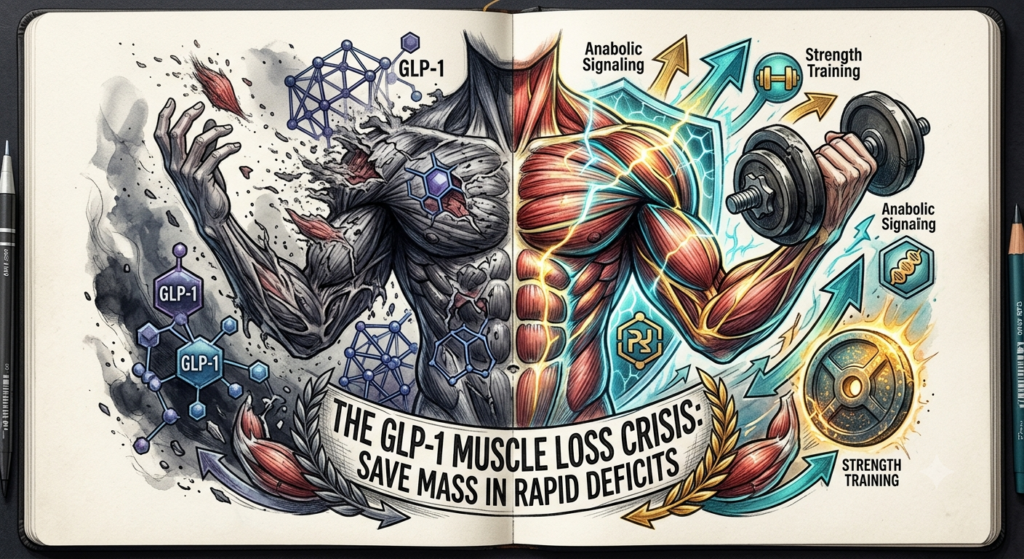
The GLP-1 Muscle Loss Crisis: Save Mass in Rapid Deficits starts the moment you skip protein. Your body turns to muscle as emergency fuel during severe restriction. This loss affects your metabolic rate for years, not weeks. The solution lives in the combination you choose today, not tomorrow.
Why The GLP-1 Muscle Loss Crisis: Save Mass in Rapid Deficits Matters More Than Weight
Studies show between 25% and 39% of weight lost comes from lean mass when people take these medications. That percentage sounds small until you do the math. Someone losing 50 pounds might lose 15 pounds of muscle. This equals roughly 20 years of aging muscle loss happening in just 68 weeks.
Your scale drops fast. Your strength drops faster.
When skeletal muscle plummets, basal metabolic rate follows, creating a severe metabolic penalty for the 70% who stop within the first year. The body now burns fewer calories at rest than before treatment started. Fat regains quickly. Muscle rebuilds slowly. This creates a dangerous cycle that few doctors warn about upfront.
Research shows sarcopenia adds nearly $900 in excess healthcare costs per employee annually. The financial burden extends beyond medication costs. Lost muscle means reduced mobility, higher fall risk, and decreased independence in older populations.
The Secret Daily Habit That Builds Muscle, Restores Energy, and Ignites Drive
The Protein Problem During The GLP-1 Muscle Loss Crisis: Save Mass in Rapid Deficits
GLP-1 medications suppress appetite so effectively that patients enter severe calorie and protein deficits. The drugs work too well. You feel full after three bites. Eating becomes a chore. Protein targets become impossible.
People on GLP-1 therapy eat 20 to 30% fewer calories daily, requiring 1.2 to 2.0 grams of protein per kilogram of body weight to preserve muscle. A 200 pound person needs roughly 110 to 180 grams daily. Most patients struggle to hit even half that amount.
The appetite suppression creates a paradox. You need more protein precisely when you want to eat less. Liquid protein shakes become necessary, not optional. Greek yogurt at breakfast matters. Lean chicken at lunch matters. Every meal needs protein front and center.
Skip protein today and your body burns muscle tomorrow. There’s no grace period. Muscle loss isn’t caused by the drugs themselves but by how they alter eating patterns. Fix the eating pattern and you protect the muscle.
Resistance Training Stops The GLP-1 Muscle Loss Crisis: Save Mass in Rapid Deficits
A six month study of 200 adults showed resistance training and protein education led to 13% body weight loss but only 3% muscle mass loss. The difference between losing 3% versus 39% muscle comes down to whether you lift weights twice weekly.
Resistance exercise should include two to three sessions per week targeting major muscle groups, progressed according to individual tolerance. This isn’t optional advice for gym enthusiasts. This is medical necessity for drug users.
Training intensity appears more influential than volume for muscle retention during weight loss. Lifting heavy twice weekly beats lifting light daily. Focus on compound movements. Squats, deadlifts, bench presses, rows. These recruit multiple muscle groups simultaneously.
You don’t need fancy equipment. Bodyweight squats work. Resistance bands work. Dumbbells work. What doesn’t work is cardio alone. Aerobic training’s protective effect is substantially weaker than resistance or combined modalities for preserving muscle during rapid weight loss.
Start light and progress slowly. Your energy drops on these medications. Recovery takes longer. Two sessions weekly with 48 to 72 hours rest between works better than daily sessions.
Monitoring Changes Beyond The GLP-1 Muscle Loss Crisis: Save Mass in Rapid Deficits Scale
The scale cannot tell you what you lost, so add strength progress metrics like more reps or heavier loads. Weight dropping 20 pounds sounds positive until composition testing reveals 8 pounds came from muscle.
Track your lifting numbers weekly. Can you do more pushups this week than last? Can you squat heavier weight? Can you walk stairs without breathing hard? These signals matter more than scale weight.
Grip strength tests take 30 seconds. Chair stand tests require no equipment. Both predict functional decline better than BMI. Ask your doctor to include these measurements at checkups.
Lean tissue has higher metabolic rate than adipose tissue, and its preservation is critical for sustaining metabolic health. Losing muscle now means burning fewer calories forever. This makes weight maintenance exponentially harder after stopping medication.
Body composition scans show the real picture. DEXA scans measure bone, muscle, and fat separately. Bioelectrical impedance scales cost less but provide rough estimates. Either beats relying on weight alone.
The Weight Cycling Trap and The GLP-1 Muscle Loss Crisis: Save Mass in Rapid Deficits
Participants regained 9.69 kg over 48 to 52 weeks after stopping semaglutide or tirzepatide. Nearly 70% of users quit within a year. Most regain the weight. The muscle doesn’t come back.
Weight cycling results in fat mass gains accompanied by muscle losses with no subsequent regain. Each cycle leaves you with less muscle and more fat than before. Three cycles might leave you heavier but weaker than when you started.
This matters for older adults most. Sarcopenic obesity affects 10 to 20% of older adults and combines excessive fat with low skeletal muscle mass. Adding GLP-1 cycling accelerates this dangerous condition.
The solution requires commitment to lifelong habits, not temporary medication compliance. Resistance training must continue after stopping the drug. Protein intake must remain high. Otherwise the rebound erases all progress and steals muscle simultaneously.
Consider medication a bridge, not a destination. Build the strength habits during treatment. These habits protect you when treatment ends. Without them, you’re worse off than baseline.
Emerging Solutions for The GLP-1 Muscle Loss Crisis: Save Mass in Rapid Deficits
Studies with the monoclonal antibody bimagrumab combined with incretin mimetics (GLP-1 receptor agonists) are ongoing to assess lean muscle mass preservation during rapid weight loss. These myostatin inhibitors work by blocking proteins that suppress muscle growth, offering a pharmacological approach distinct from appetite-suppressing mechanisms. New drug combinations and dual-action therapies might solve the muscle problem independently of dietary intervention. These remain experimental for now, but represent a shift toward treating muscle preservation as a primary clinical target rather than a secondary consequence of calorie restriction.
Creatine monohydrate supplementation improves muscle mass and strength, with pilot studies testing its effectiveness during GLP-1 therapy. Five grams daily costs pennies. The downside risk approaches zero. The upside might preserve significant muscle.
Research identified the protein BCL6 as key in maintaining muscle mass, with boosting BCL6 levels restoring muscle mass and strength in mice. This discovery could lead to targeted treatments within years.
Medical supervision makes a measurable difference. Supervised resistance training and adequate protein intake help minimize lean body mass loss in people taking GLP-1 receptor agonists. Working with trainers who understand the specific challenges beats following generic workout plans.
Some clinics now bundle exercise programs with prescriptions. This integrated approach treats the whole problem instead of just suppressing appetite. Expect this model to become standard as evidence mounts.
Frequently Asked Questions
How much muscle do people typically lose on GLP-1 medications?
Research suggests approximately 25% to 40% of weight loss during GLP-1 therapy may come from lean mass. Individual results vary based on protein intake and exercise habits. Resistance training can reduce this percentage significantly.
Can you prevent all muscle loss while taking GLP-1 drugs?
Some lean mass loss occurs during weight loss, but prioritizing protein and resistance training preserves a greater percentage. Complete prevention is unrealistic. Minimizing loss to under 10% is achievable with proper intervention.
How much protein should you eat on GLP-1 medications?
You must prioritize high protein intake, aiming for 1 gram per pound of lean mass. Divide this across multiple small meals throughout the day. Liquid protein sources help when solid food feels impossible.
Does muscle loss reverse after stopping GLP-1 medications?
Lost muscle is much harder to rebuild than fat, which regains rapidly after stopping. Muscle regrowth requires months of dedicated resistance training and high protein intake. Prevention beats rebuilding.
Are older adults at higher risk for muscle problems?
The most profound threat lies in older populations where sarcopenia drives frailty, falls, and mortality. Extra monitoring and aggressive muscle preservation strategies are essential for patients over 60.
Start resistance training before beginning GLP-1 medications to build a protective muscle reserve.