
AI Muscle Gains: Why Your Training Is Already Outdated
AI technology is revolutionizing bodybuilding by analyzing your performance data to automatically adjust workouts, weight loads, and nutrition plans in real-time. Users following AI-recommended training protocols see estimated 1RM improvements 27% faster than those using traditional manual workout planning.
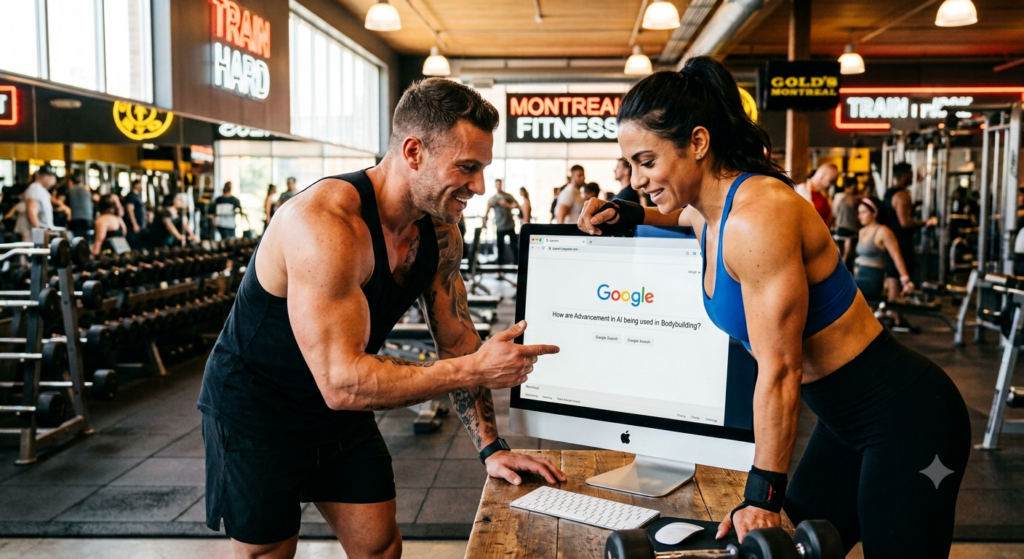
How are Advancement in AI being used in Bodybuilding? The answer sits in your phone right now. Machines are watching your squat depth, adjusting tomorrow’s weight, and redesigning your meals. The tech handles what trainers used to charge hundreds of dollars per month to do.
How are Advancement in AI being used in Bodybuilding for Workout Plans That Adapt Daily
Your training program changes based on last night’s sleep. AI tracks muscle fatigue while prioritizing fresh muscle groups and preventing overtraining. The app looks at your bench press from Tuesday. It sees you hit eight reps instead of six. Wednesday’s workout already adjusts the weight upward.
Users who follow AI-recommended workouts improve estimated 1RM around 27% faster than those who manually build workouts. This happens because the software reacts to your actual performance data. You log a set. The algorithm runs calculations. Next week’s plan rebuilds itself around what your body proved it can handle.
Progressive overload and recovery awareness are the biggest drivers of long-term muscle and strength gains. Top apps automate both. No spreadsheets needed. The system knows you trained legs yesterday. It programs upper body today. Your hamstrings get 48 hours to repair while your chest gets loaded.
Equipment changes don’t break the plan. Only have dumbbells and a bench? It builds around that. Full gym? It uses cables, machines, and barbells. Travel to a hotel gym with limited gear and the app swaps exercises in seconds.
AI Meal Planning Hits Protein Targets Without Guessing
Dr. Muscle is now the world’s first and only AI workout app that combines personalized nutrition with intelligent training guidance. You enter your weight goal. The system calculates macros. It generates meals that fit those numbers exactly.
A 2022 MyFitnessPal Nutrition IQ survey found that 91% of Americans have no idea how much protein they actually consume daily. AI fixes that problem by doing the math automatically. You scan a barcode. The app logs the food. Remaining calories for the day update in real time.
The meal plan builder AI will then automatically generate a diet plan for you that fits your nutrition goals and other preferences. Preferences matter here. Hate broccoli? The system swaps it for spinach and recalculates fiber totals. Need more calories after a heavy squat session? Simply generate a snack or dinner to make up for missing calories.
Your calorie and macronutrient requirements will automatically adjust over time based on how you’re progressing toward your weight goal. Weight goes up faster than expected? The app cuts 100 calories. Progress stalls? It adds carbs around your workout window. This removes the guesswork that derails most bulking or cutting phases.
How are Advancement in AI being used in Bodybuilding to Fix Your Form in Real Time
AI workout form checkers solve this problem using computer vision technology, the same AI that powers self-driving cars. You film your deadlift from the side. Upload the video. The software tracks your spine angle frame by frame.
System identifies specific form errors: excessive spinal flexion, knee valgus, insufficient depth, bar path deviations, asymmetries. The feedback isn’t vague. Compares your movement to a database of optimal technique profiles. You get a score out of 100 plus exact corrections.
The app’s standout feature is its real-time, camera-based form feedback using your phone’s camera. It counts reps and provides immediate technique cues. Your elbow flares out during bench press. The screen alerts you mid-set. You tuck your elbows. The alert disappears.
Exercise form determines everything: injury risk, muscle recruitment, strength gains, and long-term training sustainability. Bad form compounds over months. A slight forward lean during squats becomes knee pain after 200 workouts. AI catches these patterns before they wreck your joints.
Spot risky patterns with expert form analysis to avoid muscle imbalances and ensure safer, clean reps. The technology spots asymmetries. Your right shoulder dips lower than your left. That imbalance shows up in the data. The app suggests corrective drills before the issue causes injury.
Recovery Tracking Tells You When to Push and When to Rest
AI-driven wearables, such as smartwatches, rings, and bands, continuously monitor various sleep metrics. Devices like the WHOOP strap track sleep patterns and heart rate variability. AI tools monitor sleep quality and recovery indicators with data-driven sleep insights.
Modern wearables track several sleep parameters including total sleep duration with most athletes needing 7.5 to 9 hours. Endurance athletes in heavy training blocks often need the upper end. Deep sleep percentage should be 15-20% of total sleep where physical recovery primarily occurs.
Heart rate variability matters more than most lifters realize. A declining 7-day average alongside increased training load is the earliest sign of accumulated fatigue. Your HRV drops three days in a row. The AI flags overtraining risk. It suggests a deload week before you burn out.
AI systems continuously monitor athlete health metrics including heart rate variability, sleep patterns, stress indicators, and recovery markers. This prevents overtraining and maintains peak physical condition. You wake up with elevated resting heart rate. An elevated overnight RHR relative to your baseline can indicate incomplete recovery. The app already adjusted today’s workout to lighter weights and higher reps.
Teams like the Cleveland Indians and Chicago Cubs utilize AI to track players’ sleep patterns and fatigue levels to prevent injuries. Professional teams spend millions on this tech. Now the same analysis runs on a watch that costs less than one month of personal training.
How are Advancement in AI being used in Bodybuilding for Injury Prevention Before Pain Starts
AI solves this challenge using world-class predictive models for muscle strain detection, personalized rehabilitation, and optimized rest protocols. The system spots movement compensations. Your left hip shifts during squats. That shift means your right glute isn’t firing correctly. The AI flags this before it becomes a strain.
AI-driven injury prevention relies on machine learning models that analyze movement patterns across thousands of athlete datasets. Predictive analytics identify compensation patterns—like altered squat mechanics or asymmetrical loading—weeks before pain develops. These systems integrate real-time biomechanical feedback with periodization principles, flagging acute injury risks through volume load analysis, movement quality scoring, and fatigue accumulation metrics that spot overtraining syndrome early.
Volume tracking prevents overuse injuries. You hit 25 sets for chest this week. That’s eight sets above your normal volume. Arvo uses MEV/MAV/MRV volume tracking. Minimum effective volume gets you growing. Maximum recoverable volume is your ceiling. Cross that line and injury risk spikes.
Computer vision detects joint stress. Identifies inefficiencies that limit performance and increase injury risk over time. Your knee tracks inward during lunges. That valgus stress accumulates. The app spots it after three sets and recommends glute activation work.
Rest days become strategic instead of random. The AI knows your training history. It sees your volume climbing for six weeks straight. Recovery markers drop. Progressive overload and recovery awareness are the biggest drivers of long-term muscle and strength gains. The system schedules a deload before your connective tissue fails.
Frequently Asked Questions
How accurate is AI form checking compared to a real coach?
Advanced systems like Gymscore process workout videos frame-by-frame, tracking joint positions, movement patterns, and biomechanical relationships. The technology matches expert-level analysis for common lifts. Personal trainers still excel at hands-on corrections for complex movements.
Do AI workout apps work for beginners or just advanced lifters?
78% of personal trainers now use some form of AI to help create workout plans. Apps adjust difficulty based on your experience level. They’re especially valuable for self-motivated individuals who want consistent, science-based training. Beginners get foundational programs while advanced lifters get periodization.
Can AI meal planning handle specific diets like keto or vegan?
The AI diet plan engine supports eight dietary styles including keto, vegan, vegetarian, paleo, and mediterranean. You select your preference and the system generates meals within those constraints. The AI ensures you’re still eating exactly what you need for your fitness and nutrition goals.
How much does AI fitness technology cost compared to hiring a trainer?
AI workout apps provide personalized programming that adapts to your progress, typically costing €4-35/month vs €600+/month for a personal trainer. Some apps offer free tiers with basic features. Premium subscriptions unlock full AI personalization and tracking.
Does sleep tracking actually improve muscle growth?
Deep sleep percentage should be 15-20% of total sleep where physical recovery primarily occurs. REM sleep should be 20-25% and is essential for cognitive recovery and motor learning. AI wearables measure these metrics and suggest changes to improve recovery quality.
Start with one AI fitness app this week and log every workout for 30 days to see measurable strength gains.