
Most V-Taper Routines Miss This Compound Move
Most gym programs treat shoulders and lats as afterthoughts, leaving you looking thick instead of wide. These 4 compound exercises attack the problem differently by building outward width first, where it actually counts for creating an impressive V-taper.
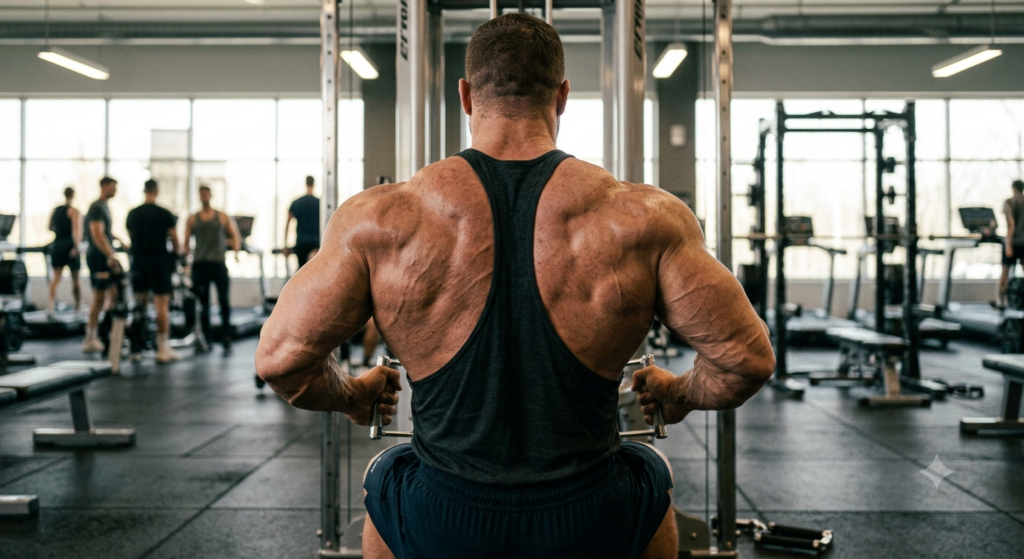
You walk into a gym and see two guys with identical weight. One looks broad and powerful. The other just looks heavy. The difference comes down to shoulder width versus waist size. The 4 Compound Exercises You Actually Need for a V-Taper create that exact ratio.
Why Most V-Taper Programs Miss the Point
Most gym routines treat shoulders and lats as afterthoughts. They stack bench press variations and arm work. Then they wonder why their physique looks thick instead of wide. The 4 Compound Exercises You Actually Need for a V-Taper attack the problem differently. They build outward width first.
Your shoulders and upper back determine how wide you look. Your waist stays relatively fixed unless you gain serious fat. So the only real way to improve your taper is adding mass where it counts. That means prioritizing exercises that recruit the most muscle fibers across your delts and lats.
Single-joint moves can’t deliver this kind of mass. Lateral raises and rear delt flies have their place. But they stimulate too few muscle groups to drive real growth. Compound movements let you move heavy weight through natural patterns. Your body responds by building muscle faster.
The trap many lifters fall into is program hopping. They try a shoulder routine for three weeks. Then they switch to a back-focused split. Progress stalls because you never give any single approach enough time. Stick with the four exercises covered here for at least twelve weeks. You’ll see measurable changes in shoulder width and back thickness.
Pull-Ups Build Width You Can See in a T-Shirt
Pull-ups force your lats to move your entire body weight. That mechanical demand creates growth in the upper and outer portions. These are the areas that flare out when viewed from the front. No other exercise matches this effect.
Lat pulldowns feel similar but they don’t compare. You can cheat a pulldown by leaning back too far. You can also use momentum to start each rep. Pull-ups eliminate both options. Either you move your chin over the bar or you don’t.
Grip width matters more than most people realize. A grip just outside shoulder width hits the lats hardest. Going excessively wide reduces range of motion. It also shifts tension to smaller muscles that fatigue before your lats do.
You should aim for three sets of eight to twelve reps. If bodyweight feels too easy, add a weight belt. If you can’t complete eight reps yet, use a resistance band for assistance. Loop it over the bar and place your knees in it. The band reduces the load just enough to let you finish quality reps.
Perform pull-ups early in your workout when energy is highest. Fatigue ruins your form and turns the movement into a partial rep contest. Fresh muscles let you control the eccentric and get a full stretch at the bottom.
The 4 Compound Exercises You Actually Need for a V-Taper Include Overhead Press
Overhead press builds your front and side delts simultaneously. These two heads make your shoulders look wider from every angle. Standing versions also engage your core to stabilize the weight overhead. That stability demand increases overall muscle activation.
Barbell and dumbbell versions both work well. Barbells let you load more total weight. Dumbbells allow each arm to move independently. That independence prevents your stronger side from compensating. Try both and pick whichever feels better on your shoulders.
Most lifters press too heavy and cut the range short. They stop the bar at forehead height instead of full lockout. Partial reps reduce the stretch at the bottom and contraction at the top. Both positions drive growth. Skipping them leaves gains on the table.
Lower the bar until it touches your upper chest. Press it back up until your elbows fully extend. Your head should move slightly backward to clear a path for the bar. Then it moves forward again at the top. This natural motion keeps the bar traveling in a straight line.
Three to four sets of six to ten reps works best here. The overhead position limits how much you can lift compared to bench press. Don’t chase numbers that force you into bad positions. Clean reps with controlled tempo build more muscle than ego lifts.
Bent-Over Rows Add Thickness to Your Back
Rows target the middle and lower portions of your lats. They also hit your rhomboids and mid traps. Together these muscles create the thick, dense look when viewed from the side. Pull-ups give you width. Rows give you depth.
The bent-over barbell row requires you to hinge at the hips. Your torso should be nearly parallel to the floor. This angle puts your lats in the best position to pull. Standing too upright turns the movement into an upright row. That shifts work away from your back and onto your traps.
Pull the bar toward your lower ribcage, not your chest. Think about driving your elbows straight back behind you. Your hands are just hooks holding the weight. The real work happens when you squeeze your shoulder blades together at the top.
You’ll see people jerking the weight up with momentum. Their torso bounces up and down with each rep. This approach lets you use heavier weight on paper. In practice it reduces time under tension and injury risk goes up. Keep your torso angle fixed and move only your arms.
Four sets of eight to twelve reps provides enough volume for growth. Use a weight that challenges you on the last two reps. If form breaks down before you hit eight, reduce the load. Rowing with proper technique beats sloppy reps with an extra plate.
Face Pulls Balance Your Delts for the 4 Compound Exercises You Actually Need for a V-Taper
Face pulls hit your rear delts harder than any other compound move. Most pressing exercises—particularly bench press, incline press, and overhead press variations—neglect this posterior shoulder muscle head. Over time that imbalance creates anterior shoulder dominance, which pulls your shoulders forward and internally rotates your upper arms. Your posture suffers, your shoulder health deteriorates, and your V-taper disappears because the rear delts can’t support the wide, balanced look you’re building with pull-ups and overhead pressing.
Set a cable pulley at upper chest height. Attach a rope handle. Step back until your arms are fully extended. Pull the rope toward your face while spreading the ends apart. Your hands should finish beside your ears.
The key is keeping your elbows high throughout the movement. If they drop below shoulder level, your lats take over. The rear delts lose tension and you waste the exercise. Think about pulling your elbows up and back at the same time.
Face pulls don’t require heavy weight to be effective. A moderate load for fifteen to twenty reps creates a strong pump. That pump drives blood into the muscle and stretches the fascia. Both factors support growth even without maximal loads.
This exercise also works as injury prevention. Strong rear delts keep your shoulder joint centered in the socket. That stability reduces strain on your rotator cuff during pressing movements. You stay healthy and keep training without setbacks.
Perform face pulls at the end of your upper body workouts. Do three sets with minimal rest between them. Your rear delts recover quickly compared to larger muscle groups. Short rest periods keep the intensity high without compromising performance.
Programming the 4 Compound Exercises You Actually Need for a V-Taper
You need to train these four movements twice per week. Split them across two separate sessions for optimal recovery. One day focuses on vertical pulling and pressing. The other emphasizes horizontal work.
Session one combines pull-ups and overhead press. Start with pull-ups for three sets. Rest two minutes between sets. Then move to overhead press for four sets. This pairing balances pulling and pushing in the same plane of motion.
Session two pairs bent-over rows with face pulls. Rows come first for four sets. Face pulls finish the workout for three sets. The horizontal pulling emphasis complements the vertical work from session one. Together they hit your back from every angle.
Allow at least two days between these sessions. Training the same muscle groups on consecutive days prevents full recovery. Your muscles grow during rest, not during the workout itself. Skipping recovery time means you lift in a perpetually depleted state.
Track your performance in a notebook or phone app. Write down the weight, sets, and reps for each exercise. This data shows whether you’re getting stronger over time. When progress stalls for two weeks straight, change one variable. Add five pounds, one extra set, or two more reps.
Most people try to change everything at once. They switch exercises, rep ranges, and rest periods simultaneously. Then they can’t identify what actually worked. Adjust one thing at a time and measure the results. That approach shows you exactly which changes drive your progress forward.
Nutrition Changes That Support the 4 Compound Exercises You Actually Need for a V-Taper
Muscle growth requires a calorie surplus. You can’t build significant mass while eating at maintenance. Your body needs extra energy to repair tissue and add new muscle fibers. Aim for two hundred to three hundred calories above your daily burn.
Protein intake should hit around one gram per pound of body weight. A 180-pound lifter needs roughly 180 grams daily. Spread this across four to five meals. Spacing protein throughout the day keeps muscle protein synthesis elevated.
Carbs fuel your training sessions and refill muscle glycogen afterward. Time your largest carb serving around your workout. Eat it one to two hours before you train. This timing ensures energy is available when you need it most.
Don’t fear dietary fat. It supports hormone production, including testosterone. Testosterone plays a direct role in muscle growth and strength gains. Aim for about 25 percent of your daily calories from fat sources. Focus on options like olive oil, nuts, and fatty fish.
Water intake affects performance more than most lifters realize. Even mild dehydration reduces strength and endurance. Drink at least half your body weight in ounces daily. A 180-pound person needs ninety ounces minimum. Add more if you train hard or sweat heavily.
Frequently Asked Questions
How long does it take to see V-taper results from these exercises?
Most people notice visible changes after eight to twelve weeks of consistent training. You’ll feel stronger within three to four weeks. Actual size increases take longer because muscle growth is gradual. Progress photos help you track changes you might miss in the mirror.
Can beginners use the 4 Compound Exercises You Actually Need for a V-Taper?
Yes, beginners can start with these movements using lighter weights. Focus on learning proper form before adding heavy loads. Use assisted pull-ups if needed. Start overhead press with dumbbells if barbells feel unstable. Master the movement patterns first.
Should I do cardio while training for a V-taper?
Light cardio supports recovery and heart health without interfering with muscle growth. Keep sessions under thirty minutes at moderate intensity. Avoid excessive running or high-intensity intervals. Those drain energy needed for lifting. Walking or cycling works well.
How much weight should I lift for each exercise?
Pick a weight that makes the last two reps challenging. You should barely complete your target rep range with good form. If you finish easily, add weight next session. If form breaks down early, reduce the load. Progress happens gradually.
Do I need supplements to build a V-taper?
No, supplements are not required for building a V-taper. Whole foods provide everything your body needs for muscle growth. Protein powder offers convenience if you struggle to eat enough. Creatine helps some people lift slightly heavier weights. Neither is mandatory.
Start your next upper body workout with pull-ups and track your progress for twelve straight weeks.