
Build Muscle After 40 Without the Joint Pain Most People Accept
Building muscle after 40 requires more protein than younger years due to anabolic resistance, with research recommending 1.2 to 1.6 grams per kilogram of body weight daily. Spreading protein intake across meals throughout the day is more effective than consuming it all at once.
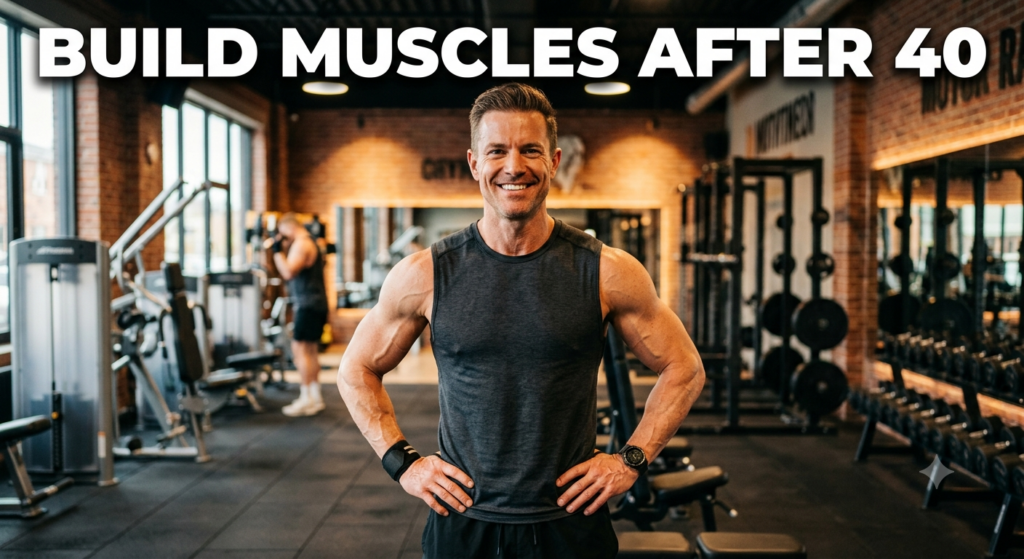
How do I build muscle after age 40? The gym feels harder than it used to. Your body recovers slower than you remember. The trick is working with your biology, not against it.
Why How Do I Build Muscle After Age 40 Demands More Protein Than You Think
Your body experiences anabolic resistance after 40. This means your muscles can’t build new tissue as efficiently from small amounts of protein. You need more raw material to trigger the same growth response.
Research recommends consuming 1.2 to 1.6 grams of protein per kilogram of body weight daily. For active individuals, this may increase to 2 grams per kilogram. A 180-pound man needs roughly 110 to 163 grams daily.
The timing matters too. Spreading protein across three meals works better than loading it all at dinner. Each meal should include at least 30 grams to maximize synthesis.
Animal protein sources show better results for preventing sarcopenia compared to plant sources. Chicken, fish, eggs, and dairy deliver complete amino acid profiles your muscles need.
Recovery Takes Longer When You Build Muscle After Age 40
Muscle recovery time in your 40s extends to 48 to 72 hours. This doubles the 24 to 48 hours you needed in your 20s. Your training schedule must reflect this reality.
Advanced lifters, both young and old, need more than 2 days recovery between intense sessions. Training the same muscle groups on back-to-back days sabotages growth. You’re breaking down tissue without allowing repair.
Two to four days per week proves ideal for strength training after 40. More isn’t better when you can’t recover properly. Three well-executed sessions beat five rushed ones.
Always leave at least 48 hours between sessions targeting the same muscles. Full-body workouts need two days rest. Upper-lower splits can alternate daily since different muscle groups recover.
Testosterone Drops but Doesn’t Stop How You Build Muscle After Age 40
Men’s testosterone levels decline 1 to 2 percent each year starting around age 40. This makes muscle repair less efficient, so the same training produces a smaller response. You notice it around your early 40s when the decline accumulates.
Declining testosterone reduces protein synthesis signaling in muscle cells. Decreased growth hormone and IGF-1 also impair muscle repair and growth. These hormones work together to build tissue.
The drop isn’t catastrophic. Resistance training remains potent enough to build both muscle and strength even starting late. Consistency matters more than your hormone levels.
Exercises engaging multiple large muscle groups stimulate greater hormonal response than isolated exercises. Squats trigger more testosterone release than leg extensions. This helps offset natural decline.
Building Muscles After 40 Need Natural Solutions for Continued Gains
Compound Movements Matter Most When You Build Muscle After Age 40
Squats, deadlifts, presses, rows, and pull-ups provide the most muscle-building stimulus per exercise. You can’t waste energy on moves that deliver minimal results. Time and recovery capacity become limited resources.
Compound movements generate strong muscle-building signals within shorter periods while training your body as a coordinated unit. Machines isolate muscles but life demands coordination. Carrying groceries requires multiple muscle groups working together.
Balance your training across squat, lunge, hinge, push, and pull patterns for joint health and muscular balance. Missing any pattern creates imbalances that lead to injury.
You don’t need barbell versions of everything. A trap bar deadlift proves as effective as conventional deadlifts with less lower back stress. Dumbbell bench presses may protect your shoulders better than barbells. Pick versions that feel safe.
Sleep Becomes Critical for How You Build Muscle After Age 40
During sleep, your body releases human growth hormone, which stimulates protein synthesis and repairs damaged muscle fibers. The more deep sleep you get, the more growth hormone releases. Skimp on sleep and muscle growth stalls.
Both growth hormone and slow-wave sleep naturally decrease as you age. Fragmented sleep and reduced deep sleep affect growth hormone and testosterone levels. Poor sleep creates a double hit against muscle building.
Testosterone, which promotes muscle growth, releases primarily during sleep, and lack of sleep disrupts production. Seven to nine hours nightly isn’t optional anymore. It’s as important as your workout.
Athletes wanting to build muscle and older adults preserving bone strength depend on growth hormone. Growth hormone depends on sleep. No shortcuts exist around this biological requirement.
Progressive Overload Still Works When You Build Muscle After Age 40
The best way to build muscle at any age is progressive resistance training. You gradually increase workout volume through weight, reps, and sets as strength improves. Muscles need increasing challenge to grow.
Adding five pounds monthly beats attempting weekly jumps. Slower progression prevents injury while maintaining consistent gains. Your joints need adaptation time.
For beginners, start with 1 to 3 sets of 8 to 12 reps using 70 to 85 percent of your one-rep maximum. Master form before adding weight. Perfect technique with lighter loads builds more muscle than sloppy heavy lifting.
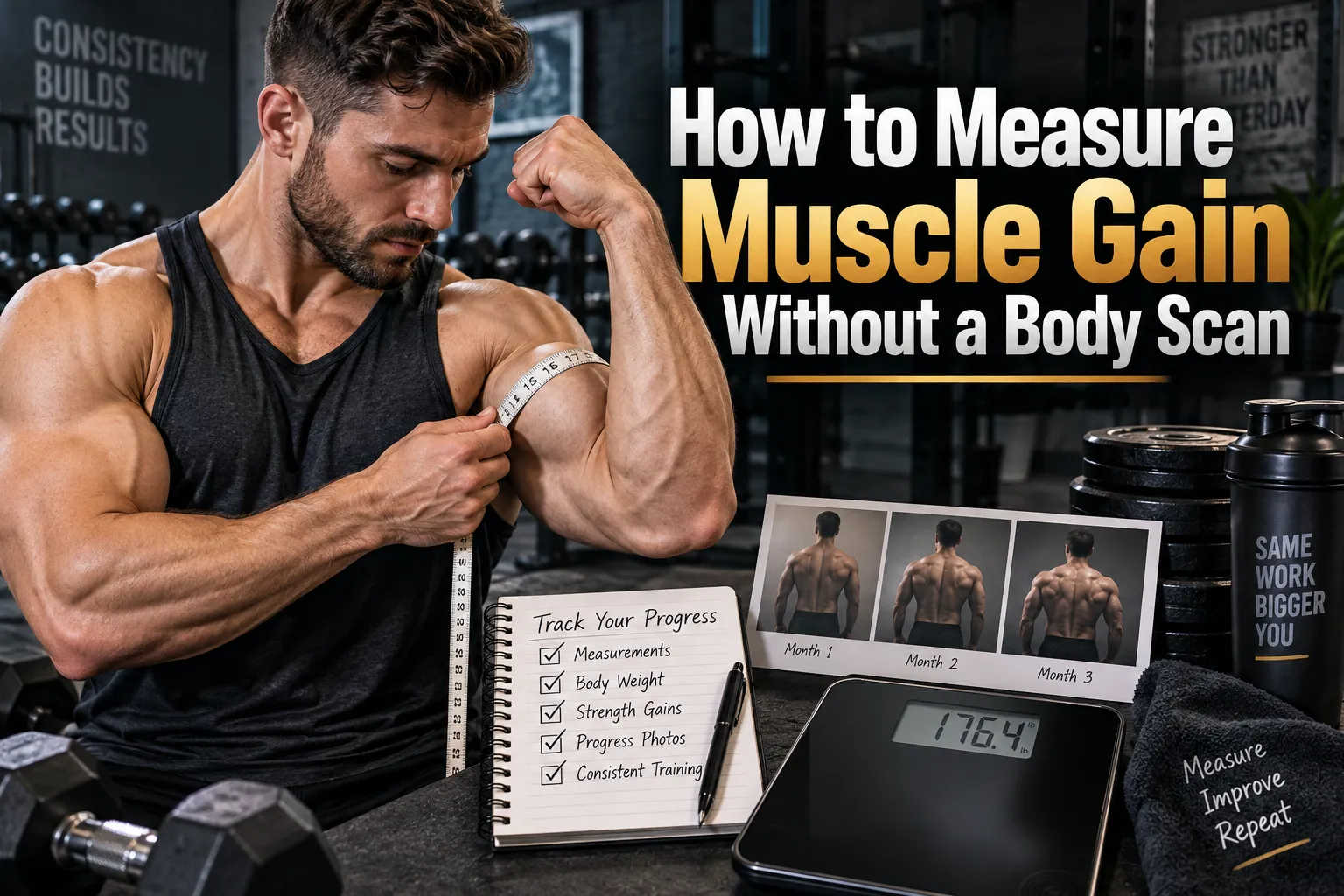
Track every session. Write down weights, sets, and reps. You can’t progress what you don’t measure. Small improvements compound over months into significant strength gains.
Form and Mobility Determine Success When You Build Muscle After Age 40
The worst exercises after 40 are ones you cannot perform safely with good form. Classic barbell lifts like squats, deadlifts, and bench presses prove most troublesome due to high technical demands and joint stress. Age-related mobility restrictions, including decreased flexibility in hips, shoulders, and ankles, combined with reduced cartilage resilience and ligament elasticity, make these movements riskier. Loss of proprioception and balance coordination further increase injury risk during complex compound movements.
Improved flexibility allows greater range of motion during strength training, leading to more effective muscle engagement and better joint health. Tight muscles can’t move through full ranges. Partial movements build partial strength.
Spend ten minutes before lifting on mobility drills. Hip openers, thoracic rotations, and shoulder circles prepare your body. This prevents compensation patterns that cause injury.
Form keeps joints safe and maintains tension on muscles. Without enough muscular tension, you don’t stimulate adaptations. Cheating reps with momentum wastes your session.
Consistency Beats Intensity for How You Build Muscle After Age 40
Training consistency matters as much as frequency since missing scheduled sessions undermines progressive adaptation. Three monthly workouts done perfectly beat five attempted workouts with two skipped.
One study of adults aged 40 to 81 found no significant decline in lean muscle mass among those who trained consistently. The key isn’t age. It’s staying active without long breaks.
Sarcopenia causes muscle loss as you age, but how much you lose and when depends on your control. The best defense involves building as much muscle as possible, then working daily to retain it.
Build habits, not motivation. Schedule workouts like doctor appointments. Same days, same times. Motivation fades but habits persist through low energy days.
Frequently Asked Questions
Can you really build muscle after 40 or just maintain it?
Research proves resistance training builds both muscle and strength even starting in your 40s, 50s, 60s, or beyond. New growth remains possible with proper training and nutrition. You won’t match teenage hormone levels but can still gain significant muscle mass.
How often should I lift weights to build muscle after 40?
Two to four strength training sessions per week proves ideal for most people over 40. This provides enough stimulus for muscle growth while allowing adequate recovery time. Start with two sessions weekly if you’re new to lifting.
Do I need to take testosterone to build muscle after 40?
Progressive resistance training remains the best way to build muscle mass regardless of age. Natural training works without hormone therapy for most people. Testosterone replacement requires medical supervision and isn’t necessary for muscle building.
What’s the single most important factor for building muscle after 40?
Consuming 1.2 to 1.6 grams of protein per kilogram of body weight daily prevents muscle loss. Protein intake matters more than any supplement. Without adequate protein, your training effort produces minimal results.
Why does it take longer to recover from workouts after 40?
Growth hormone and testosterone decline, muscle protein synthesis becomes less efficient, and inflammation resolves more slowly with age. These factors combine to extend recovery time. Your body needs more rest between sessions to complete repairs.
Start with two strength sessions this week and track your protein intake for three days to see where you stand.