
Why HIIT Destroys Muscle Gains (And How to Fix It)
High-Intensity Interval Training for bodybuilders alternates maximum effort bursts with brief rest periods, burning fat while preserving lean muscle tissue. Unlike traditional steady-state cardio, HIIT prevents muscle breakdown during cuts by signaling your body to maintain strength rather than adapt for endurance.
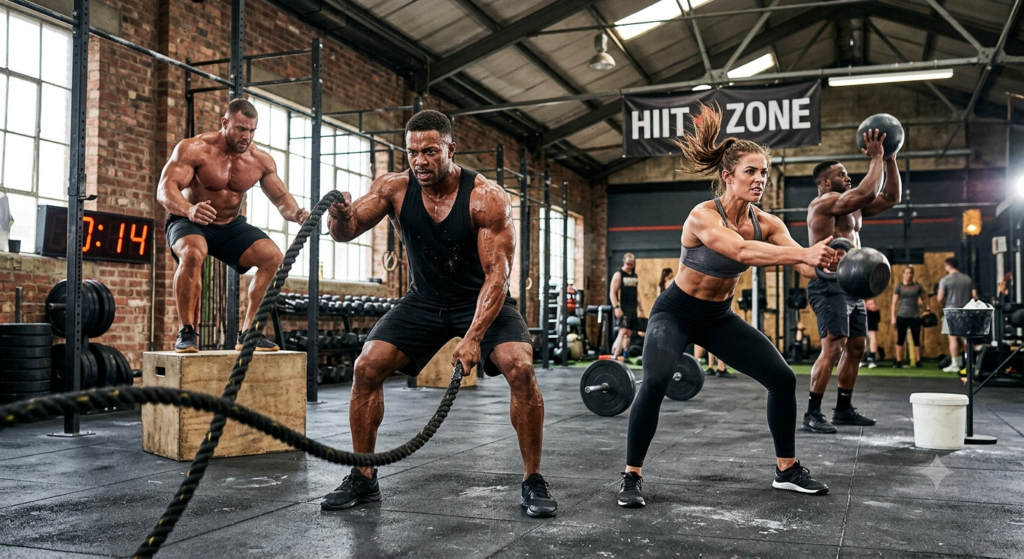
Bodybuilders often skip cardio because they fear losing muscle mass during cuts. What is High-Intensity Interval Training for Bodybuilders becomes the solution here. It preserves lean tissue while burning fat faster than steady cardio. The method works by alternating extreme effort with brief rest periods.
What is High-Intensity Interval Training for Bodybuilders and How It Differs from Traditional Cardio
High-Intensity Interval Training for bodybuilders means short bursts of maximum effort exercise. You sprint for 30 seconds, then walk for 60 seconds. You repeat this pattern for 15 to 20 minutes total. Traditional cardio keeps you at one steady pace for 45 minutes.
The difference matters for muscle retention. Steady cardio tells your body to adapt for endurance. Your muscles shrink to become more efficient at long efforts. HIIT sends the opposite signal to your metabolism.
Your body interprets HIIT as a strength activity. It protects muscle tissue during the recovery phase between intervals. Studies show bodybuilders doing HIIT lose 9% more fat than those doing steady cardio. The steady cardio group also lost more muscle mass.
HIIT takes less time. You finish in 20 minutes instead of an hour. This leaves more energy for heavy compound lifts in the gym. Your legs won’t feel drained before squats or deadlifts.
Why What is High-Intensity Interval Training for Bodybuilders Protects Muscle Mass During Cuts
Your body releases different hormones during HIIT compared to long cardio sessions. Growth hormone spikes during the intense work intervals. This hormone signals your body to preserve lean tissue.
Long cardio sessions raise cortisol levels significantly. Cortisol breaks down muscle protein to fuel extended activity. HIIT keeps cortisol lower because sessions end quickly.
The intensity also triggers an afterburn effect called EPOC. Your metabolism stays elevated for 24 hours after finishing. You burn calories while sitting on the couch recovering.
This post-workout burn uses mainly fat for fuel. Your body taps into fat stores without touching muscle glycogen. Steady cardio burns calories only during the actual workout.
HIIT also improves insulin sensitivity without depleting muscle glycogen stores completely. Your muscles stay full and hard during contest prep. This visual fullness makes you look bigger on stage.
Setting Up What is High-Intensity Interval Training for Bodybuilders in Your Weekly Schedule
Place HIIT sessions on days you train smaller muscle groups. Do it after arms or calves, never before legs or back. Your central nervous system needs full recovery for heavy squats.
Start with two sessions per week during the first month. Add a third session only if recovery feels solid. More than three sessions per week interferes with muscle growth.
Time your HIIT at least six hours away from leg training. Your quads need full glycogen for growth stimulus. Depleted legs can’t push hard enough to trigger adaptation.
Morning fasted HIIT works well for advanced bodybuilders. Take 10 grams of BCAAs before starting. This prevents muscle breakdown while maximizing fat oxidation.
Never do HIIT the day before a heavy deadlift session. Your lower back and hamstrings need 48 hours minimum. Ignore this and your numbers will drop.
Exercise Selection When Applying What is High-Intensity Interval Training for Bodybuilders
The assault bike stands as the best option for bodybuilders due to its low-impact biomechanics and dual-action resistance. It loads both upper and lower body simultaneously without concussive joint stress, making it superior to high-impact modalities like sprints on hard surfaces. The non-reciprocal pedaling pattern eliminates repetitive impact forces that stress knee cartilage and connective tissue, particularly important when carrying significant muscle mass. Additionally, the air resistance naturally matches your effort level, allowing automatic intensity scaling throughout each interval without requiring equipment adjustments between work and recovery phases.
Sprints work but only on soft surfaces like grass or turf. Concrete destroys knees over time, especially carrying extra muscle mass. Your bodyweight at 220 pounds creates serious impact force.
Battle ropes offer another joint-friendly choice. You can adjust intensity instantly by changing rope speed. The movement pattern doesn’t interfere with any lifting mechanics.
Skip the rowing machine for HIIT intervals. The hip hinge position too closely mimics deadlifts and rows. You create unnecessary fatigue patterns that hurt your back training.
Sled pushes work during off-season phases. They build work capacity without eccentric damage. Cut them out six weeks before competition though.
Swimming sprints preserve joints but most bodybuilders lack pool access. The technique also requires skill that takes months to develop. Stick with simpler options that work immediately.
Interval Timing Protocols for What is High-Intensity Interval Training for Bodybuilders
The 1:2 work-to-rest ratio suits most bodybuilders during contest prep. Sprint 30 seconds, recover 60 seconds. Repeat for 10 rounds total.
Beginners should start with 1:3 ratios. Work 20 seconds, rest 60 seconds. Your cardiovascular system needs adaptation time before handling harder ratios.
Advanced athletes can try Tabata style intervals. Go all-out for 20 seconds, rest 10 seconds. Eight rounds takes only four minutes but feels brutal.
Never exceed 20 minutes of total HIIT time including rest periods. Longer sessions trigger the same muscle-wasting response as steady cardio. Quality beats duration here.
The work intervals must reach true maximum effort. Coasting at 70% intensity defeats the entire purpose. You should feel unable to maintain the pace.
Track your output each session. Write down watts on the bike. If numbers drop across sessions, you’re overtraining.
Common Mistakes Bodybuilders Make with What is High-Intensity Interval Training for Bodybuilders
Most bodybuilders do HIIT too often thinking more equals better results. Your body can’t recover from daily high-intensity work and heavy lifting. Progress stalls completely within three weeks.
Another mistake involves picking exercises that create muscle damage. Box jumps sound intense but they trash your quads. Sore legs can’t grow from squat sessions.
Many competitors add HIIT while keeping the same lifting volume. Something must decrease when you add intense cardio. Drop two sets per muscle group per week.
Going too hard too soon causes burnout and injury. Your cardiovascular system adapts slower than your willpower pushes. Tendonitis and joint pain follow aggressive progression.
Some bodybuilders do HIIT and steady cardio in the same week. This confuses your metabolic adaptations. Pick one method and stick with it.
Skipping the warmup before intervals leads to pulled muscles. Spend five minutes gradually increasing intensity. Cold muscles tear under explosive effort.
Nutrition Adjustments Around What is High-Intensity Interval Training for Bodybuilders Sessions
Eat 30 grams of fast-digesting carbs 90 minutes before HIIT. Your muscles need immediate fuel for explosive efforts. Sweet potato or white rice both work well.
Take 5 grams of creatine daily when doing regular HIIT. It refills ATP stores faster between intervals. Your power output stays higher across all rounds.
Post-workout protein becomes even more critical. Consume 40 grams within 30 minutes of finishing. This stops any muscle breakdown from the intense session.
Don’t cut carbs too low on HIIT days. You need 200 grams minimum to fuel both lifting and intervals. Lower carbs turn HIIT into a muscle-eating activity.
Hydration matters more during interval work than steady cardio. Drink 20 ounces of water 30 minutes before starting. Dehydration kills power output and recovery.
Skip fat in the meal before HIIT. It slows digestion and sits heavy. Save fats for meals at least four hours away.
Measuring Progress with What is High-Intensity Interval Training for Bodybuilders
Track your body composition weekly, not daily. HIIT causes water fluctuations that mask true fat loss. Weigh yourself the same day each week.
Monitor strength levels in the gym closely. Your compound lift numbers should stay stable. Dropping bench press weight means you’re overdoing cardio.
Take progress photos every two weeks under identical lighting. Visual changes appear before the scale moves. You’ll see increased vascularity and separation.
Record your heart rate recovery after each HIIT session. Better conditioning means your heart rate drops faster. Improved recovery signals positive adaptation.
Watch for decreased appetite as a warning sign. HIIT shouldn’t kill your hunger like long cardio does. Lost appetite means excessive cortisol response.
Sleep quality indicates recovery status. HIIT should tire you physically, not create insomnia. Poor sleep means you need an extra rest day.
Frequently Asked Questions
How many times per week should bodybuilders do HIIT?
Two to three sessions per week works best for most bodybuilders. More frequent sessions interfere with muscle recovery and growth. Start with two sessions and add a third only if energy stays high.
Can HIIT replace all cardio for bodybuilders during contest prep?
Yes, HIIT can serve as your only cardio method during prep. It burns fat while protecting muscle mass better than steady cardio. Some coaches add one steady session weekly for active recovery only.
Should beginners start with HIIT or build a cardio base first?
Beginners should build two weeks of moderate cardio before starting HIIT. This prepares your cardiovascular system for intense intervals. Jump straight into HIIT and you risk injury or burnout.
Does HIIT interfere with muscle growth during bulking phases?
HIIT doesn’t interfere with bulking if kept to two short sessions weekly. It actually improves nutrient partitioning and insulin sensitivity. This helps your body store more calories as muscle instead of fat.
What heart rate should bodybuilders reach during HIIT work intervals?
Aim for 85 to 95 percent of your maximum heart rate during work intervals. Calculate max heart rate by subtracting your age from 220. During rest periods, let your heart rate drop to 120 beats per minute.
Start adding HIIT to your next training week and measure your body composition changes over 30 days.