
Strong and Feminine: The Balance Nobody Told You About
Building strength won’t make you bulky due to women’s lower testosterone levels and slower muscle growth rates. Discover the science behind balancing strength training with a feminine physique and why dedicated training creates the shape you actually want.
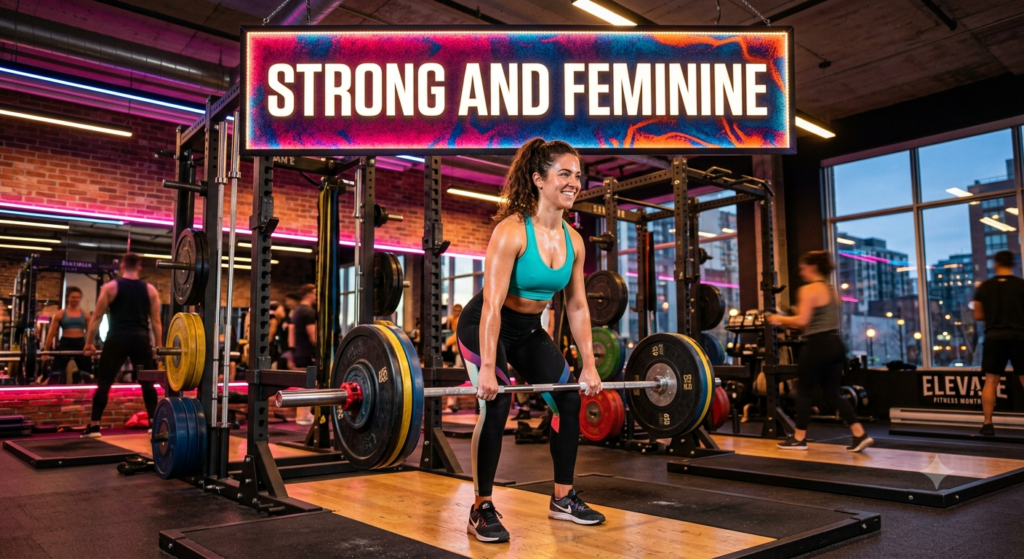
How do I balance strength with a feminine physique? You walk into the weight room and see only heavy barbells. Maybe you think lifting hard makes you look bulky. The truth flips this completely: building actual strength creates the exact shape you want.
How Do I Balance Strength With a Feminine Physique When Everyone Says It’s Impossible?
Women have significantly lower testosterone levels than men, and testosterone is the primary hormone responsible for large muscle growth. You won’t accidentally wake up looking like a bodybuilder. Even with optimal training, women can expect to build 0.5-1 pound of muscle per month as beginners. That’s slower than most people think.
Gaining a bulky physique requires years of dedicated, highly specific training and a very controlled diet. It doesn’t happen by accident. Female bodybuilders who appear very muscular typically train for 5-10+ years with specialized programs, strict nutrition protocols, and often use performance-enhancing substances. Your regular gym sessions won’t do this.
The physique most women want already exists from lifting weights. When women lift heavy, they develop a firm, athletic, toned appearance. This is body recomposition in action. Toning up is really just a more defined muscle appearance resulting from fat loss combined with gaining muscle mass.
What Rep Ranges Actually Work for How I Balance Strength With a Feminine Physique?
Forget the pink dumbbells and endless high reps. Light weights that you can lift for 30, 40, or 50 reps provide minimal stimulus for muscle growth, while loads of 60-85% of your 1RM are most effective for muscle hypertrophy. A rep range of 8-12 per set is widely considered the sweet spot for hypertrophy.
Women often underestimate their strength and grab lighter weights; instead, choose a weight that can be lifted 10 times, with the last two repetitions posing a significant challenge. That last rep should feel hard. If you breeze through it, add more weight next time.
Muscle growth can occur with any load and rep range as long as the set is taken to failure. But practical application matters here. There’s good rationale to suggest that heavier loads with fewer reps are actually better for building a more dense muscle. Dense muscle looks tighter and more defined.
Worth knowing. If muscle growth is your main objective, then be sure that a good deal of your workouts are done using reps in the sweet spot for muscle growth—8-12 reps.
Balance Strength with your Feminine Physique Here!
How Do I Balance Strength With a Feminine Physique Through Exercise Selection?
Exercises like squats, deadlifts, overhead presses, and rows engage multiple major muscle groups simultaneously, sparking a higher metabolic rate and encouraging full-body strength. These compound movements form your foundation. They work more muscle in less time than isolation work.
Your training splits matter for results. The workout itself targets your lower body three times a week with a strong focus on your glutes, and your upper body twice a week with a focus on sculpting the muscles of the arms. This frequency allows recovery while maintaining stimulus.
Follow up your heavy compound lifts with targeted accessory movements like glute bridges, lateral raises, or bicep curls to address muscular imbalances. Compound lifts build the base. Accessory work shapes specific areas you want to develop.
Don’t skip exercises because they feel too hard. Muscles don’t have a gender; a bicep is a bicep whether it belongs to a man or woman.
Nutrition Differences When Balancing Strength With a Feminine Physique
To successfully build muscle and lose fat, you need adequate protein, aiming for about one gram per pound of your target body weight. Protein supports both muscle repair and growth. Your body can’t build what it doesn’t have materials for.
Without consuming enough calories, building significant muscle is unlikely. But here’s the nuance. Most women pursuing body recomposition should eat at maintenance calories or in a slight deficit of 100 to 250 calories, with maintenance calories for moderately active women typically ranging from 1,800 to 2,200.
Aggressive deficits below 1,500 calories are counterproductive because they impair muscle protein synthesis, hormonal function, and recovery. Eating too little backfires completely. You lose muscle instead of building it.
The secret to body recomposition lies in balancing your energy intake and training; your caloric intake controls your weight, while your training style influences how much muscle you gain or fat you lose.
Why the Scale Lies About How I Balance Strength With a Feminine Physique
Muscle is denser than fat, so even if your weight stays the same, building muscle while losing fat will make you appear leaner. The number doesn’t tell the full story. A woman who weighs 60kg and lifts weights for a year might still weigh 60kg, but will look more defined as she’s gained muscle and lost fat.
Your measurements and photos tell you more than any scale. The scale is already unreliable during recomposition and becomes even more misleading for women due to cyclical water retention. Hormones shift water weight throughout your cycle.
Traditional weight loss approaches focused solely on diet can lead to muscle loss along with fat loss, resulting in a body that looks exactly the same, just smaller in appearance. You get a smaller version of your current shape. Without enough muscle beneath the skin, the body may not have the defined look many women seek; to achieve the shape and firmness most people associate with toning, the focus must shift to building muscle while reducing body fat.
Training Phases Make How I Balance Strength With a Feminine Physique More Realistic
Body recomposition is most achievable for beginners, those who have been inactive, or people returning to training after a break; as you become more advanced in your fitness journey, achieving both fat loss and muscle gain becomes more difficult. Your body adapts and progress slows.
For many women, a structured approach involving separate build and cut phases is more effective for body recomposition; in a build phase, lasting 6-9 months, the goal is to focus on building muscle with a slight calorie surplus. The cut phase, lasting around 12-16 weeks, aims to reduce body fat gradually while maintaining as much muscle as possible; together, these phases optimise results.
Although designed primarily for muscle growth, this advanced women’s workout program can still be used during a fat-loss phase; the key is to adjust calorie intake while maintaining adequate protein intake to preserve muscle mass, though training intensity should remain high even when calories are reduced.
This is wrong. Many women fear building muscle first. They want to lose fat immediately. But you need muscle to reveal through fat loss. Build first, then cut.
Recovery Variables That Change How I Balance Strength With a Feminine Physique
Consistency is key; it’s better to work out for 30 minutes three times a week than to do one three-hour marathon session once a month. Frequency beats intensity for long-term results. Your muscles need regular stimulus to adapt.
Rest periods for this program should be kept to 30-90 seconds between sets and exercises. Shorter rest periods maintain metabolic stress and time under tension, both key drivers of muscle hypertrophy. This approach also elevates heart rate and caloric expenditure during training, supporting fat loss during body recomposition. However, ensure rest is long enough to maintain lifting performance on subsequent sets—if strength drops significantly, extend rest slightly to 60-90 seconds to preserve training quality and progressive overload capacity.
The menstrual cycle is a roughly 28-day hormonal cycle that affects nearly every aspect of training, recovery, and body composition tracking; understanding how it works removes a significant source of frustration during body recomposition. Energy levels shift during different phases. Some weeks you feel stronger than others.
Sticking with moderate-intensity Zone 2 cardio is typically more sustainable during calorie deficits than high-intensity interval training, which may increase fatigue and reduce performance. Save your energy for lifting heavy.
Frequently Asked Questions
How do I balance strength with a feminine physique without looking bulky?
You won’t look bulky from normal weight training. Women lack the testosterone needed for extreme muscle growth. Train with challenging weights in the 8-12 rep range for best results.
How long does it take to see results when balancing strength with a feminine physique?
Most women see visible changes within 8-12 weeks of consistent training. Early gains come from neural adaptations and fat loss. Muscle growth appears slower but compounds over months.
Should I do cardio when trying to balance strength with a feminine physique?
Cardio helps with fat loss but isn’t required for building muscle. Moderate cardio supports recovery better than intense sessions. Prioritize strength training over excessive cardio for best body composition changes.
Can I build muscle and lose fat at the same time?
Yes, especially if you’re new to training. Eat at maintenance calories or a small deficit. Prioritize protein at one gram per pound of body weight. More advanced trainees benefit from separate building and cutting phases.
What’s the biggest mistake women make balancing strength with a feminine physique?
Using weights that are too light. Your muscles need real challenge to grow. If you can complete 15 easy reps, increase the weight immediately.
Start tracking your actual weights lifted in a simple notebook to see real progress.