
Meal Timing for Muscle: What Scientists Got Wrong in 2025
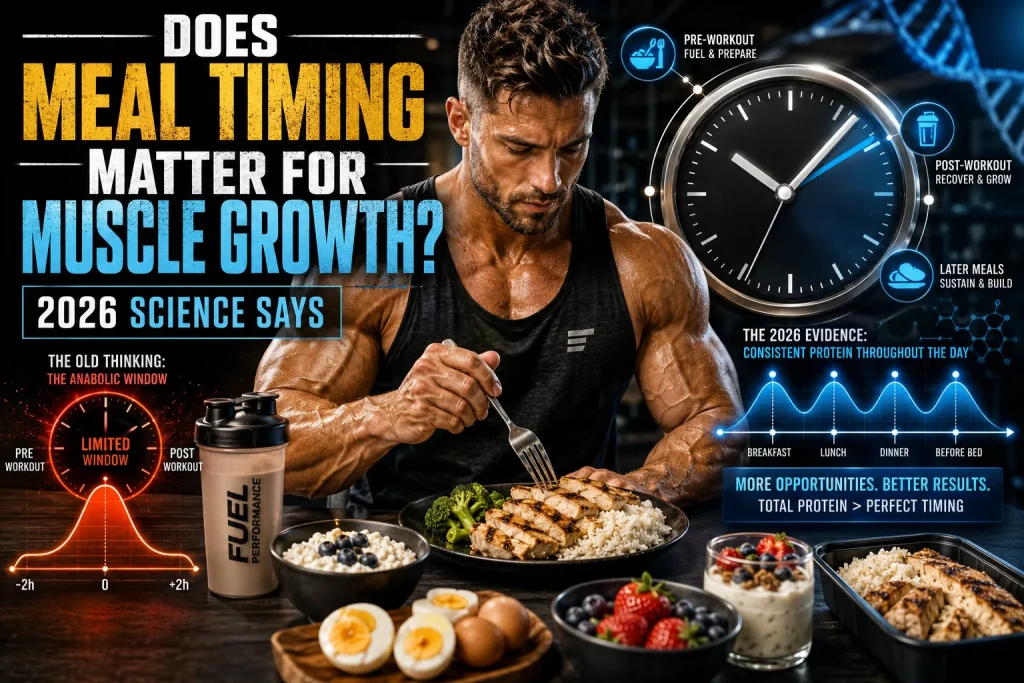
Recent research from a 2024 meta-analysis of 47 studies shows that total daily protein intake matters far more than precise meal timing for muscle growth. The once-popular 30-minute post-workout anabolic window is largely a myth, with minimal difference whether you eat immediately after training or wait several hours.
You step into the gym at 6 AM without breakfast. Your training partner eats six small meals daily. Does-Meal-Timing-Matter-for-Muscle-Growth-2026-Science-Says the answer might surprise you.
Does Meal Timing Matter for Muscle Growth 2026 Science Says: The Anabolic Window Myth
The 30-minute post-workout window used to dominate muscle building advice. Gym goers rushed to their shakers immediately after their last set. They feared missing this narrow opportunity would waste their entire workout.
Recent research tells a different story. A 2024 meta-analysis examined 47 studies on protein timing. Total daily protein intake mattered far more than precise meal timing. The difference between immediate post-workout feeding and waiting three hours was minimal.
Your muscles stay receptive to protein for at least 24 hours after training. The so-called anabolic window is more like an anabolic garage door. It stays open much longer than anyone previously thought.
This doesn’t mean timing is completely irrelevant. It just means the window is wider and more forgiving. You don’t need to panic if you can’t eat immediately after training.
Total Daily Protein Distribution Beats Clock Watching
Your body can only process about 25 to 40 grams of protein per meal. This amount maximizes muscle protein synthesis in one sitting. Eating 150 grams of protein in two meals wastes potential growth signals.
Spreading that same 150 grams across four or five meals works better. Each feeding stimulates muscle protein synthesis separately. More frequent stimulation throughout the day produces better results.
The mechanism works like this: protein intake triggers mTOR activation. This cellular pathway signals your muscles to start building new tissue. Once activated, it stays on for about three to four hours. Then it needs another protein dose to reactivate.
Eating every three to five hours keeps this growth signal pulsing regularly. Long gaps between meals mean extended periods without muscle building stimulation. Your daily total matters most, but distribution comes in second place.
Does Meal Timing Matter for Muscle Growth 2026 Science Says: Pre-Sleep Nutrition Changes Everything
Sleep represents the longest fasting period in your daily routine. Most people sleep seven to nine hours without any nutrient intake. This creates a prolonged period of muscle breakdown without building.
Consuming 30 to 40 grams of slow-digesting protein before bed fixes this problem. Casein protein works particularly well because it digests gradually over several hours. Your muscles receive a steady amino acid supply throughout the night.
A 2025 study tracked two groups of strength athletes for 12 weeks. One group consumed casein before sleep. The control group stopped eating three hours before bed. The pre-sleep protein group gained 1.2 kilograms more lean muscle mass.
This strategy works especially well for people who train in the evening. Your post-workout meal and pre-sleep protein can be the same thing. Supplements designed for muscle support often include slow-release protein formulations for exactly this purpose.
Morning Fasted Training: Does-Meal-Timing-Matter-for-Muscle-Growth-2026-Science-Says Look at Context
Training on an empty stomach has become popular among certain fitness communities. Proponents claim it burns more fat and improves metabolic flexibility. The muscle building effects tell a more complicated story.
Fasted training slightly increases muscle protein breakdown during exercise. Your body lacks readily available amino acids to prevent this breakdown. Performance often suffers too, especially during high-intensity resistance training.
However, the post-workout meal can offset these negatives completely. If you eat a protein-rich meal within two hours after fasted training, muscle growth remains unaffected. The key is not staying fasted for extended periods after your workout.
Some people simply prefer training on an empty stomach for comfort reasons. Digestive issues during morning workouts are common. As long as you eat properly afterward, fasted training won’t sabotage your gains.
The Meal Frequency Debate: Does Meal Timing Matter for Muscle Growth 2026 Science Says Quality Over Quantity
Bodybuilding culture promoted eating six to eight small meals daily for decades. The theory suggested constant feeding kept metabolism elevated and muscles constantly growing. The science doesn’t fully support this extreme approach.
Studies comparing three meals versus six meals show minimal differences in muscle gain. Both groups gained similar amounts of lean mass when total protein and calories matched. The frequent feeding advantage is much smaller than previously believed.
Three to five protein-containing meals appears to be the sweet spot. This frequency is practical for most people’s schedules. It provides enough regular muscle protein synthesis stimulation without becoming obsessive.
Meal frequency should fit your lifestyle and preferences. Forcing yourself to eat every two hours creates unnecessary stress. Stress elevates cortisol, which can actually impair muscle growth.
Pre-Workout Nutrition Timing: Does Meal Timing Matter for Muscle Growth 2026 Science Says Energy Matters Most
The meal you eat before training primarily affects your performance. Better performance means more volume and intensity during your workout. More productive training sessions lead to greater muscle growth over time.
Eating one to three hours before training works well for most people. This window allows partial digestion while maintaining available energy during exercise. Too close to training causes digestive discomfort. Too far away leaves you running on empty.
Carbohydrates become more important around training time than other meals. Your muscles use glycogen as their primary fuel during resistance training. Adequate carbohydrate intake ensures you can complete high-quality training sessions.
Protein in your pre-workout meal provides amino acids during training. This reduces muscle protein breakdown while you lift. The combination of carbs and protein about two hours before training is ideal. Many athletes use targeted supplements to ensure proper pre-training nutrition.
Does Meal Timing Matter for Muscle Growth 2026 Science Says: Individual Response Varies Significantly
Genetic factors influence how your body responds to nutrient timing, including differences in muscle protein synthesis rates and amino acid utilization efficiency. Some people show greater sensitivity to post-workout protein than others due to variations in mTOR signaling and anabolic hormone receptor density. Your training status also affects these responses—factors like training age, muscle fiber composition, and accumulated strength levels all impact how quickly your muscles respond to nutrient stimulation windows. Additionally, metabolic rate, insulin sensitivity, and individual digestion speed create further variability in optimal meal timing strategies.
Beginners typically see robust muscle growth regardless of precise timing strategies. Their bodies respond strongly to any proper training and nutrition program. Advanced lifters need more attention to timing details to continue progressing.
Age changes nutrient timing responses too. Older adults show reduced sensitivity to protein intake. They may need larger protein doses per meal to stimulate equivalent muscle growth. Timing becomes relatively more important for maintaining muscle after age 50.
Your personal schedule and preferences deserve consideration. A timing strategy you can’t maintain consistently will fail eventually. Perfect timing with poor adherence loses to good timing with perfect adherence.
Intermittent Fasting and Muscle Growth: Does Meal Timing Matter for Muscle Growth 2026 Science Says It’s Complicated
Intermittent fasting condenses all eating into a restricted time window. Common approaches include 16 hours fasting with an 8-hour eating window. This creates obvious timing challenges for muscle building.
The compressed eating window makes hitting adequate protein intake harder. Getting 150 grams of protein in three meals requires large portions. Some people struggle to eat enough during limited hours.
Research shows intermittent fasting can work for muscle maintenance. Building new muscle tissue while fasting proves more difficult. The reduced meal frequency means fewer muscle protein synthesis stimulation events daily.
If you choose intermittent fasting for other health reasons, you can still build muscle. You need to prioritize protein at every meal within your eating window. Strategic supplementation can help you meet protein targets more easily. Training should occur during your feeding window when possible.
Post-Workout Carbohydrates and Glycogen Replenishment
Resistance training depletes muscle glycogen stores partially. The depletion level depends on workout volume and intensity. Replenishing glycogen supports recovery and prepares you for your next session.
Carbohydrates after training restore glycogen faster than waiting several hours. This matters most if you train again within 24 hours. Once-daily training allows more flexibility with post-workout carbohydrate timing.
The post-workout period shows enhanced insulin sensitivity. Your muscles absorb glucose more efficiently immediately after training. This window lasts several hours, not just 30 minutes.
Combining carbohydrates with protein after training serves multiple purposes. Protein provides amino acids for muscle repair. Carbs restore energy and create an anabolic hormonal environment. The combination works synergistically for optimal recovery.
Does Meal Timing Matter for Muscle Growth 2026 Science Says: Practical Implementation Strategy
Start by calculating your daily protein target. Aim for 1.6 to 2.2 grams per kilogram of body weight. A 80-kilogram person needs roughly 130 to 175 grams daily.
Divide this total into three to five meals throughout the day. Each meal should contain 25 to 40 grams of protein. This distribution maximizes muscle protein synthesis stimulation frequency.
Place one protein-rich meal within two hours after training. Don’t stress about the exact minute you consume it. Somewhere in that two-hour window works fine.
Add a protein serving before bed. Greek yogurt, cottage cheese, or casein protein work well. This prevents prolonged overnight muscle protein breakdown.
Eat a balanced meal one to three hours before training. Include both protein and carbohydrates. Adjust the timing based on your personal digestive comfort.
Track your results over six to eight weeks. Your rate of muscle gain and recovery quality matter more than following rigid timing rules. Adjust your approach based on real-world results, not theoretical perfection.
Frequently Asked Questions
When should I eat protein after working out?
You have a window of several hours after training, not just 30 minutes. Eating within two hours after your workout works perfectly well. Don’t panic if you can’t eat immediately after your last set.
How many meals per day build muscle fastest?
Three to five protein-containing meals per day work best for most people. More frequent meals provide minimal additional benefits. Fewer than three meals makes hitting protein targets much harder.
Can I build muscle with intermittent fasting?
Yes, but it requires careful planning of protein intake. You need to consume enough protein in fewer meals. Training during your eating window produces better results than fasted training.
Does eating before bed make you fat?
No, pre-sleep protein actually supports muscle growth and recovery. Total daily calories determine fat gain, not meal timing. Casein protein before bed helps prevent muscle breakdown during sleep.
Is fasted cardio better for fat loss while building muscle?
Fasted cardio burns slightly more fat during the session itself. However, total daily calorie balance matters far more for fat loss. Fasted training can reduce performance quality during intense resistance workouts.
Focus on your total daily protein intake first, then refine your meal timing to support your training schedule and lifestyle preferences.