

Why High Protein All Day Tanks Your Gains
Most gym-goers consume protein throughout the day hoping to maximize muscle growth, but your muscles stop responding after the initial spike. Research reveals that muscle protein synthesis peaks 90 minutes after eating protein, then drops to baseline within 3-5 hours regardless of available amino acids.
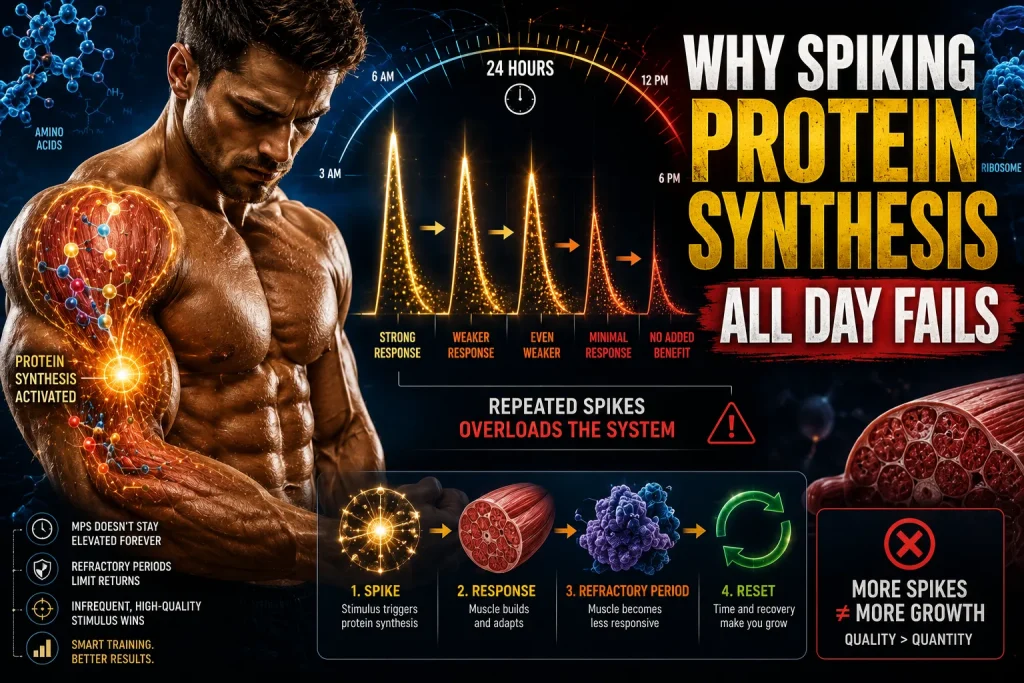
You eat protein every few hours hoping to build muscle faster. Your shaker bottle travels everywhere with you during the day. Why Spiking Protein Synthesis All Day Fails is something most gym-goers never consider. The real issue is that your muscle cells stop responding after the first spike.
Why Spiking Protein Synthesis All Day Fails to Build More Muscle
Protein synthesis works differently than most people think. Your muscles don’t just keep building as long as amino acids are available. They respond to the signal, then shut down even with protein still present.
Research shows muscle protein synthesis peaks about 90 minutes after protein intake. It then drops back to baseline within three to five hours. This happens regardless of continued amino acid availability in your bloodstream.
The muscle building machinery has a refractory period. Think of it like a light switch that needs to fully reset. You can’t just hold the switch in the on position and expect more light.
Scientists call this the muscle full effect. Once your muscles receive enough amino acids to trigger growth, additional protein does nothing. The cellular machinery simply stops responding to the signal.
The Refractory Period That Nobody Talks About
Your muscles need time between protein feedings to become sensitive again. This period lasts roughly three to four hours in most people. Eating protein every hour doesn’t speed up muscle growth during this window.
The mTOR pathway controls muscle protein synthesis activation. This pathway needs to cycle through periods of activation and rest. Constant stimulation actually reduces its effectiveness over time.
Studies on frequent protein feeding show no advantage over spacing meals properly. Subjects eating protein every two hours built no more muscle than those eating every four hours. The total daily protein mattered, but timing past a certain frequency didn’t.
Your body breaks down muscle protein between meals too. This breakdown is necessary for the growth process to work correctly. The cycle of breakdown and synthesis is what produces net muscle gain.
Why Spiking Protein Synthesis All Day Fails Your Recovery Process
Constant protein intake interferes with cellular cleanup processes. Autophagy removes damaged cell parts and helps muscles recover from training. This process only happens when protein synthesis rates drop.
Your cells need periods of lower anabolic signaling to function optimally. During these times, they repair damaged mitochondria and clear out waste products. Skipping this phase means your muscle cells accumulate junk over time.
The body uses fasting periods to activate AMPK pathways. These pathways improve insulin sensitivity and metabolic health in muscle tissue. Better insulin sensitivity means your muscles respond more strongly when you do eat protein.
Athletes who space their meals strategically often recover better than constant grazers. The rhythm of feeding and fasting creates a stronger adaptation signal. Your body thrives on these cycles, not constant stimulation.
How Many Protein Feedings Actually Work
Three to four protein-rich meals per day appears optimal for most people. Each meal should contain 25 to 40 grams of high-quality protein. This pattern allows full activation and complete recovery between feedings.
More meals don’t produce better results once you hit this frequency. A study comparing three meals to six meals found identical muscle growth. The six-meal group simply wasted time preparing and eating extra food.
Athletes training twice per day might benefit from four feedings instead of three. Each training session creates a new opportunity for protein synthesis activation. But adding meals without added training provides no extra benefit.
The spacing matters more than the exact number of meals. Aim for roughly four to five hours between protein feedings. This gives the refractory period time to complete before the next stimulus.
Why Spiking Protein Synthesis All Day Fails for Fat Loss Goals
Eating every few hours keeps insulin elevated throughout the day. Higher insulin levels make fat burning nearly impossible between meals. Your body never switches into fat-burning mode when constantly fed.
Frequent eating also tends to increase total daily calorie intake. Each feeding opportunity is another chance to overconsume calories. People eating six times per day often eat more than they realize.
The thermic effect of food doesn’t increase with meal frequency. Your body burns the same calories digesting three large meals as six small ones. This old myth about stoking your metabolic fire has been thoroughly debunked.
Longer gaps between meals allow for better hunger regulation. Your body has time to produce accurate hunger signals based on true needs. Constant snacking disrupts these signals and leads to mindless eating.
Products like Bulk Extreme work better when paired with proper meal timing strategies. The ingredients support muscle growth during your feeding windows without requiring constant intake.
The Leucine Threshold and Diminishing Returns
Leucine triggers the protein synthesis response in muscle cells. You need about 2.5 to 3 grams per meal to reach the threshold. More leucine beyond this point doesn’t increase the response strength.
This threshold explains why eating massive protein servings doesn’t help. A 60-gram protein meal doesn’t build twice as much muscle as a 30-gram meal. You hit the ceiling much earlier than most people think.
The leucine from one adequate protein meal saturates all available muscle building machinery. Additional amino acids get oxidized for energy or converted to other compounds. They don’t contribute to additional muscle protein synthesis at that moment.
Spreading your leucine intake across the day makes more sense than loading it all at once. Each proper dose creates a new synthesis spike when the cells are ready. This strategy maximizes your daily opportunities for growth.
Why Spiking Protein Synthesis All Day Fails to Match Natural Patterns
Human metabolism evolved with periods of feast and famine, creating circadian feeding patterns that optimized nutrient partitioning and hormonal signaling. Our ancestors never had protein shakes available every three hours, so their bodies adapted through metabolic flexibility to build muscle efficiently without constant feeding. This ancestral eating pattern—characterized by longer fasting windows and concentrated nutrient intake—trained the body to maximize muscle protein synthesis during fed states while preserving lean tissue during fasted periods through improved insulin sensitivity and growth hormone secretion.
Modern research on time-restricted eating shows benefits for body composition. People eating within an eight to ten hour window often gain muscle just as well. They also lose fat more easily than those eating constantly.
Your hormones follow daily rhythms that anticipate feeding patterns. Constant grazing disrupts these rhythms and reduces their amplitude. Stronger hormone pulses produce better training adaptations and muscle growth.
Growth hormone secretion happens primarily during fasting periods and deep sleep. Eating constantly suppresses these natural pulses throughout the day. Lower growth hormone means reduced fat burning and slower recovery.
What Actually Drives Long-Term Muscle Growth
Total daily protein intake matters far more than timing details. Getting 1.6 to 2.2 grams per kilogram of body weight is the key. How you spread this amount has much less impact than hitting the total.
Training stimulus remains the primary driver of muscle adaptation. Your workouts create the signal that tells muscles they need to grow. Protein just provides the raw materials for that growth to happen.
Sleep quality affects muscle growth more than meal frequency ever could. During deep sleep, your body releases growth hormone and testosterone. These hormones drive the actual tissue building process overnight.
Consistency over months and years produces results, not perfect meal timing. Someone eating three solid meals daily for a year will outgrow someone obsessing over six perfectly timed meals for a month. The person who can stick to their plan wins.
Supporting your training with quality supplements helps bridge gaps in your nutrition. But no supplement fixes a poorly designed eating schedule or inadequate protein total.
Why Spiking Protein Synthesis All Day Fails Your Wallet and Schedule
Buying protein for six daily feedings costs significantly more than three meals. Your grocery bill climbs without any additional muscle gain to show for it. That money could go toward better quality protein sources instead.
Meal prep time multiplies when you’re preparing six servings instead of three. Most people can’t sustain this schedule long-term without burning out. The complexity makes the plan fail within weeks.
Constantly thinking about your next meal creates unnecessary mental stress. You spend your day watching the clock and planning feeding times. This obsession with timing distracts from the actual training that builds muscle.
Social situations become difficult when you need to eat every few hours. You can’t enjoy a dinner out without worrying about your feeding schedule. This rigidity makes your nutrition plan harder to follow long-term.
The Right Approach to Meal Timing
Start with three solid meals spaced four to five hours apart. Include 25 to 40 grams of protein in each meal from whole food sources. This simple pattern covers all your bases without unnecessary complexity.
Add a fourth meal only if your training schedule demands it. Two-a-day training sessions or very high total protein needs might justify this addition. Otherwise, three meals work perfectly well for most goals.
Focus on the quality of each protein feeding rather than the quantity. Complete proteins with adequate leucine trigger the full synthesis response. Chicken, fish, eggs, and dairy all work excellently for this purpose.
Time one protein meal within two hours after your hardest training session. This post-workout window is the one timing detail that actually matters. Your muscles are primed for nutrient uptake during this period.
Consider using Bulk Extreme to support your muscle building goals within a sensible eating schedule. The formula works with your body’s natural rhythms rather than fighting against them.
Frequently Asked Questions
How often should I eat protein to build muscle?
Three to four meals per day with adequate protein works best. Space these meals four to five hours apart for optimal results. More frequent eating provides no additional muscle building benefit.
Does eating protein every two hours build more muscle?
No, research shows no advantage to eating protein every two hours. Your muscles need three to four hours between feedings to reset. Constant protein intake doesn’t overcome this refractory period.
Why do my muscles stop responding to protein during the day?
Muscles have a refractory period after protein synthesis activation. The cellular machinery needs time to reset before responding again. This muscle full effect limits how often protein helps.
Can I build muscle with just three meals per day?
Yes, three properly spaced meals work perfectly for muscle growth. Each meal should contain 25 to 40 grams of protein. Total daily protein matters much more than meal frequency.
What happens if I eat protein constantly throughout the day?
Constant protein intake interferes with cellular cleanup and recovery processes. It also keeps insulin elevated, which prevents fat burning. Your muscles don’t build faster despite the extra effort.
Focus on three quality protein meals spaced throughout your day instead of constant feeding.