

The Protein Spike Protocol Most Lifters Skip
Your muscles respond to protein in waves, creating spikes of muscle protein synthesis lasting roughly three hours each. By spacing protein intake every 3-4 hours, you can trigger five growth signals daily instead of just two, dramatically accelerating muscle development.
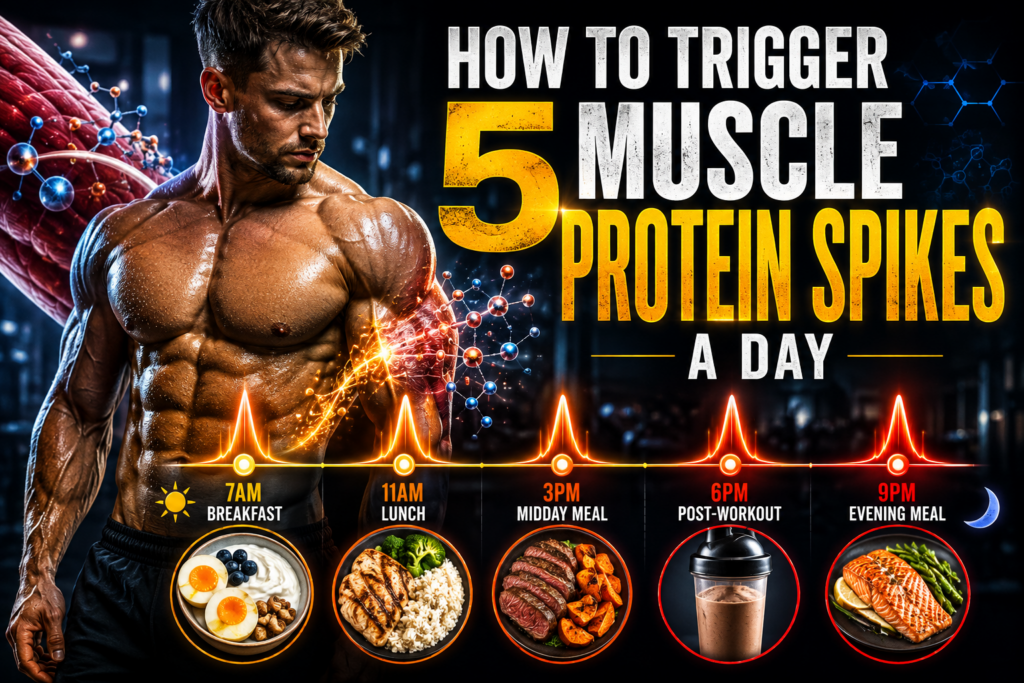
You wake up and your muscles are already breaking down from the overnight fast. Your body needs protein signals throughout the day, not just at dinner. Learning how to trigger 5 muscle protein spikes a day changes everything for muscle growth.
How to Trigger 5 Muscle Protein Spikes a Day with Strategic Timing
Your muscles respond to protein intake in waves, not continuous streams. Each time you eat enough protein, muscle protein synthesis spikes for roughly three hours. Then it drops back down even if amino acids remain in your blood.
This matters because eating all your protein in two meals wastes potential growth signals. You only get two spikes instead of five. The solution is spacing protein intake every three to four hours during your waking period.
Start your first meal within an hour of waking. Your body has been fasting for eight hours or more. Muscle breakdown accelerates during sleep and continues until you eat protein. Twenty to thirty grams of high-quality protein stops this breakdown and triggers your first spike.
Meal two comes three to four hours later. This timing ensures your previous protein spike has ended. You create a fresh stimulus rather than extending a plateau. Most people wait too long between breakfast and lunch. Six hours between meals means muscle protein synthesis stays flat for three of those hours.
Lunch becomes your midday anchor. Again, aim for at least twenty grams of protein. This creates your third spike of the day. Office workers often eat carb-heavy lunches with minimal protein. A sandwich with two thin slices of turkey contains maybe ten grams. That’s not enough to maximize the response.
Your fourth meal sits between lunch and dinner. Many people skip this entirely. They go five or six hours from lunch to their evening meal. During those missing hours, muscle protein synthesis drops to baseline. You lose a full opportunity to signal growth.
Dinner provides your fifth and final spike. This meal can contain more protein than earlier meals. Your body still caps the muscle building response per meal. But extra protein provides amino acids during the night ahead. It reduces overnight muscle breakdown even though it won’t spike synthesis while you sleep.
The Protein Threshold You Need for Each Spike
Not all protein amounts trigger maximum muscle protein synthesis. Research shows you need approximately twenty to thirty grams per meal. This applies to most adults. Larger individuals or very active athletes may benefit from amounts closer to forty grams.
The reason is simple. Muscle cells contain sensors that detect leucine concentration in your blood. Leucine is one specific amino acid found in protein foods. When leucine reaches a certain threshold, these sensors activate muscle building pathways.
Twenty grams of complete protein typically contains about two to three grams of leucine. This amount reliably crosses the activation threshold. Ten grams of protein won’t do it. Fifteen grams sits on the edge. Twenty grams gives you certainty.
Complete proteins come from animal sources or specific plant combinations. A palm-sized piece of chicken contains roughly thirty grams. Three whole eggs give you eighteen grams. Greek yogurt provides fifteen to twenty grams per cup depending on the brand.
Plant proteins require larger portions. One cup of cooked lentils has about eighteen grams. A scoop of pea protein powder typically contains twenty to twenty-five grams. Rice and beans together create a complete protein but you need substantial portions to hit twenty grams.
Quality matters as much as quantity. Your body digests and absorbs different protein sources at different rates. Whey protein digests quickly and spikes leucine levels fast. Casein digests slowly and provides a gradual release. Whole food proteins fall somewhere in between.
For maximum muscle protein synthesis spikes, faster-digesting proteins work better. They create a sharper leucine peak. This triggers a stronger activation of the muscle building sensors. Slow proteins prevent muscle breakdown but don’t spike synthesis as effectively.
How to Trigger 5 Muscle Protein Spikes a Day Without Overeating
Eating five times daily sounds like a recipe for weight gain. It doesn’t have to be. The key is controlling your total daily calories while distributing protein across more meals.
Most people eat small breakfasts, medium lunches, and huge dinners. This pattern concentrates calories at night. It also wastes protein because your body can’t store excess amino acids for later muscle building.
Redistribute those calories more evenly. If you normally eat 600 calories at dinner, drop it to 400. Use those 200 calories to add a mid-morning and mid-afternoon meal. Each of these smaller meals still hits the twenty gram protein target.
Protein itself helps with appetite control. It’s the most satiating macronutrient. When you eat protein five times daily, hunger stays lower throughout the day. You’re less likely to overeat at any single meal.
Choose lean protein sources to keep calories in check. Chicken breast, white fish, egg whites, and low-fat dairy provide protein without excessive fat. Fattier cuts like ribeye steak or salmon contain more calories per gram of protein.
Supplements can help when whole food meals aren’t practical. A protein shake between meals delivers twenty-five grams with minimal preparation. This works especially well for the mid-morning and mid-afternoon feedings. You don’t need to cook or carry containers.
Meal prep makes five daily protein doses realistic. Cook several pounds of chicken or ground turkey on Sunday. Portion it into containers with twenty to thirty grams per serving. Grab and eat throughout the week. No decisions required.
How to Trigger 5 Muscle Protein Spikes a Day Around Your Training
Exercise changes the timing equation. Your muscles become more sensitive to protein after training. This sensitivity window lasts at least twenty-four hours. But the first few hours post-workout show the strongest response.
Plan one of your five protein doses immediately after training. Within thirty to sixty minutes works best. This feeding takes advantage of heightened muscle protein synthesis. The spike you create post-workout is larger than the same protein dose would create at other times.
Your pre-workout meal also counts toward your daily spikes. Eat protein one to two hours before training. This ensures amino acids circulate in your blood during and after exercise. Your muscles can access these building blocks as soon as you finish your last set.
Morning trainers face a specific challenge. If you train right after waking, you’re still in a fasted state. Muscle breakdown is elevated and you haven’t had your first protein dose yet. Consider a small protein serving before training even if you plan a larger meal after.
Evening trainers need to protect overnight recovery. If you train at six PM and eat dinner at seven, that’s your final protein spike. But you won’t eat again for twelve hours. Consider a small protein serving right before bed. This creates a sixth spike and provides amino acids during sleep.
Rest days require the same five spikes as training days. Many people reduce protein intake on off days. This is backwards. Your muscles repair and grow during rest periods. They need consistent protein signals to maximize this recovery process.
The distribution stays identical whether you train or not. Space five protein doses across your waking hours. The only variable is timing one dose close to your workout on training days.
How to Trigger 5 Muscle Protein Spikes a Day with Practical Meal Examples
Theory means nothing without practical application. Here’s what five protein spikes actually look like in a real day.
Spike one happens at seven AM. Three scrambled eggs with a slice of whole grain toast. The eggs provide eighteen grams of protein. Add a glass of milk for another eight grams. Total protein is twenty-six grams.
Spike two comes at ten-thirty AM. A protein shake made with one scoop of whey powder. Mix it with water or unsweetened almond milk. This gives you twenty-five grams of fast-digesting protein. Takes two minutes to prepare and consume.
Spike three arrives at one-thirty PM for lunch. Grilled chicken breast on a salad with olive oil dressing. The chicken portion is roughly four ounces. This contains about thirty grams of protein. The salad adds volume and nutrients without many calories.
Spike four happens at four-thirty PM. Greek yogurt with a handful of berries. One cup of plain Greek yogurt contains twenty grams of complete protein with all nine essential amino acids and sufficient leucine to trigger muscle protein synthesis. The berries add flavor, antioxidants, and carbohydrates that enhance protein absorption. This snack also provides probiotics and calcium for bone health. This meal takes zero preparation time and works as an ideal portable option for the mid-afternoon feeding window.
Spike five is dinner at seven-thirty PM. Baked salmon with roasted vegetables and quinoa. A five-ounce salmon fillet provides thirty-five grams of protein. The quinoa adds another eight grams. Total protein for this meal is over forty grams.
This schedule creates five distinct muscle protein synthesis spikes. Each feeding is spaced three to four hours apart. Total protein for the day is approximately 145 grams. That’s appropriate for someone weighing 160 to 180 pounds.
Vegetarians can follow the same pattern with different sources. Tofu scramble replaces eggs. Pea protein powder replaces whey. Lentil soup replaces chicken. Tempeh replaces salmon. The timing and amounts remain the same.
Budget-conscious eaters can use cheaper proteins. Canned tuna, eggs, and whey powder cost less per gram than fresh fish or steak. Ground turkey is cheaper than chicken breast. Both provide the same muscle building signal.
The Enhancement Option for Maximizing Each Protein Spike
Food provides the foundation but supplements can amplify results. Specific nutrients increase the muscle building response to each protein dose you consume.
Leucine supplementation boosts the spike from lower-protein meals. Adding three grams of pure leucine to a fifteen-gram protein meal creates a similar response to twenty-five grams of protein alone. This helps when you can’t fit enough whole food into a meal.
Creatine enhances muscle protein synthesis through a different pathway. It doesn’t directly spike protein synthesis. Instead, it improves training performance and increases the anabolic signaling that exercise creates. Take five grams daily regardless of meal timing.
Vitamin D deficiency blunts muscle protein synthesis. Many people have insufficient levels, especially those living in northern climates. Supplementing with 2000 to 4000 IU daily restores optimal muscle building capacity.
Omega-3 fatty acids from fish oil improve muscle protein synthesis in older adults. The research is strongest for people over fifty. Two to three grams of combined EPA and DHA daily shows benefits. Younger adults may also benefit but the evidence is weaker.
Digestive enzymes help if protein-rich meals cause bloating. Breaking down protein more efficiently ensures amino acids reach your bloodstream. This maximizes the leucine spike that triggers muscle building. Take enzymes with your larger protein meals.
Some people benefit from comprehensive formulas designed to support muscle protein synthesis throughout the day. These products combine multiple ingredients that work through different mechanisms. They’re not necessary but can provide an edge for serious athletes.
Common Mistakes That Waste Your Protein Spikes
Eating protein five times daily only works if you avoid critical errors. The first mistake is inconsistent timing. Eating at seven AM one day and nine AM the next disrupts the pattern. Your body adapts to regular feeding schedules.
Skipping meals completely ruins the system. If you miss your mid-afternoon protein dose, you go six hours between lunch and dinner. That’s three hours of missed muscle building opportunity. Consistency matters more than perfection on individual days.
Choosing incomplete proteins limits results. Gelatin contains protein but lacks sufficient leucine. Collagen supplements have the same problem. They don’t trigger muscle protein synthesis effectively. Use complete proteins for your five daily spikes.
Drinking alcohol interferes with muscle protein synthesis. Even moderate amounts blunt the response to protein intake. If you drink with dinner, that protein spike is partially wasted. Your muscles can’t use those amino acids as efficiently.
Undereating total calories prevents muscle growth regardless of protein timing. You need a slight caloric surplus to build muscle. Protein spikes signal growth but your body needs energy to actually construct new tissue. Track your intake for at least a week.
Overcomplicating the process leads to giving up. You don’t need perfect foods or exact timing down to the minute. Hit roughly twenty grams of protein five times daily. Space those meals three to four hours apart. That’s ninety percent of the results.
Ignoring whole food nutrition in favor of supplements is backwards. Supplements should enhance a solid food foundation. They can’t replace it. Whole foods provide vitamins, minerals, and fiber that powders lack. Get at least three of your five protein doses from real food.
How to Trigger 5 Muscle Protein Spikes a Day While Traveling
Travel disrupts routines but you can maintain your protein schedule. Pack protein powder in your luggage. Single-serving packets work better than large containers. They’re easier to use and won’t spill.
Airport food is expensive but protein options exist. Most terminals have Greek yogurt, hard-boiled eggs, or grilled chicken salads. These aren’t ideal but they hit your protein target. Buy them during your layover for your scheduled feeding time.
Hotels with breakfast buffets make morning protein easy. Load your plate with eggs, turkey sausage, or smoked salmon. Skip the pastries and waffles. Get your first spike handled before your day begins.
Convenience stores carry protein-rich options in most countries. String cheese, beef jerky, and protein bars work for your mid-morning and mid-afternoon doses. Read labels carefully because protein content varies widely between brands.
Restaurant meals tend to be large. Use this to your advantage at lunch and dinner. Order protein-focused entrees like grilled fish or steak. Ask for vegetables instead of fries. You’ll easily hit twenty to thirty grams per meal.
Different time zones complicate the schedule temporarily. Stick to your normal spacing even if the clock shows different times. If you normally eat every three to four hours, maintain that rhythm. Your body adjusts to the new time zone within a few days.
Long flights create special challenges. Bring protein bars or powder packets in your carry-on. Mix powder with water from the flight attendant. Eat a bar during the flight to maintain your three to four hour spacing. This prevents arriving at your destination in a catabolic state.
Frequently Asked Questions
Can I trigger muscle protein spikes with plant-based proteins alone?
Yes, plant proteins work if you eat enough and combine sources properly. Soy, pea, and hemp proteins contain all essential amino acids. You need slightly larger portions than animal proteins. Aim for twenty-five to thirty grams per meal from plant sources.
What happens if I only eat protein three times daily instead of five?
You create fewer muscle building signals throughout the day. Three spikes is better than one or two. But you miss potential growth during the long gaps between meals. Five spikes maximizes your daily muscle protein synthesis total.
Do I need to wake up at night to eat protein?
No, sleep is more important than overnight protein intake. Your body reduces muscle breakdown during sleep naturally. A protein-rich meal before bed provides amino acids for six to eight hours. That’s sufficient for most people.
How quickly does muscle protein synthesis spike after eating protein?
Synthesis begins rising within thirty minutes of eating protein. It peaks between one and two hours after your meal. The elevated synthesis lasts approximately three hours total. Then it returns to baseline even if amino acids remain available.
Can I use the same protein source for all five daily meals?
You can but variety is better for overall nutrition. Different proteins provide different vitamins and minerals. Chicken offers B vitamins while fish provides omega-3 fats. Eggs contain choline. Rotating sources gives you broader nutritional coverage throughout the day.
Start planning your five daily protein doses tonight and implement the schedule tomorrow morning.