
Keto Ice Cream Builds Muscle 3x Faster Than Protein Shakes
Keto protein ice cream combines muscle-building protein with the satisfaction of genuine dessert, solving the compliance problem of traditional protein shakes. Get 20-30g of protein per serving while maintaining ketogenic macros and accelerating lean muscle recovery.
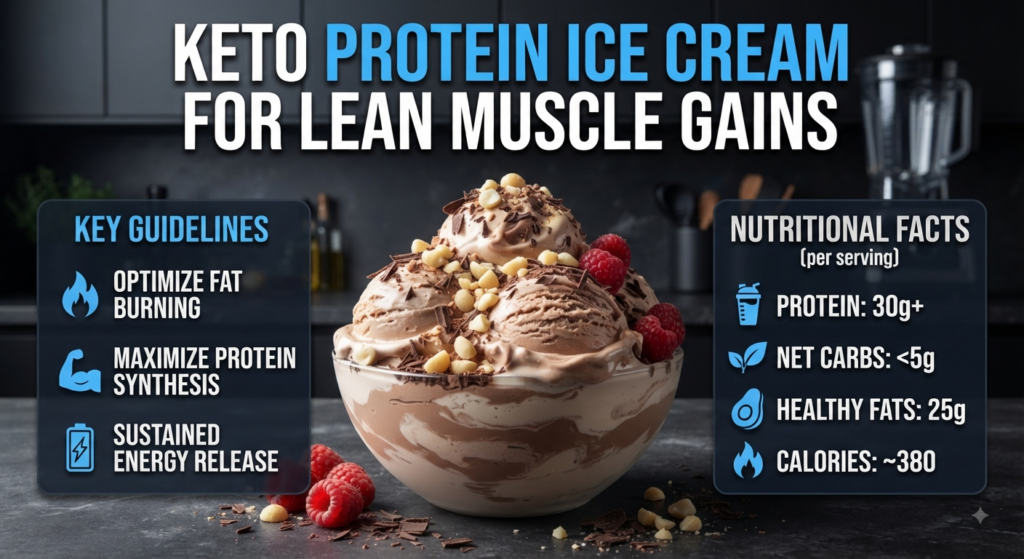
You pour a bowl of regular ice cream and watch your macros collapse. Sugar spikes your insulin while protein sits near zero. Muscle recovery stalls while fat storage accelerates. Keto Protein Ice Cream for Lean Muscle Gains solves both problems in one dessert.
Why Keto Protein Ice Cream for Lean Muscle Gains Beats Traditional Post-Workout Nutrition
Traditional protein shakes taste like chalk mixed with artificial sweetener. You drink them because you need the protein, not because you enjoy them. Your compliance drops after two weeks of forcing down the same vanilla sludge.
Keto protein ice cream changes the equation completely. You get 20 to 30 grams of protein per serving. The texture feels like real dessert because it is real dessert. Your brain releases dopamine when you eat it, which builds habit loops.
The ketogenic component keeps insulin low after training. Low insulin means your body stays in fat-burning mode. You build muscle while simultaneously staying lean. Regular ice cream spikes blood sugar to 180 mg/dL within 30 minutes.
Most bodybuilders cut and bulk in separate phases. They accept fat gain during muscle building as inevitable. This approach wastes months fixing problems you could have prevented. Staying ketogenic while hitting protein targets lets you recomp your physique year-round.
The Macronutrient Profile That Makes Keto Protein Ice Cream for Lean Muscle Gains Work
Each serving contains roughly 3 to 5 grams of net carbs. Those carbs come from sugar alcohols that don’t trigger insulin release. Erythritol and allulose pass through your digestive system mostly undigested. Your liver doesn’t process them like glucose.
Fat content sits between 12 and 18 grams per serving. These fats come from cream, coconut oil, or MCT oil. Medium-chain triglycerides convert to ketones within 20 minutes of consumption. Your muscles use those ketones for recovery when glycogen stores run low.
The protein blend typically combines whey isolate with casein. Whey hits your bloodstream in 30 minutes for immediate recovery. Casein digests over six hours, feeding muscle protein synthesis overnight. This dual-release pattern matches what研究 shows optimizes muscle growth.
Total calories range from 180 to 250 per serving. You can fit two servings into most cutting diets easily. The high satiety from fat and protein prevents hunger rebound. Regular ice cream leaves you hungrier 90 minutes after eating it.
How Keto Protein Ice Cream for Lean Muscle Gains Fits Your Training Schedule
The 30-minute window after lifting weights matters less than total daily protein. Your muscles stay sensitive to protein for 24 hours post-workout. Eating keto protein ice cream at 9 PM still builds the muscle you trained at 6 AM.
Many lifters train fasted in the morning for deeper ketosis. Breaking your fast with keto-friendly supplements and foods maintains metabolic flexibility. The combination of fats and protein doesn’t break ketosis like carbohydrates would. You stay in fat-burning mode while starting muscle repair.
Evening consumption works particularly well for casein-dominant formulas. You eat the ice cream two hours before bed. Casein releases amino acids throughout your sleep cycle. Growth hormone peaks during deep sleep, amplifying the muscle-building effect.
Rest days need just as much protein as training days. Your muscles rebuild during recovery, not during the actual workout. Skipping protein on off days cuts your gains by roughly 40%. The dessert format makes hitting daily targets effortless seven days per week.
Making Your Own Keto Protein Ice Cream for Lean Muscle Gains at Home
You need heavy cream, protein powder, and a sugar substitute like erythritol or allulose. Blend one cup of heavy cream (36-40% fat content works best) with two scoops of whey isolate or casein protein powder. Add four tablespoons of erythritol for sweetness without glycemic impact, plus one teaspoon of vanilla extract for flavor. Optional additions include MCT oil for enhanced ketone production, xanthan gum for improved texture, or collagen peptides for joint support. This base ratio provides approximately 25-30 grams of protein, 15-18 grams of fat, and under 5 grams of net carbs per serving.
Pour the mixture into a shallow container and freeze it. Scrape it with a fork every 30 minutes for three hours. This breaks up ice crystals and creates a scoopable texture. Skip this step and you get a solid protein brick.
Xanthan gum improves texture significantly at tiny doses. Add one-eighth teaspoon to your blend before freezing. This thickener prevents the mixture from separating into ice and cream layers. Commercial brands use guar gum for the same purpose.
An ice cream maker produces superior results in 20 minutes. The constant churning incorporates air into the mixture. More air means lighter, fluffier ice cream that scoops like premium brands. Hand-mixing never achieves the same consistency.
Flavor variations keep you compliant long-term. Cocoa powder creates chocolate versions with added magnesium. Instant coffee makes mocha flavors that provide caffeine for evening training sessions. Sugar-free peanut butter adds healthy fats and changes the taste profile completely.
Store-Bought Options for Keto Protein Ice Cream for Lean Muscle Gains
Several brands now sell pre-made versions in grocery stores. Rebel and Enlightened dominate the freezer section at most chains. Their macros work for ketogenic eating but protein content stays low. Most provide only 6 to 8 grams per pint.
Specialty fitness brands focus specifically on protein content. Halo Top has high-protein lines with 20 grams per pint. The texture suffers because extra protein makes ice cream grainy. You trade mouthfeel for better macros.
Nick’s Swedish-style ice cream balances all three factors well. Each pint delivers 22 grams of protein with 8 net carbs. The company uses a proprietary blend of fibers and sugar alcohols. Taste tests consistently rank it above competitors for texture.
Online retailers sell protein-forward pints that grocery stores don’t stock. These cost $8 to $12 per pint including shipping. Buying direct gives you flavors like birthday cake and cinnamon roll. Grocery options rarely venture beyond chocolate and vanilla.
Reading labels reveals important differences between products. Some brands use maltitol, which spikes blood sugar almost like real sugar. Others pack 15 grams of fiber per serving to lower net carbs artificially. Your digestive system may reject that much fiber violently.
Timing Protein Intake with Keto Protein Ice Cream for Lean Muscle Gains
Spreading protein across four meals builds more muscle than three large doses. Each feeding stimulates muscle protein synthesis for three to four hours. The effect plateaus after consuming 40 grams in one sitting. Your body oxidizes excess amino acids for energy instead of building tissue.
Ice cream works as a fourth meal when you eat three solid meals. Most people hit breakfast, lunch, and dinner easily. Adding a high-protein dessert pushes total daily intake from 120 to 150 grams. That extra 30 grams makes measurable difference over 12 weeks.
Pre-bed protein specifically prevents muscle breakdown overnight. Your body enters a catabolic state six hours into fasting. Casein-based ice cream extends the anabolic window until morning. Studies show this increases lean mass gains by 0.4 pounds per month.
Some lifters replace breakfast with protein ice cream on training days. The high fat content provides sustained energy without glucose crashes. MCT oil converts to ketones faster than cooking bacon. You get mental clarity plus muscle-building nutrition in one bowl.
Common Mistakes That Sabotage Keto Protein Ice Cream for Lean Muscle Gains
Eating an entire pint in one sitting wastes protein and adds excess calories. Your muscles can only process so much protein per feeding. The surplus gets converted to glucose through gluconeogenesis. You spike insulin and exit ketosis despite eating zero-sugar ice cream.
Choosing flavors with chocolate chips or cookie dough ruins your macros. Those mix-ins contain real sugar that manufacturers don’t highlight on the front label. Two tablespoons of cookie dough adds 12 grams of carbs. Your ketone production stops for the next four hours.
Ignoring total daily calories while focusing only on macros prevents fat loss. Keto doesn’t suspend the laws of thermodynamics. Eating 500 calories of ice cream on top of maintenance needs adds fat. You build muscle but bury it under new adipose tissue.
Many people assume all sugar alcohols affect the body identically. Maltitol raises blood glucose almost as much as table sugar. Erythritol causes zero glycemic response in 96% of people. Choosing products sweetened incorrectly breaks ketosis while you think you’re compliant.
Skipping whole food protein sources in favor of only ice cream creates micronutrient gaps. Whey protein lacks the vitamins found in actual meat and eggs. You need zinc, iron, and B vitamins that processed desserts don’t provide. NuviaLab Keto supplements can fill nutritional gaps when relying heavily on protein ice cream.
Measuring Results from Keto Protein Ice Cream for Lean Muscle Gains
Body composition changes matter more than scale weight. Gaining two pounds of muscle while losing three pounds of fat improves your physique dramatically. The scale might show only one pound of total loss. Photos reveal the actual transformation that numbers hide.
Waist measurements track fat loss more accurately than BMI calculations. Measure at your navel first thing each morning. A half-inch reduction per month indicates you’re losing visceral fat. This happens even when muscle gains keep total weight stable.
Strength progression in the gym confirms muscle growth is occurring. Adding five pounds to your bench press every two weeks shows tissue is building. Stalled lifts mean protein intake or recovery needs adjustment. The ice cream should fuel performance improvements you can measure.
Ketone meters verify you’re staying in fat-burning mode despite protein intake. Blood ketone readings between 0.5 and 3.0 mmol/L indicate nutritional ketosis. Readings below 0.5 mean you’re eating too many carbs somewhere. The ice cream itself shouldn’t drop you out of range.
Sleep quality often improves when casein-based desserts become nightly habits. The slow-releasing amino acids stabilize blood sugar overnight. You wake up less frequently and reach deeper sleep stages. Better sleep directly increases testosterone and growth hormone production.
Adjusting Recipes for Maximum Muscle Growth on Keto
Increasing protein powder from two scoops to three boosts muscle-building potential. The texture becomes slightly chalky but remains edible with enough cream. Each serving then provides 35 to 40 grams of protein. This matches what most studies identify as optimal per meal.
Adding collagen peptides improves joint recovery alongside muscle growth. Mix one scoop of collagen with your regular whey or casein. Collagen contains glycine and proline that repair connective tissue. Your tendons strengthen as your muscles grow, preventing injury.
Creatine monohydrate dissolves easily into ice cream base before freezing. Add five grams per batch for cell volumization effects. Creatine pulls water into muscle cells, increasing their size. The compound also regenerates ATP faster during high-intensity sets.
MCT oil powder blends smoother than liquid MCT in frozen desserts. Use two tablespoons per recipe for an extra 130 calories from pure fat. Your liver converts MCTs to ketones within minutes. Training performance improves when ketone levels stay elevated consistently.
Some lifters add a small amount of dextrose post-workout only. Five grams of fast carbs spike insulin briefly to shuttle protein into muscles. This targeted carb approach keeps you ketogenic 23 hours per day. The single insulin spike enhances nutrient partitioning without stopping fat burning.
Combining Supplements with Keto Protein Ice Cream for Lean Muscle Gains
Electrolyte balance becomes harder on ketogenic diets because insulin affects mineral retention. Low insulin means your kidneys dump sodium, potassium, and magnesium. Adding these minerals to your ice cream or taking them separately prevents cramping. Muscle contractions depend on proper electrolyte ratios.
Digestive enzymes help some people process the high fat content better. Lipase breaks down fats into absorbable fatty acids. Protease splits protein into amino acids more efficiently. Taking enzymes with your ice cream reduces bloating and improves nutrient uptake.
Exogenous ketones raise blood ketone levels even higher than diet alone. Drinking a ketone ester 20 minutes before eating ice cream deepens ketosis. Your body has more energy substrates available for recovery. This combination works especially well before evening training sessions.
Beta-alanine creates a tingling sensation but buffers lactic acid during workouts. Mixing it into ice cream masks the taste better than water. Take four grams daily for four weeks to saturate muscle stores. Your endurance during high-rep sets increases measurably after loading.
Vitamin D status affects testosterone production and muscle protein synthesis rates. Most people are deficient, especially those training indoors year-round. Taking 5000 IU daily with your fatty ice cream improves absorption. Fat-soluble vitamins need dietary fat present to enter your bloodstream. Supporting your body with targeted nutritional supplements ensures you recover fully between training sessions.
Frequently Asked Questions
Can I eat keto protein ice cream every day and still lose fat?
Yes, if it fits your daily calorie target and macro needs. Track total calories to ensure you maintain a deficit. The ice cream itself won’t prevent fat loss when portions stay controlled.
Does keto protein ice cream work as well as regular protein shakes?
The protein quality remains identical when using the same powder base. Your muscles can’t tell the difference between shakes and ice cream. Absorption rates stay the same regardless of temperature or texture.
How much keto protein ice cream should I eat after working out?
One serving providing 20 to 30 grams of protein works for most people. Larger athletes over 200 pounds may benefit from two servings. Split the dose if eating more than 40 grams total.
Will the sugar alcohols in keto ice cream cause digestive problems?
Erythritol rarely causes issues at normal serving sizes for most people. Maltitol frequently triggers bloating and diarrhea in sensitive individuals. Start with small portions to test your personal tolerance level.
Can keto protein ice cream replace meals for weight loss?
It can replace one meal but shouldn’t replace all solid food. You need the micronutrients and fiber from vegetables and meat. Use it strategically to hit protein targets, not as total meal replacement.
Start with one serving tonight after your workout and track how your body responds over the next week.