

Why Fasting Builders Get Muscle Timing Wrong
Muscle growth during intermittent fasting depends on strategic meal timing around your workouts and consistent protein intake. This guide reveals the science-backed timing strategies that optimize muscle protein synthesis whether you fast or eat regularly.
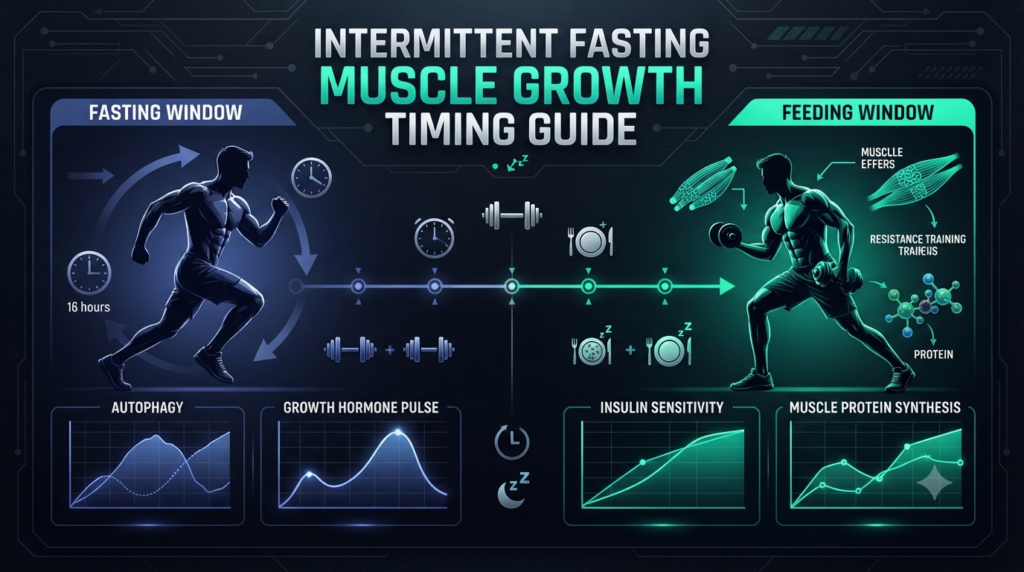
You lift weights while skipping breakfast and wonder if muscle growth is even possible. Most fasting protocols crash straight into training schedules without a plan. This Intermittent Fasting Muscle Growth Timing Guide shows exactly when to eat for results.
Why the Intermittent Fasting Muscle Growth Timing Guide Matters for Protein Synthesis
When you eat a high-protein meal, it spikes muscle protein synthesis. You start building muscle at that moment. The problem shows up when you combine long fasting windows with poorly timed training.
Recent research found no differences in daily muscle protein synthesis rates following ten days of fasting. This study compared alternate day fasting to regular eating in overweight men. The key was total protein intake stayed consistent across both groups.
The longer you go without eating a meal, the more muscle protein breakdown you’ll have. This is basic biology. Your body alternates between breakdown during fasts and building during feeding windows.
The balance determines whether you gain muscle or lose it. Most people focus only on the fasting part.
How to Schedule Training in Your Intermittent Fasting Muscle Growth Timing Guide
A 2024 study showed that guys who lifted after meals gained significantly more strength. They beat the fasted training group by a clear margin. Both groups maintained similar body fat levels throughout.
Schedule those heavy lifting sessions one to two hours after your first meal. This timing puts your energy stores and hormones in the right position. You have circulating amino acids ready to support muscle work.
Training at the end of your fast sounds efficient for fat burning. Performance suffers though. Exercising in a fasted state can enhance fat oxidation but may limit performance. Depleted glycogen stores reduce your ability to push hard.
Worth knowing.
Some people train fasted anyway due to schedule constraints. Timing workouts one to two hours before breaking the fast strikes a balance. You finish training just before your eating window opens. Then you eat immediately after the session ends.
Protein Distribution Strategies in the Intermittent Fasting Muscle Growth Timing Guide
Distributing protein evenly across three meals produced twenty five percent greater muscle protein synthesis. Researchers compared this to cramming the same total protein into dinner. The even distribution won clearly.
Most fasting protocols limit you to two or three meals maximum. You need to hit protein targets in fewer eating opportunities. Aim for 1.6 to 2.2 grams of protein per kilogram of body weight. That means a 75 kilogram person needs 120 to 165 grams daily.
For maximizing muscle protein synthesis per meal, twenty to forty grams is optimal. Amounts above forty grams don’t provide extra benefits in one sitting. They still count toward your daily total though.
Split your protein across your eating window. Three meals of thirty grams beats one meal of ninety grams. The repeated synthesis spikes matter more than one massive spike.
Thirty to forty grams of casein protein before bed can improve overnight recovery. This works if your eating window extends into evening hours. The slow-digesting protein keeps synthesis elevated while you sleep.
The Real Anabolic Window in Your Intermittent Fasting Muscle Growth Timing Guide
The thirty-minute post-workout window is fiction. The anabolic window lasts four to six hours, not thirty minutes. You have substantially more time than gym culture suggests.
The anabolic effect of exercise lasts at least twenty four hours. It diminishes gradually over time after training. This means you don’t need to panic about immediate feeding.
Exception exists for fasted training. If you train on an empty stomach, consume twenty five to forty grams of protein within one to two hours. The timing matters more when amino acid availability runs low.
If you had a protein meal two to four hours before training, there’s no rush. The amino acids from that meal are still being digested. However, if you trained completely fasted, consuming protein within one to two hours becomes more important.
This is the conventional wisdom backwards.
People who eat before training bought themselves time. Those who train fasted face a genuinely smaller window. This is the one scenario where the window is genuinely smaller. Your pre-workout nutrition status determines your post-workout urgency.
Practical Meal Timing for the Intermittent Fasting Muscle Growth Timing Guide
A sixteen hour fast with an eight hour eating window is the most common protocol. You might eat from noon to eight PM. This setup works well for muscle growth if you plan it right.
Break your fast with a solid protein meal around noon. Aim for thirty grams minimum. Schedule training near the start of your eating window for optimal recovery. Break the fast with a protein and carb meal to support glycogen and muscle repair.
Train between one PM and two PM. You have energy from your first meal. You still have hours left in your eating window for additional meals.
Second meal comes around four PM. Another thirty grams of protein with carbs and fats. Final meal hits before eight PM. Make this your largest protein dose if possible.
If you have your next meal too soon after your last meal, you may not get another spike. You need to give amino acids from the previous meal time to spike synthesis and drop back down. Space meals three to four hours apart minimum.
Morning trainers face the hardest challenge. You either train fasted and eat immediately after or you adjust your eating window. Some people shift their window to eight AM through four PM. This lets them eat before morning sessions.
The schedule matters less than total daily protein and consistent meal spacing.
Frequently Asked Questions
Can you build muscle while doing intermittent fasting?
Intermittent fasting has been shown not to impair muscle protein synthesis. Muscle protein synthesis rates were unchanged when participants followed an eight-hour eating window. You need to hit your total daily protein and calorie targets.
Should you train during your fasting window or eating window?
Training during your eating window produces better strength gains according to recent research. If you want to build muscle or strength, you’ll likely benefit more from training during your eating window. Fasted training works for fat loss goals but limits performance for heavy lifting.
How much protein do you need per meal when fasting?
Each meal should contain twenty to forty grams of high-quality protein for most people. A single meal containing twenty to forty grams of protein typically maximizes muscle protein synthesis. Heavier lifters may need amounts at the upper end of that range.
Does the thirty-minute post-workout window actually exist?
No, the thirty-minute window is a myth for most training situations. Muscle protein synthesis stays elevated for twenty four to forty eight hours after resistance training. You have a wide recovery window unless you trained completely fasted.
How long should you wait between protein meals when fasting?
Space protein meals three to five hours apart for best results. Continue twenty to forty gram protein meals every three to five hours. This spacing allows each meal to spike muscle protein synthesis independently without interference.
Schedule your next training session right after your first meal and track your strength gains over four weeks.