
The Meal Frequency Myth Costing You Muscle Growth
Meal frequency alone doesn’t determine muscle growth—what matters is matching your protein intake to your training window. Research shows 20-40g of protein maximizes muscle protein synthesis, making strategic nutrient timing more effective than eating six meals daily.
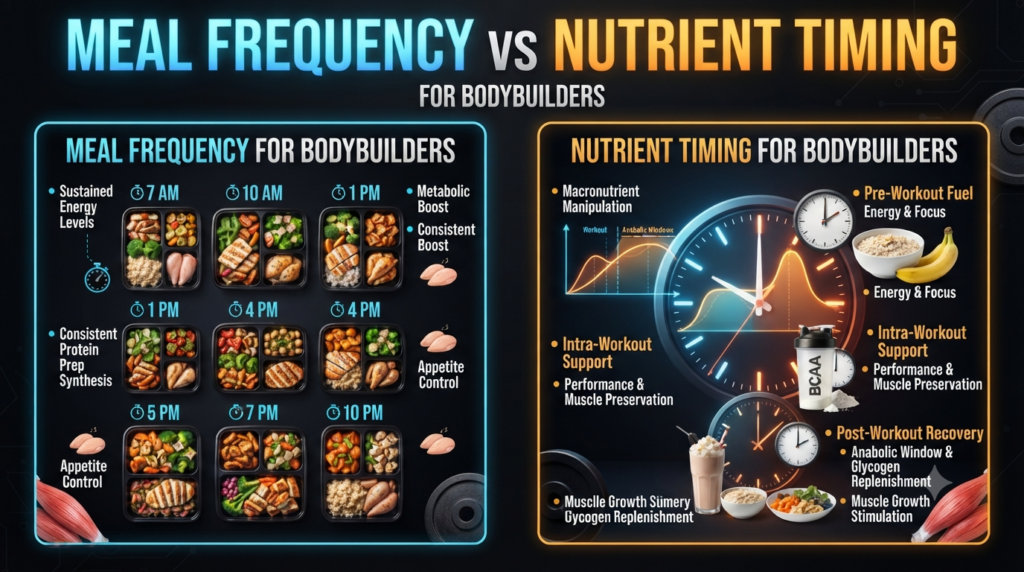
Bodybuilders eat six meals a day while their competitors eat three and both get results. Meal-Frequency-vs-Nutrient-Timing-for-Bodybuilders comes down to one thing: protein synthesis peaks quickly. The real game is matching your eating pattern to your training window.
What Meal Frequency Actually Does to Muscle Growth
Your body builds muscle for about three hours after you eat protein. This window doesn’t extend if you eat more protein in one sitting. Studies show that 20 to 40 grams of protein trigger maximum muscle protein synthesis. Eating 100 grams at once doesn’t triple the effect.
Your muscles don’t store extra amino acids for later use. They either use them immediately or convert them to other compounds. This is why bodybuilders traditionally eat every three to four hours. They want to keep muscle building turned on throughout the day.
But here’s where it gets interesting. Total daily protein matters more than spreading it out perfectly. Research comparing three meals to six meals shows nearly identical muscle gains. The difference is so small that other factors matter more.
Meal frequency becomes more important when you’re in a calorie deficit. Eating more often helps preserve muscle during a cut. It also keeps hunger manageable when you’re trying to lose fat.
Nutrient Timing Windows Are Smaller Than You Think
The post-workout window isn’t two hours. Recent research shows it’s actually four to six hours wide. Your muscles stay sensitive to protein for much longer than old gym wisdom suggested. This changes everything about how you should plan meals.
You don’t need to chug a shake in the locker room. If you ate a solid meal two hours before training, you’re already covered. The amino acids from that meal are still circulating in your bloodstream. Your muscles can access them during and after your workout.
Pre-workout nutrition matters more than most bodybuilders realize. Eating protein and carbs one to two hours before training improves performance. It also starts the muscle building process before you even finish your session. This overlap creates a longer total window of elevated protein synthesis.
The real timing mistake happens at night. Going eight to ten hours without protein during sleep actually matters. Studies show that eating 40 grams of casein protein before bed increases overnight muscle building. This is one timing strategy that shows clear benefits in research.
How Meal-Frequency-vs-Nutrient-Timing-for-Bodybuilders Affects Different Training Styles
Powerlifters and bodybuilders train differently so their eating patterns should differ too. Powerlifters do fewer sets with longer rest periods between sessions. They can get away with fewer meals because their training doesn’t deplete glycogen as much.
Bodybuilders doing high volume work need more frequent carb intake. Twenty sets for chest in one session burns through stored muscle glycogen fast. Eating carbs every few hours helps maintain training intensity across multiple sessions per week.
If you train twice a day, nutrient timing becomes non-negotiable. You need protein and carbs between sessions to recover properly. Waiting until dinner to refuel guarantees your second workout will suffer. The performance drop is measurable and significant.
Morning trainers face a unique challenge with meal frequency and nutrient timing. You wake up in a fasted state after sleeping 8-10 hours, which depletes liver and muscle glycogen stores. Training completely fasted can impair strength, power output, and training volume even if it doesn’t significantly impact muscle protein synthesis. A small pre-workout meal containing 20-30 grams of protein and 30-50 grams of fast-digesting carbs (taken 30-60 minutes before training) restores blood glucose, spares muscle glycogen, and improves workout intensity and quality. This early meal also initiates muscle protein synthesis before your training window begins, extending your total anabolic window.
The Protein Distribution Problem Most People Get Wrong
Eating 200 grams of protein daily means nothing if you eat poorly distributed amounts. Your body can only process so much protein per meal for muscle building. The rest gets used for energy or converted to glucose.
Four meals with 50 grams each beats two meals with 100 grams. This isn’t theory anymore. Multiple studies confirm that spreading protein evenly throughout the day maximizes muscle growth. The difference becomes visible over months of consistent training.
Breakfast protein is where most bodybuilders fail. They drink coffee and wait until lunch to eat real food. This wastes the entire morning for muscle protein synthesis. Your muscles were already breaking down protein overnight from the fasting state.
The minimum effective dose is 20 grams of high-quality protein per meal. This amount triggers near-maximum muscle building in most people. Going to 40 grams adds a small benefit for larger or more advanced bodybuilders. Beyond 40 grams per meal, returns diminish rapidly.
Carb Timing Matters More Than Protein Timing
Most bodybuilders obsess over protein timing and ignore carb timing completely. This is backwards. Protein timing has a wide window. Carb timing directly affects your next workout performance.
Glycogen resynthesis happens fastest in the first two hours after training. Eating 50 to 100 grams of carbs during this window refills your muscles efficiently. Wait four hours and the process slows down noticeably. Your next training session pays the price.
Training fasted depletes glycogen faster than training fed. If you do multiple hard sessions per week, this deficit accumulates. Your Thursday workout suffers because you didn’t refuel properly on Tuesday. The pattern repeats until you feel chronically flat.
Carb backloading is popular but misunderstood in the context of Meal-Frequency-vs-Nutrient-Timing-for-Bodybuilders. Saving all your carbs for night works only if you train in the evening. Morning trainers need carbs before and after their session. Eating them twelve hours later doesn’t help recovery.
What Actually Happens When You Skip Meals
Missing one meal doesn’t erase your gains. Your body doesn’t shift into emergency muscle-burning mode after five hours without food. This fear drives bodybuilders to eat when they’re not hungry. It creates unnecessary stress around meal timing.
Skipping meals becomes a problem when it’s a pattern. Going from six meals to three means longer gaps between protein intake. Each gap represents hours where muscle protein synthesis could be elevated but isn’t. Over weeks and months, this adds up.
Intermittent fasting works for some bodybuilders despite breaking traditional meal frequency rules. They compress all meals into an eight-hour window. Total protein and calories still hit their targets. The shortened eating window doesn’t seem to hurt muscle growth in research.
The real issue with meal skipping is hunger management. Bodybuilders eating 4000 calories need multiple meals to feel comfortable. Trying to eat that much in two sittings leads to digestive distress. Frequency becomes a practical necessity rather than a muscle-building requirement.
How to Actually Apply Meal-Frequency-vs-Nutrient-Timing-for-Bodybuilders
Start with your training schedule and work backwards. If you train at 6 PM, eat a solid meal by 4 PM. Plan another protein-rich meal within two hours after finishing. These two meals matter more than the others.
Divide your remaining daily protein across your other meals evenly. Three to five total meals works for most people. More than six meals becomes inconvenient without adding benefits. Fewer than three makes hitting protein targets unnecessarily difficult.
Track your protein intake by meal for one week. You’ll probably find big variations you didn’t notice before. Breakfast might have 15 grams while dinner has 80 grams. Evening out these amounts improves results without changing total daily intake.
Don’t stress about eating exactly every three hours. A range of three to five hours between meals works fine. Life happens. Missing your target by an hour won’t destroy your progress. Consistency over weeks matters more than perfect timing every single day.
Adjust meal frequency based on your current phase. Bulking with high calories often requires more frequent meals. Cutting with lower calories might work better with fewer, larger meals. Your hunger signals and energy levels will guide you.
Frequently Asked Questions
Is eating six meals a day better than three for muscle growth?
Research shows minimal difference between three and six meals for muscle growth. Total daily protein matters more than how you split it up. Six meals may help with hunger control during a cut. Three meals works fine if you hit your protein target.
How soon after training do I need to eat protein?
You have four to six hours after training to eat protein. The post-workout window is much wider than previously thought. If you ate protein before training, you’re already covered. Don’t stress about drinking a shake within 30 minutes.
Does intermittent fasting hurt muscle growth for bodybuilders?
Intermittent fasting doesn’t seem to hurt muscle growth if protein is sufficient. Studies show similar results between fasting and traditional meal patterns. The challenge is eating enough calories in a shorter window. Some bodybuilders find this uncomfortable.
What’s more important for bodybuilders: meal frequency or nutrient timing?
Nutrient timing around workouts is more important than overall meal frequency. Eating protein before and after training has clear benefits. Spacing meals throughout the day helps but matters less. Focus on pre-workout and post-workout nutrition first.
How many grams of protein per meal is best for muscle building?
Twenty to 40 grams per meal triggers maximum muscle protein synthesis. Smaller bodybuilders do fine with 20 to 30 grams. Larger or advanced bodybuilders benefit from 30 to 40 grams. Eating more than 40 grams adds little extra benefit.
Plan your meals around your training schedule and distribute protein evenly across the day.